
MACHINE GUARDS & EQUIPMENT PANELS
Prepare and bend sheet metal covers, access panels and protective housings around the equipment layout, mounting details and fabrication sequence.
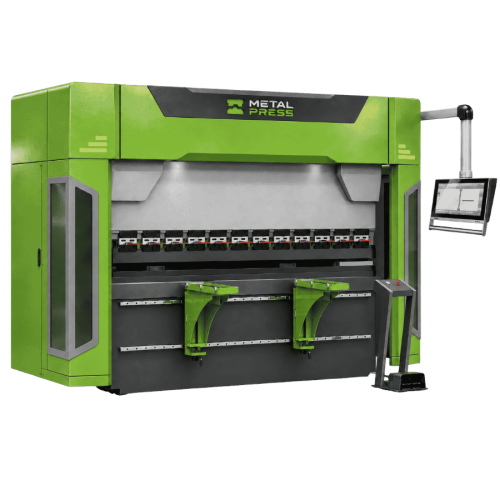
Fabrication Equipment for Guards, Covers & Panels
Machine guard fabrication equipment cuts and forms the sheet metal components used for covers, access panels, protective housings and equipment cladding. The manufacturing workflow starts with the panel drawing: blank dimensions, folded edges, mounting features, surface finish and the space needed to assemble the finished component.
Coordinate MGS guillotine-shear blank cutting with Titan CNC press-brake bending for suitable straight-cut and folded parts. Review openings, shaped profiles, fastening features and joining as separate operations where required. For related workflows, explore the fabrication applications hub.
Plan the Panel Around the Equipment
Define fixed covers, removable panels and access doors before selecting fabrication equipment. Check finished dimensions, flange geometry, assembly clearances and mounting locations against the equipment drawing.
Straight-Cut Blanks for Covers & Access Panels
Rectangular covers, side panels and strips can start with straight-cut blanks. Define full sheet size, blank dimensions, squareness, edge condition and the narrowest strip, together with the material specification and handling arrangement.
The MGS hydraulic CNC guillotine shear supports suitable straight-cut sheet and plate preparation. Review cutting length, material-specific ratings, backgauge and sheet support for the job. Internal openings, ventilation patterns and curved outlines require an appropriate separate process.
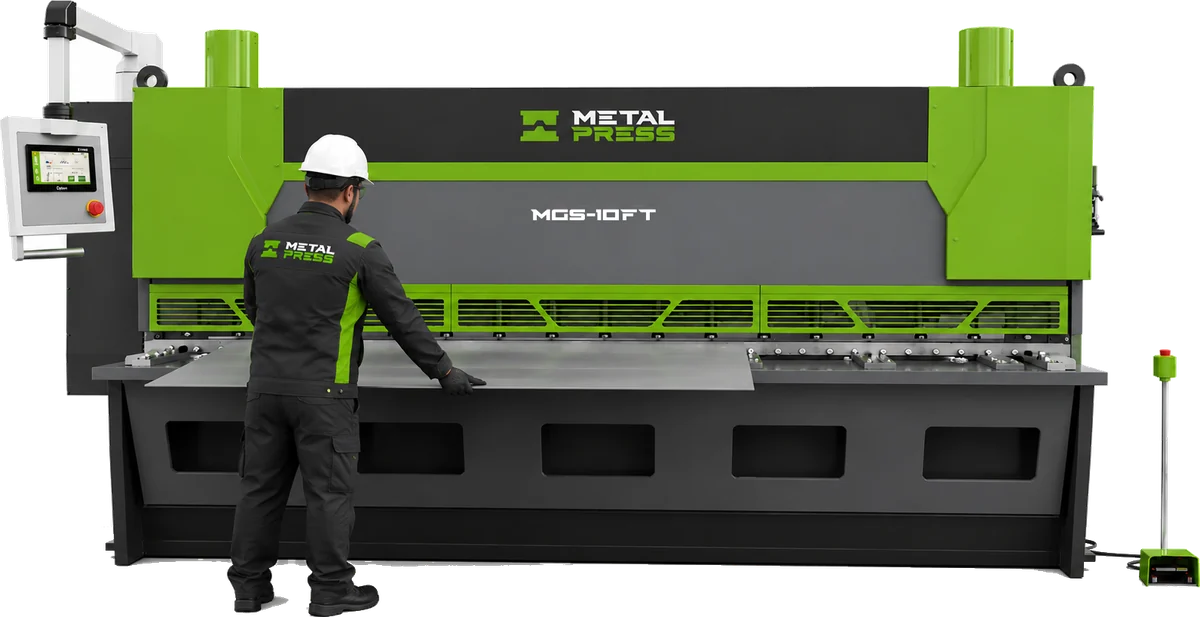
Folded Edges, Flanges & Formed Covers
Folded edges and return flanges affect the panel geometry, attachment arrangement and tooling access. Check the longest bend, shortest flange, inside radius, material thickness and available clearance at every step. Large covers also need a practical handling and support plan.
Use the Titan servo-hydraulic CNC press brake to review forming force, bending length, working clearance, tooling and backgauge configuration. Plan the bend order so existing flanges do not block later bends or prevent removal of the formed component.
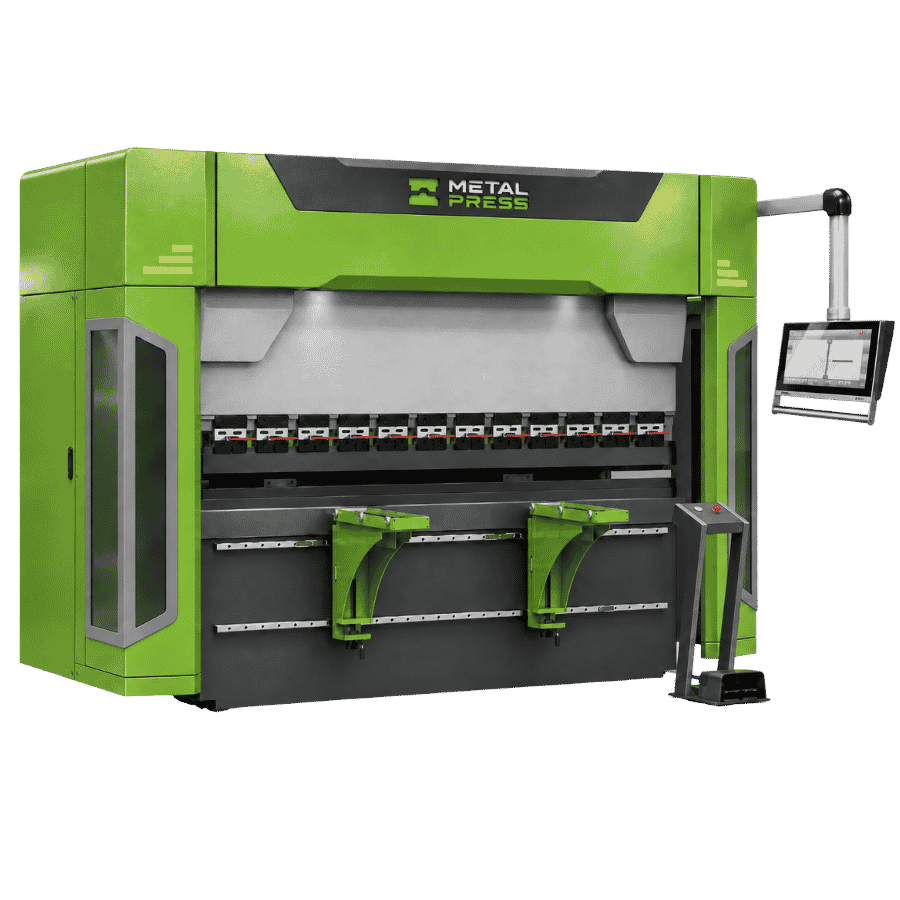
Plan the Equipment-Panel Fabrication Sequence
Blank layout & locating references
Prepare the flat pattern and identify the reference edges used for cutting and bending. Include bend allowances and the dimensions that control fit against the equipment structure.
Openings & mounting features
Locate access openings, fasteners, hinges and other attachments on the drawing. Choose the process and operation order for these features around tooling access, panel distortion and the finished assembly.
Bend sequence & handling
Review tooling clearance, return bends and part removal before finalizing the setup. Define support and lifting arrangements for large or awkward panels, including transfer between cutting, forming and assembly.
Finish & fit-up checks
Specify burr removal, edge finish, cosmetic faces and coating allowance. Inspect dimensions, bend angles, mounting points and the fit of removable panels against the approved drawing.
Material & Finished-Guard Requirements
Provide the actual material grade, strength, thickness and condition. Mild steel, stainless steel, galvanized sheet and aluminum can require different cutting and bending setups. Review bend radius, springback, tool contact and surface protection for the selected material.
This page covers fabrication equipment selection, not the safety design of a machine guard. The guard's dimensions, openings, fixing method, access arrangements and any interlocking requirements need an appropriate equipment-safety review. Cutting and bending machinery alone do not establish compliance.
Prepare Your Guard & Panel Fabrication Enquiry
Send the flat pattern, formed-part drawing and equipment interface details. Include material specification, thickness, overall dimensions, flange lengths, bend radii, mounting features, finish requirements and tolerances.
Add batch sizes, repeat-job frequency, part handling, available floor space and power. Discuss your machine-cover and equipment-panel fabrication requirements with MetalPress to review blank cutting, bending, tooling and support together.
Machine Guard & Equipment Panel Questions
A guillotine shear prepares suitable straight-cut blanks, while a CNC press brake forms bends and flanges. Review the MGS shear and Titan press brake against the drawing. Openings, joining, hardware and finishing may need separate operations.
No. Its role is straight cutting from the sheet edge. Internal apertures, ventilation patterns and shaped profiles require an appropriate separate cutting or punching process.
Check bending length and force, material properties, flange geometry, tool clearance, backgauge access and the ability to remove the formed part. Plan support and handling throughout the sequence.
Identify cosmetic faces, protective film and acceptable contact marks. Review tooling contact, deburring, handling and the point at which coating or other finishing occurs.
No. Fabrication machinery makes components. The finished guard requires its own design, risk review and applicable verification, including any required access control or interlocking.
Use the MGS guillotine-shear product page for blank preparation and the Titan press-brake product page for bending configurations, tooling and published specifications.
PLAN YOUR NEXT
Share your drawings to review cutting, bending, tooling access and handling for equipment covers and panels.