
Servo Hydraulic Presses
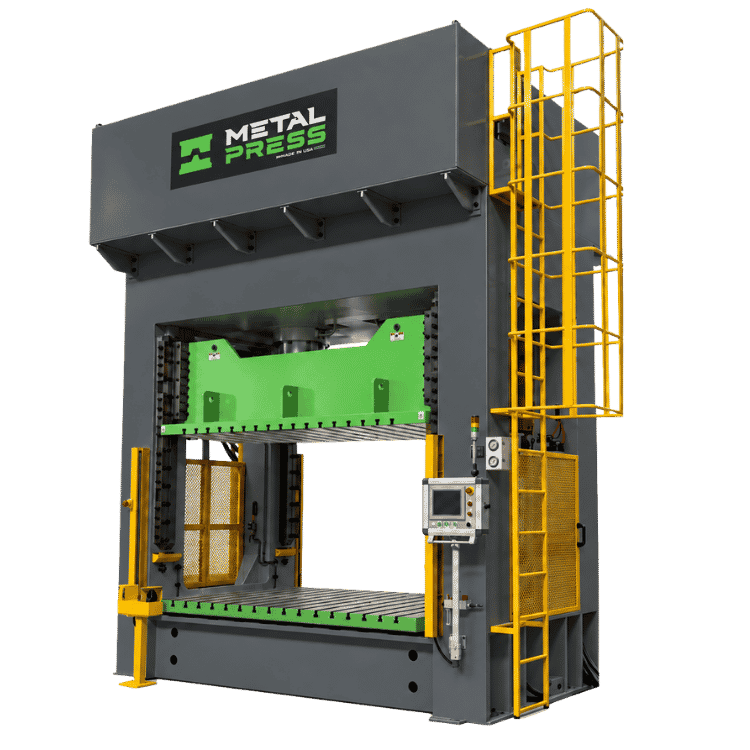
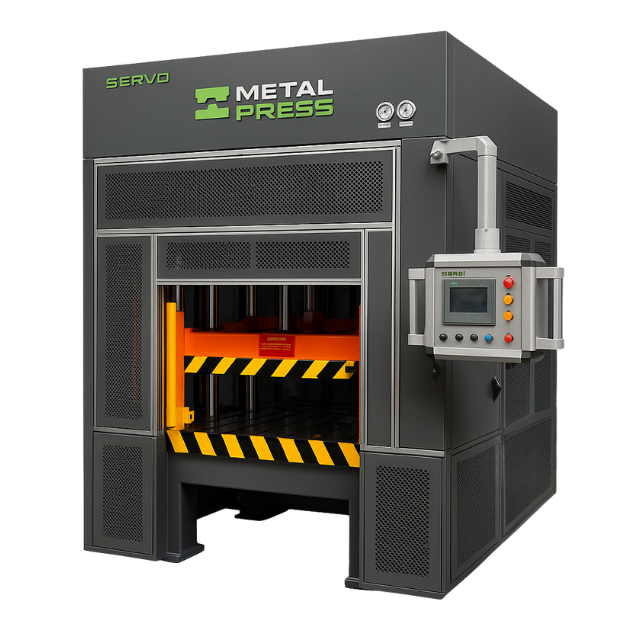
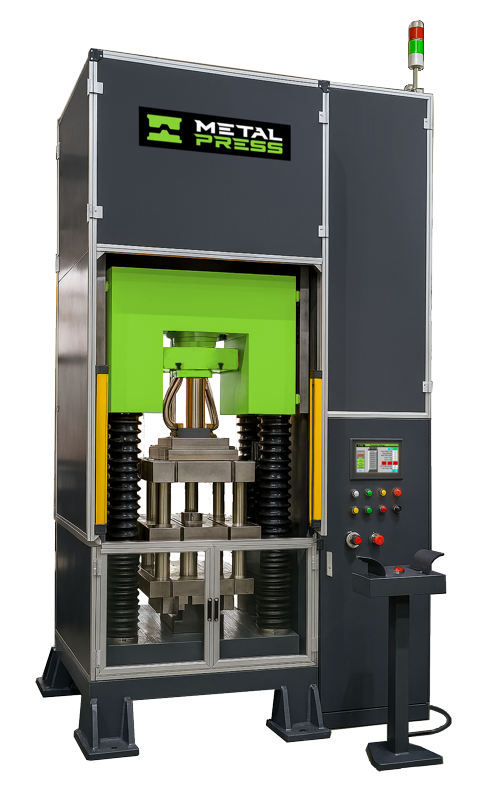
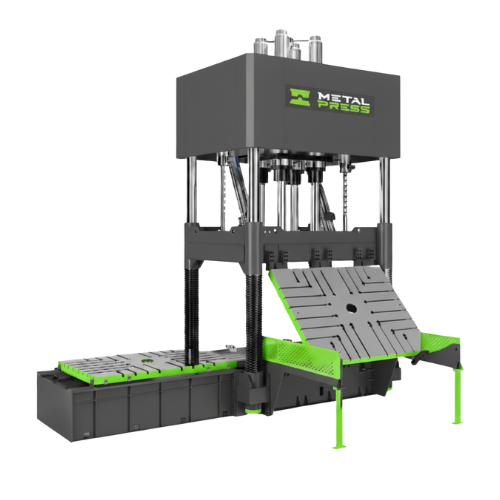
Discover 4-Post, Straight Sided, Spotting and Powder Compacting Servo Hydraulic Presses for precision forming and stamping.
What are Servo Hydraulic Presses?
Servo hydraulic presses are advanced forming machines widely used in manufacturing and metalworking industries for precision stamping, pressing, and forming operations. Unlike traditional hydraulic presses, which operate with fixed-speed pumps and valves, servo hydraulic presses use servo motors to control the hydraulic system. This integration of servo technology provides precise control over motion, force, and speed, resulting in highly accurate and programmable stroke patterns.
The key distinction between servo hydraulic presses and conventional hydraulic presses lies in their control mechanisms. Standard hydraulic presses typically run at constant speed and pressure, limiting their adaptability. In contrast, servo hydraulic presses can dynamically adjust speed, pressure, and position throughout the stroke, making them ideal for complex applications such as deep drawing, coining, precision forming, and multi-step processes. This programmability reduces cycle times, minimizes energy consumption, and improves product quality.
Another major advantage is the ability to perform dwell actions—pausing the ram at a specific point in the stroke to allow for material flow, cooling, or inspection. Conventional hydraulic presses cannot achieve this level of programmable precision due to their fixed hydraulic cycle.
Servo hydraulic presses also offer quieter operation, reduced vibration, and lower overall maintenance compared to traditional hydraulic machines. Although they typically involve a higher upfront investment, the long-term benefits—greater efficiency, reduced energy usage, extended tool life, and superior forming accuracy—make them a cost-effective solution for modern manufacturing environments.
In summary, servo hydraulic presses combine the high force capacity of hydraulics with the precision control of servo motors, delivering unmatched flexibility, accuracy, and efficiency in industrial forming processes.
Advantages of Servo Hydraulic Press
Traditional hydraulic presses run their motors constantly, generating excess heat and noise. The MHS-SV Series changes that:
Energy Savings: The servo motor only rotates when flow or pressure is required, reducing energy consumption by up to 50%.
Precise Slide Control: Achieve accuracy within 0.01mm for bottom dead center (BDC) repeatability.
Oil Temperature Management: Reduced system heat means longer seal life and less cooling equipment required.
Noise Reduction: Near-silent operation during dwell and idle modes.
Read MetalPress Machinery's article on differences between hydraulic press and servo hydraulic press to improve your decision on choosing the right press or servo press for your workshop.
Applications of Servo Hydraulic Press
The flexibility of the MHS-SV Series allows for diverse manufacturing processes:
Deep Drawing: Programmable velocity changes prevent tearing during deep draw operations.
Composite Molding: Precise pressure holding (dwell) for bonding and curing applications.
Die Tryout: Slow-motion slide control allows for safe and accurate die testing and spotting.
Hot Stamping: Compatible with heated platen systems for specialized forming.
To understand more about the technical advantages and applications of servo hydraulic presses (also referred to as hydraulic servo press) you can read the article about "How a servo hydraulic press works" by MetalPress industry and technology department.
Servo-Hydraulic Press Selection and Engineering Guide
A servo-hydraulic press combines hydraulic force with a servo-controlled pump drive. Instead of operating the hydraulic power unit at a fixed output throughout the cycle, the system can command flow and pressure according to the programmed motion profile.
This architecture supports programmable approach, pressing, dwell, decompression and return stages. The appropriate machine still depends on force, working area, frame rigidity, stroke, daylight, accuracy, cycle time, tooling functions, automation and process-data requirements.
Which Servo-Hydraulic Press Fits the Application?
| Press family | Primary advantage | Typical application |
|---|---|---|
| 4-Post Servo-Hydraulic Press | Four-side access with programmable force and motion | Flexible forming, drawing, molding, trimming and automated production |
| Straight-Sided Servo-Hydraulic Press | Rigid closed-frame support with programmable profiles | Large tooling, precision forming, off-center loads and demanding production |
| Powder Compaction Servo Press | Controlled pressing stages, position and pressure for compacted parts | Powder metal, ceramic and related compaction processes |
| Spotting / Mold Tryout Servo Press | Slow controlled motion and repeatable setup for large tools | Mold spotting, die tryout, inspection, correction and maintenance |
Servo-Hydraulic Press Specification Factors
Force profile
Define peak force, working force, pressure ramps, dwell and decompression rather than specifying only maximum tonnage.
Motion profile
Document approach, contact, pressing, venting, return and any intermediate position or speed changes required by the process.
Frame and working area
Match frame style, bed and platen dimensions, guidance and allowable loading to the tooling and part-handling method.
Stroke and daylight
Provide enough travel and opening for the die, finished part, ejectors, loading equipment and safe tool changes.
Accuracy and monitoring
Define position, pressure and repeatability needs together with alarms, trend data, traceability and quality checks.
Auxiliary functions
Identify cushions, ejectors, core pulls, heating, cooling, vacuum, robots and upstream or downstream interfaces.
Servo-Hydraulic vs. Traditional Hydraulic Presses
| Decision factor | Servo-hydraulic | Traditional hydraulic |
|---|---|---|
| Pump operation | Servo motor commands pump output according to cycle demand | Conventional motor and hydraulic controls manage flow and pressure |
| Motion programming | Well suited to detailed position, speed and pressure recipes | Provides adjustable speeds, pressures and dwell for many applications |
| Idle operation | Pump drive can reduce output when the cycle does not demand flow | Power unit commonly continues operating between active movements |
| Best fit | Processes prioritizing programmable motion, repeatability, recipes and data | Versatile applications where conventional hydraulic control meets the process |
Servo-Hydraulic Press Applications
Servo-Hydraulic Engineering Resources
Information Needed for a Servo-Hydraulic Press Quote
Provide the part and process description, material, tooling drawings, required force and force profile, bed or platen size, stroke, daylight, speed and position stages, cycle target, accuracy and data requirements, and any cushion, ejector, heating, cooling, automation or safety functions.
Frequently Asked Questions About Servo-Hydraulic Presses
What is a servo-hydraulic press?
It is a hydraulic press that uses a servo-controlled motor and pump arrangement to command hydraulic flow and pressure according to the programmed cycle.
What can be programmed in the press cycle?
Depending on the machine, recipes can define positions, approach and pressing speeds, force or pressure stages, dwell, decompression, return motion and auxiliary functions.
When should I choose a four-post frame?
A four-post frame is useful when the process benefits from access on multiple sides for tooling, part loading, automation or maintenance.
When should I choose a straight-sided frame?
A straight-sided frame is appropriate for larger tools, demanding rigidity, higher forces or applications with significant off-center loading.
Can servo-hydraulic presses support production data?
Yes. Controls can be configured for recipes, pressure and position monitoring, alarms, trend data, traceability and interfaces with plant systems.
What should be sent with a servo-hydraulic press RFQ?
Send the process, part, material and tooling information; force and motion requirements; working area, stroke and daylight; cycle target; accuracy and monitoring needs; and all auxiliary, automation and safety requirements.
Expert Advice & Technical Resources
This servo hydraulic press is relevant for manufacturers comparing press frame style, forming force, production accuracy, and long-term reliability. In servo hydraulic, buyers often need a machine that can support metal forming, stamping, trimming, drawing, or tryout work while maintaining repeatable performance. Related considerations such as servo press machine, hydraulic metal press, precision forming help clarify where the press fits in a production line and why the right equipment choice matters.
Engineering Resources
Use these engineering guides to compare Servo-Hydraulic Presses configurations, controls, applications, and equipment-selection considerations.
- 4-Post Servo Hydraulic vs. Traditional Hydraulic: Which Press Wins?
- The Story Of A Success: Shipment And Commissionig The 200 Ton Straight Sided Servo Hydraulic Press
- Real Life Project: 200-Ton Straight Sided Servo Hydraulic Press At Precommissioning Stage
- Next Project: 200 Ton Straight Sided Servo Hydraulic Press Built for Ohio Heavy Machinery Manufacturer