
SHEET & PLATE BLANK PREPARATION
Plan straight-cut blanks and repeat strips around material, squareness, edge condition and the next fabrication operation.

Sheet & Plate Blank Preparation Equipment
Sheet metal blank preparation and plate blank preparation start with straight-cut rectangles, panels and strips for the next fabrication operation. Start with the finished drawing and flat pattern, then define blank dimensions, reference edges, material specification and inspection requirements.
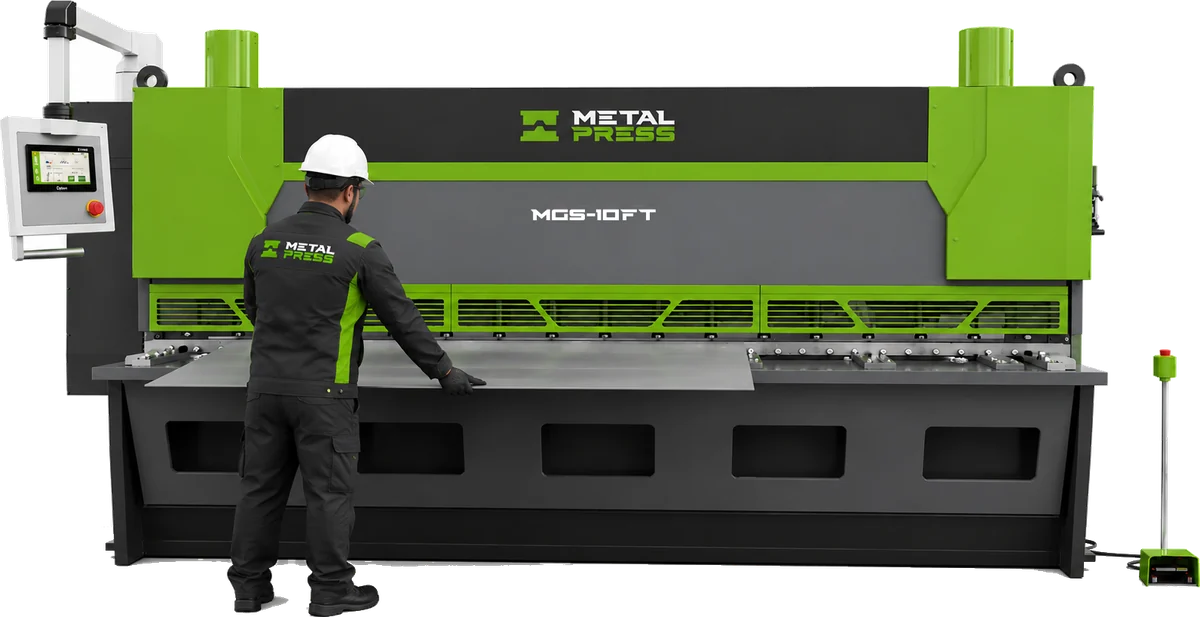
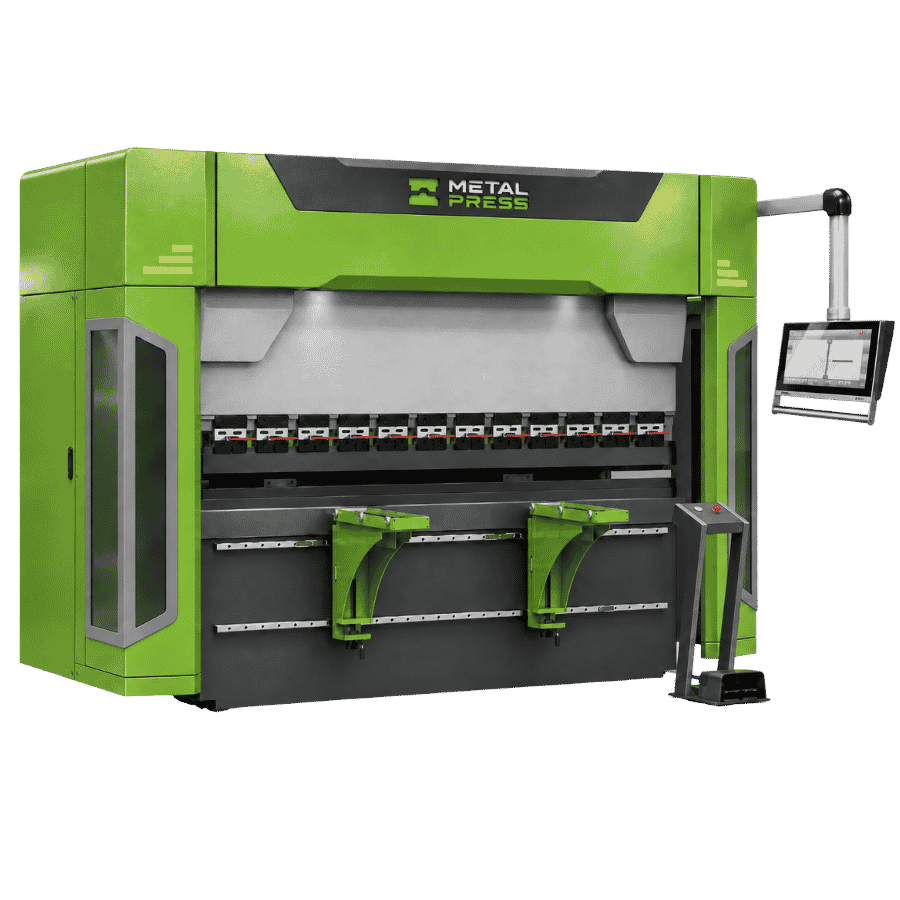
The MGS hydraulic CNC guillotine shear supports suitable straight-cut blanking. Coordinate blank preparation with Titan CNC press-brake bending when parts require flanges or folds. Explore the fabrication applications hub for finished-part workflows.
For repeat-batch blank supply, group the cutting list by stock, blank dimensions and locating reference. Review strip support, cut-piece collection and transfer to bending before choosing the production sequence; the required output depends on the actual parts and setup.
Define the Blank Before Selecting the Setup
Specify sheet or plate dimensions, grade, thickness, required blank size and acceptable edge condition. Check the longest cut, narrowest strip, locating references and support needed throughout the cutting sequence.
Straight-Cut Blanks & Repeated Strip Cutting
Rectangular blank preparation and repeated strip cutting depend on consistent locating references, suitable backgauge use and support for both the stock and cut piece. Plan the cut sequence around material use, remnant handling and the ability to position each piece.
Review MGS guillotine-shear models and specifications against the actual cutting length, thickness and material strength. A published capacity for one material does not establish the same capacity for another. Internal openings, curved profiles and complex outlines need a suitable separate process.
For cut-quality planning, review shear rake, blade clearance and strip distortion alongside the material specification and required edge condition.
Prepare Blanks for the Bending Sequence
Use the approved flat pattern and bend allowances to define the blank. Identify which cut edges locate against the backgauge and which dimensions control the finished part. Allow for any specified deburring, finishing and subsequent operations.
Coordinate blank dimensions, grain direction where relevant, flange lengths and handling with the Titan press-brake bending setup. Check the formed drawing and tooling access before finalizing a production cutting list.
Plan the Blank-Cutting Workflow
Reference edges & squareness
Identify a consistent datum and define how squareness and blank dimensions will be checked. Review the condition of the incoming sheet edges rather than assuming every stock edge is a finished reference.
Repeat strips & positioning
Specify strip width, length and quantity, together with the repeat positioning method. Review narrow-strip handling and cut-piece support before confirming the sequence.
Edge condition & distortion
Agree acceptable burr, rollover, bow and twist for the next operation. Review the machine setup, blade condition and material-specific cutting adjustments. Establish acceptance using the actual material and representative blanks.
Support & material transfer
Plan infeed support, cut-piece collection and remnant handling around sheet size and weight. Define suitable lifting arrangements for large or heavy stock and the transfer route to deburring, forming or assembly.
Material, Cut Quality & Inspection
Provide material grade, strength, thickness, surface condition and any protective film. Mild steel, stainless steel, galvanized sheet and aluminum can require different cutting setups and handling precautions.
Specify dimensional tolerances and edge-quality requirements on the drawing. Confirm achievable results with the proposed machine, setup and actual stock; this application page does not establish a universal cutting tolerance or thickness rating.
Prepare Your Sheet & Plate Cutting Enquiry
Send the material specification, incoming sheet dimensions, cutting list, blank drawings, tolerances and required edge condition. Include the narrowest strips, longest cuts, typical quantities and any cosmetic-surface requirements.
Add stock weight, support and lifting needs, cut-piece collection, available floor space and site power. Discuss your sheet and plate blank preparation requirements with MetalPress to review machine selection and the cutting-to-bending workflow.
Sheet & Plate Blank Preparation Questions
A guillotine shear prepares suitable straight-edged blanks and strips. Review the MGS shear against cutting length, material grade, thickness, support and required cut quality.
No. Its role is straight cutting from the stock edge. Internal apertures, curved outlines and complex profiles require an appropriate separate process.
Incoming edge condition, locating references, workpiece support, positioning and machine setup all matter. Define the inspection method and confirm the setup with representative blanks.
Specify strip width, stock thickness, cut length and quantity. Review positioning, support, distortion and how the cut strip is collected and handled.
Provide the flat pattern, material, bend allowances, reference edges and formed-part drawing. Coordinate these with the press-brake tooling and bend sequence.
Use the MGS guillotine-shear product page for published model specifications. Confirm the applicable rating for your material rather than applying one thickness figure to every grade.
PLAN YOUR NEXT
Share your cutting list and blank drawings to review straight cutting, positioning, material support and preparation for bending.