
PLATE & ANGLE PUNCHING AND NOTCHING
Prepare hole patterns and notches around material thickness, tooling access and repeat positioning.
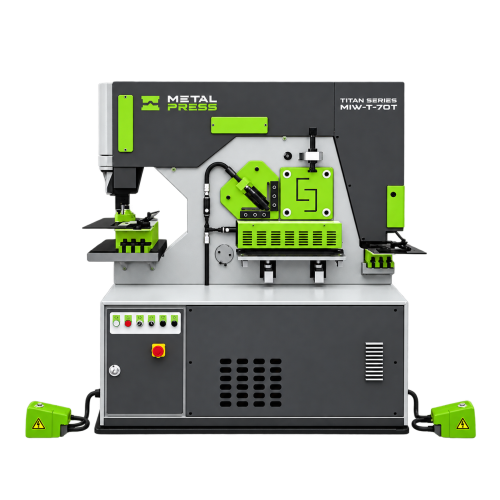
Fabrication Equipment for Plate & Angle Punching and Notching
Steel plate punching applications, angle punching and notching require workstation selection around feature geometry, material and physical access. This workflow focuses on the individual hole or notch and its access requirements. Hole size, material thickness, edge distance and the position of angle legs all affect the proposed tool arrangement.
Review MIW-T hydraulic ironworker against the actual drawings, material and production requirements. Find related workflows in the fabrication applications hub.
For a proposed mounting plate, compare the specified hole diameter and material thickness with the punching station limits, then check throat reach to every hole center. For angle notching, review both leg dimensions and tool clearance. This ironworker station selection does not replace the applicable tool and material ratings.
Match Each Feature to Its Workstation
Specify the hole or notch geometry and its location on the actual stock section. Check the applicable workstation rating, tool compatibility and physical reach separately.
Punching & Notching with the MIW-T Ironworker
Review punch diameter, material thickness, hole centers and the throat access needed to position the workpiece. Angle legs, existing bends and neighboring features can interfere with tools or supports. Slots and shaped holes require the appropriate tooling.
For notching, provide a dimensioned profile and check tool clearance, support and part removal. A general machine tonnage does not replace the individual punching and notching ratings.
View MIW-T hydraulic ironworker models and specifications for the relevant equipment configuration.
For the tooling review, see ironworker punch and die selection and confirm compatibility with the specified material, feature and station.
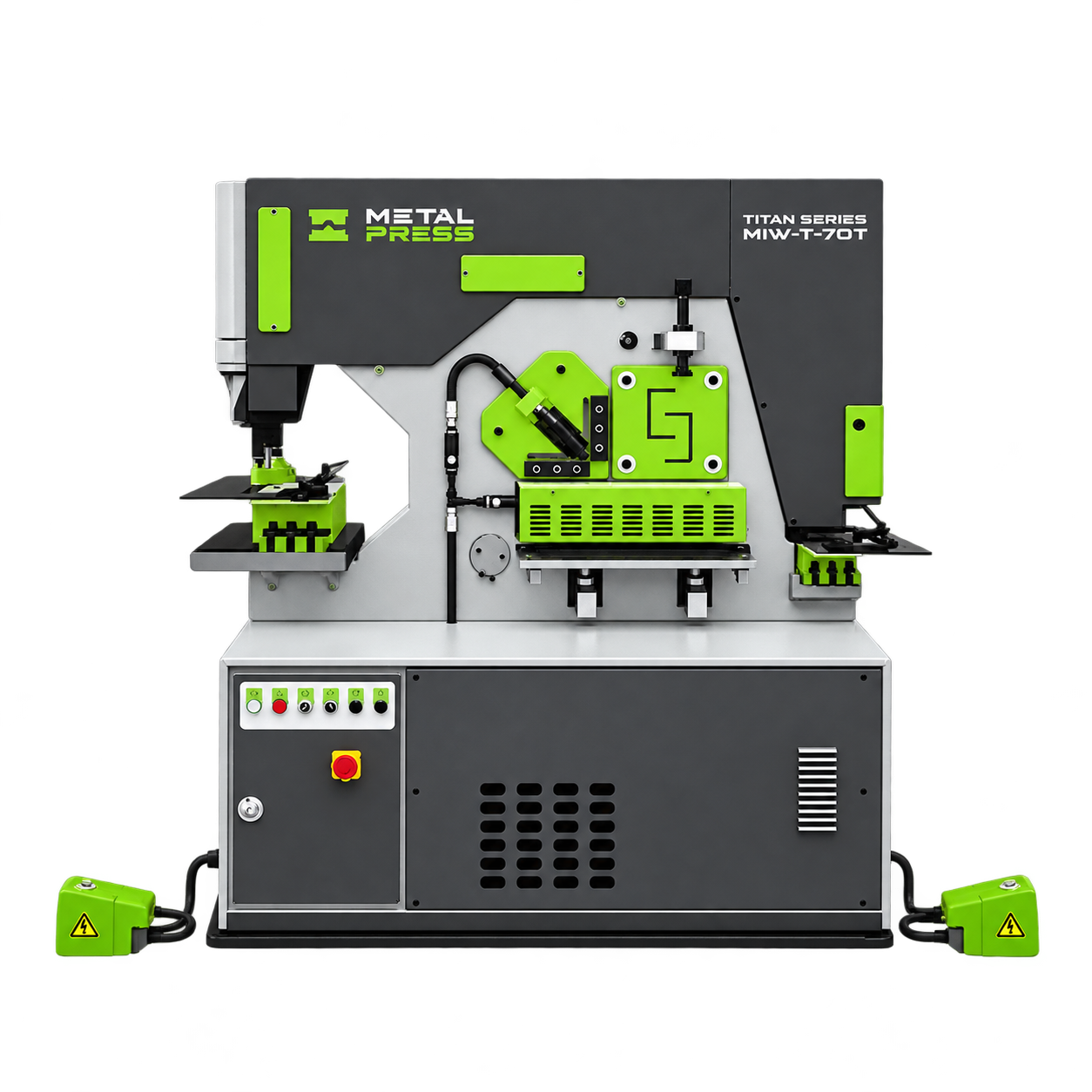
Plan the Plate & Angle Punching and Notching Workflow
Feature definition
Dimension hole centers, edge distances, notch depth and profile from clear datums. Identify the features that control assembly and any required burr direction.
Tool & access review
Check punch-and-die compatibility with the material and required hole. Review angle-leg interference and the reach needed to locate the feature under the tool.
Locating & repeat work
Plan stops, gauges and support for recurring patterns. Define repositioning between holes and how the stock is held consistently without obstructing the workstation.
Inspection & downstream fit
Check feature size, location, notch shape, edge condition and fit before batch release. Include any specified deburring before welding, fastening or coating.
Material & Application Requirements
Provide the actual grade and strength together with thickness and section dimensions. Punching and notching limits depend on the selected tools, material and workstation. Review narrow ligaments and closely spaced features against the part design and proposed process.
Related application planning: angle and flat-bar fabrication and bracket and mounting-plate fabrication.
Prepare Your Fabrication Enquiry
Send plate or angle drawings showing hole sizes, centers, edge distances, notch geometry and tolerances. Include both angle-leg dimensions, stock length, quantities, material strength and the support needed for long pieces.
Discuss your plate & angle punching and notching requirements with MetalPress to review the machine configuration, tooling and production route.
Plate & Angle Punching and Notching Questions
Required force depends on material properties, thickness and the cut perimeter. The proposed hole and tool must also fit the machine’s published workstation limits and access.
No. The profile must suit the selected notching tool, stock geometry and available clearance. Special features require configuration review or another process.
Start with MIW-T hydraulic ironworker. Compare the applicable ratings, tooling, access and support with the actual part drawing.
Send plate or angle drawings showing hole sizes, centers, edge distances, notch geometry and tolerances. Include both angle-leg dimensions, stock length, quantities, material strength and the support needed for long pieces.
PLAN YOUR NEXT
Share your drawings and material requirements to review equipment, tooling, access and handling for this application.