
DIE CASTING PROCESS TEMPERATURE CONTROL
Process-level guidance for stabilizing die temperature, heat balance, casting quality, cycle time, and tooling life in aluminum and magnesium die casting.
DIE THERMAL CONTROL FOR CASTING PROCESSES
Die casting temperature control is one of the most important factors in maintaining part quality, reducing cycle times, and protecting mold life. In aluminum and magnesium die casting operations, thermal consistency affects how the die fills, how the casting releases, how the surface finish develops, and how much thermal shock the mold experiences over time. A properly applied temperature control system helps maintain more stable mold temperatures, improves process consistency, and supports tighter production control across demanding die casting cycles.
For an overview of related temperature control applications and equipment solutions, explore our Temperature Control Unit Applications resource hub.
MetalPress supplies temperature control solutions built for real die casting environments. The current temperature control category positions these systems for die casting applications and specifically identifies Hot Oil Temperature Control Units as the best fit for aluminum and magnesium die casting, with operating capability up to 300°C standard and 350°C for higher-temperature applications. The category also highlights precise thermal regulation, stable mold temperature control, and the ability to maintain temperature within ±0.5°C, while the Water Channel Cleaning Unit supports die casting by restoring cooling flow, improving heat extraction, and reducing thermal shock inside die-casting molds and dies.
This process guide focuses on the thermal behavior of the casting cell: heat entering the die from molten metal, heat removed through circulating fluid, spray and dwell effects, warm-up, and temperature recovery between shots. For commercial equipment selection, compare die casting temperature control units and then review the hot oil TCU or high-flow water TCU product page.
A die thermal control system must be assessed as a complete loop, including the temperature setpoint, circulating-fluid flow, circuit pressure drop, heat exchanger or cooling method, sensor location, and channel condition. The die-casting TCU sizing guide explains the engineering inputs used to match the system to the machine and die.
GET A FREE QUOTE TODAY


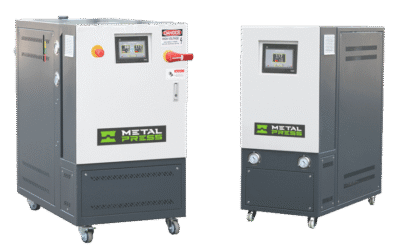
THE RIGHT TEMPERATURE CONTROL EQUIPMENT FOR DIE CASTING
HOT OIL TEMPERATURE CONTROL UNIT
A hot oil temperature control unit for die casting is the strongest fit when the process requires high-temperature stability, precise mold heating, and controlled thermal management without relying on pressurized water at extreme temperatures. In die casting, this type of unit is used to regulate mold temperature, improve thermal consistency between cycles, reduce scrap, and support better casting surface quality. Hot oil systems are positioned as ideal for higher-temperature die casting processes, especially where stable thermal performance is critical and where temperatures may reach up to 300°C in standard configurations or 350°C in higher-temperature versions.
For die casting applications, a hot oil temperature control unit also supports better production uptime by helping the mold stay within a tighter thermal window. The broader temperature control category highlights features such as PID microprocessor control, multi-stage adjustable heating, heating and cooling capability, single-, dual-, or triple-zone setups, and robust construction. That makes this equipment a strong fit for searches and applications tied to die casting temperature control, hot oil unit for die casting, aluminum die casting temperature control, magnesium die casting temperature control, and die mold temperature control system.
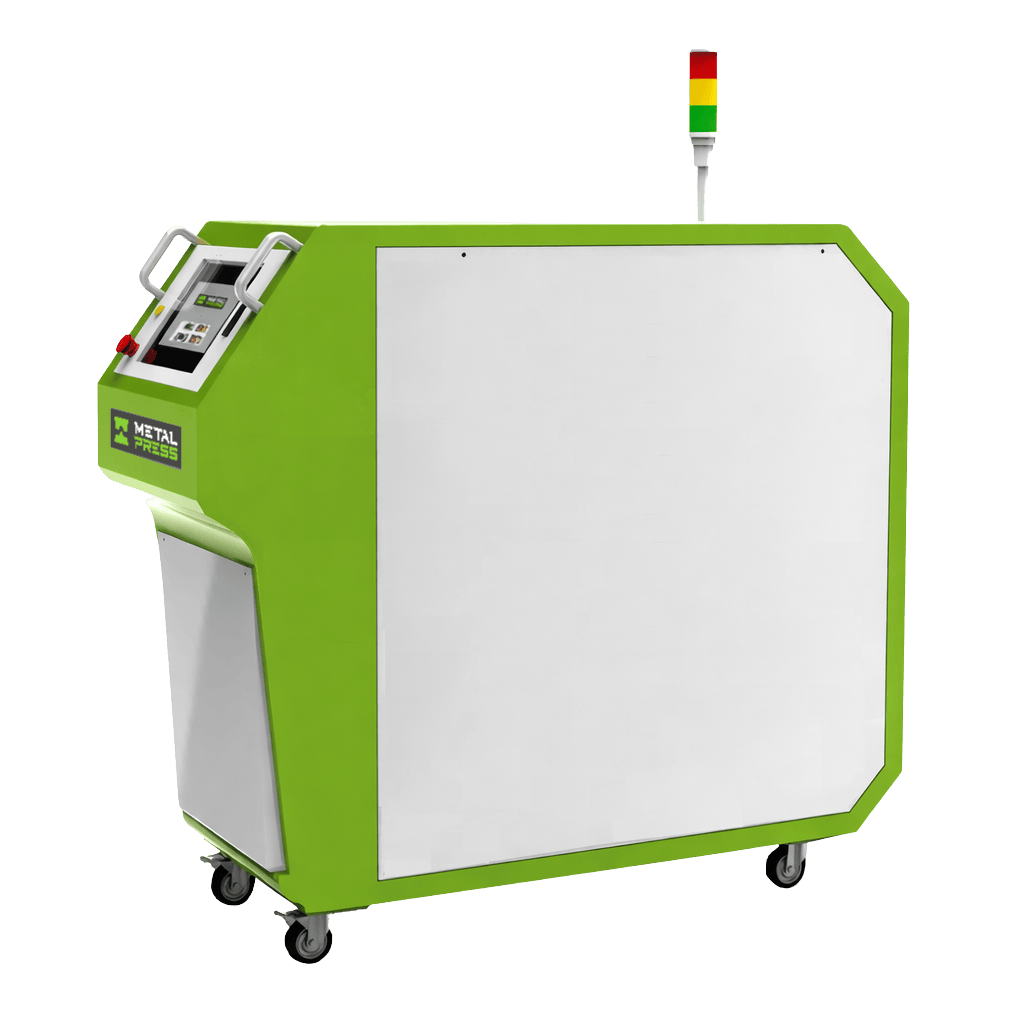
WATER CHANNEL CLEANING UNIT
A water channel cleaning unit for die casting is a critical support machine when cooling circuits inside the die begin to lose efficiency because of scale, corrosion, oxide buildup, sludge, rust, calcium, or casting residue. In die-casting molds, clean cooling channels are essential because the tool operates under extreme thermal loads and depends on effective heat extraction to reduce thermal fatigue, stabilize cycle performance, and extend mold life. A dedicated water channel cleaning unit restores coolant circulation and improves heat transfer by flushing internal cooling circuits and removing the contamination that restricts flow.
For die casting applications, this makes the water channel cleaning unit an important part of the overall temperature control strategy rather than a separate maintenance afterthought. Clean channels help reduce longer cooling cycles, unstable temperatures, and defect-related issues caused by poor heat exchange. The current product positioning also connects the unit to high-pressure die casting molds, conformal cooling channels in advanced tooling, and preventive maintenance programs that help keep tooling thermally efficient and production-ready.
TEMPERATURE CONTROL SYSTEMS FOR DIE CASTING CELLS
A strong die casting temperature control application is not only about heating the die. It is also about maintaining stable thermal conditions across the full die casting cell. The current category emphasizes that these systems are engineered to integrate into modern production environments and support stable mold temperatures, tighter process control, improved surface finish, reduced scrap, and more consistent part quality. It also highlights single-, dual-, and triple-zone configurations, which are especially relevant when the process requires more than one thermal zone or when different sections of the die need more controlled temperature management.
SELECTING THE RIGHT DIE CASTING TEMPERATURE CONTROL SOLUTION
THE BEST DIE CASTING TEMPERATURE CONTROL APPLICATION DEPENDS ON THE DIE, THE TEMPERATURE RANGE, AND THE COOLING CONDITION
Choosing the right die casting temperature control application depends on the die size, the alloy being cast, the thermal load on the tooling, the temperature range required, and the condition of the die’s internal cooling system. Some die casting operations need a hot oil temperature control unit as the primary solution for stable mold heating and high-temperature regulation. Others also need a water channel cleaning unit because heat extraction has already been reduced by contamination inside the cooling channels. In many cases, both solutions work together: one controls temperature, and the other restores the cooling performance needed to make that temperature control effective.
For die casting plants, the right temperature control setup improves more than mold temperature alone. It improves cycle consistency, helps reduce scrap, supports better casting surface finish, protects the die from unnecessary thermal stress, and helps maintain more stable production output. That is why buyers searching for die casting temperature control, hot oil units for die casting, die mold thermal control, or die casting cooling channel cleaning are often really looking for a more complete thermal-performance solution.
WHY DIE CASTERS CHOOSE METALPRESS
Die casters choose MetalPress because the current temperature control lineup is already positioned around the exact thermal-management problems die casting plants face: high-temperature mold control, tight process stability, consistent part quality, and restoration of cooling performance when channels become restricted. The Hot Oil Temperature Control Unit is positioned as the best thermal solution for aluminum and magnesium die casting, while the Water Channel Cleaning Unit is positioned as the maintenance and efficiency-restoration solution for die-casting molds and dies operating under extreme thermal loads.
Together, these solutions support a stronger workflow for die casting temperature control applications, reduce thermal instability, improve heat transfer efficiency, and help protect mold life in demanding production environments. This page should move the buyer toward the right product quickly if the current process is struggling with uneven mold temperature, longer cooling times, unstable part quality, or declining cooling-channel performance.
NEED HELP MATCHING THE RIGHT TEMPERATURE CONTROL SOLUTION TO YOUR DIE CASTING PROCESS?
If you already know your process temperature range, die size, alloy, or cooling challenges, the next step is simple: choose the temperature control solution that best fits the job and continue to the product page to request a quote.
If you are still comparing a hot oil temperature control unit for die casting versus a water channel cleaning unit, or evaluating the best setup for aluminum die casting temperature control, magnesium die casting thermal control, mold temperature stability, or cooling channel efficiency restoration, use the equipment above to narrow the options first. The goal is to help you reach the right die casting temperature control application faster, with less guesswork and a clearer path to the solution that fits your production workflow.
Expert Advice & Technical Resources
For die casting temperature control applications, the right temperature control unit helps maintain stable tool temperature, improve heat transfer, and support repeatable casting quality. Buyers comparing industrial TCU equipment should consider temperature range, pump capacity, cooling method, heater size, safety controls, and how the unit responds to production changes. This helps connect mold temperature control to process stability, cycle consistency, reduced scrap, and more predictable performance in demanding die casting environments.
Related Technical Guides
Review these technical guides for additional engineering context on Temperature Control Units, equipment selection, safety, and production planning.
- How To Size A Temperature Control Unit To A Die Casting Machine
- Heating Platens and Heated Press Systems: A Practical Guide for Molding and Forming
- Finalizing & Precommissioning the THC‑D‑24 Hot Oil Temperature Control Unit
- Engineering the THC‑D‑24 Hot Oil Temperature Control Unit for Plastic Processing Manufacturer from Michigan
For the equipment-focused keyword family—die casting temperature controller, die TCU, die temperature control unit, and hot oil die temperature controller—continue to the die casting temperature control unit guide. This keeps process education separate from product selection.