
Hydraulic Presses
Explore our Hydraulic Presses, including 4-Post Press and Trim Press models. Designed for reliable high-force forming, stamping, and trimming applications.

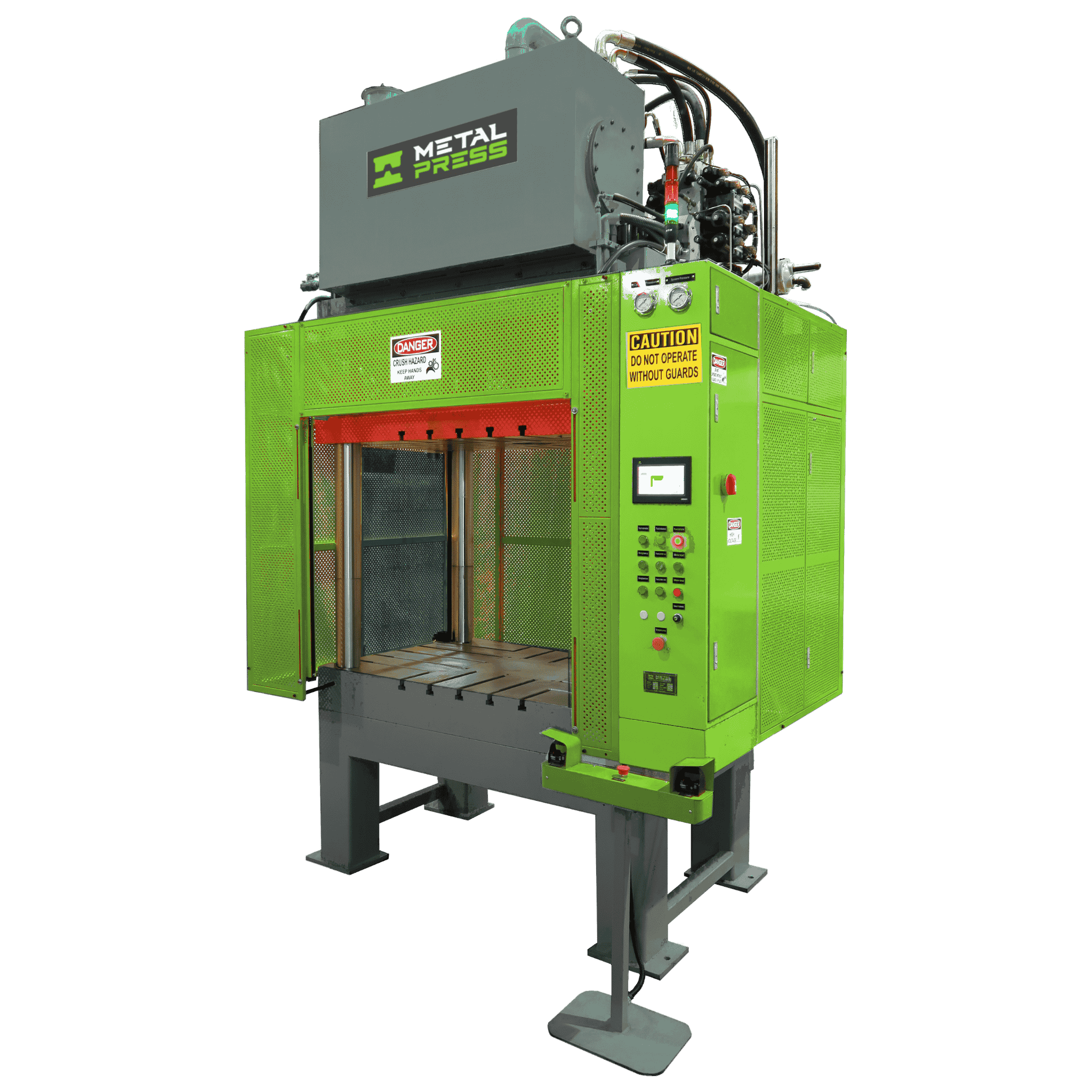
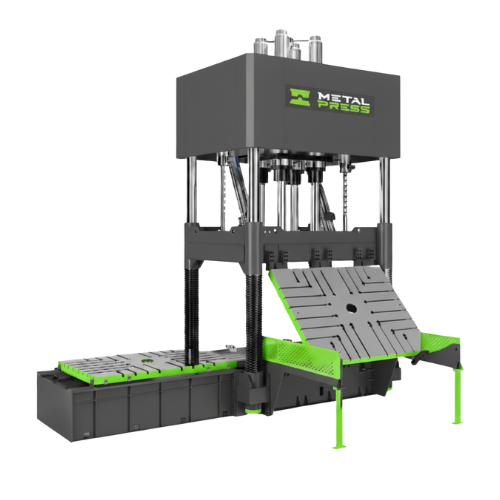
Industrial Hydraulic Presses for Forming, Trimming and Tool Tryout
Industrial hydraulic presses provide controllable force throughout the working stroke, making them a practical choice for operations that need repeatable pressure, adjustable speed and programmable dwell. MetalPress hydraulic presses are used for metal forming, trimming, punching, drawing, coining, straightening, die spotting and other production or toolroom work.
The right machine depends on more than tonnage. Part geometry, material, tooling dimensions, stroke, daylight, access, production rate and automation requirements all affect press selection. The comparison and selection guidance below will help you identify the best starting point before requesting a detailed quotation.
Which Hydraulic Press Fits Your Application?
MetalPress offers three traditional hydraulic press families, each designed around a different production need. Standard model ranges are summarized below; working area, stroke, daylight, controls and auxiliary equipment can be matched to the application.
| Press family | Standard range | Best suited for | Why choose it |
|---|---|---|---|
| 4-Post Hydraulic Press | 35–200 US tons | Forming, stamping, punching, trimming and general production | Four-side working-area access and a versatile platform for tooling, part handling and automation |
| Hydraulic Trim Press | 35–200 US tons | Trimming, piercing, punching and secondary operations | Purpose-built for repeatable finishing work with available ejection, air-blast and unloading options |
| Die Spotting / Mold Tryout Press | 75–660 US tons | Mold spotting, die tryout, inspection, correction and maintenance | Large working areas, controlled platen movement and clear access for toolroom operations |
How to Choose an Industrial Hydraulic Press
Force and process
Confirm the required working force and whether the operation is drawing, forming, trimming, punching, coining, straightening or tool tryout.
Bed and platen size
Size the working area for the complete die, clamps, fixtures, material movement and any future tooling requirements.
Stroke and daylight
Allow enough opening, travel and access for the part, tooling, loading method, ejection and safe maintenance.
Speed and dwell
Define approach, pressing and return speeds along with any pressure-hold or decompression time required by the process.
Tooling functions
Identify cushions, ejectors, core pulls, heating, cooling, air blast, die change and part-removal requirements early.
Controls and automation
Plan for recipe control, position and pressure monitoring, guarding, light curtains, robot interfaces and upstream or downstream equipment.
Common Hydraulic Press Applications
Hydraulic presses are especially useful when full force, controlled motion or dwell is needed across a long working stroke. Explore the application pages below for more process-specific guidance.
Hydraulic vs. Servo-Hydraulic vs. Mechanical Presses
The best drive system depends on the balance between flexibility, process control, energy use and production speed.
| Press type | Primary advantage | Typical fit |
|---|---|---|
| Traditional hydraulic | Full force through the stroke, adjustable speed and programmable pressure hold | Versatile forming, drawing, trimming, molding and toolroom work |
| Servo-hydraulic | More precise programmable motion and pressure control with energy used on demand | Processes requiring repeatability, controlled profiles, data and flexible recipes |
| Mechanical | High cycle rates and repeatable motion for dedicated production | High-volume stamping and blanking where throughput is the priority |
For a more detailed drive-system discussion, see our servo-hydraulic versus traditional hydraulic press comparison.
Standard Capabilities and Available Options
Depending on the press family and application, a hydraulic press can be configured with the following production and control features:
- PLC and HMI recipe controls
- Position and pressure monitoring
- Programmable approach, press and return speeds
- Pressure dwell and controlled decompression
- Hydraulic cushions, ejectors and core pulls
- Light curtains, guarding and two-hand controls
- Oil cooling and filtration systems
- Robot, unloader and material-handling interfaces
- Air blast and part-removal equipment
- Remote diagnostics and production monitoring
Hydraulic Press Project Experience
Completed-machine documentation helps buyers evaluate how press specifications, controls and auxiliary equipment are applied in real production projects.
Information Needed for a Hydraulic Press Quote
For the most useful recommendation, provide the operation, part material and thickness, tooling or part drawings, required force, working-area dimensions, stroke, daylight, target production rate and any ejection, heating, cooling, automation or safety requirements.
Frequently Asked Questions About Hydraulic Presses
What is an industrial hydraulic press used for?
Industrial hydraulic presses are used for forming, deep drawing, trimming, punching, coining, straightening, molding, assembly, die spotting and many other operations that benefit from controlled force and dwell.
How do I determine the required press tonnage?
Required tonnage depends on the process, material strength and thickness, part geometry, perimeter or projected area, tooling and safety margin. A calculation or trial based on the actual part and die is preferable to selecting tonnage from part size alone.
When should I choose a four-post hydraulic press?
A four-post press is a strong general-purpose option when the process needs access from multiple sides, a stable guided platen and flexibility for tooling, part loading or automation.
What is the difference between a hydraulic press and a servo-hydraulic press?
A traditional hydraulic press uses a continuously driven hydraulic power unit, while a servo-hydraulic system controls pump motion on demand. Servo-hydraulic presses can provide more precise programmable motion, reduced idle energy use and better production data, while traditional hydraulic presses remain highly versatile and cost-effective.
Can a hydraulic press be integrated with automation?
Yes. Hydraulic presses can be integrated with robots, feeders, unloaders, transfer equipment, die-change systems, safety devices and upstream or downstream production equipment.
What information should I send with an RFQ?
Send the part and process description, material, drawings, tooling information, required force, bed or platen size, stroke, daylight, speeds, production rate, utilities and any automation, ejection or safety requirements.
Choosing a Hydraulic Press Manufacturer and Supplier
Choosing an industrial hydraulic press involves more than comparing catalog tonnage. The manufacturer or supplier must translate the production requirement into a complete metalworking hydraulic press system with the correct frame, cylinder arrangement, hydraulic circuit, controls, safety architecture, tooling functions, and material-handling interfaces.
MetalPress supplies standard and custom hydraulic presses for metal forming, drawing, trimming, punching, coining, straightening, die spotting, mold tryout, compression molding, and automated production. For application-specific planning, compare metal forming presses, deep-drawing presses, and automatic hydraulic press systems.
Application engineering
A qualified hydraulic press manufacturer should review the part, material, die, force curve, stroke, daylight, bed size, speed, dwell, and production-rate requirements before defining the machine.
Custom system capability
Custom hydraulic press systems may require cushions, ejectors, core pulls, heated tooling, recipe controls, guarding, robots, unloaders, or upstream and downstream automation.
Controls and documentation
Evaluate PLC and HMI standards, pressure and position monitoring, data requirements, safety design, manuals, training, remote support, and acceptance-testing procedures.
Service and lifecycle support
A hydraulic press supplier should support installation, commissioning, spare parts, troubleshooting, maintenance planning, and future changes to tooling or automation.
Expert Advice & Technical Resources
This hydraulic press is relevant for manufacturers comparing press frame style, forming force, production accuracy, and long-term reliability. In hydraulic, buyers often need a machine that can support metal forming, stamping, trimming, drawing, or tryout work while maintaining repeatable performance. Related considerations such as industrial hydraulic press, hydraulic metal press machine, metal forming press help clarify where the press fits in a production line and why the right equipment choice matters.
Engineering Resources
Use these guides to compare hydraulic press types, drive systems, and forming applications before specifying a machine.