
INDUSTRIAL COINING PRESS
High-pressure coining, sizing, calibration, embossing, and precision metal-forming systems
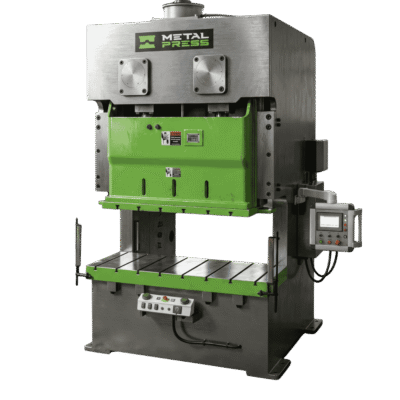
Coining Press Machines for Industrial Parts, Coins and Medallions
Precision Engineering for High-Detail Metal Forming
A coining press is a high-pressure metal forming machine that forces a workpiece to flow into the fine detail of a closed die. Unlike general stamping, industrial coining concentrates very high force over a small area to create precise dimensions, sharp edges, controlled thickness, smooth surfaces, lettering, logos, or high-relief features.
Coining press machines are used for coins and medallions, but also for electrical contacts, fasteners, bearing components, precision hardware, automotive parts, calibration and sizing operations, and localized surface finishing. Depending on the part and production rate, the process may use a mechanical crank press, a servo-mechanical press, or a hydraulic forming press.
Minting applications add stringent requirements for frame rigidity, platen parallelism, die alignment, force repeatability, surface finish, and bottom-of-stroke control. If the frame deflects or the tooling is misaligned, details blur and thickness becomes uneven. MetalPress supports both industrial metal coining and professional minting operations with press configurations selected around material, projected area, relief depth, die size, production volume, and finish requirements.
For related forming processes and industry-specific solutions, explore the Press Applications resource hub.
FIVE COIN PRESS OPTIONS
Every MetalPress Machinery coin minting press is engineered for rigidity, repeatability, and longevity. High-Precision Coining Press & Minting Press Solutions:
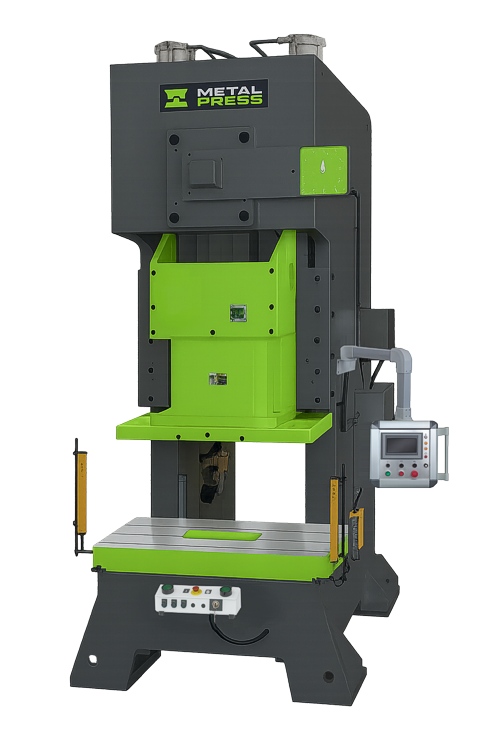
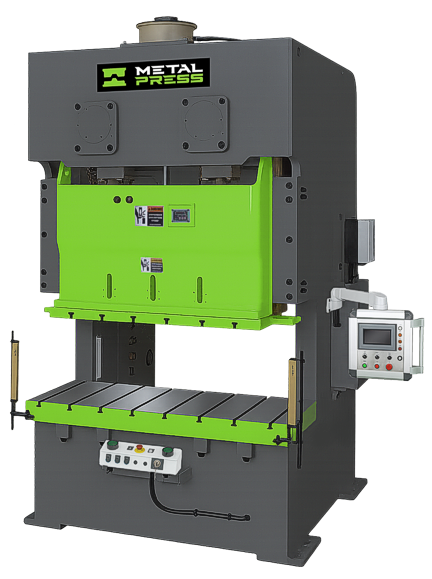
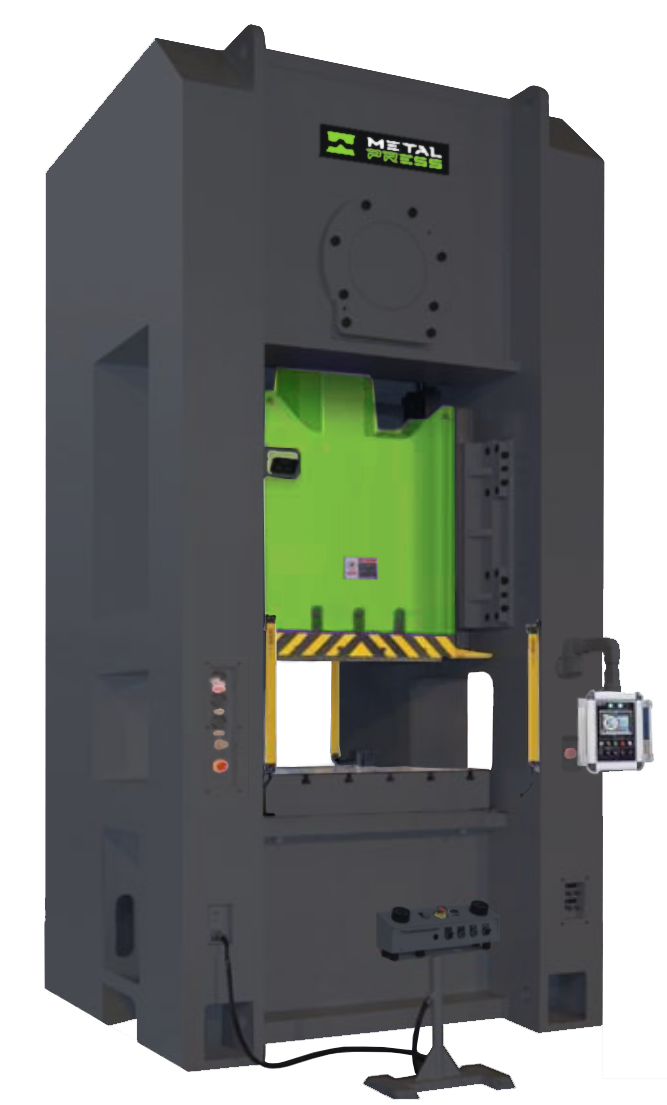
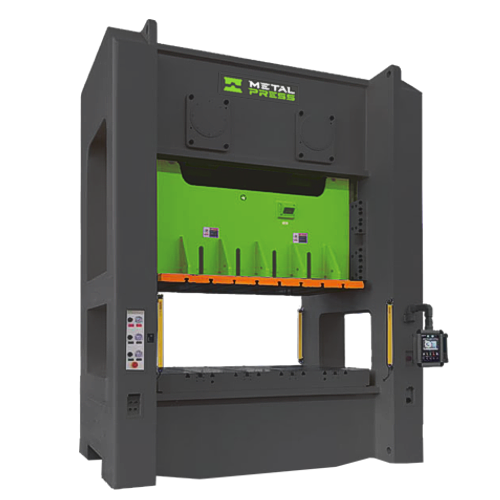
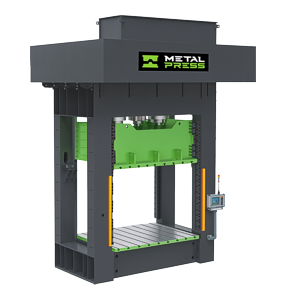
MINTING PRESS
TECHNICAL ADVANTAGE
FOR COINING MANUFACTURERS
Every MetalPress mechanical machine is built to a standard that prioritizes safety and machine longevity:
Hydraulic Overload Protection: Standard on all models to instantly release pressure during a jam, preventing catastrophic frame or die damage.
Advanced Control Systems: Integrated User-Friendly PLCs allow for easy "recipe" storage, ensuring faster setup times for recurring jobs.
Enhanced Drive Systems: Our presses utilize advanced lubrication and high-efficiency motors to reduce noise and energy consumption during continuous operation.
Safety Compliance: Fully compatible with modern light curtains and dual-hand safety controls to ensure a secure working environment.
Looking for a coining press for sale? Contact us 24/7.

RIGHT PRESS.
RIGHT STAGE.
BUILT FOR SAFE COINING OPERATION
Every MetalPress mechanical machine is engineered to a standard that prioritizes operator safety and machine longevity. Coining mfg is our specialty.
Hydraulic Overload Protection
Standard on all models. Instantly releases pressure during a jam to prevent catastrophic frame or die damage.
User-Friendly PLC Control
Integrated recipe storage means faster setup times on recurring jobs. Less downtime between changeovers.
Enhanced Drive Systems
Advanced lubrication and high-efficiency motors reduce noise and energy consumption during continuous operation.
Safety Compliance
Fully compatible with modern light curtains and dual-hand safety controls for a secure working environment.
Choosing the Right Press Configuration & Press Frame
For both a manual coin press or automated coining setup, selecting the correct frame and drive type is critical for minimizing tool wear and maximizing ROI in coining manufacturing. Use the guide below to identify the best fit for your production requirements.
When striking a coin or medallion, the metal must flow into every microscopic crevice of the die. If a press frame "yawns" or flexes under pressure, the resulting coin will have uneven thickness and blurred details.
Closed-Frame Design: Our straight-sided models provide a rigid, four-column environment that eliminates the angular deflection found in open-frame machines.
Uniform Force Distribution: Double-point suspension ensures the slide remains perfectly parallel to the bed, providing an even strike across the entire diameter of the coin making the coin hydraulic press your right choice.
C-FRAME VS.
STRAIGHT SIDED.
C-Frame (Gap Frame) Presses
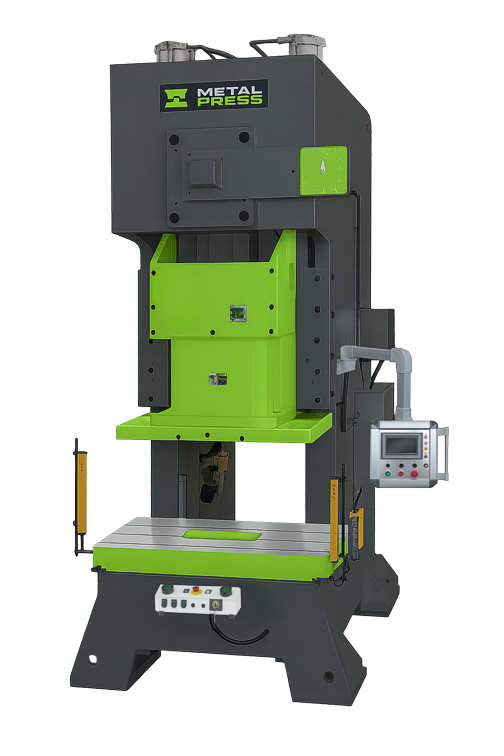
Best for smaller parts and secondary operations. The open-back design allows for three-sided access to the die area, making a mechanical press ideal for manual feeding, manual coining, or quick tool changes.
C-Frame Single Crank: Compact and high-speed; perfect for blanking, punching, and assembly. This type comes in both servo mechanical c-frame single crank press and mechanical c-frame single crank press.
C-Frame Double Crank: Features a wider bed area to accommodate larger or multi-stage dies while maintaining a smaller footprint than a straight-sided press. This type comes in both servo mechanical c-frame single crank press and mechanical c-frame single crank press.
Straight-Sided (H-Frame) Presses
The industry standard for high-precision, high-tonnage applications. The closed-frame construction eliminates the "angular deflection" (frame yawning) common in C-frames. This makes the hydraulic coining press the right solution.
Straight Sided Single Point: This hydraulic coin press provides concentrated force for heavy-duty stamping and precision forming.
Straight Sided Double Point: This coining hydraulic press machine is the ultimate choice for wide, progressive dies where off-center loading is a factor.
| PRESS TYPES – SPECIFICATIONS | |||
| Press Type | Tonnage | Best For | Frame Rigidity |
| C-Frame Single Crank | 25T – 250T | Blanking & Punching | Standard |
| C-Frame Double Crank | 110T – 315T | Large-bed blanking | Moderate |
| Straight-Sided Single Point | 110T – 600T | Industrial Coining | High |
| Straight-Sided Double Point | 160T – 1000T | Mass Medallion Production | Maximum |

Optimizing for Material Dynamics: From Soft Copper to Stainless Steel
Soft & Precious Metals (Gold, Silver, Copper)
These materials are highly malleable but gold coining press and silver coining press require extreme precision to capture fine details without “over-striking.”
The Challenge: Achieving high-relief detail while maintaining consistent coin thickness.
The Solution: Our Straight Sided Servo Press is ideal here. The ability to program a “dwell time” at the bottom of the stroke allows soft metals to fully flow into the die’s deepest crevices, resulting in a mirror-like “Proof” finish.
Standard Industrial Metals (Carbon Steel, Aluminum)
These are the workhorses of high-volume stamping and blanking.
The Challenge: Managing heat buildup and ensuring high-speed repeatability.
The Solution: The C-Frame Single Crank provides the cycle speed necessary for rapid blanking of steel and aluminum discs, while our robust cooling and lubrication systems prevent thermal expansion from affecting part tolerances.
High-Strength & Work-Hardening Alloys (Stainless Steel, Titanium)
Stainless steel is notoriously difficult to coin because it “work-hardens” rapidly as it is compressed.
The Challenge: Excessive springback and high resistance to detail capture.
The Solution: For these applications, frame rigidity is non-negotiable. Our Straight Sided Press Double Point provides the massive, balanced tonnage required to overcome the yield strength of stainless steel. The heavy-duty frame ensures that 100% of the energy is transferred into the material, not lost to frame flex.
| MATERIAL SELECTION GUIDE | ||
| Material | Key Property | Recommended Press Type |
| Sterling Silver / 24K Gold | High Malleability | Servo Press (for detail) |
| Copper / Brass | Low Resistance | C-Frame (for speed) |
| Carbon Steel | Moderate Strength | Straight-Sided (for balance) |
| Stainless Steel | High Work-Hardening | Heavy Straight-Sided (for rigidity) |
| TONNAGE CONSTANT BY MATERIAL FOR COIN BLANKING PRESS | ||
| Material Type | Tonnage Constant (Sc) | Recommended Press Type |
| Aluminum | 40 – 60 Tons/sq. in | C-Frame / Mechanical |
| Copper / Brass | 60 – 100 Tons/sq. in | Mechanical / Servo |
| Sterling Silver | 80 – 120 Tons/sq. in | Servo (Best for detail) |
| 24K Gold | 60 – 90 Tons/sq. in | Hydraulic / Servo |
| Carbon Steel | 120 – 150 Tons/sq. in | Straight-Sided |
| Stainless Steel | 150 – 200+ Tons/sq. in | Straight-Sided Heavy Duty |
Download the technical guide for calculating the coining press tonnage
Coining Tonnage Calculator
Find the right press and tonnage for your coin stamping machine.
Capacity Warning
0 US Ton
Requirement exceeds our standard catalog capacity (880T). Please contact our engineering team for a custom high-capacity solution.
Contact Engineering →Where Industrial Coining Is Used
Dimensional calibration
Sizing finished or near-finished parts to improve thickness, flatness, diameter, edge definition, and dimensional consistency.
Surface and detail formation
Creating lettering, logos, serrations, knurls, textures, seals, electrical contact faces, and functional surface details.
Fasteners and precision hardware
Forming heads, recesses, controlled radii, bearing surfaces, and localized features on components that require repeatable geometry.
Coins, tokens and medallions
Producing sharp relief, uniform thickness, clean rims, detailed text, and consistent finishes in precious and industrial metals.
Coining Press Questions
What is the difference between coining and stamping?
Stamping is a broad family of sheet-metal operations that includes blanking, bending, drawing, and forming. Coining is a high-pressure closed-die operation that intentionally causes localized plastic flow to reproduce fine die detail or calibrate a part.
How is coining different from embossing?
Embossing normally raises or recesses a design in sheet material with less through-thickness compression. Coining uses substantially higher pressure and more complete die filling to produce sharper detail, controlled dimensions, and a denser finished surface.
Which press type is best for coining?
Mechanical presses suit repeatable high-volume work when the force and energy requirements fit the crank-motion curve. Servo-mechanical presses add programmable motion and dwell. Hydraulic presses suit applications requiring full force through a longer stroke or extended pressure hold.
What determines coining press tonnage?
Required force depends on material strength and hardness, projected coined area, percentage of area under load, relief depth, detail, lubrication, die geometry, number of impressions, and the finish or dimensional tolerance required.
READY TO SPEC
YOUR COINING PRESS?
Talk to an engineer who knows the difference between a brochure and a plant floor. Quotes in 24 hours.
Related Technical Guides
Use these resources to compare industrial coining, minting, press configurations, tooling, and force requirements.