
Metal Forming Presses
Choose hydraulic, mechanical, servo-hydraulic or servo-mechanical equipment around your process and tooling.
Select a Metal Forming Press by the Job
MetalPress supplies hydraulic, mechanical, servo-hydraulic and servo-mechanical press machines for manufacturers evaluating stamping, forming, trimming, powder compaction and die-tryout projects. Start with the process, material, part and tooling, then match the drive technology and force rating to the production duty.
This page helps you compare the four equipment categories. Open a category to compare its families, then use the individual product page for model dimensions, configuration questions and an enquiry. The appropriate machine depends on force, motion, energy, throughput, frame layout and the complete production cell.
Explore the Four Press Technologies
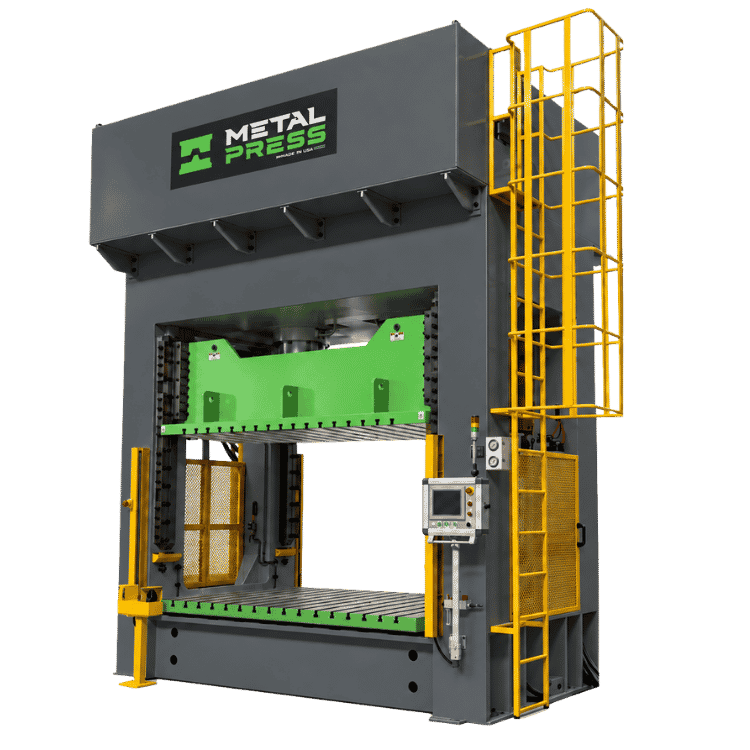
Review servo-controlled hydraulic drive options for a defined force and motion sequence.

Compare servo-driven mechanical presses when the process needs a programmable slide-motion profile.
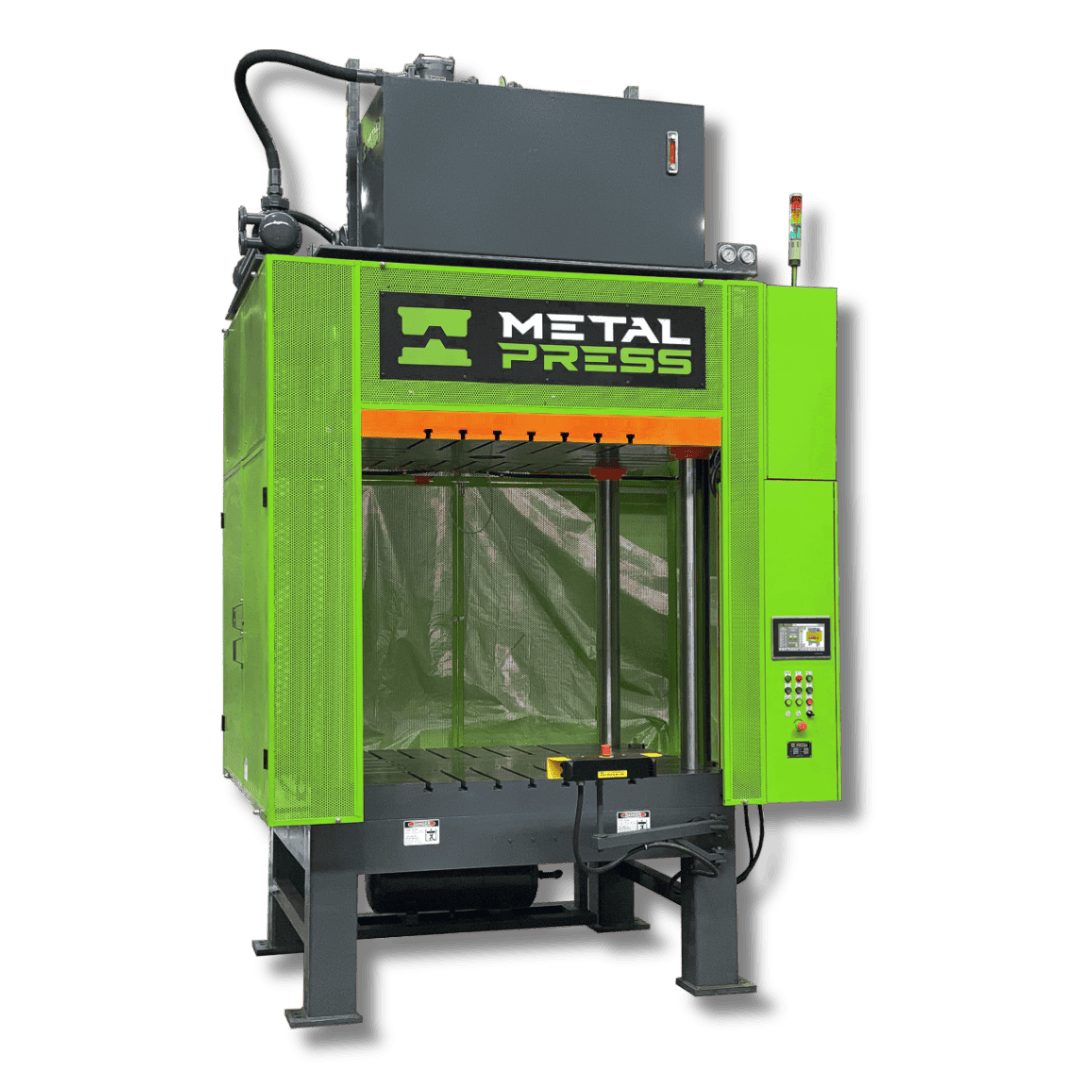
Evaluate hydraulic force, stroke, dwell and tooling access for forming, trimming or die tryout.
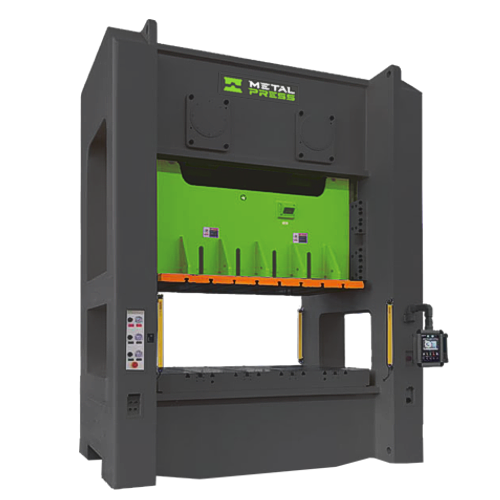
Compare crank-driven C-frame and straight-sided presses for stamping, blanking and forming.
Compare Press Technologies Before Selecting a Model
Match the press technology to your forming process, tooling and production targets. Use the comparison below to evaluate control, throughput and frame requirements.
| Press technology | Control and process needs | Throughput checks | Tooling and frame checks |
|---|---|---|---|
| Hydraulic presses | Hydraulic force and motion. Confirm the available pressure, speed, position and dwell controls. | Check approach, pressing, hold, decompression and return times together with loading and unloading. | Match the force throughout the working stroke, die envelope, platen/bolster support and required access. |
| Mechanical presses | Crank-driven slide motion. Review rated capacity at the working position and available energy. | Evaluate production strokes per minute with the die workload, feed timing, part transfer and scrap handling. | Choose the frame and single- or double-point support from die size, load distribution and access. |
| Servo-hydraulic presses | Servo-controlled hydraulic drive. Specify the required force, position, speed and dwell sequence. | Review the programmed process profile, hydraulic duty and energy use for the intended production cycle. | Select the frame and process-specific arrangement; confirm controlled axes, die/punch motions and ejection where needed. |
| Servo-mechanical presses | Servo-driven mechanical motion. Agree the available stroke profiles and forming-speed requirements. | Evaluate the programmed motion with feeder or transfer synchronization, die restrictions and production duty. | Compare C-frame and straight-sided layouts, connection points, die envelope and allowable loads. |
Go Directly to the Relevant Press Products
Hydraulic presses
Review the hydraulic presses category or go directly to a product:
Mechanical presses
Servo-hydraulic presses
Servo-mechanical presses
Choose by Process, Industry or Frame
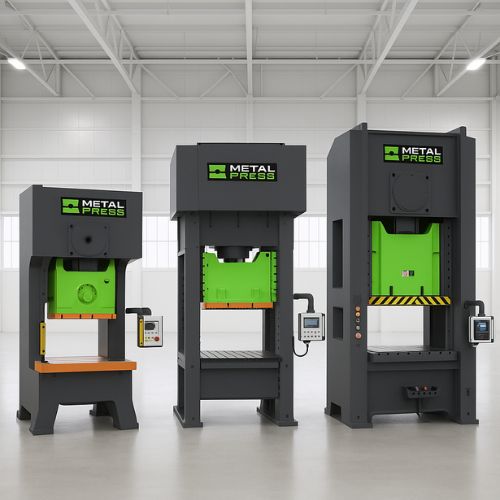
Use the process to define the work, the industry pages for production context, and the frame pages to compare tooling access and support. C-frame, straight-sided and 4-post describe the structure; hydraulic, mechanical and servo describe the drive/control approach. Check which combinations are available in the product range.
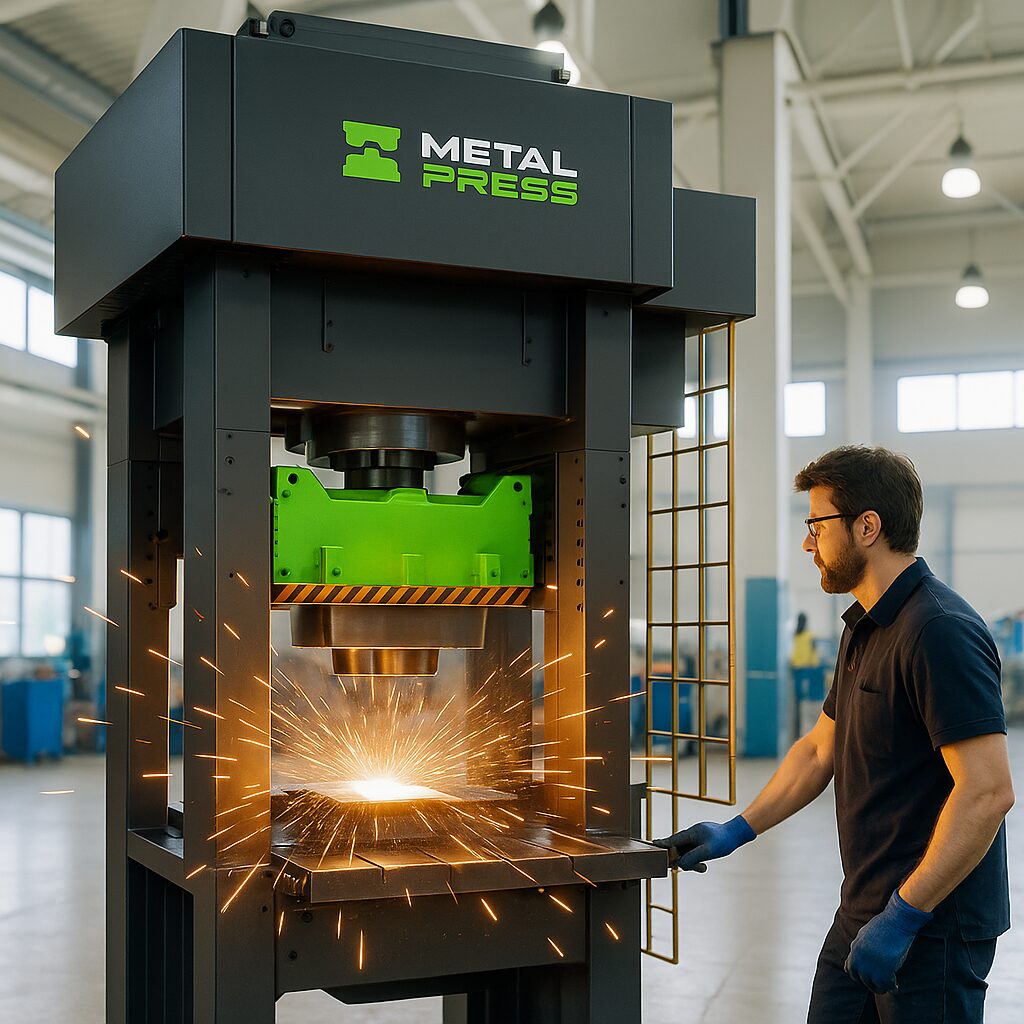
Engineering Resources for Press Selection
Use the metal forming, tooling and press-selection guide to prepare the application information. For a focused technology comparison, review mechanical versus hydraulic presses.
Frame choice should follow the die footprint, load distribution, access, feeding direction and changeover method. Confirm allowable off-center loads, stroke, daylight or die height, working area and required safeguarding for the selected model.
Need Help Choosing an Industrial Press?
Send your part drawing, material grade and thickness or powder information, tooling dimensions and weight, required force or test data, stroke and opening requirements, desired cycle time, production volume, loading method and automation needs.
Include the plant layout, available utilities, die-change requirements, process temperature where relevant, and safeguarding requirements. Share the specifications you have and tell us where you need engineering input. Our press enquiry form is the starting point for a configuration review.