
INDUSTRIAL MOLD TEMPERATURE CONTROLLERS
Hot oil and hot water temperature control systems for injection molding, die casting, rubber, composites, extrusion, and precision manufacturing.
What Is an Industrial Mold Temperature Controller?
Direct answer: an industrial mold temperature controller circulates heated or cooled fluid through a mold, die, platen, or process circuit to hold a stable operating temperature. Better thermal control can shorten warm-up time, reduce temperature variation, improve part consistency, protect tooling, and support repeatable cycle times.
MetalPress supplies hot oil mold temperature controllers and hot water temperature control units for demanding industrial applications. Systems can be evaluated around temperature range, heater capacity, pump pressure and flow, cooling method, number of zones, fluid type, controls, alarms, and connection requirements.
The terms mould temperature controller and mould temperature control unit are common international variants of the same equipment category. Application-specific resources include injection molding temperature control units, die casting temperature control units, extrusion temperature control, and blow molding temperature control units. Product specifications remain on the hot oil and hot water TCU pages.
Hot Oil vs. Hot Water Mold Temperature Controllers
The best heat-transfer fluid depends mainly on operating temperature, heat-transfer demand, pressure limits, maintenance practice, and the process being controlled. Both technologies can be configured as automatic industrial temperature controllers with programmable controls, alarms, heating, cooling, and single- or dual-zone circulation.
Hot Oil Temperature Controllers
Hot oil systems are selected for high-temperature mold and die control where water is outside the desired operating range. Common uses include die casting, high-temperature composite molding, heated platens, specialty plastics, and other processes that require stable thermal control at elevated temperatures.
- Higher operating-temperature capability
- Single- and dual-zone arrangements
- Magnetic-drive pump options for leak reduction
- Programmable heating, cooling, alarms, and safety controls
Hot Water Temperature Controllers
Hot water systems provide efficient heat transfer and fast response for plastic injection molding, rubber processing, extrusion, thermoforming, and other applications within the selected pressure and temperature range.
- High heat-transfer efficiency
- High-flow configurations for complex cooling circuits
- Single- and dual-zone arrangements
- Fast response for heating and cooling changes
Industrial Mold Temperature Control Equipment
Review the two established MetalPress product families below. The detailed product pages remain unchanged and provide model information, technical features, and equipment-specific specifications.


How to Specify a Mold Temperature Controller
An industrial mold temperature controller should be selected from process data, not only from a maximum temperature. These six inputs help a manufacturer or supplier size the system around real production requirements.
Process Temperature
Define normal operating temperature, startup target, maximum allowable temperature, and the required stability through the complete cycle.
Heating & Cooling Load
Document mold mass, starting temperature, material heat input, cycle time, production rate, and the heat that must be added or removed.
Pump Flow & Pressure
Size circulation around channel diameter, circuit length, restrictions, elevation, manifolds, pressure drop, and the flow needed for effective heat transfer.
Fluid & Temperature Range
Choose hot water or heat-transfer oil based on temperature, pressure, heat-transfer performance, safety, maintenance, and compatibility.
Zones & Connections
Confirm single- or dual-zone control, hose and fitting sizes, supply and return locations, manifolds, valves, and machine-interface requirements.
Controls & Safety
Specify PID control, alarms, phase protection, overload protection, pressure relief, leak detection, remote signals, data, and operator access.
Mold Temperature Control Applications
Industrial mold temperature controllers are used wherever controlled heating and cooling influence material flow, curing, solidification, dimensional stability, surface finish, cycle time, and tool life. Explore the established application pages below for process-specific guidance.
Metal, Composite, and Tooling Processes
Custom Industrial Mold Temperature Controllers
Buyers searching for an industrial mold temperature controller manufacturer, supplier, or equipment for sale usually need more than a catalog temperature rating. MetalPress can review the application around the process temperature, fluid, pump duty, heater capacity, cooling-water conditions, mold circuits, zones, controls, electrical requirements, footprint, and machine interface.
Available configurations can include hot oil or hot water service, single- or dual-zone control, high-flow circulation, application-specific pump and heater sizing, programmable control, alarms, safety protection, and integration with injection molding, die casting, extrusion, rubber, composite, or metalworking equipment.
Mold Temperature Controller FAQs
A mold temperature controller circulates heated or cooled water or heat-transfer oil through a mold, die, platen, or process circuit. Its purpose is to bring the tool to operating temperature and hold it within a controlled range during production.
Choose from the required operating temperature, pressure, heat-transfer performance, response time, safety, fluid compatibility, and maintenance practice. Water is efficient within its pressure and temperature range; oil is typically selected for higher-temperature service.
Sizing should consider mold mass, starting and operating temperatures, material heat input, cycle time, heater load, cooling load, pump flow, pressure drop, channel design, fluid, hose size, zones, utilities, and the production environment.
Yes. Single- and dual-zone arrangements are available, but each circuit should be evaluated for its own temperature, flow, pressure drop, and control requirements.
Common applications include plastic injection molding, die casting, rubber processing, extrusion, thermoforming, composite molding, heated platens, and other industrial processes that require stable tool or fluid temperature.
Provide the process and mold type, target and maximum temperature, fluid, mold mass, cycle time, heat load if known, channel and hose details, required flow and pressure, number of zones, electrical service, cooling-water conditions, controls, alarms, and installation constraints.
Expert Advice
Avoid selecting a mold temperature controller only from heater kilowatts or maximum temperature. A unit can reach the target temperature and still perform poorly if pump flow, pressure drop, cooling capacity, channel condition, fluid choice, or zone arrangement is wrong. Start with the thermal load and complete circulation circuit, then match controls and safety features to the operating environment.
RELATED MOLD TEMPERATURE CONTROL GUIDES
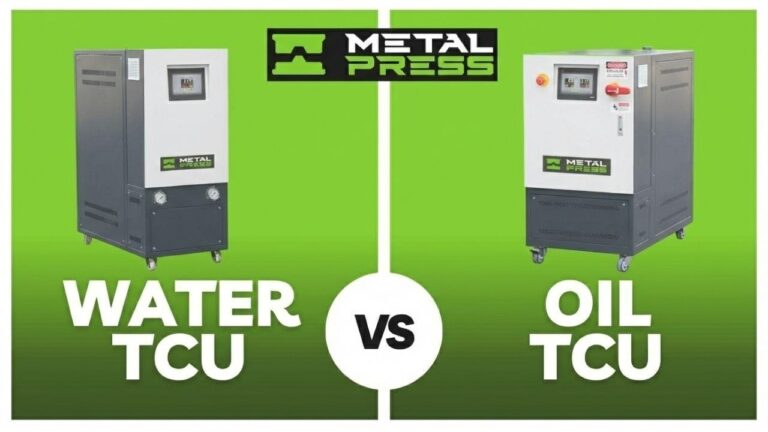
Oil vs. Water TCUs: Which Is Right for Your Process?
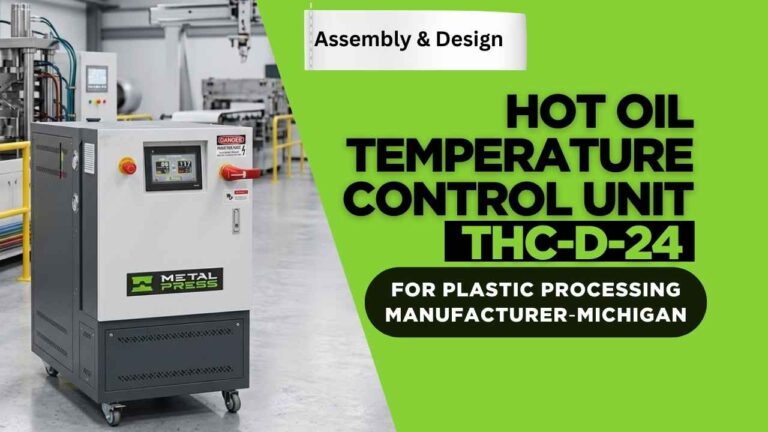
THC-D-24 Hot Oil Temperature Control Unit Design & Assembly Project
Read the rocess of ordering, design and assembly of a THC-D-24 hot oil control temperature unit for a plastic manufacturer in Michigan, USA
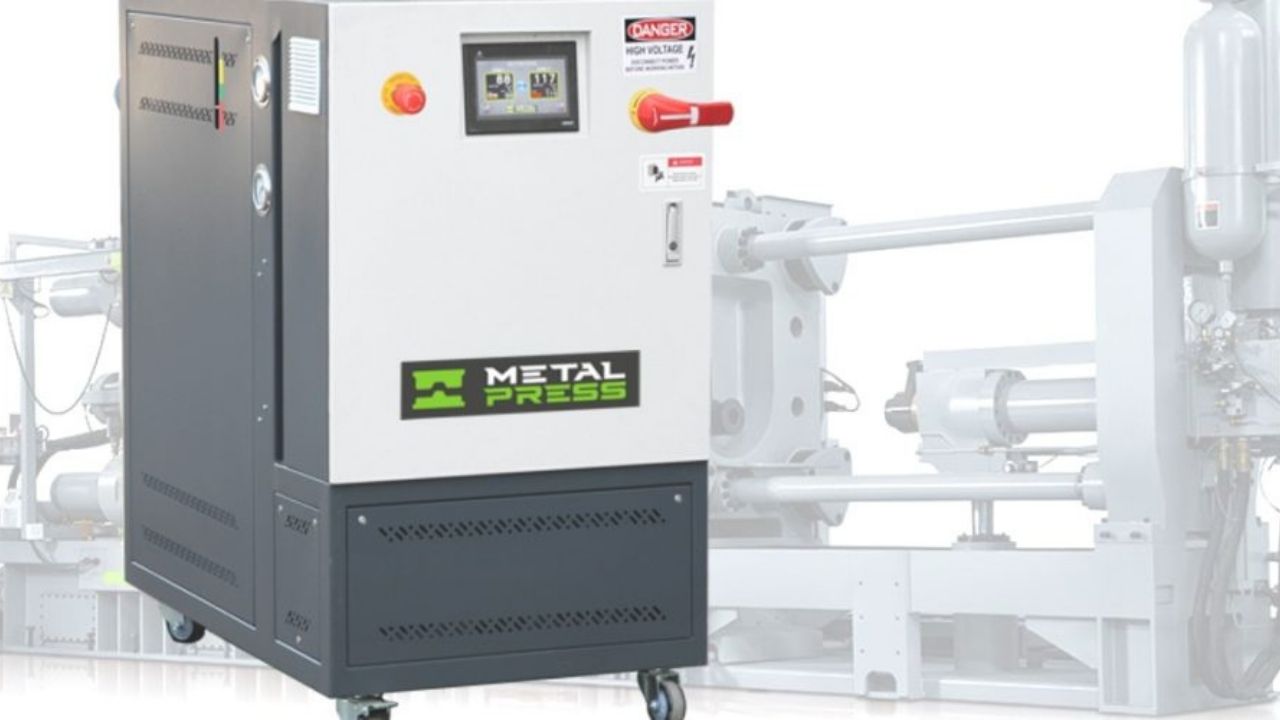
Importance of temperature control unit sizing
To increase the stability and efficiency of the die casting system, the characteristics and sizing of the temperature control unit is of vital importance.