
Deep Drawing Press
Top Metal Forming Equipment, Deep Draw Stamping, And Draw Forming
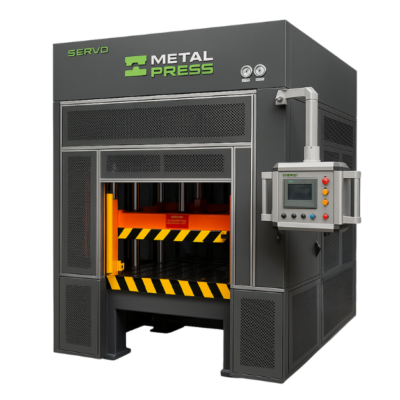
Deep Drawing Press, Forming Press, Bending Press
Precision Engineering for High-Detail Metalforming
Metal forming and metal deep draw demand more than just raw power; they require synchronized force and variable stroke speed. Whether you are producing deep-drawn canisters, structural automotive brackets, or precision-bent industrial housings, your press must manage the material's flow to prevent thinning and fractures.
For an overview of related forming processes and industry-specific solutions, explore our Press Applications resource hub.
At MetalPress Machinery, we offer specialized hydraulic deep drawing press systems and servo-hydraulic solutions engineered to handle the high-torque demands of multi-stage metal and sheet forming.
THREE METAL PRESS FORMING OPTIONS
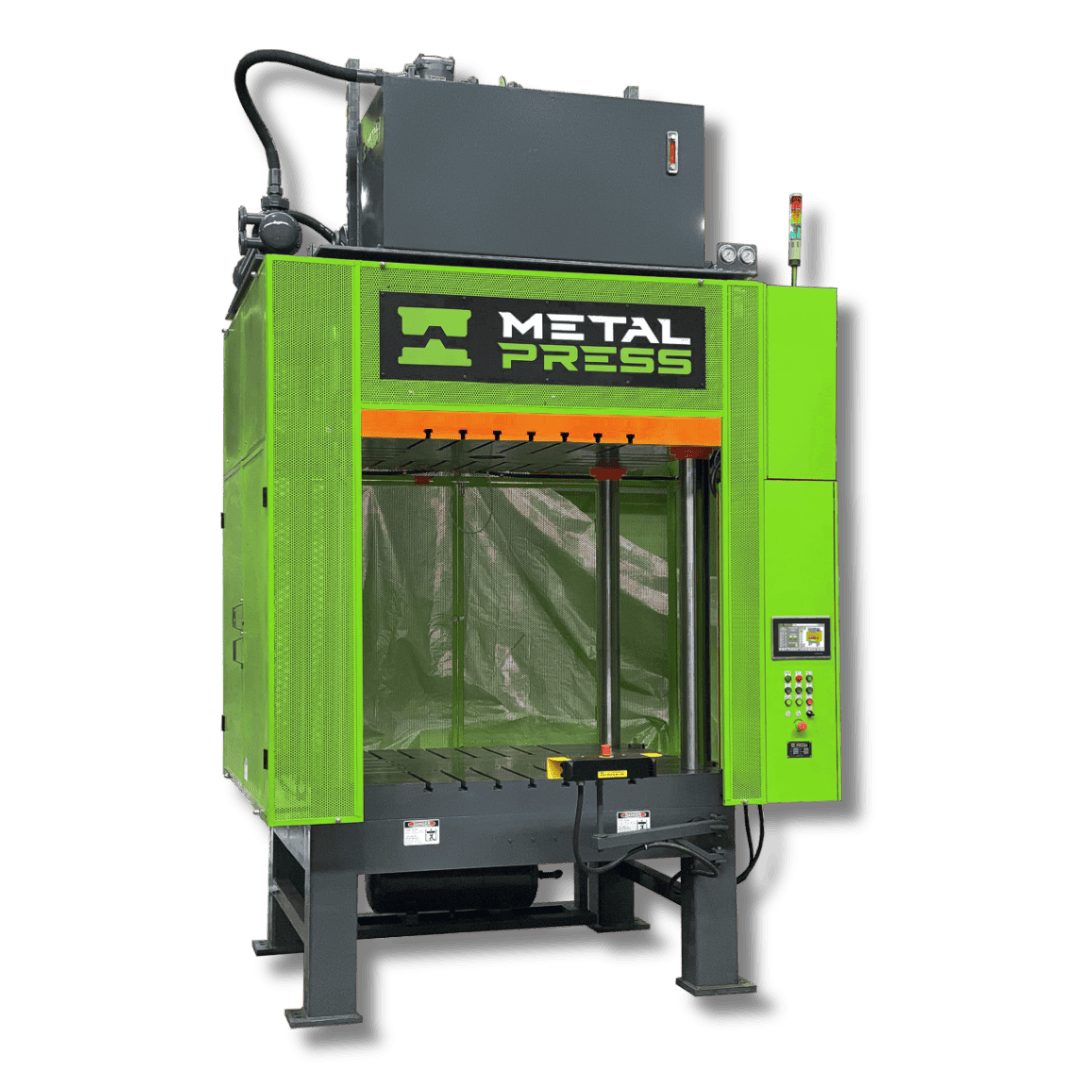
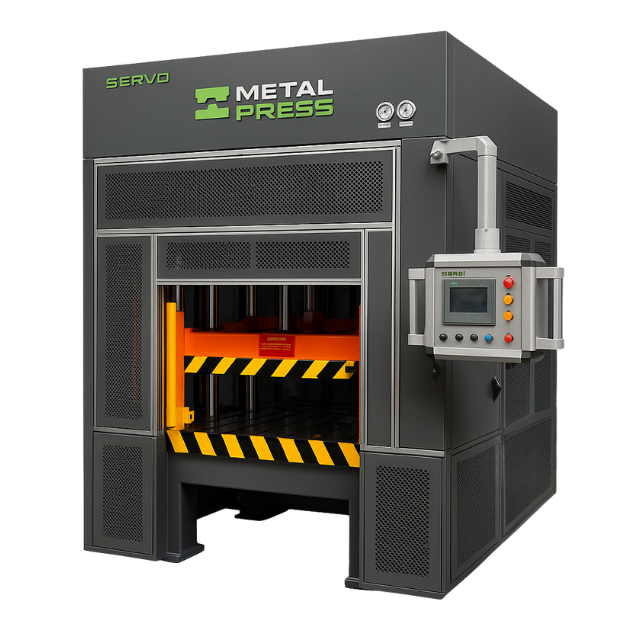
We offer different type of deep drawing machines among which the most versatile press types for forming operation and deep drawing operation are:
MINTING PRESS
TECHNICAL ADVANTAGE
FOR DEEP DRAWING MANUFACTURERS
Every MetalPress mechanical machine is built to a standard that prioritizes safety and machine longevity:
Hydraulic Overload Protection: Standard on all models to instantly release pressure during a jam, preventing catastrophic frame or die damage.
Advanced Control Systems: Integrated User-Friendly PLCs allow for easy "recipe" storage, ensuring faster setup times for recurring jobs.
Enhanced Drive Systems: Our presses utilize advanced lubrication and high-efficiency motors to reduce noise and energy consumption during continuous operation.
Safety Compliance: Fully compatible with modern light curtains and dual-hand safety controls to ensure a secure working environment.
Looking for a forming press for sale? Contact us 24/7.
RIGHT PRESS.
RIGHT STAGE.
BUILT FOR SAFE METAL BENDING
Every MetalPress mechanical machine is engineered to a standard that prioritizes operator safety and machine longevity.
Hydraulic Overload Protection
Standard on all models. Instantly releases pressure during a jam to prevent catastrophic frame or die damage.
User-Friendly PLC Control
Integrated recipe storage means faster setup times on recurring jobs. Less downtime between changeovers.
Enhanced Drive Systems
Advanced lubrication and high-efficiency motors reduce noise and energy consumption during continuous operation.
Safety Compliance
Fully compatible with modern light curtains and dual-hand safety controls for a secure working environment.
Choosing the Right Press Configuration & Press Frame
The Ultimate Drawing Machine: Straight-Sided Servo Press
The Straight Sided Servo Press is our most rigid platform. Its closed-frame construction eliminates "frame yawn," making it the gold standard for high-precision deep drawing and heavy-duty forming where zero deflection is mandatory.
Maximum Versatility: 4-Post Servo Press
The 4-Post Servo Press offers four-sided access for easy die changes and automation integration. The Servo Hydraulic drive provides energy efficiency and programmable "dwell" times, which are essential for materials that require a pause to "set" their shape.
Reliable Heavy-Duty Forming: 4-Post Hydraulic Press
For standard forming and heavy bending operations, the 4-Post Hydraulic Press provides a cost-effective, high-tonnage solution. Its robust design is ideal for simple drawing tasks and large-scale bending where the extreme programmable control of a servo is not required.
TECHNICA ADVANTAGES
FORMING SOLUTIONS
To achieve high-precision results in Deep Drawing and Bending, your press must manage the physics of metal flow. Our machinery is engineered to solve the three most common challenges in the forming industry:
1. Eliminating "Frame Yawn"
In heavy-duty forming, the force of the press can cause the frame to flex (yawn), leading to uneven parts and premature die wear.
Our Straight-Sided Servo Press features a closed-box frame that provides the highest rigidity in the industry, ensuring perfectly parallel strikes every time.
2. Variable Velocity for Complex Draws
Deep drawing requires a delicate balance of speed. If the punch hits the material too fast, the metal tears; if it moves too slow, production stalls.
Using our Servo-Hydraulic technology, you can program the press to decelerate upon contact, allowing the metal to enter a "plastic flow" state for a flawless draw without fractures.
3. Integrated Blank Holder Control
Wrinkling is the enemy of deep drawing. Our 4-Post models are designed to integrate seamlessly with advanced blank holder cushions. This allows for precise pressure adjustment across the flange of the part, preventing folds and ensuring uniform wall thickness.


Material Compatibility Guide For Choosing Deep Drawing Press
Different alloys require different forming strategies. Our engineering team has optimized these presses for:
Aluminum Deep Drawing: High-speed forming with low-friction coatings.
Stainless Steel Deep Drawing: High-tonnage drawing requiring extreme frame rigidity.
Mild Steel: High-volume progressive forming and bending.
Exotic Alloys: Precision-controlled servo profiles for aerospace-grade materials.
| TENSILE STRENGTH & PRESS SELECTION | ||
| Material Type | Tensile Strength (PSI) | Recommended Press Type |
| Aluminum (Soft) | 35,000 | Hydraulic / 4-Post |
| Aluminum (Half-Hard) | 45,000 | Hydraulic / Servo |
| Low Carbon Steel | 55,000 | Straight-Sided Servo |
| Stainless Steel (304) | 75,000 | Straight-Sided Heavy Duty |
| Stainless Steel (316) | 95,000 | Straight-Sided (High Rigidity) |
Download the technical guide: The Fundamentals of Deep Drawing
Bending Force Calculator
Calculate required tonnage and find the matching press for your application.
READY TO SPEC YOUR
COINING PRESS?
Talk to an engineer who knows the difference between a brochure and a plant floor. Quotes in 24 hours.
Deep Drawing Presses for Controlled Material Flow
Deep drawing transforms a flat blank into a hollow or contoured part by drawing material into a die cavity. The press must provide enough force and stroke for the operation while controlling ram speed, blank-holder pressure and material flow. That control helps reduce wrinkling, tearing, excessive thinning and dimensional variation.
A successful system is selected around the part and process, not tonnage alone. Material properties, blank size, draw depth, tooling, cushion requirements, stroke, daylight, production rate and automation all influence the correct press configuration.
Which Press Configuration Fits the Draw?
The three press families above support different combinations of access, control and frame rigidity. Final selection should be confirmed using the actual part, material and die data.
| Press configuration | Primary advantage | Typical fit |
|---|---|---|
| 4-Post Hydraulic Press | Full force through the working stroke, adjustable speed and flexible four-side access | General deep drawing, forming and secondary operations with varied tooling |
| 4-Post Servo-Hydraulic Press | Programmable motion and pressure profiles with accessible tooling and automation interfaces | Flexible production that benefits from repeatable recipes, controlled draw speed and process data |
| Straight-Sided Servo-Hydraulic Press | Rigid closed-frame construction with programmable ram control | Demanding draws, larger tooling and processes where rigidity and repeatability are priorities |
Deep Drawing Press Selection Factors
Part geometry
Define blank diameter, finished depth, corner radii, wall profile, flange dimensions and the number of anticipated draw stages.
Material behavior
Specify alloy, temper, thickness, grain direction and formability data. Material variation can change force, flow and defect risk.
Force and stages
Account for drawing, blank holding, redraw, restrike, piercing and trimming loads rather than treating the job as one simple tonnage value.
Stroke and daylight
Allow enough travel and opening for the die, part depth, loading, ejection, transfer equipment and safe tool changes.
Blank holder and cushion
Select the force range, travel and control needed to restrain the flange without preventing material from feeding into the die.
Speed and controls
Define approach, drawing, dwell, decompression and return profiles plus recipes, monitoring, automation and quality-data needs.
Draw Ratio and Multi-Stage Planning
The drawing ratio – blank diameter divided by punch diameter – is a useful starting indicator, but it is not a universal pass/fail rule. Practical limits change with material properties, thickness, tooling radii, lubrication and blank-holder conditions.
Deep or complex parts may require multiple draws, redraws, annealing, restriking or later trimming. Planning those stages early prevents an undersized stroke, daylight or cushion system.
Blank-Holder and Cushion Control
Blank-holder force must be high enough to limit flange wrinkles but low enough to let material flow into the die. Too little restraint encourages buckling; too much can increase thinning or tearing.
A hydraulic cushion, programmable cushion or segmented control arrangement can be evaluated when the part needs controlled counterforce, ejection or different pressure zones.
Common Deep Drawing Defects and Corrective Actions
Defects often reflect a combination of material, tooling, lubrication and press settings. The table provides investigation starting points; final corrections should be validated through tooling and process trials.
| Symptom | Possible contributors | Items to evaluate |
|---|---|---|
| Flange or wall wrinkling | Insufficient restraint, blank shape, die clearance or material flow imbalance | Blank-holder pressure, draw beads, blank geometry, lubrication and tooling alignment |
| Tearing or excessive thinning | Excess restraint, aggressive reduction, tight radii, speed or friction | Draw stages, radii, holder force, lubricant, material condition and ram profile |
| Earing | Directional material properties and blank orientation | Material anisotropy, rolling direction, blank shape and trimming allowance |
| Scratches or galling | Surface condition, debris, insufficient lubrication or tool finish | Cleaning, lubricant, die material or coating, surface finish and clearance |
| Dimensional variation | Material variation, springback, temperature, alignment or inconsistent process settings | Recipes, position and pressure data, material controls, restrike and tooling condition |
Materials and Typical Deep-Drawn Parts
Deep drawing is used with low-carbon steel, stainless steel, aluminum and other formable alloys. Each grade and temper behaves differently, so press selection and process settings should be based on supplier data and forming trials rather than a generic material-strength table.
- Cups, cans, shells and cylindrical housings
- Automotive structural and enclosure components
- Appliance tubs, panels and housings
- Electrical and electronic enclosures
- Medical and precision formed components
- Aerospace, energy and industrial parts
Industries Using Deep Drawing and Forming Presses
Explore industry pages for additional context on parts, production goals and related press configurations.
Related Press Project Experience
These completed-machine updates show how press frames, controls, testing and commissioning are handled for production equipment.
Information Needed for a Deep Drawing Press Quote
Provide the part drawing, material grade and thickness, blank dimensions, finished depth, die dimensions, required drawing and blank-holder force, stroke, daylight, production rate, number of stages and any cushion, ejection, transfer, automation or safety requirements.
Frequently Asked Questions About Deep Drawing Presses
What is a deep drawing press?
A deep drawing press forms a flat sheet-metal blank into a hollow or contoured part by drawing material into a die. The machine controls force, stroke, speed and often blank-holder or cushion pressure.
Should I use a hydraulic or servo-hydraulic press for deep drawing?
Both can supply controlled force through the stroke. A traditional hydraulic press is versatile and cost-effective, while a servo-hydraulic press is useful when the process benefits from precise programmable motion, repeatable recipes, on-demand energy use or production data.
What causes wrinkling during deep drawing?
Wrinkling can be influenced by insufficient blank restraint, blank shape, die clearance, draw-bead design, lubrication, alignment and material behavior. The complete tooling and process should be reviewed before changing one setting.
Why is blank-holder force important?
Blank-holder force controls flange material as it feeds into the die. Too little restraint can allow wrinkles, while excessive force can restrict flow and contribute to thinning or tearing.
When are multiple draws required?
Multiple stages may be required when the finished depth or diameter reduction cannot be achieved reliably in one operation. Material formability, tooling radii, lubrication, wall-thickness requirements and part geometry all affect the stage plan.
What should I send with a deep drawing press RFQ?
Send part and blank drawings, material specifications, thickness, tooling dimensions, process stages, force estimates, stroke, daylight, production target and any cushion, ejector, transfer, automation or safety needs.
Related Technical Guides
For additional engineering context, review these guides on deep drawing, metal forming, and production planning.