
MOLDING PRESS
Precision pressure, heated platen control, and repeatable molding performance for plastic, rubber, composite, and industrial compression molding applications.

Industrial molding press
TIER 1 MOLDING PRESS MANUFACTURER
Precision control for compression molding, heated platen work, and repeatable molded part production
Molding is the process of shaping a material inside a mold cavity using controlled force, temperature, dwell time, and stroke behavior. Unlike cutting or simple forming operations, molding depends on stable pressure, accurate mold closure, consistent heat transfer, and repeatable cycle control to produce parts with the right geometry, density, surface quality, and dimensional consistency. Depending on the application, molding may involve plastic parts, rubber parts, composite panels, thermoset components, elastomer products, housings, covers, seals, pads, insulation parts, and other molded industrial components.
For an overview of related forming processes and industry-specific solutions, explore our Press Applications resource hub.
At MetalPress Machinery, our molding press solutions are built for manufacturers that need repeatable pressure, reliable platen performance, controlled mold closure, and long-term tooling stability in demanding production environments. Whether the job involves compression molding, plastic molding, rubber molding, composite molding, thermoset molding, elastomer molding, or rubber curing, our lineup includes the right mix of hydraulic molding presses, servo molding presses, heated platen presses, mold tryout presses, and mold & trim press solutions to match the material, mold design, and production requirements of the application.
Choosing the Right Press Configuration & Press Frame
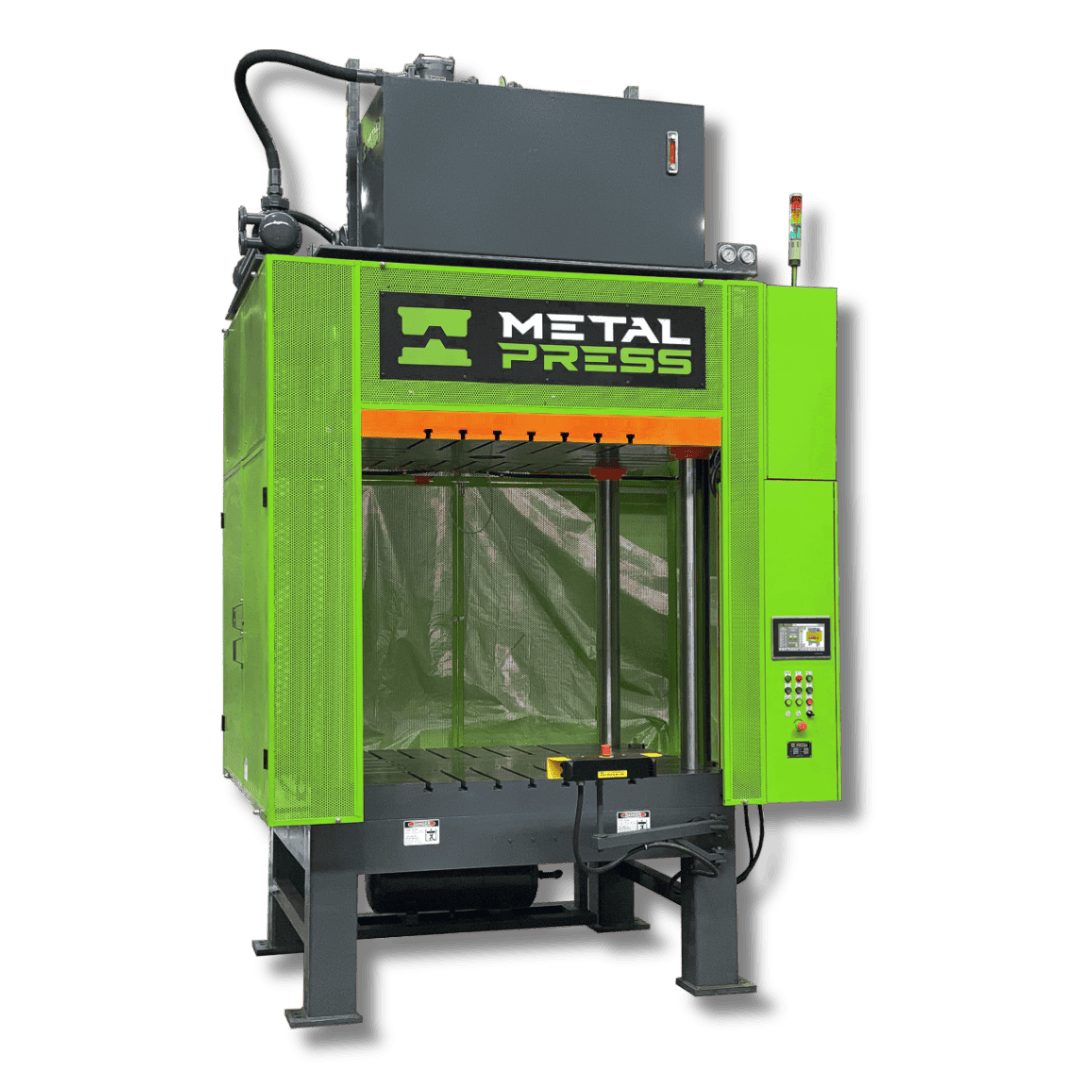
4 POST PRESS
4 post hydraulic presses are widely used in powder metallurgy and ceramics manufacturing for producing compacted metal parts, ceramic components, structural pressed parts, and other applications that require dependable high-force pressing. They are well suited for powder-based manufacturing processes where stable force delivery, full tonnage throughout the stroke, and reliable pressure control help manage compaction pressure, dwell time, and density requirements. In this sector, these presses are commonly used for powder metallurgy pressing, ceramic powder pressing, green compact formation, controlled density distribution, and other compaction-related processes where steady force and dependable performance make them a strong choice for heavier-duty powder and ceramic production.
4 POST SERVO PRESS
4 post servo presses are widely used in powder metallurgy and ceramics manufacturing for producing larger compacted parts, multi-step formed components, ceramic shapes, powder metal parts, and other components that require more control over force, speed, and position throughout the stroke. They are especially well suited for applications where programmable motion and repeatable performance can improve fill consistency, compaction behavior, and part geometry. In powder metallurgy and ceramics production, these presses are commonly used for powder pressing, precision compaction, ceramic pressing, restriking, and other controlled processes where stroke programmability and repeatable motion support higher-value component production.
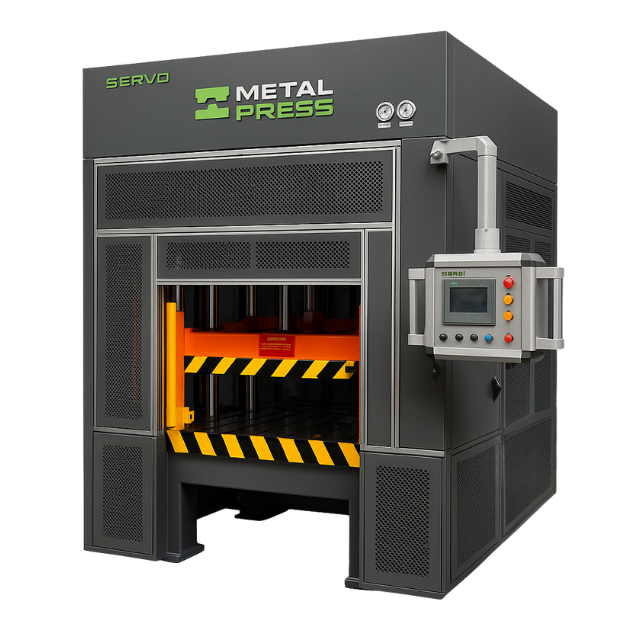
STRAIGHT SIDED SERVO PRESS
Straight sided servo hydraulic presses are widely used in molding applications that require both rigid frame support and more advanced hydraulic control. They are especially useful for larger composite panels, structural molded parts, reinforced thermoset components, rubber and plastic products with more demanding tooling, and other applications where press rigidity and controlled force delivery both matter. In industrial molding, these presses are commonly used for composite molding press applications, thermoset molding press work, structural panel molding, and other demanding production processes where consistent pressure, programmable stroke control, and rigid frame performance support better part quality and tooling life.
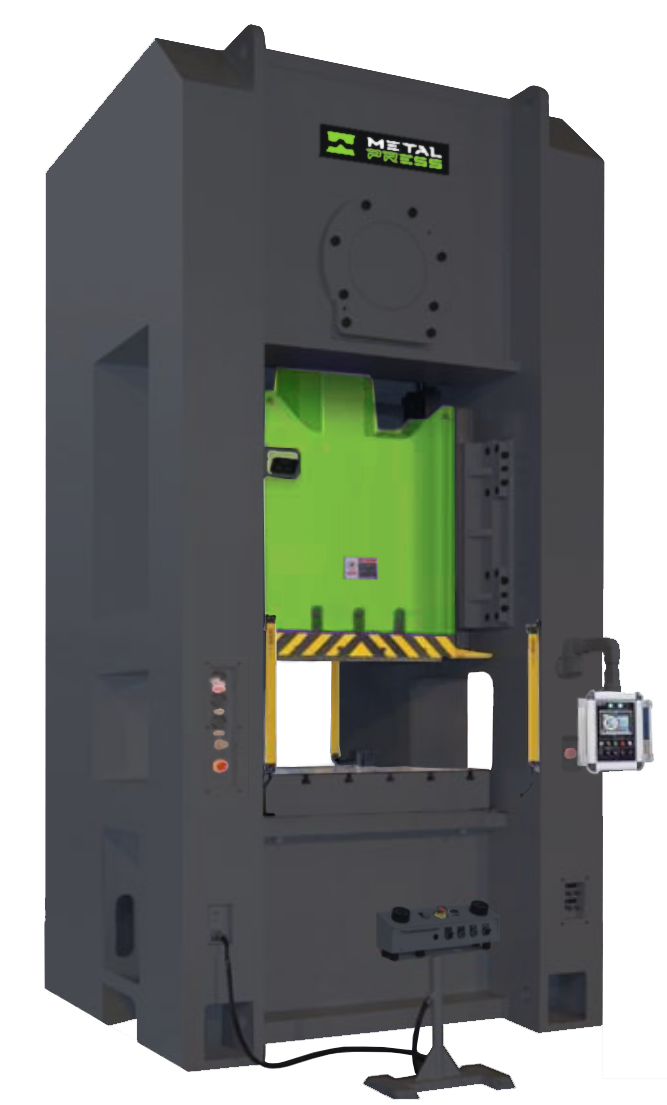
TRIM PRESS
Trim presses are widely used after molding operations for removing flash, trimming excess material, punching openings, and finishing molded parts to final geometry. They are well suited for molded plastic parts, rubber parts, composite panels, housings, covers, and formed components that require accurate post-molding finishing. In molding production, these presses are commonly used for mold & trim press applications, flash removal, cut-off, punch-out, and secondary finishing operations where clean edges, repeatable trimming, and consistent part presentation are important to downstream assembly and final product quality.
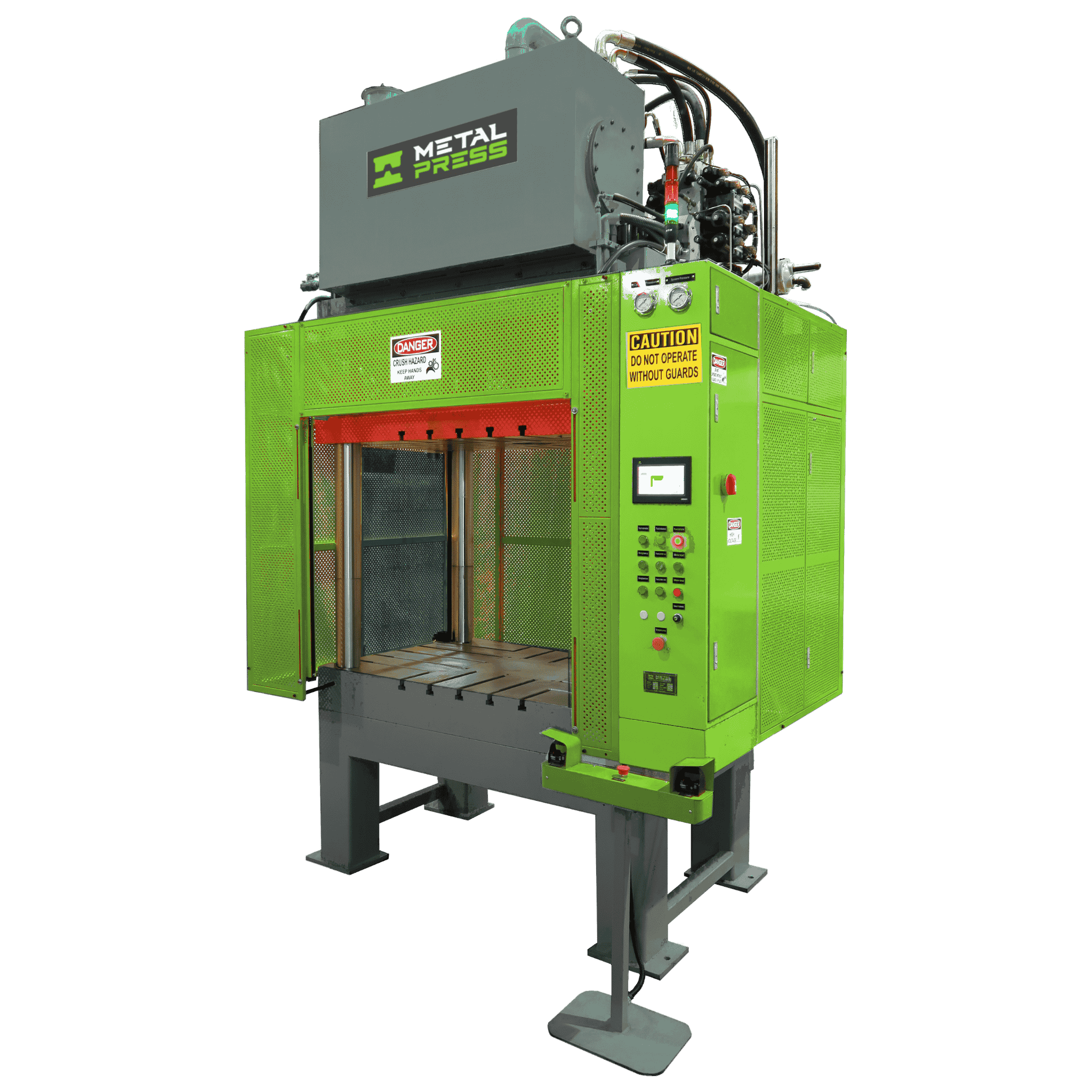
SPOTTING PRESS / MOLD TRYOUT PRESS
Spotting presses and mold tryout presses are widely used in molding applications for validating molds, checking mold contact, confirming shut height, correcting mismatch issues, and improving mold accuracy before production begins. They are especially valuable in plastic, rubber, and composite molding operations where mold quality directly affects flash control, part consistency, and final molded performance. In molding environments, these presses are commonly used for mold tryout, mold validation, tool fit checking, setup verification, and other pre-production processes where accurate contact checking and safer mold handling help reduce tooling problems and support more stable molding results.
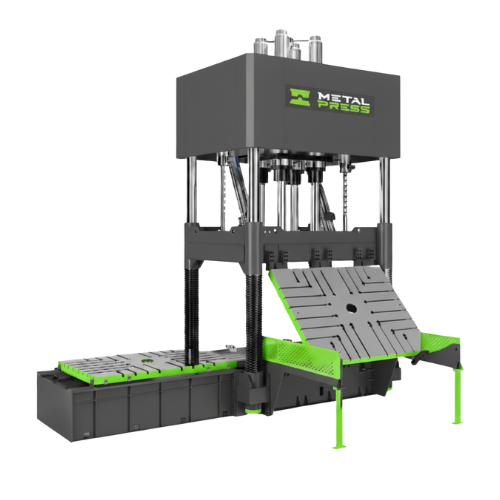
Spotting press / mold tryout servo press
Spotting press and mold tryout servo press systems are widely used when mold validation requires more controlled motion, smoother setup, and repeatable spotting performance. They are especially well suited for more demanding molding programs, multi-cavity molds, larger composite tools, and applications where programmable movement can improve setup precision and reduce the risk of tooling damage during validation. In molding operations, these presses are commonly used for mold tryout press applications, mold validation, tooling correction, and other precision setup processes where programmable slide behavior and repeatable motion help improve mold quality before production begins.
MINTING PRESS
TECHNICAL ADVANTAGE
FOR MOLDING MANUFACTURERS
Every MetalPress molding machine is selected to support safe operation, tooling protection, and long-term molding performance in demanding production environments.
Stable pressure through the cycle: Molding depends on consistent pressure from mold closure through dwell and release. Press platforms with stable force delivery help improve part density, surface finish, geometry, and repeatability.
Programmable motion control: Servo-driven molding presses provide better control over speed, position, and force throughout the cycle. That added control helps improve mold closure consistency, reduce part variation, and support better results on more sensitive molded parts.
Full tonnage throughout the stroke: Hydraulic molding presses are especially valuable when the process needs dependable pressure over a longer portion of the stroke, particularly in compression molding, rubber curing, composite molding, and heated platen applications.
Rigid frame stability: Straight sided and 4-post press structures help maintain platen alignment and tooling consistency under load, which is especially important when molding larger parts or using demanding tooling.
User-friendly PLC control: Integrated controls support recipe storage, repeatable setups, and faster changeovers for recurring molding jobs.
Tooling protection and process consistency: Better control over approach speed, mold closure speed, pressure build-up, and dwell helps reduce tooling shock and supports more consistent molded results.
Support for heated platen applications: Molding operations often require precise coordination of heat, pressure, and time. Press systems suited to heated platens help maintain stable molding conditions across production cycles.
Safety compliance: Modern guarding and operator-protection features help support safe molding operation in industrial environments.

Hydraulic Overload Protection
Standard on all models. Instantly releases pressure during a jam to prevent catastrophic frame or die damage.
User-Friendly PLC Control
Integrated recipe storage means faster setup times on recurring jobs. Less downtime between changeovers.
Enhanced Drive Systems
Advanced lubrication and high-efficiency motors reduce noise and energy consumption during continuous operation.
Safety Compliance
Fully compatible with modern light curtains and dual-hand safety controls for a secure working environment.
SELECTING THE RIGHT
MOLDING PRESS
In molding, you are not just pressing material into shape. You are controlling how the material flows, fills, compresses, cures, and stabilizes inside the mold. That means the right molding press depends on force delivery, platen alignment, stroke control, mold design, material behavior, heating requirements, and the level of repeatability required in the finished part.
- For general compression molding and heated platen work: 4 post hydraulic presses are often the best choice because they offer large platens, stable pressure, full tonnage through the stroke, and strong support for dwell-based molding cycles.
- For molding jobs that need more programmable cycle control: 4 post servo presses are a strong choice because they provide control over ram speed, position, and force. That makes them especially valuable when part quality depends on smoother mold closure and tighter cycle repeatability.
- For larger tools and more rigid support: Straight sided servo hydraulic presses are a strong option when the molding application uses larger molds, higher tonnage, reinforced materials, or more demanding composite and thermoset tooling.
- For post-molding finishing: Trim presses are the practical choice when molded parts need flash removal, punch-outs, or cut-off operations to achieve final geometry and cleaner presentation.
- For mold validation before production: Spotting presses and mold tryout presses are essential when the application requires accurate mold contact checking, shut height verification, and setup correction before running production parts.
Selecting the right molding presses
Hydraulic molding presses
For compression molding, rubber curing, and heated platen applications, hydraulic presses are often the strongest platform because they provide stable force, full tonnage throughout the stroke, and dependable pressure control.
Servo molding presses
Servo presses are ideal when the job needs programmable mold closure, improved repeatability, reduced variation, and tighter control over the molding cycle.
Straight sided servo hydraulic molding presses
For larger molds, reinforced materials, and more demanding composite or structural molding work, straight sided servo hydraulic presses offer a strong combination of rigidity and controlled force delivery.
Trim presses for molded parts
When the molded component must be trimmed to final shape after pressing, a trim press becomes a critical part of the production workflow.
Mold tryout presses
When mold quality and setup accuracy determine final part performance, spotting presses and mold tryout presses become essential to stable production.
MATERIAL ENGINEERING FOR MATERIAL FLOW AND MOLDING
In molding, the press must control how the material flows into the cavity, compresses under pressure, responds to heat, and stabilizes during dwell. The success of the operation depends on how well the machine manages pressure, temperature coordination, stroke behavior, mold closure, and tooling alignment.
Thermoset materials
- Characteristics: Heat-reactive materials that cure under pressure and temperature, often used where rigidity and thermal stability are important.
- Molding note: Thermosets usually benefit from stable pressure, controlled dwell, and reliable heated platen performance to achieve proper fill and cure.
- Recommended press: 4 post hydraulic press or straight sided servo hydraulic press.
Thermoplastics in compression molding applications
- Characteristics: Materials that soften with heat and can be shaped under pressure, depending on process and part design.
- Molding note: Thermoplastics can benefit from controlled closure speed and repeatable pressure application to improve consistency and reduce part variation.
- Recommended press: 4 post servo press or 4 post hydraulic press.
Rubber and elastomers
- Characteristics: Flexible materials that often require heat, compression, and curing control to achieve the desired shape and final properties.
- Molding note: Rubber molding usually benefits from even pressure, stable dwell, and controlled cycle timing to improve final part consistency and flash control.
- Recommended press: 4 post hydraulic press or 4 post servo press.
Composite molding materials
- Characteristics: Reinforced materials used for structural parts, panels, and molded products where strength and weight balance matter.
- Molding note: Composites often require rigid mold support, stable force delivery, and controlled cycle behavior to improve part geometry and surface quality.
- Recommended press: Straight sided servo hydraulic press or 4 post hydraulic press.
| MOLDING PROPERTIES BY MATERIAL GROUP | |||
| Material Group | Typical Molding Behavior | Process Sensitivity | Recommended Press Direction |
| Thermosets | Cure under heat and pressure | High | Hydraulic or Servo Hydraulic |
| Thermoplastics | Heat-softened forming behavior | Medium | Servo or Hydraulic |
| Rubber and Elastomers | Compression and curing sensitive | High | Hydraulic or Servo |
| Composites | Structural, tooling-sensitive | High | Straight Sided Servo Hydraulic or Hydraulic |
Molding Press Selector
Capacity Threshold Reached
The calculated force requirement exceeds 2,500 Tons. Contact our specialist engineering team for custom high-tonnage molding solutions.
Consult an Engineer →Compression Molding Press Selection Guide for Plastics, Rubber and Composites
A compression molding press controls how material fills, compresses, cures and stabilizes inside a heated or temperature-controlled mold. Repeatable parts depend on coordinated pressure, platen temperature, closing speed, dwell time, venting, decompression and ejection.
The correct molding press is selected from the material system, projected part area, required molding pressure, mold dimensions and weight, platen size, heating zones, stroke, daylight, cure cycle and production method. The existing machine lineup above provides several hydraulic and servo-hydraulic starting points.
Which Press Configuration Fits the Molding Process?
| Press configuration | Primary advantage | Typical molding fit |
|---|---|---|
| 4-Post Hydraulic Press | Full force through the stroke, dwell capability and accessible mold area | General compression molding, rubber curing and heated-platen work |
| 4-Post Servo-Hydraulic Press | Programmable mold-closing, pressure and decompression profiles | Flexible molding recipes, controlled venting and repeatable cycle development |
| Straight-Sided Servo-Hydraulic Press | Rigid frame support for larger molds and demanding platen-parallelism requirements | Large composite panels, structural molded parts and precision multi-cavity tooling |
| Mold Tryout Servo Press | Controlled motion for mold validation, spotting and tool correction | Mold setup, parting-line checks, tryout and maintenance before production |
Critical Compression Molding Process Variables
Molding pressure
Define required pressure across the projected area and how that pressure must ramp, hold and release during the cycle.
Platen temperature
Coordinate heating zones, sensor locations, ramp time and allowable temperature variation with the material and mold.
Closure speed
Control approach, material contact and final closing speed to manage flow, trapped air and tooling impact.
Dwell and cure time
Hold pressure and temperature long enough for consolidation or curing without extending the production cycle unnecessarily.
Venting and decompression
Program bumping, vent openings or controlled pressure release when the material system requires gas evacuation.
Platen and mold support
Size the bed and platens for mold footprint, weight, clamping, heating utilities and the required support area.
Clamp Force and Platen Sizing
A preliminary clamp-force estimate multiplies projected molded area by the required material pressure. The final rating should account for cavity layout, pressure distribution, mold design and an appropriate process margin.
Platen dimensions must support the complete mold and clamping pattern without assuming that a large nominal press rating automatically provides the correct working area.
Heated Platens and Thermal Control
Heated platen design should be coordinated with mold size, zone layout, heater type, insulation, temperature sensors and the required heat-up or recovery time.
Consistent platen temperature helps reduce cure variation, surface defects and dimensional differences across the molded part.
Common Molding Problems and Investigation Points
| Result | Possible contributors | Items to evaluate |
|---|---|---|
| Incomplete fill | Charge placement, material temperature, closure profile or insufficient pressure | Charge size, mold temperature, speed, vents, pressure and material condition |
| Voids or trapped gas | Air entrapment, moisture, cure behavior or inadequate venting | Material preparation, bump cycle, vents, vacuum and closure sequence |
| Uneven thickness | Charge distribution, platen alignment, mold support or pressure imbalance | Charge pattern, parallelism, mold condition and force distribution |
| Under-cure or over-cure | Temperature variation, dwell time or material inconsistency | Zone temperatures, sensors, recovery time, recipes and material storage |
| Part sticking or ejection damage | Release system, draft, cure state, ejector timing or decompression | Release agent, tooling, cure, ejectors and opening profile |
Related Molding and Press-Engineering Resources
Information Needed for a Compression Molding Press Quote
Provide the material system, part and mold drawings, projected area, molding pressure, mold dimensions and weight, platen size, temperature range and zones, stroke, daylight, closure profile, dwell time, cycle target and any vacuum, ejector, shuttle, automation or safety requirements.
Frequently Asked Questions About Compression Molding Presses
What does a compression molding press control?
It controls mold closure, force, pressure, temperature coordination, dwell, venting, decompression, opening and often part ejection.
How is molding press force estimated?
A preliminary estimate multiplies projected molded area by required material pressure. Cavity layout, pressure distribution, tooling and a process margin must be included in final engineering.
When is a servo-hydraulic press useful for molding?
Servo-hydraulic control is useful when the cycle needs programmable closure, pressure ramps, venting movements, decompression profiles, repeatable recipes or production data.
Why does platen temperature uniformity matter?
Temperature differences can change material flow and cure rate across the mold, contributing to inconsistent surfaces, dimensions or mechanical properties.
Can molding presses include vacuum or automated loading?
Yes. The press can be integrated with vacuum systems, material loading, mold shuttles, ejectors, robots, temperature controls and downstream handling.
What should be sent with a molding-press RFQ?
Send part, material and mold information; projected area and pressure; mold size and weight; heating requirements; stroke and daylight; cycle data; and all auxiliary, automation and safety needs.
Related Technical Guides
Review these technical guides for additional engineering context on Compression Molding, equipment selection, safety, and production planning.