

Blog
Engineering the Right Solution: From First Contact to Assembly and Design of a Custom 35‑Ton Trim Press


Industrial machinery projects rarely begin with a simple request. They begin with a challenge—one that demands engineering clarity, production efficiency, and long‑term reliability. This project was no exception. Phase One of this journey captures the moment a manufacturer identifies a bottleneck, reaches out for help, and collaborates with our engineering team to design and build a custom 35‑ton trim press tailored to their exact needs.
This article documents that journey in detail, from the first inquiry to the near‑finished assembly of a precision‑engineered 4 post hydraulic press. It also provides a technical introduction to trim presses, their applications, and the specifications that define a high‑performance trimming solution.
A Manufacturer From Ohio Reaches Out
The story begins when a metal components manufacturer from Ohio contacted us through our website. This company specializes in producing aluminum and zinc die‑cast parts for the automotive and appliance industries. Their production line was experiencing increasing inefficiencies due to outdated trimming equipment. The older machinery lacked the speed, force consistency, and precision required to keep up with rising production volumes.
Their engineering manager explained that they needed a reliable trimming press capable of:
Handling medium‑sized die‑cast components
Delivering consistent trimming force
Reducing manual finishing work
Improving cycle times
Integrating with their existing tooling
After reviewing their requirements, our sales engineers recommended a custom 35‑ton trim press, built on a 4 post hydraulic press structure for maximum rigidity and precision.
This initial consultation set the tone for a collaborative and technically driven project.

👉 You can visit our trim press (MTP Series) page and contact our specialists for details about our trim presses.
Understanding Trim Presses and Their Role in Manufacturing
Before diving into the engineering process, it’s important to understand what a trim press is and why it plays such a critical role in die‑casting and metalworking operations.
What Is a Trim Press?
A trim press—also known as a trimming press or 4 post press—is a hydraulic machine designed to remove excess flash, runners, gates, and unwanted material from cast or molded parts. After a part is ejected from a die‑casting machine, it often contains extra material that must be removed before the part can be used or assembled. A trim press performs this operation quickly, safely, and consistently.
Where Trim Presses Are Used
Trim presses are essential in industries such as:
Automotive die‑casting
Aerospace components
Consumer appliance manufacturing
General metalworking
Electrical hardware production
Any operation that produces cast or molded components benefits from the precision and repeatability of a 4 post hydraulic trimming press.
Why 4 Post Presses Are Preferred
A 4 post press offers several advantages:
Superior platen parallelism due to four‑column guidance
Even force distribution across the entire tooling surface
Open access from all sides for loading, unloading, and automation
High structural rigidity for long‑term accuracy
Flexibility for a wide range of tooling sizes
For the Ohio manufacturer, these benefits aligned perfectly with their need for a dependable, high‑precision trimming solution.
Engineering the Right Solution: The 35‑Ton Trim Press
Once the customer’s needs were fully understood, our engineering team began developing the specifications for a custom 35‑ton trimming press. This phase involved detailed discussions, technical evaluations, and careful consideration of the customer’s production environment.
Key Specifications of the 35‑Ton Trim Press
The final specification package included:
Hydraulic System
35 tons of trimming force
High‑efficiency hydraulic power unit
Precision pressure control for consistent trimming cycles
Adjustable stroke and speed settings
Low‑noise hydraulic pump
Structural Design
4 post hydraulic press frame
Hardened and ground guide posts
Heavy‑duty steel frame engineered for minimal deflection
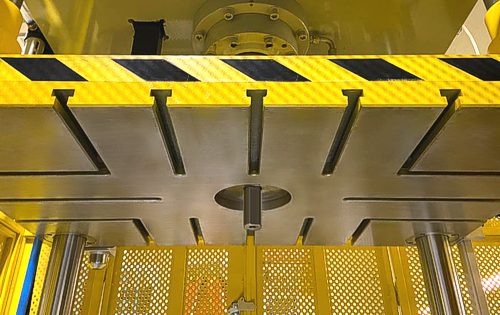
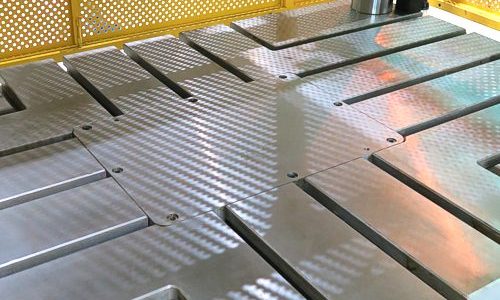
Precision‑machined upper and lower platens
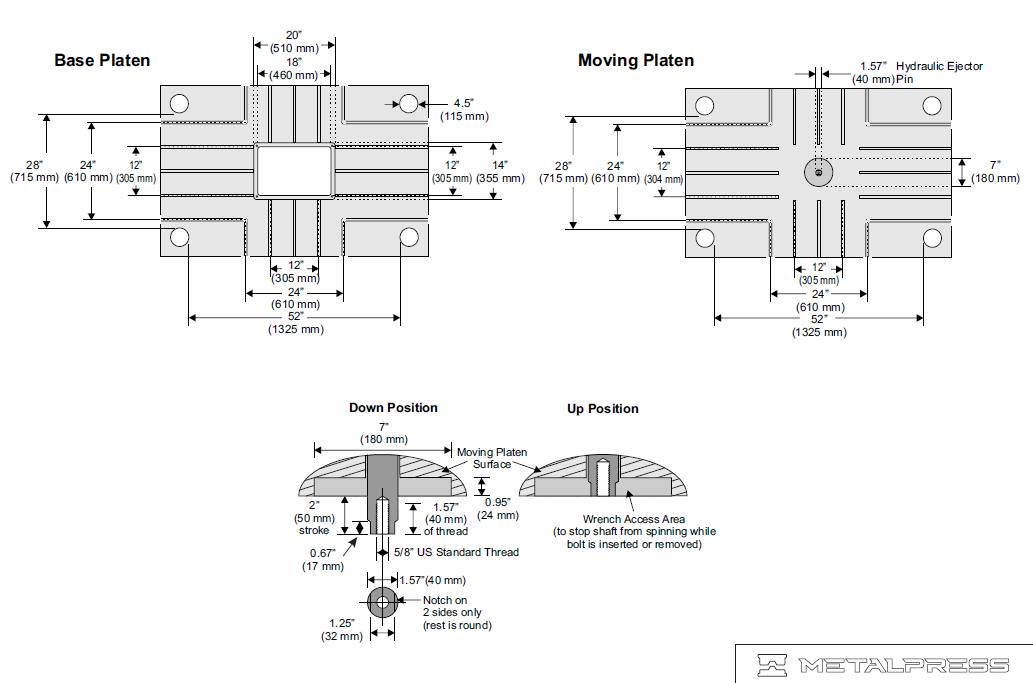
Custom platen size to match customer tooling
Control System
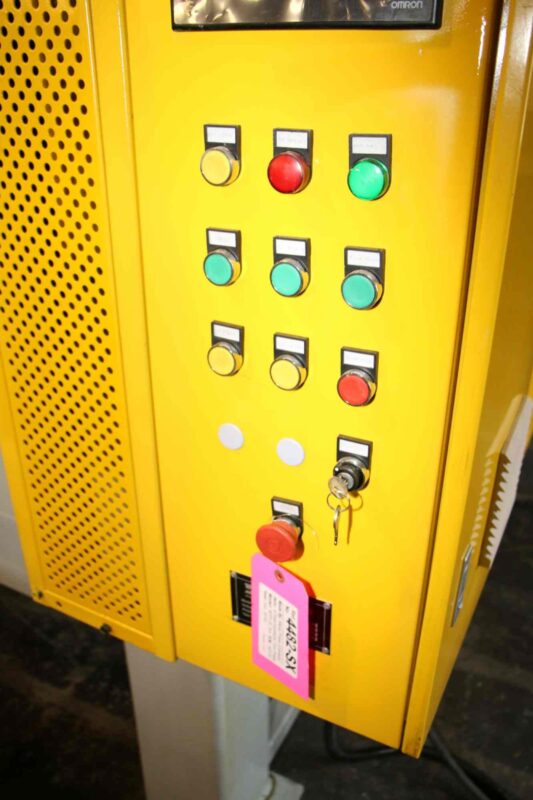
PLC‑based control panel
Touchscreen HMI for operator adjustments
Stroke control, pressure control, and dwell time settings
Safety interlocks and diagnostics
Safety Features
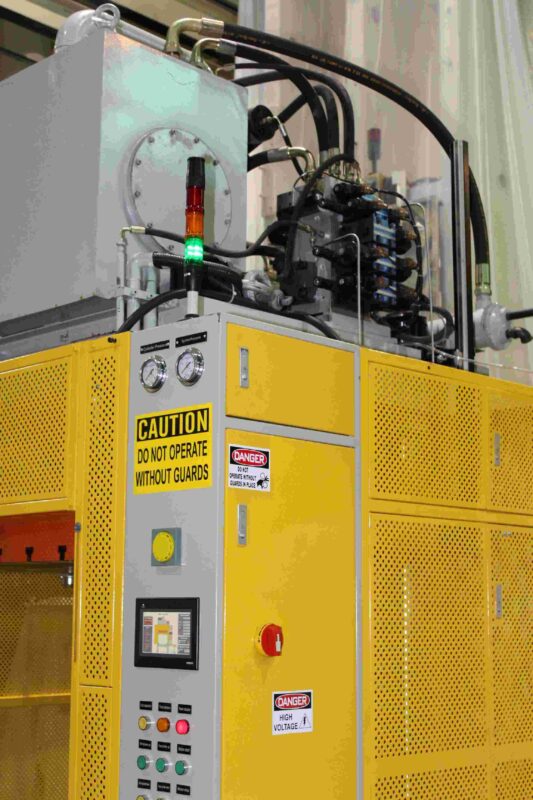
Light curtains
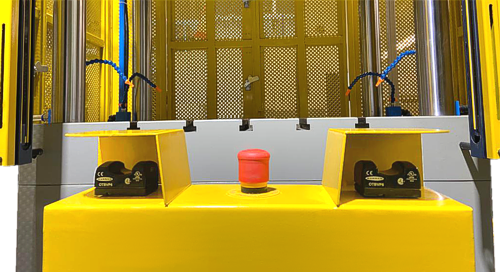
Emergency stop system
Two‑hand control option
Full perimeter guarding
Safety‑rated interlocks
Tooling Compatibility
Custom mounting pattern
Quick‑change tooling capability
Adjustable bolster plate
These specifications ensured that the 35‑ton trim press would deliver the force, precision, and reliability required for the customer’s die‑casting workflow.
Design and Engineering: Turning Requirements Into Reality
Transforming a customer’s production challenge into a fully engineered machine begins long before steel is cut or components are assembled. It starts in the design room, where every requirement, constraint, and performance target is translated into a precise engineering plan. For this project, our team took the Ohio manufacturer’s operational needs and began shaping them into a tangible solution—a custom 35‑ton trim press built on a robust 4‑post hydraulic architecture. This phase is where ideas become blueprints, specifications become models, and the foundation of a high‑performance trimming press is established with accuracy, foresight, and collaboration. With the specifications approved, our engineering team moved into the design phase. This stage is where the machine begins to take shape—first digitally, then physically.
3D Modeling and Structural Analysis
Our mechanical engineers created detailed 3D CAD models of the entire 4 post press structure. These models included:
Frame geometry
Cylinder placement
Platen dimensions
Column spacing
Hydraulic routing
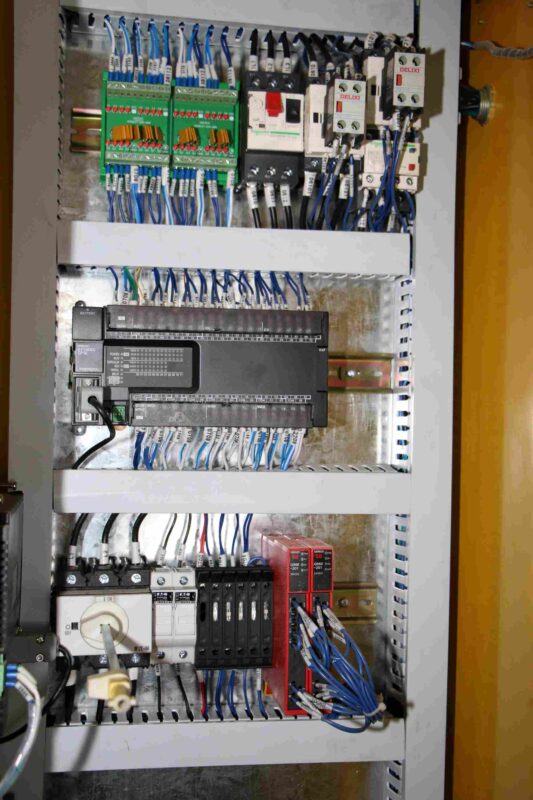
Electrical panel layout
To ensure long‑term durability, we performed finite element analysis (FEA) on the frame and platen assembly. This allowed us to validate:
Stress distribution
Deflection under load
Column alignment
Structural rigidity
The Ohio manufacturer reviewed the design package and provided feedback on operator access, tooling clearance, and ergonomic considerations. Their input helped refine the final design before fabrication began.
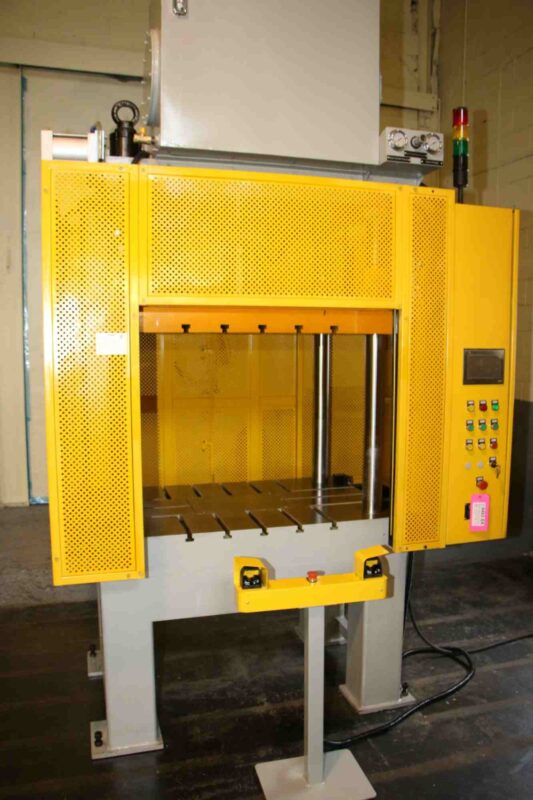
Fabrication and Assembly: Building the Trim Press
Once the engineering design was finalized and approved, the project transitioned from digital models to physical manufacturing—a stage where precision craftsmanship and heavy‑duty industrial processes take center stage. Fabrication and assembly are where the 35‑ton trim press truly begins to take shape, moving from engineered intent to a fully realized 4 post hydraulic press built for durability, accuracy, and long‑term performance. Every component, from the machined platens to the hardened guide posts, is produced with exacting tolerances to ensure the trimming press will deliver consistent force, smooth motion, and reliable operation for years of demanding production cycles. This phase represents the heart of the build, where steel, hydraulics, and engineering expertise converge to create a machine tailored to the Ohio manufacturer’s needs.
Frame Fabrication
The heavy‑duty steel frame was cut, welded, and stress‑relieved to ensure long‑term stability. Precision machining followed to guarantee perfect alignment of the guide post mounting points.
Platen Manufacturing
The upper and lower platens were machined from high‑strength steel. Each platen was ground to achieve:
Perfect flatness
Tight tolerances
Smooth surface finish
These characteristics are essential for consistent trimming operations.
Guide Post Installation
The four hardened guide posts were installed and aligned with micrometer precision. This ensures:
Smooth platen travel
Accurate parallelism
Long‑term repeatability
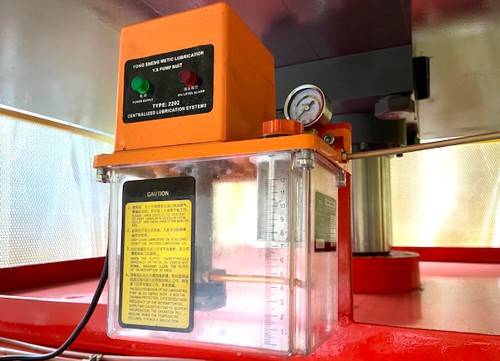
Hydraulic Cylinder Assembly
The hydraulic cylinder was mounted to the upper platen and connected to the hydraulic power unit. The cylinder was tested for:
Seal integrity
Smooth stroke movement
Pressure stability
Hydraulic and Electrical Integration
Hydraulic lines were routed cleanly and securely. The electrical panel was assembled with:
PLC
HMI
Safety relays
Circuit protection
Wiring harnesses
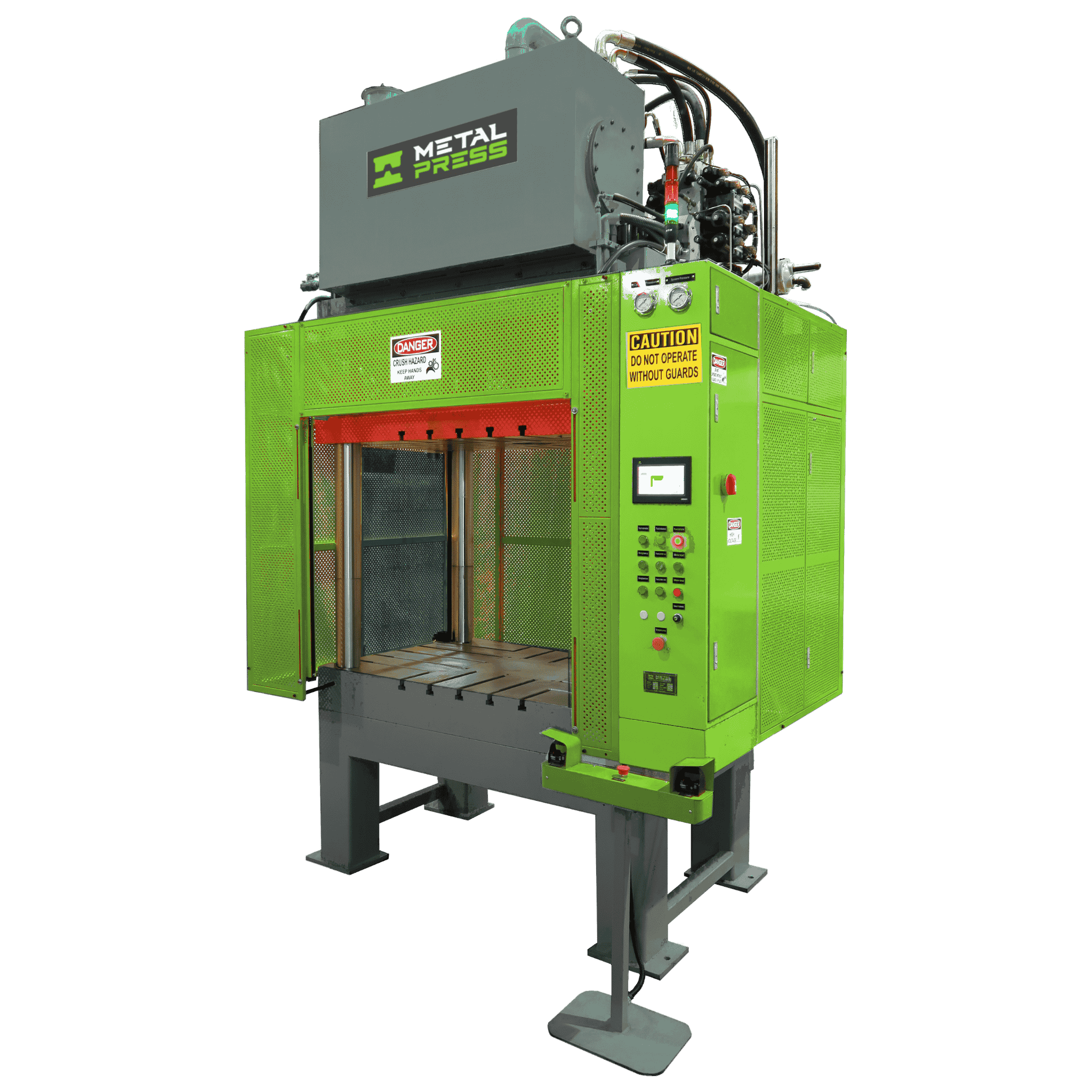
At this stage, the machine began to resemble a fully functional 4 post hydraulic trimming press.
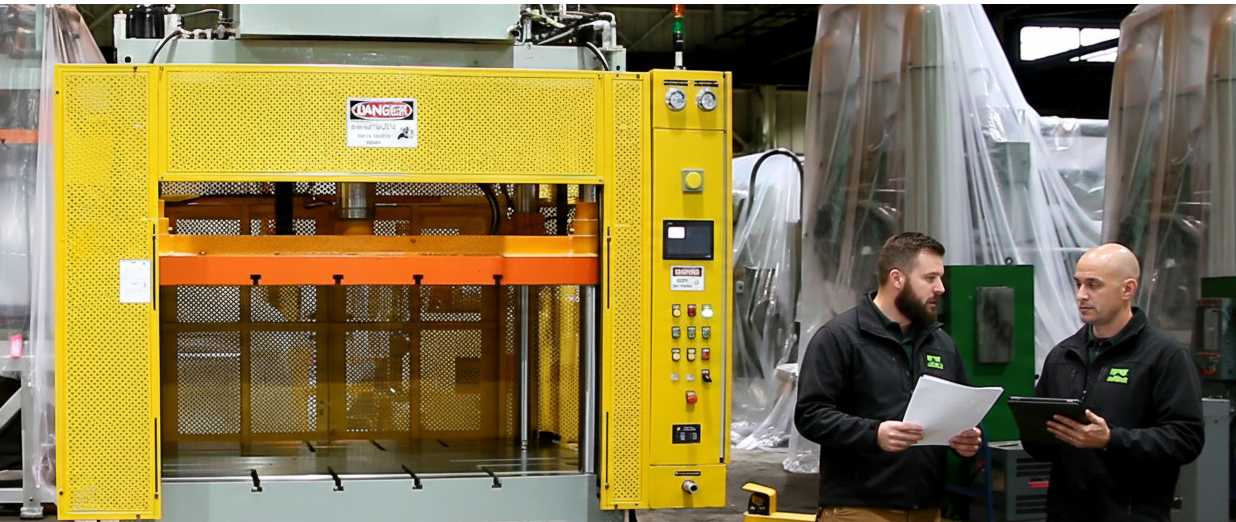
Safety Integration and Client Feedback
Safety is never treated as an afterthought in the development of a custom industrial machine—it is engineered into the very structure of the trim press from the earliest stages. As the 35‑ton 4 post hydraulic press moved through assembly, our team began integrating the full suite of safety systems that would protect operators, maintain compliance, and ensure long‑term reliability on the customer’s production floor. This phase included installing light curtains, emergency‑stop circuits, safety‑rated interlocks, and guarding panels, each designed to work seamlessly with the machine’s hydraulic and control architecture. At the same time, we maintained an active communication loop with the Ohio manufacturer, gathering real‑world insights from their operators and maintenance personnel. Their feedback helped refine control panel placement, optimize access points for tooling changes, and fine‑tune ergonomic details—ensuring the trimming press would not only perform with precision but also integrate naturally into their workflow. This collaborative approach strengthens every build, transforming safety from a requirement into a shared engineering priority.
Safety is a core part of our engineering philosophy. During Phase One, we installed:
Light curtains
Emergency stop buttons
Guarding panels
Safety interlocks
Two‑hand control options
We also maintained a continuous feedback loop with the Ohio manufacturer. Their operators provided insights on:
Control panel layout
Preferred stroke settings
Tooling access
Ergonomic adjustments
This collaboration ensured that the final machine would integrate seamlessly into their production line.
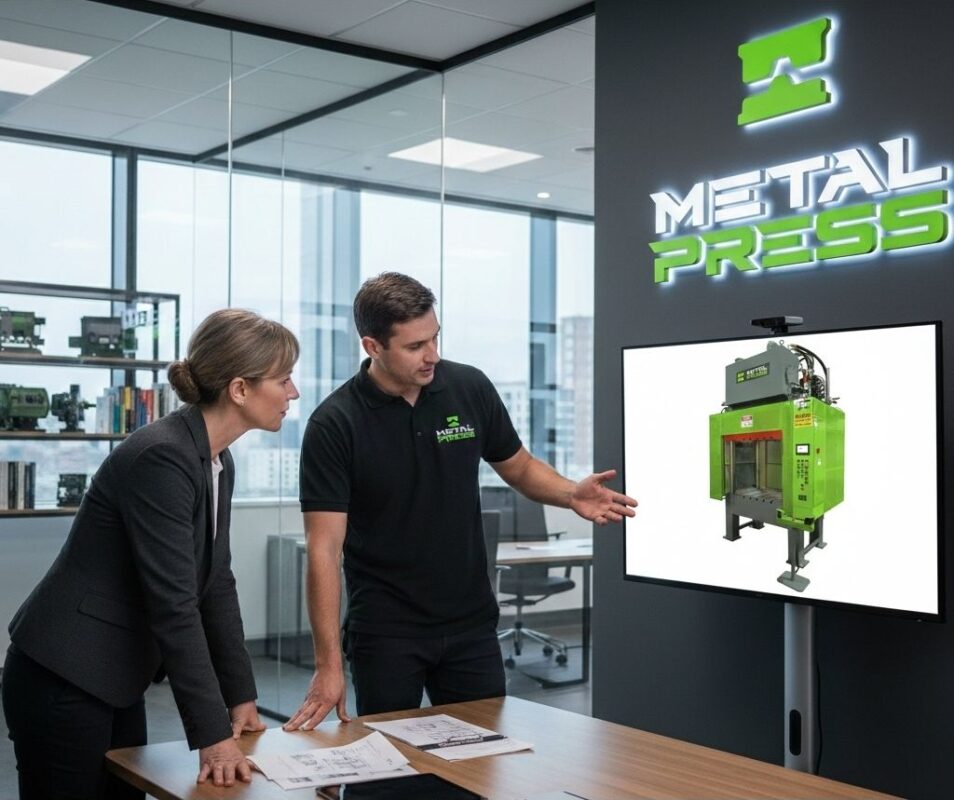
Phase One Conclusion: A Nearly Completed 35‑Ton Trim Press
By the end of Phase One, the machine was:
Fully assembled
Wired and plumbed
Safety systems installed
Mechanically complete
Ready for inspection and testing
The 35‑ton trim press stood on the shop floor—an impressive, precision‑engineered 4 post hydraulic press built to deliver years of reliable trimming performance.
Phase Two will focus on inspection, testing, hydraulic calibration, functional validation, and pre‑commissioning before shipment.
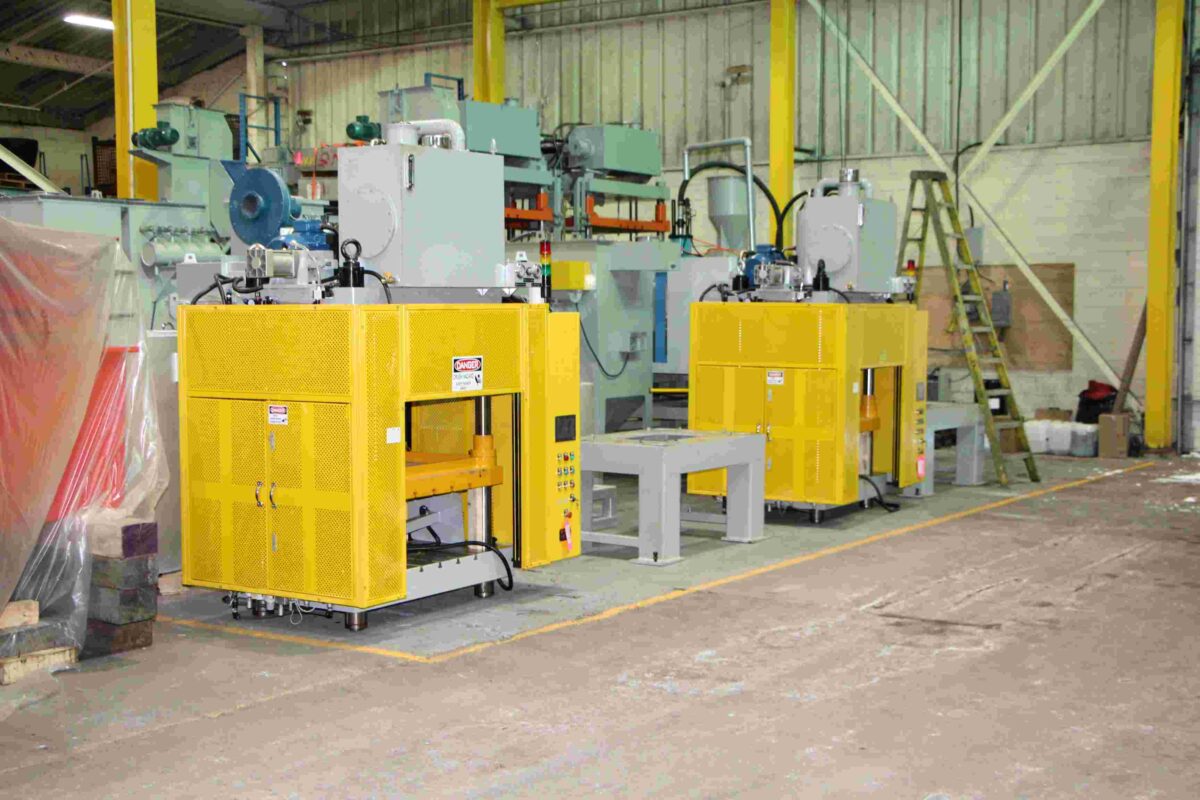
Let Us Make Your Next Trim Press
Whether you’re located in the USA, Canada, Mexico, or South America, you can contact us for more information, pricing, and consultations through our online forms, or by phone or email.
View Our Trim Press
Visit all our pproducts