

Blog
Die Flipper, Die Upender & Coil Tipper Applications Guide

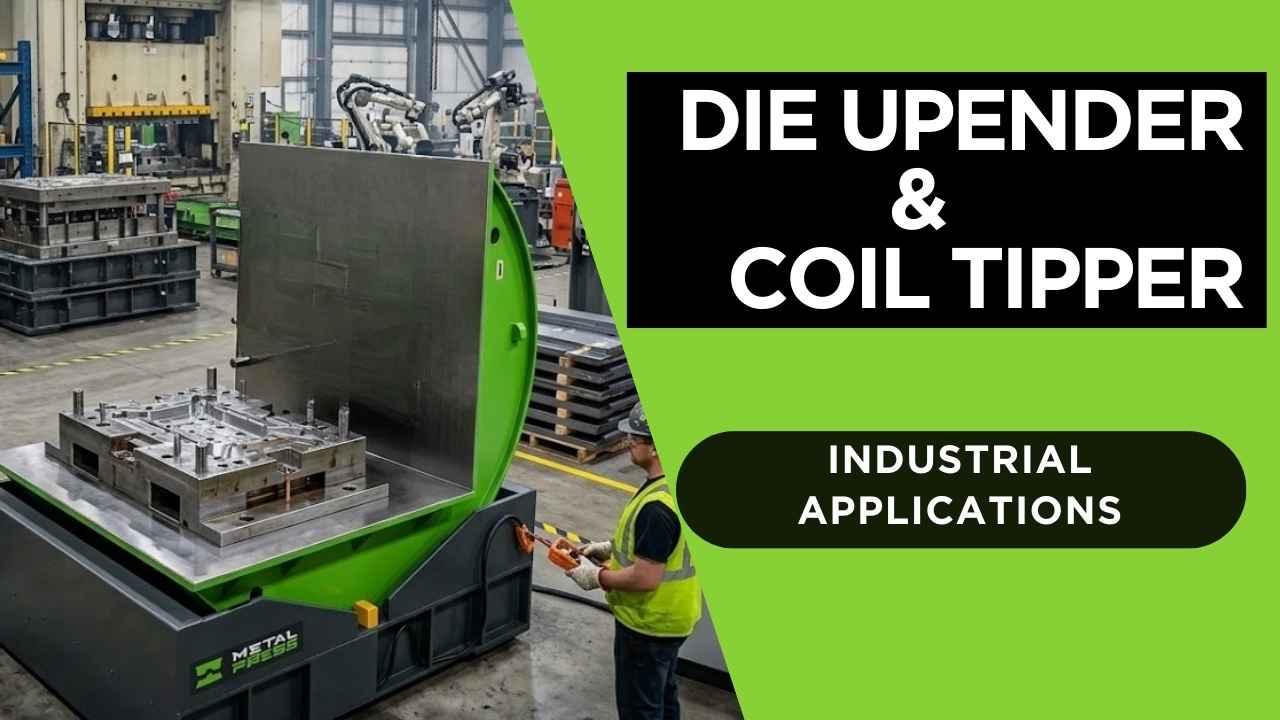
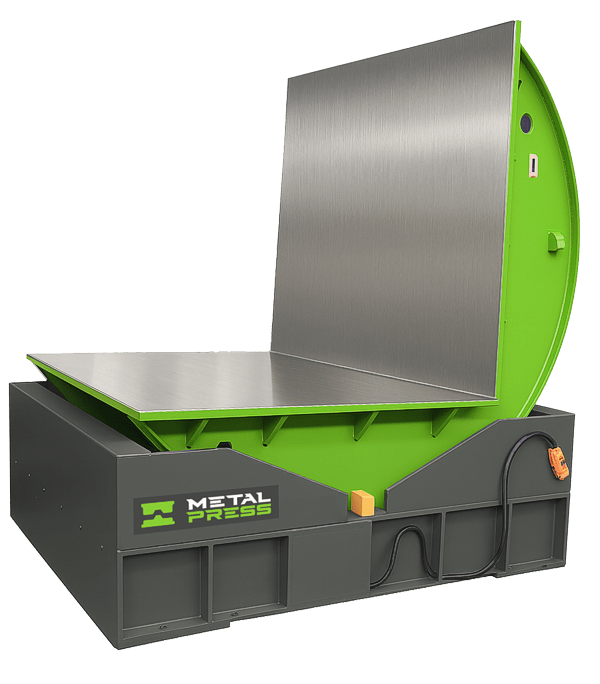
Heavy-tool and coil rotation use similar mechanical principles but serve different loads. A die flipper or mold flipper—also called a die upender or mold upender—rotates flat-sided tooling for inspection, maintenance, storage, and changeover. A coil tipper or coil upender rotates cylindrical coils and rolls between production, storage, and shipping orientations.
This guide compares the two equipment families and their industrial applications while directing commercial die- and mold-flipper searches to the dedicated MDR product page.
Defining the Machinery: Die Flipper vs. Coil Tipper
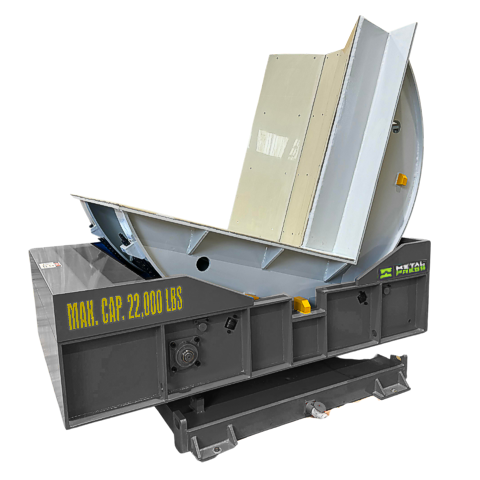
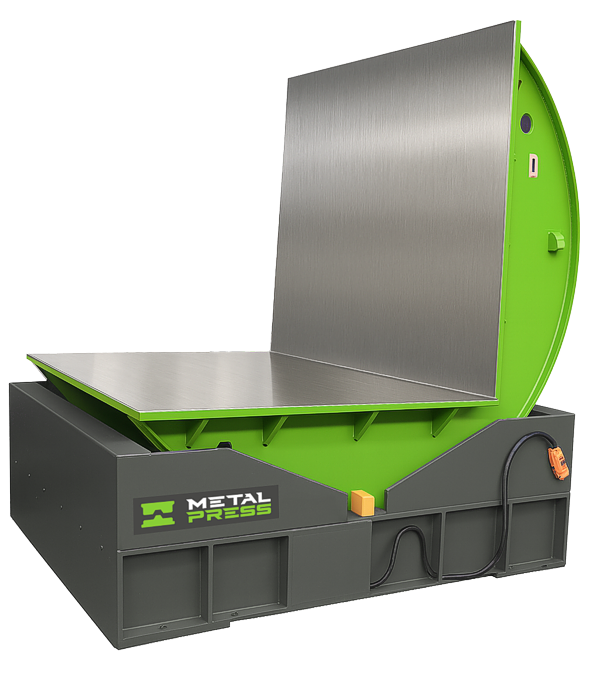
Die flipper / mold flipper: designed for stamping dies, injection molds, die-casting molds, and other heavy tooling. Die upender and mold upender are common alternate names. The machine supports the load through a controlled 90-degree or application-specific rotation.
Coil tipper / coil upender: designed for cylindrical steel, aluminum, copper, paper, or wire coils. A V-shaped cradle or purpose-built support controls the roll while it changes between eye-to-sky and eye-to-side orientations.
COIL, DIE & MOLD HANDLING EQUIPMENT

Get A Free Quote
Call 519-624-9987 to immediately talk to a technician, or fill in the form below and get a same day reply.
Global Industry Applications: From Steel to Steriles
Transportation & Heavy Haulage (The Logistics Pivot)
One of the most significant shifts in 2026 is the adoption of upenders by trucking and logistics companies.
Load Correction: During transit, heavy loads like steel coils or machinery can shift, becoming “unbalanced” on the trailer. This creates a massive safety risk for the driver and the public. Logistics hubs now use pit-mounted upenders to safely re-center and re-orient shifted loads before they head back onto the highway.
Freight Transition: Many specialized carriers use upenders to transition cargo from rail-to-truck or ship-to-shore. When a 40,000 lb coil arrives vertically but needs to be loaded onto a flatbed horizontally, the upender is the only safe way to bridge that gap without risking a “dropped load” on a busy loading dock.
Automotive & EV Manufacturing
The automotive industry remains the “power user” of die upenders. With the global shift toward Electric Vehicles (EVs), the demand has intensified.
Stamping Dies: Modern car panels are stamped from massive steel sheets. The dies required are behemoths, often weighing upwards of 50 tons.
EV Battery Trays: Large aluminum castings used for EV battery packs require enormous, complex molds. These must be flipped regularly for “split-line” maintenance—cleaning the interior faces to ensure no debris ruins a casting.
Pharmaceuticals & Healthcare (The Hygiene Pivot)
In 2026, the pharmaceutical industry has become a primary market for specialized upenders, often called Pallet Inverters.
The Application: Moving sensitive medical components or raw chemical ingredients from “dirty” wooden shipping pallets to “clean-room” plastic or stainless steel pallets.
Why it Matters: Manual restacking is a contamination risk. An upender clamps the entire load, rotates it 180°, and allows for a touchless pallet swap, ensuring compliance with strict FDA and global health regulations.
Food & Beverage (The Cold Chain Optimizer)
The food industry uses upenders to manage high-volume logistics and hygiene.
Freezer Spacer Removal: In cold storage, “freezer spacers” allow cold air to circulate between layers of produce. Once frozen, these must be removed.
The Solution: An upender tilts the pallet 90°, allowing the spacers to slide out easily, then rotates the load back. This saves thousands of hours of manual labor in freezing-cold environments.
Renewable Energy: Wind Turbine Production
As wind energy scales, the components are getting larger and more fragile.
Blade & Nacelle Molds: Wind turbine blades now exceed 100 meters. The molds used to cast these fiberglass structures are massive and must be rotated with extreme precision to avoid micro-cracking the “green” material.
The Benefit: A die upender provides a vibration-free tilt, protecting multi-million dollar investments from structural failure.
Paper, Pulp, & Publishing
The paper industry faces the physics challenge of Flat-Spanning.
The Problem: When a 10-ton “Jumbo Roll” of paper sits on its side for too long, gravity causes a “flat spot,” ruining miles of paper for high-speed presses.
The Solution: Coil upenders stand these rolls on their ends (vertically) for storage, preserving the perfect roundness of the paper.
The Economic Argument: ROI Beyond the Price Tag
Purchasing an upender is a capital investment, but the Return on Investment (ROI) is often realized in less than 18 months through three primary channels:
I. Drastic Reduction in Material Damage
When you use a crane to flip a die or a coil, the load “swings.” This pendulum effect often results in the load striking the floor. Even a minor “clink” on a precision-ground die surface can cost $10,000 in repair and days of lost production. Upenders provide a controlled, mechanical pivot that eliminates the “swing” entirely.
II. Labor Efficiency
Historically, flipping a 20-ton die required a “Rigging Team”—three or four people to manage the crane and guide the chains. A modern upender is a one-person operation. The forklift driver places the load, hits a button, and the machine handles the rest.
III. Reduced Insurance and Workers’ Comp
The most dangerous moment in a plant is the “Flipping Maneuver.” If a chain snaps while a load is suspended, the results are often fatal. Insurance providers are increasingly offering lower premiums to facilities that utilize floor-based upenders, as they eliminate “overhead hazards.”
Technical Features to Look For in 2026
If you are currently researching a machine for your facility, several “standard” features have evolved:
Wireless Remotes with E-Stops: Allows the operator to stand 20 feet away, out of the “crush zone,” while maintaining total control.
Laser Safety Scanners: Equipped with “Time-of-Flight” scanners that create a digital “curtain.” If a human or forklift enters the zone while the machine is moving, it stops instantly.
PLC & WMS Integration: Modern upenders can be integrated into your Warehouse Management System. They can weigh the load, scan a barcode, and report the tool’s status to the maintenance team automatically.
Conclusion: The Backbone of the Factory Floor
As we move further into an era of automated, high-output manufacturing, the humble Die Upender and Coil Tipper have transitioned from “luxury items” to “essential infrastructure.” Whether you are handling the steel for the next generation of electric trucks, the sterile pallets for life-saving medicine, or the concrete for a modular skyscraper, these machines represent the intersection of safety and efficiency.
They are an investment in your most valuable assets: your expensive tooling and, more importantly, your people. By taking the “swing” out of the equation, you create a workplace that is not just faster, but fundamentally safer.
For equipment selection and plant planning, explore the Die & Mold Handling Applications hub, including die flipper, die upender, transfer, changeover, and tool-handling guidance.
Let Us Make Your Next Die Flipper or Coil Tipper
Whether you’re located in the USA, Canada, Mexico, or South America, you can contact us for more information, pricing, and consultations through our online forms, or by phone or email.