
BRACKET, GUSSET & MOUNTING PLATE FABRICATION
Coordinate cutting, punching, notching and bending for metal brackets, gussets, mounting plates and formed supports.
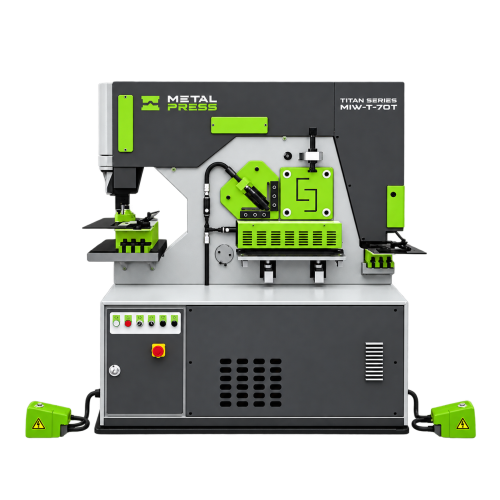
Equipment for Metal Brackets, Gussets & Mounting Plates
Metal bracket fabrication equipment coordinates blank preparation, mounting plate punching, notching and bending for brackets, gussets and formed supports. Flat mounting plates, reinforcing gussets and bent brackets can share several operations, but their geometry determines which machine stations, tools and handling arrangements are suitable.
Start with the MIW-T hydraulic ironworker for appropriate punching, stock-shearing and notching work. Add Titan CNC press-brake bending for formed flanges and MGS guillotine-shear blank cutting where long straight sheet or plate cuts are needed. Match each operation to the material, drawing dimensions and production quantity.
Explore the fabrication applications hub for related manufacturing workflows.
For a proposed gusset plate, define the outline and hole pattern first, then review which edges suit the available cutting station and whether the holes can be reached with the selected tooling. For bent steel brackets, confirm the material grade and thickness, make the mounting features in the planned sequence, and check the bend radius and flange access against the drawing.
For stock preparation before the finished bracket route, see angle and flat-bar fabrication.
Plan Holes, Cuts & Bends Together
Define the finished connection part before choosing individual operations. Hole locations, edge distances, flange lengths, bend radii and tooling access need to work together throughout the sequence.
Punching & Notching for Brackets and Plates
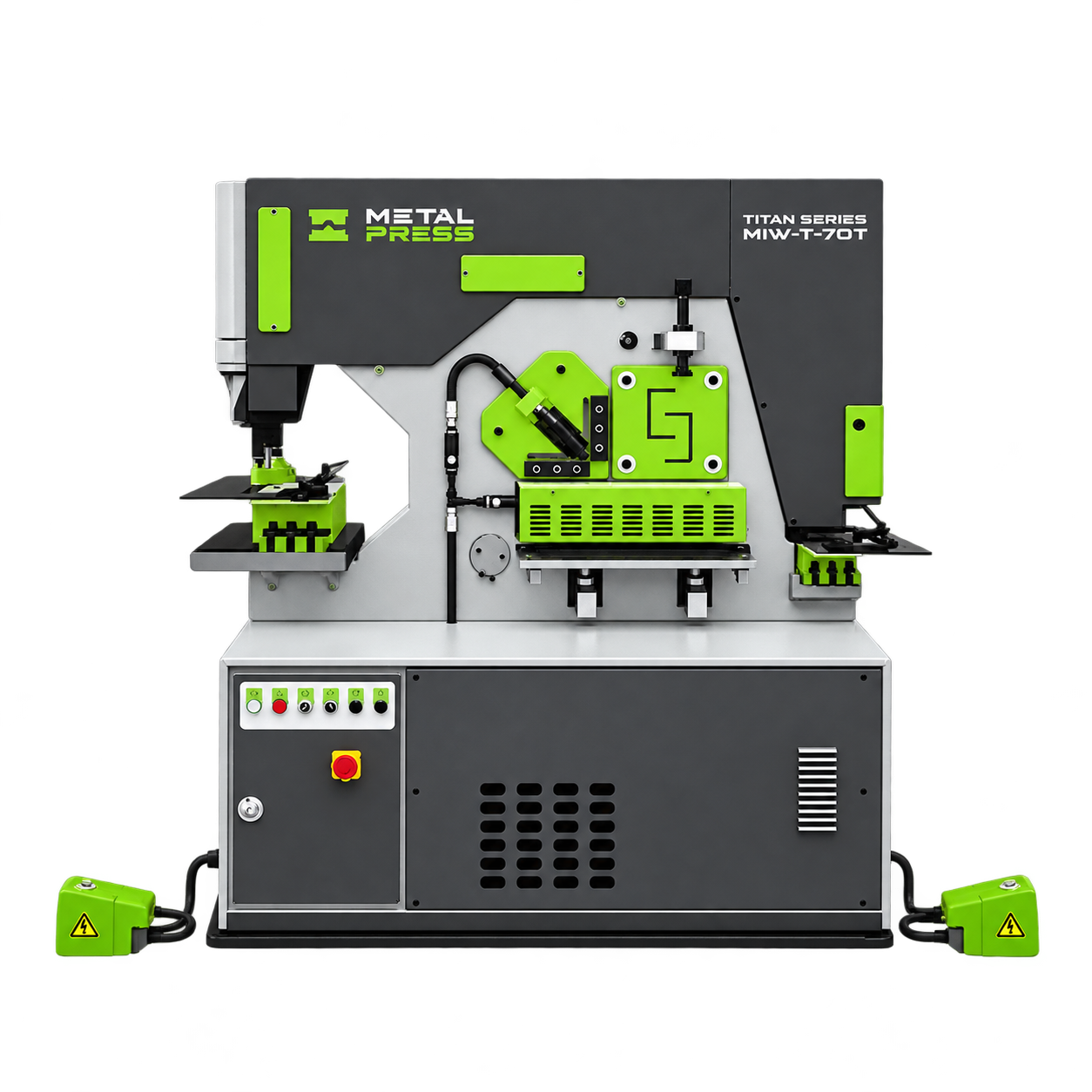
An ironworker can combine hole punching, suitable bar or angle cuts and notching within one machine platform. For mounting plate fabrication, define the hole pattern, part envelope, material thickness and the reach needed to position every hole against the tooling and supports.
Review the MIW-T punching, shearing and notching stations by their individual ratings. Hole diameter versus thickness, punch and die selection, throat access and workpiece support all matter. Slots, shaped holes and special notches require the appropriate tooling; a triangular gusset or complex outline must also fit the selected cutting process and station geometry.
Bent Brackets & Formed Supports
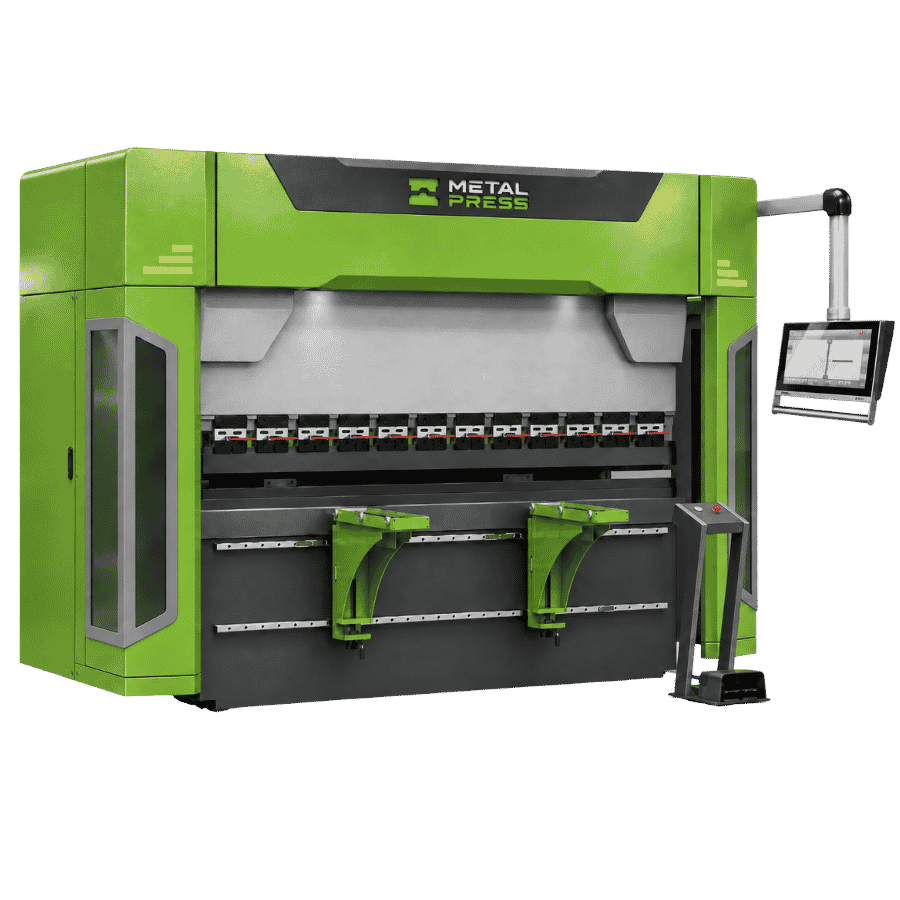
L-brackets, channel-shaped supports and flanged mounting parts add bending requirements to blank and hole preparation. Check the developed blank, inside bend radius, shortest flange, hole positions near bends and the order in which the part can enter and leave the tooling.
The Titan servo-hydraulic CNC press brake supports a separate bending operation with tooling selected for the part. Review required forming force, bending length, working clearance and backgauge access. An ironworker bending attachment, where offered, has its own tooling and capacity limits and should be compared against the actual bracket drawing.
Straight-Cut Blanks for Plates & Strips
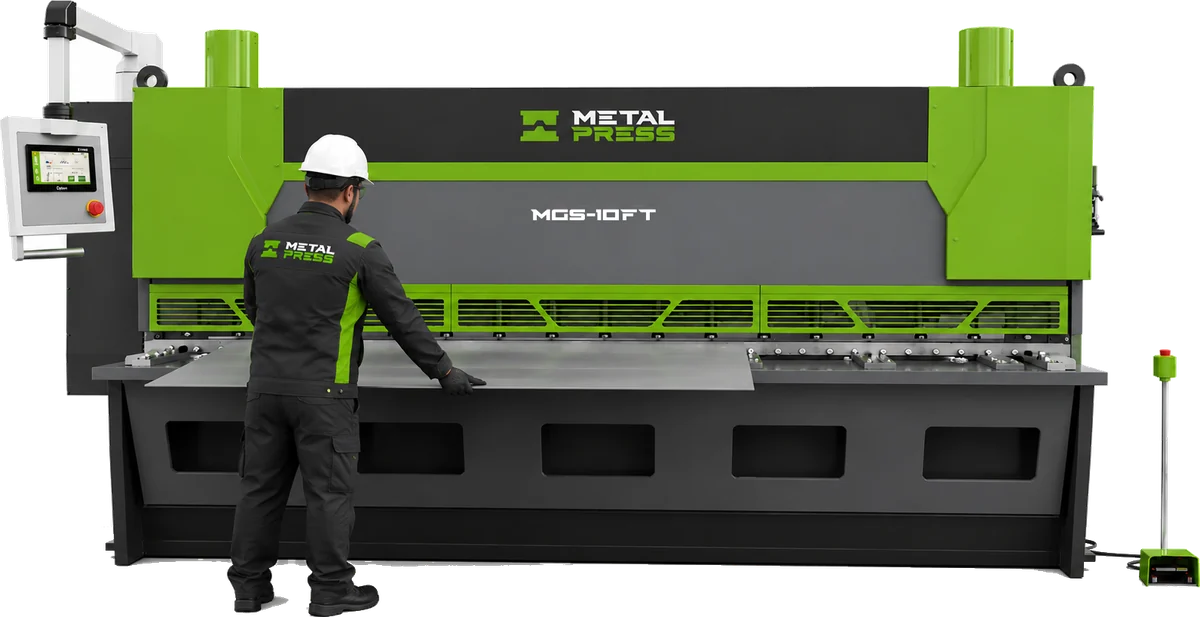
Mounting plates and bracket blanks may start as straight-cut rectangles or strips. Define blank length and width, squareness, edge condition and the smallest strip before planning the punching, notching or bending stages.
Use the MGS hydraulic CNC guillotine shear when the application calls for suitable long straight sheet or plate cuts. Compare cutting length, material-specific thickness ratings, backgauge and support requirements. Internal apertures, curved profiles and intricate contours need a suitable separate process.
Plan the Bracket Fabrication Sequence
Hole patterns & locating references
Identify drawing datums, hole centers, pitch and the edges used to locate the workpiece. Decide how each part is supported and repositioned, especially when more than one punching or notching setup is required.
Tool access & part geometry
Check throat access, tool clearance and the space needed around existing flanges or projecting features. Confirm that the selected punch, die, notch tool or bend tool suits the actual material and dimensions.
Operation order & repeat positioning
Compare punching and notching before or after bending against access, distortion and the finished dimensions. Define stops, gauges and setup references for repeat batches rather than relying on machine tonnage alone.
Fit-up, finish & inspection
Specify burr removal, cosmetic faces, coating allowance and mating-part fit. Check hole locations, bend angles and mounting faces against the drawing. Establish the inspection method and acceptance criteria for the finished connection part.
Material, Thickness & Tooling Requirements
Provide the material grade, strength, thickness and condition for each bracket, gusset or mounting plate. Mild steel, stainless steel and aluminum can require different usable capacities, punch-and-die clearances and bending setups. Include alloy and temper when specifying aluminum.
Compare the individual machine-station ratings and tooling requirements instead of applying one headline capacity to every operation. The finished bracket or connection also needs the appropriate component design and load assessment; selecting fabrication equipment does not establish its structural rating.
Prepare Your Bracket Fabrication Enquiry
Send the part drawing and, for bent parts, the flat pattern. Include material specifications, thickness, finished dimensions, hole sizes, hole centers, edge distances, notch geometry, flange lengths and inside radii.
Add tolerances, typical batch sizes, recurring-job requirements, loading arrangements and the intended inspection method. Discuss your bracket, gusset and mounting-plate requirements with MetalPress to review the ironworker stations, bending configuration, blank-cutting equipment and tooling together.
Bracket, Gusset & Mounting Plate Questions
An ironworker can perform suitable punching, stock-shearing and notching work. Bent flanges may need a press brake, while long straight blanks may need a guillotine shear. Start with the drawing and compare the MIW-T ironworker with the additional operations the part requires.
Yes, when the material, hole diameter, thickness and required reach fit the selected station and tooling. Check punch and die compatibility, throat access, part support and the station-specific capacity before selecting a model.
That depends on the blank, holes, bends and available tooling. Some parts may suit an ironworker with appropriate attachments; others need separate cutting, punching and press-brake operations. Review the full sequence and access requirements rather than assuming one machine covers every feature.
The outline must fit the cutting or notching process and its tooling. Straight edges may suit shearing, while complex contours or internal features can require another process. Confirm the gusset drawing, cut angles and positioning before choosing equipment.
Choose the sequence around tool access, hole position, part location and potential distortion near bends. Review the flat pattern and finished geometry together, then define setup references and inspection points.
Use the MIW-T ironworker product page for workstation capacities and tooling, the Titan press-brake page for bending configurations, and the MGS shear page for straight-cut blank preparation.
PLAN YOUR NEXT
Share your part drawings and production requirements to review the punching, cutting, notching, bending and tooling configuration.