
DIE SPLITTER & TESTER MACHINE
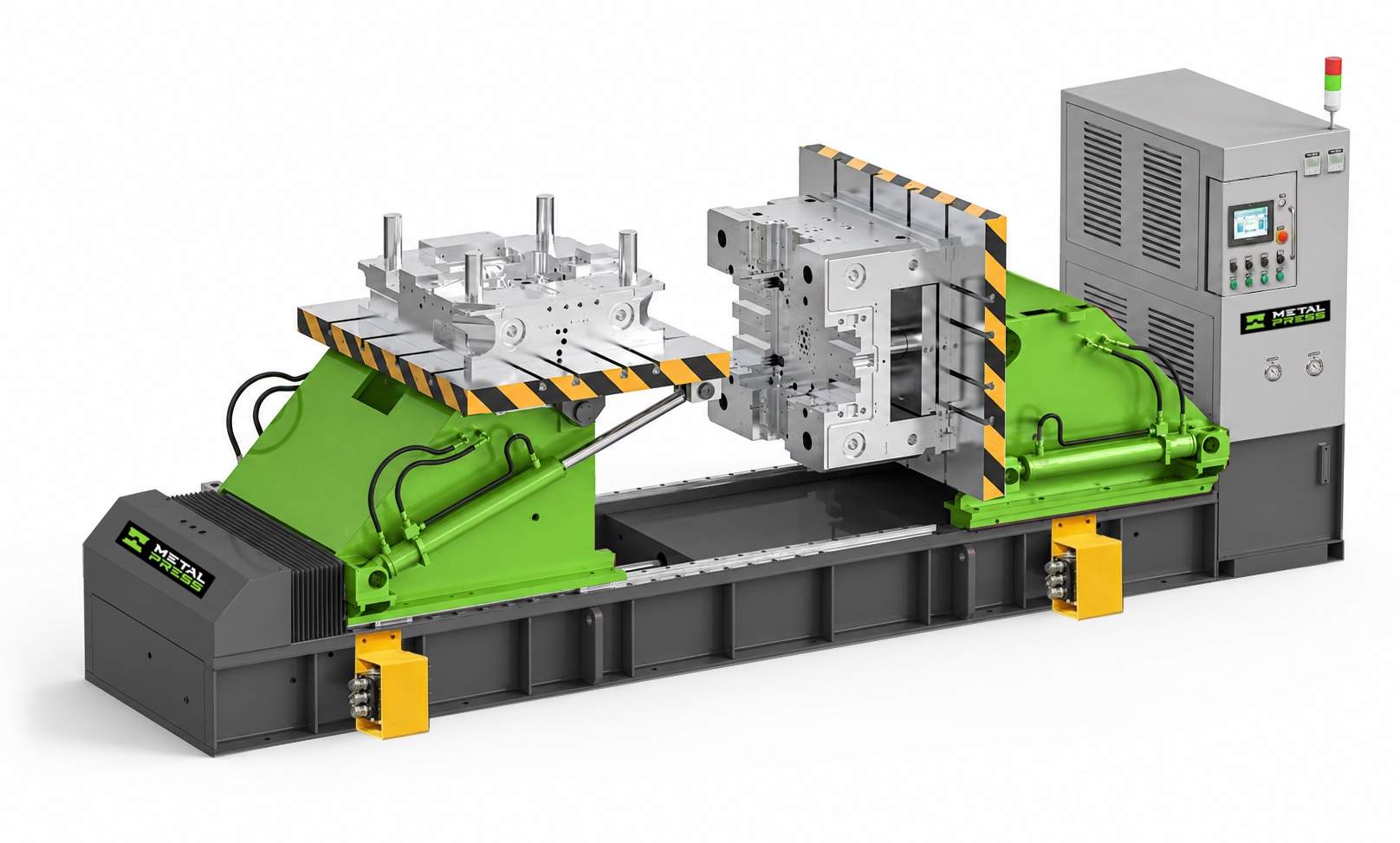
MDS SERIES
A MetalPress die splitter and tester is a controlled die separator machine for opening, tipping, inspecting, testing, and closing heavy dies and molds. It replaces uncontrolled separation with supported movement, giving technicians safer access for cleaning, repair, adjustment, and preventive maintenance.
The MDS Series serves as a die splitter machine, die and mold splitter, mold splitter, and testing platform in one system. Available functions support ejector testing, hydraulic core-cylinder testing, and water-cooling circuit checks before tooling returns to production.
Five standard machine sizes and custom configurations support different toolroom requirements. Selection is based on the actual die or mold weight, dimensions, opening requirement, test functions, access needs, and facility constraints—not on a generic equipment label.
For controlled contact-pattern and alignment work rather than physical tool separation, compare our hydraulic die spotting press and mold tryout press.
DIE SPLITTER MACHINE TECHNICAL OVERVIEW
A die splitter and tester is engineered to safely open, separate, and inspect stamping dies without relying on cranes, pry bars, or manual force. Dies are extremely heavy and tightly fitted, making traditional opening methods dangerous and prone to damaging precision surfaces. A die splitter provides controlled, stable separation of the upper and lower die halves, allowing technicians to access internal components for cleaning, repair, and inspection. Many units also function as die testers, enabling operators to cycle the die, check alignment, verify movement, and confirm proper function before returning it to production. For toolrooms, stamping plants, and maintenance departments, a die splitter and tester dramatically improves safety, reduces downtime, and protects high‑value tooling.
Manual die opening methods — including pry bars, overhead cranes, and forklift manipulation — introduce significant risk to both operators and tooling. These methods can cause sudden shifts, misalignment, cracked die shoes, or dropped components. A die splitter and tester eliminates these hazards by providing a controlled, guided mechanism that opens dies evenly and safely. The machine supports the die halves throughout the process, preventing damage to guide pins, bushings, and precision surfaces. When equipped with testing capability, it also allows technicians to verify die movement, timing, and alignment before reinstalling the die in a press. This reduces trial‑and‑error adjustments, shortens changeover time, and ensures the die is production‑ready.
The die splitter and tester combines safe die separation with functional testing capabilities, making it a critical tool for die maintenance and troubleshooting. Its rigid frame and guided lifting system ensure smooth, controlled opening of the die halves, while adjustable supports accommodate a wide range of die sizes. Many models include powered opening mechanisms, sliding tables, safety interlocks, and ergonomic access points for detailed inspection. When used as a tester, the machine allows technicians to cycle the die, check timing, verify alignment, and identify issues before the die returns to production. This reduces press downtime, prevents tooling damage, and improves overall die performance and longevity.
PRODUCT DESCRIPTION
STANDARD FEATURES FOR OUR DIE & MOLD SPLITTERS
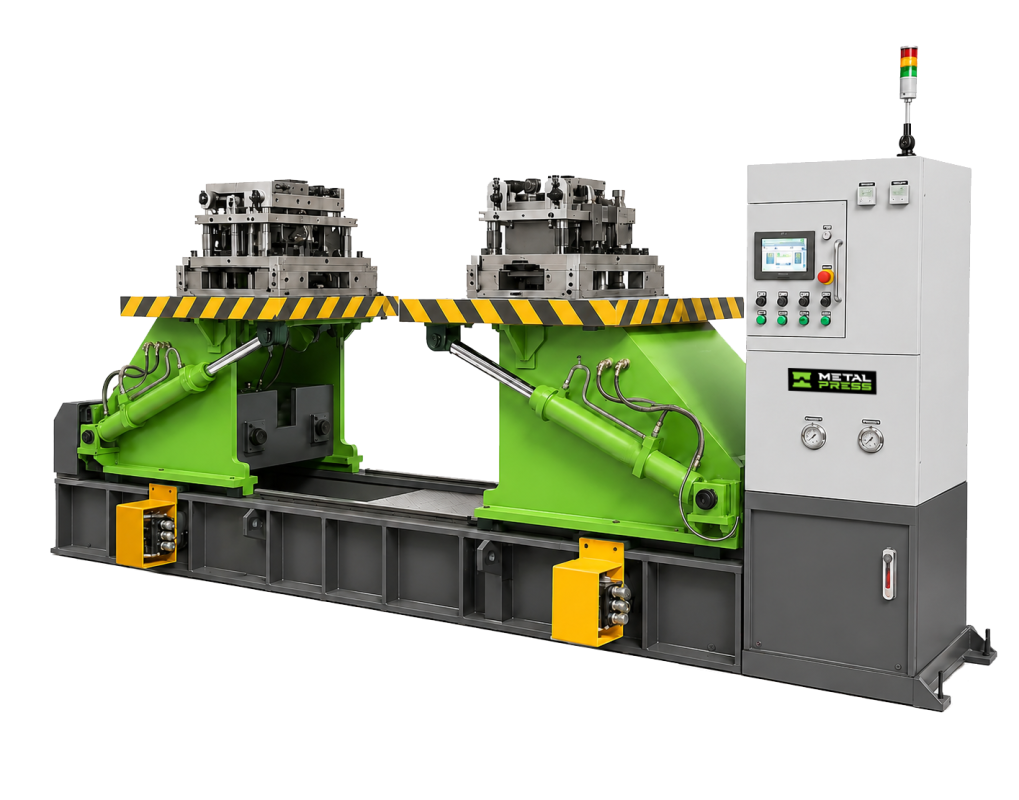
- Die/Mold can be tilted 90 degrees for maintanence and repairs
- Die/Mold hydraulic core system testing
- Die/Mold ejector system testing
- Die/Mold water cooling system testing
- Siemens PLC and HMI control
VIDEO OVERVIEW
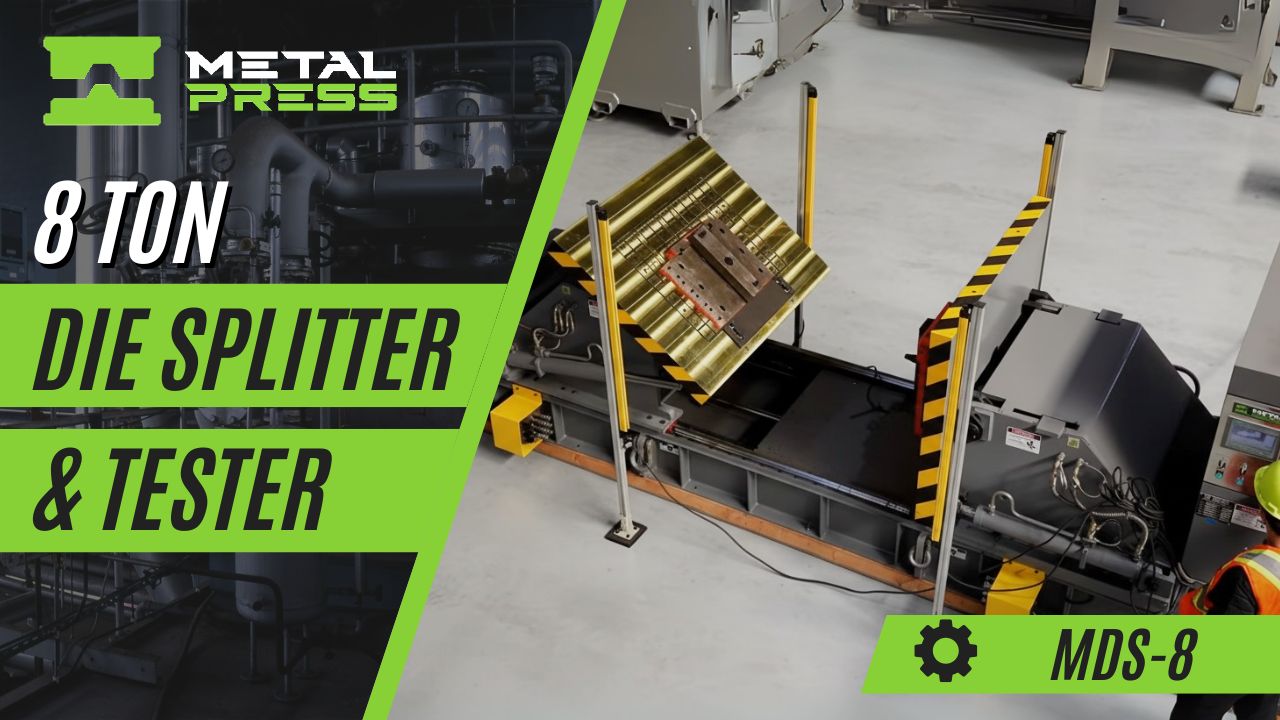
See What This Die Splitter & Tester Has to Offer.
Our Die and Mold Splitters feature a robust, high-quality design packed with valuable features. Engineered with operator safety, rapid setup, and cost-effectiveness as top priorities, these machines are available in multiple sizes with customizable options to suit your specific needs.
HOW A DIE SEPARATOR MACHINE WORKS
Simple is Good
Using our die mold splitter, opening and closing a die or mold consists of four easy steps. The process is simple and reliable with the die mold splitter.

MAGNETIC DIE CLAMPING
Quick and Convenient Clamping
Our optional magnetic clamping system is designed with a positive magnetic connection. That means it does not need electricity to hold the dies or molds. It makes no difference if the machine loses power or not – the die or mold is securely mounted with the die mold splitter. The clamp remains magnetized even during a power outage. The only way to release the die or mold is to power the platens again. The added benefit is that mounting space for clamps is not required. Both horizontal and vertical mounting with the die mold splitter is possible, speeding up clamping and unclamping by 75%.


EJECTOR TESTING CAPABILITY
Reduce Down Time
Testing ejection is an important part of testing dies and molds. With our MDS die mold splitter and testing machine, you can check ejection for noise, wear, corrosion, alignment, pin offset, and more. Changes, adjustments, or corrections can be made as soon as they are noticed. Keeping your die or mold ejection in good shape reduces downtime and improves production capacity.
HYDRAULIC CORE CYLINDER TESTING CAPABILITY
Reduce Headaches
Testing the cores and core cylinders is an important part of testing dies and molds. Regularly cleaning and inspecting the cores prevents issues from developing. Our MDS die mold splitter and testing machine allows you to conveniently test all the functions of your cores and address any issues on the spot. Easily make necessary adjustments based on the inspection results to achieve optimal core performance with the die mold splitter.

HEAVY DUTY CONSTRUCTION
Made to Stand Up to Constant Use.
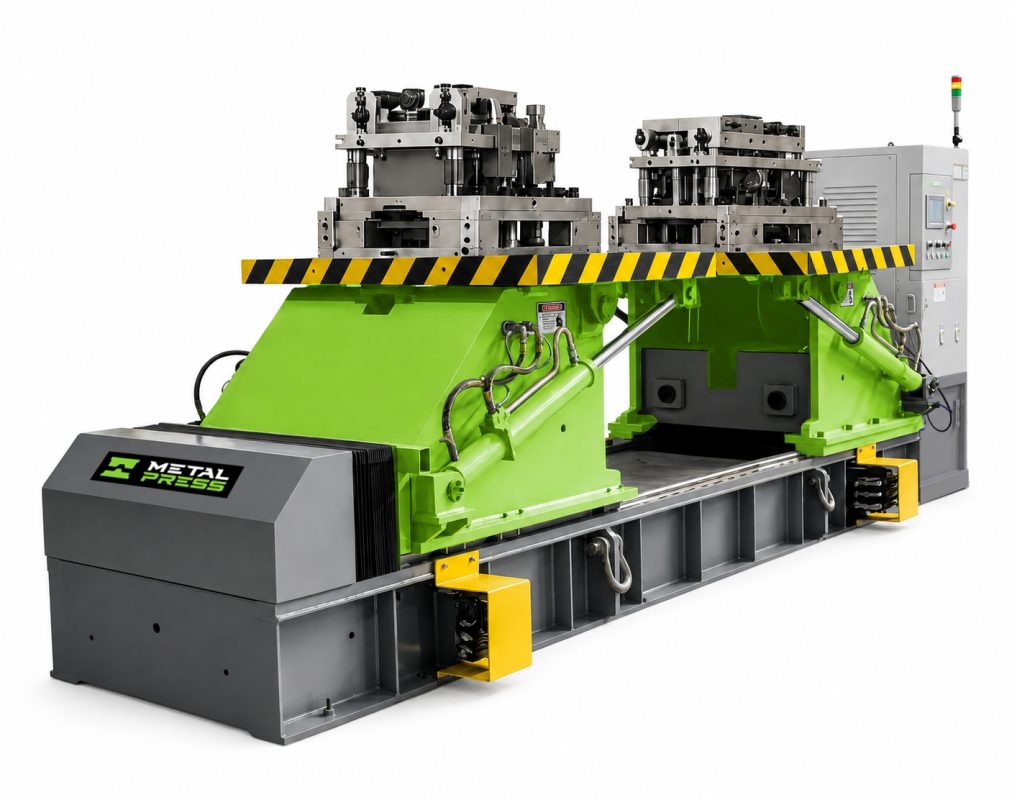
Our Die and Mold Splitters and Testers are made of robust reinforced welded steel construction. They are driven by a gear motor which drives a dual chain sprocket which enables rotation. The cradle has two flat platforms. Heavy-duty sealed bearings help the rollers support the load. A brake motor and gear reducer provide a smooth rotating cycle without jerking or sudden speed changes which could destabilize the load.
WATER COOLING SYSTEM TESTING CAPABILITY
Keep Things Cool
A water cooling system testing option can be ordered for our MDS die mold splitter and testing machine. Testing mold or die water circulation is a critical part of die or mold maintenance. Proper water cooling ensures uniform cooling of the molded part, reducing the risk of warping, shrinkage, or internal stresses that can lead to defects. Consistent cooling helps maintain a high-quality surface finish by preventing issues like sink marks or surface blemishes. Reliable cooling ensures consistent thermal conditions, leading to stable and repeatable molding cycles and part quality.


SAFETY LIGHT CURTAINS
Worker safety should not be an option.
We are very serious about worker safety. That is why all our die mold splitters and testers include full-size CAT4 safety light curtains as a standard feature. These light curtains work alongside other safety features to ensure worker safety at all times. Worker safety is our highest priority, and it always will be with our die mold splitters and testers.
HIGH QUALITY COMPONENTS
We Use Brand Name Components You Know, Already Use and Trust.
We use only the finest quality components that are open source and readily available locally in your area or from our online parts store. We do not use any hard-to-find proprietary components in our die mold splitters and testers.

FIVE STANDARD SIZES
Flexible Range of Applications.
The MDS Series is available in five standard sizes suitable for most applications.
| SPECIFICATIONS – US STANDARD | |||||
|---|---|---|---|---|---|
| Item | MDS-4 | MDS-8 | MDS-18 | MDS-25 | MDS-50 |
| Max. Weight of Mold or Die (tons) | 4.4 | 8.8 | 19.8 | 27.6 | 55 |
| Max. Overturn Capacity (tons) | 2.2 | 4.4 | 9.9 | 14.3 | 27.5 |
| Clamping Force (tons) | 7.7 | 7.7 | 11 | 11 | 55 |
| Opening Force (tons) | 11 | 11 | 66 | 88 | 88 |
| Platen A Ejector Force (tons) | 4.4 | 7.7 | 12 | 12 | 12 |
| Platen Dimension (inches) | 43.3 x 31.5 | 55.1 x 43.3 | 59.1 x 70.8 | 82.7 x 78.7 | 82.7 x 82.7 |
| Overturn Degree (°) | 0° – 90° | 0° – 90° | 0° – 90° | 0° – 90° | 0° – 90° |
| Max. opening Stroke (inches) | 59 | 59 | 78.7 | 118.1 | 118.1 |
| Min. opening Stroke (inches) | 7.8 | 7.8 | 15.7 | 19.7 | 19.7 |
| Die Open/Close Speed (inches/s) | 0 – 1.6 | 0 – 1.6 | 0 – 1.6 | 0 – 1.6 | 0 – 2.4 |
| Overturn Speed (° /s) | 8 | 8 | 8 | 8 | 8 |
| Machine Weight (tons) | 4.6 | 6.6 | 11 | 24.2 | 33.1 |
| External Dimensions (LxWxH) (inches) | 181.1 x 43.3 x 68.9 | 197.2 x 55.1 x 68.9 | 234.6 x 70.9 x 79.1 | 307 x 82.7 x 106.3 | 352.2 x 102.4 x 91.8 |
| SPECIFICATIONS – METRIC STANDARD | |||||
|---|---|---|---|---|---|
| Item | MDS-4 | MDS-8 | MDS-18 | MDS-25 | MDS-50 |
| Max. Weight of Mold or Die (metric tons) | 4 | 8 | 18 | 25 | 50 |
| Max. Overturn Capacity (metric tons) | 2 | 4 | 9 | 13 | 25 |
| Clamping Force (metric tons) | 7 | 7 | 10 | 10 | 10 |
| Opening Force (metric tons) | 10 | 10 | 60 | 80 | 80 |
| Platen A Ejector Force (metric tons) | 4 | 7 | 11 | 11 | 11 |
| Platen Dimension (mm) | 1100 x 800 | 1400 x 1100 | 1500 x 1800 | 2100 x 2000 | 2100 x 2100 |
| Overturn Degree (°) | 0° – 90° | 0° – 90° | 0° – 90° | 0° – 90° | 0° – 90° |
| Max. opening Stroke (mm) | 1500 | 1500 | 2000 | 3000 | 3000 |
| Min. opening Stroke (mm) | 200 | 200 | 400 | 500 | 400 |
| Die Open/Close Speed (mm/s) | 0 – 40 | 0 – 40 | 0 – 40 | 0 – 40 | 0 – 60 |
| Overturn Speed (° /s) | 8 | 8 | 8 | 8 | 8 |
| Machine Weight (metric tons) | 4.2 | 6 | 10 | 22 | 30 |
| External Dimensions (LxWxH) (mm) | 4600 x 1100 x 1750 | 5010 x 1400 x 1750 | 5960 x 1800 x 2010 | 7800 x 2100 x 2700 | 8946 x 2600 x 2331 |
Die Splitter, Die Separator & Mold Splitter Applications
The primary application of a die splitter is safely opening and separating the upper and lower die halves without relying on cranes, pry bars, or manual force. Stamping dies are extremely heavy and tightly fitted, making traditional opening methods dangerous and prone to damaging precision surfaces. A die splitter provides controlled, guided separation that protects guide pins, bushings, and die shoes. This dramatically reduces the risk of injury and prevents costly tooling damage during routine maintenance.
This machine is also commonly referred to as a Die Separator, providing a safe and repeatable method for separating tooling components. It reduces the risk of damage to expensive dies while improving operator safety.
Typical die separator applications include:
Controlled die separation
Tool maintenance workflows
Safe handling of large dies
Reduced manual intervention
Improved maintenance efficiency
A Die Splitter and Tester can also function as a Mold Splitter for injection molding applications. It allows molds to be opened, rotated, and inspected easily, helping technicians identify wear, alignment issues, and defects.
Typical mold splitter applications include:
Injection mold inspection
Mold disassembly
Mold maintenance operations
Plastic tooling inspection
Mold repair workflows
This machine is often described as a Die Manipulator when used to rotate and position heavy dies for inspection or repair. Many systems allow 90° or 180° rotation, enabling better access to all surfaces of the tool.
Typical die manipulator applications include:
Die rotation and positioning
Tool alignment setup
Ergonomic tool handling
Improved access for maintenance
Heavy tool manipulation
A Die Splitter and Tester also serves as a Die Testing Machine, allowing operators to evaluate die functionality before returning it to production. This includes checking mechanical movement, alignment, and operational performance.
Typical die testing machine applications include:
Functional die testing
Alignment verification
Tool performance checks
Pre-production validation
Quality assurance inspections
With integrated testing capabilities, this machine can also be used as a Mold Testing Machine. It allows operators to test ejectors, core systems, and cooling circuits to ensure proper function before production.
Typical mold testing machine applications include:
Ejector system testing
Core cylinder testing
Cooling system verification
Mold performance checks
Process validation
In toolrooms, this equipment is widely used as a Die Maintenance Machine for performing repairs, cleaning, and adjustments. It provides safe and efficient access to all parts of the die.
Typical die maintenance applications include:
Tool cleaning and servicing
Die repair and adjustment
Preventive maintenance
Component replacement
Tool refurbishment
A Die Splitter and Tester is essential toolroom equipment for facilities that regularly maintain dies and molds. It improves safety, reduces downtime, and increases the efficiency of maintenance operations.
Typical toolroom applications include:
Toolroom workflows
Maintenance operations
Production support
Die servicing
Equipment optimization
Die splitters and testers are excellent training tools for new technicians. They allow trainees to learn die construction, alignment, inspection, and troubleshooting techniques in a safe, controlled environment. Because the machine supports the die and controls movement, technicians can focus on learning proper procedures without the risks associated with cranes or manual handling.
Before a die is installed in a press, quality teams use the die splitter and tester to perform final checks on movement, alignment, timing, and internal components. This ensures the die is fully validated and ready for production. Identifying issues before the die reaches the press reduces scrap, prevents downtime, and improves overall stamping efficiency.
Die Splitter Machine Frequently Asked Questions
A die splitter and tester is used to safely open, inspect, rotate, and test dies or molds during maintenance and repair operations. It allows technicians to check ejector systems, hydraulic cores, cooling circuits, alignment, and overall die functionality without relying on cranes, pry bars, or manual handling.
Die splitters reduce the risks associated with manually separating heavy dies and molds. The controlled opening and rotating system prevents sudden movement, while integrated CAT4 safety light curtains and stable clamping systems help protect operators during inspection and testing procedures.
Yes. The MDS Series Die Splitter & Tester is designed to test hydraulic core systems, ejector systems, and optional water cooling circuits. This allows maintenance teams to identify wear, leaks, alignment issues, or cooling problems before returning the die to production.
The MDS Series is available in multiple standard sizes ranging from smaller 4-ton models up to 50-ton capacity systems. Different configurations are available depending on die dimensions, opening stroke, overturn capacity, and testing requirements. Custom-built solutions are also available for specialized applications.
Die splitter and tester machines are commonly used in metal stamping, injection molding, automotive manufacturing, tool and die shops, appliance manufacturing, and industrial mold maintenance facilities. They are especially valuable anywhere large or complex dies require safe inspection, repair, and functional testing.
Related Projects & Posts
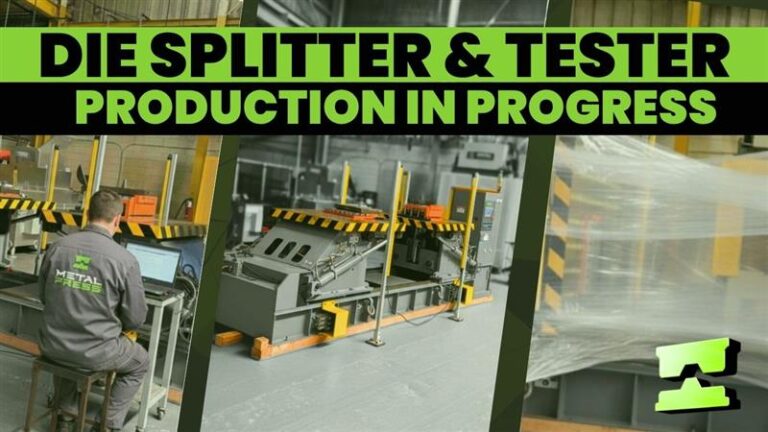
Die splitter and tester order, design & assembly project
Read about the successful project of engineering a die splitter and tester customized for a mold and tooling manufacturer, mid-west, USA.
How to Specify a Die Splitter or Die Separator Machine
A useful quotation starts with the maximum tool weight and dimensions, required opening position, center of gravity, available floor space, utilities, inspection tasks, and the functions that must be tested. These inputs determine the appropriate MDS model and options more reliably than selecting by the terms die handler or die manipulator, which can describe broader material-handling equipment.
Use a die splitter or mold separator when technicians need full internal access. Use a die spotting press when they need controlled closing force for contact, fit, and alignment verification. See the mold and die testing equipment comparison for both workflows.