
ELECTRICAL ENCLOSURE & CABINET FABRICATION
Cut accurate blanks and plan repeatable bends for electrical enclosure panels, cabinet doors and folded sheet metal assemblies.
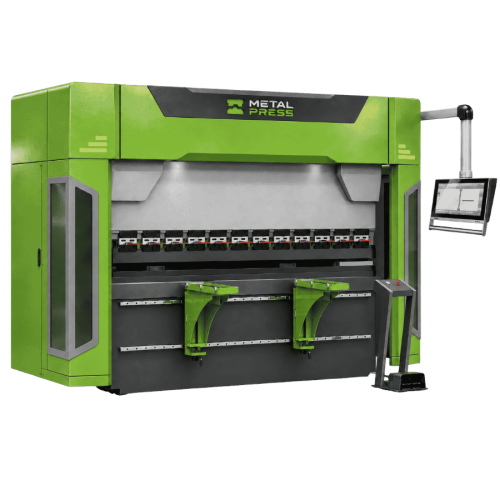
Equipment for Electrical Enclosures & Metal Cabinets
Electrical enclosure fabrication equipment prepares and forms the sheet metal parts that become cabinet bodies, doors, mounting panels and covers. A typical workflow starts with straight-cut blanks, then uses a press brake to form flanges and folds in a sequence that keeps the part accessible to the tooling.
For sheet metal cabinet fabrication, coordinate MGS guillotine-shear blank preparation with Titan CNC press-brake bending. Select each machine around the actual material, longest cut or bend, flange geometry and production quantity. Cutouts, welded joints, hardware installation and finishing are separate operations to plan alongside cutting and bending.
Explore the fabrication applications hub for other part and industry workflows.
Coordinate straight-cut blank preparation with multi-bend part planning when panel flanges, returns and access affect the operation sequence.
Match Cutting & Bending to the Part
Enclosure panels and cabinet doors often need both operations. Review the product pages for machine models, specifications and available configurations; use the part drawing to connect those capabilities to the manufacturing sequence.
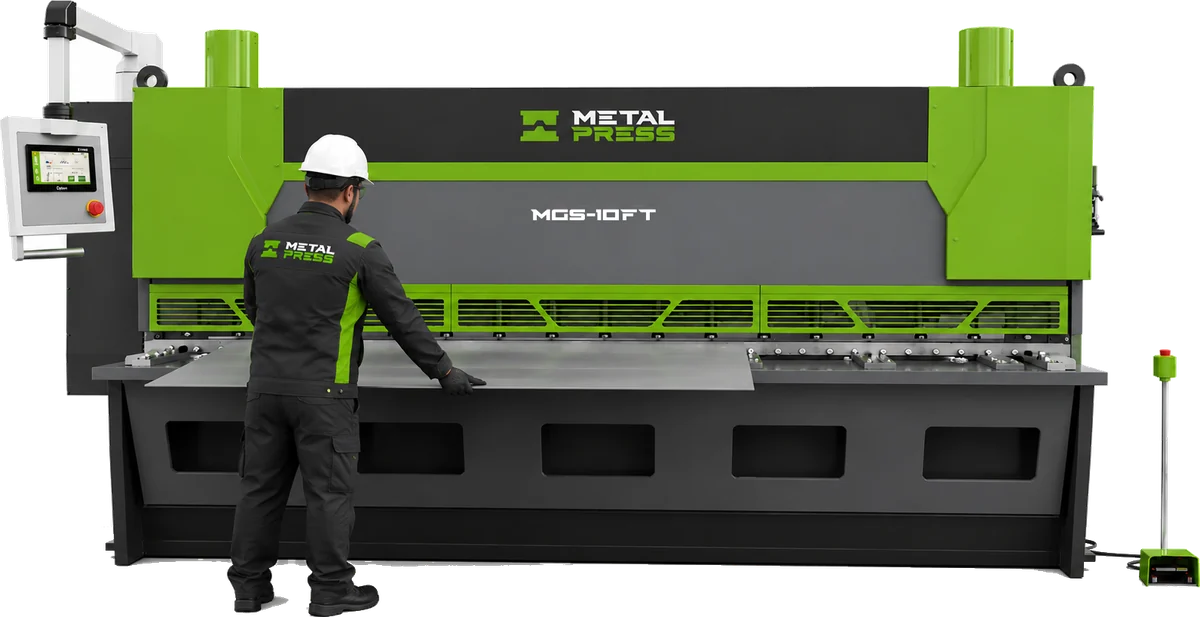
Straight-Cut Blanks for Panels & Doors
Start with blank dimensions, squareness, cut-edge requirements and the finished surface. Straight cuts can prepare cabinet side panels, door blanks, back panels and strips before bending. Define the narrowest strip, sheet size and handling arrangement as well as the material thickness.
The MGS hydraulic CNC guillotine shear supports straight-cut sheet and plate preparation. Review its model-specific cutting ratings, backgauge, blade-gap adjustment and sheet-support options for the selected grade. Apertures, ventilation patterns and internal cutouts require a suitable separate process.
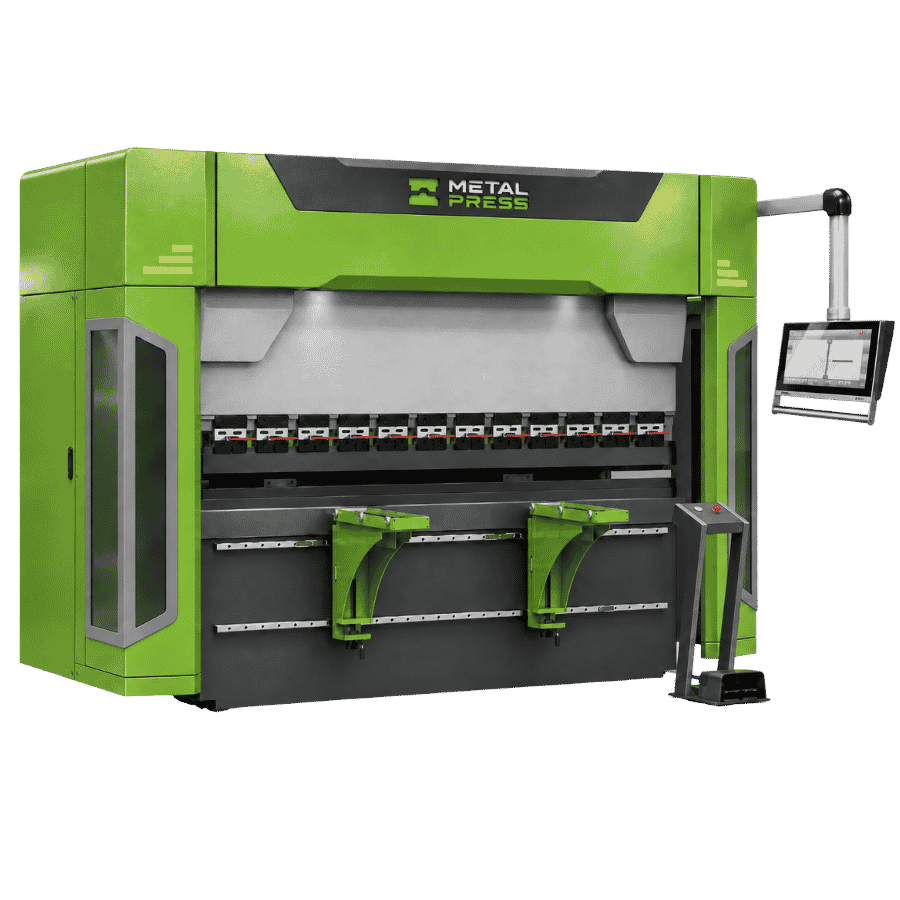
Bending Electrical Enclosure Panels
Plan the bends around the enclosure depth, return flanges, door geometry and access to the punch, die and backgauge. The longest bend and required forming force matter, but so do short flanges, inside radii, tool clearance and the ability to remove the folded part.
Use the Titan servo-hydraulic CNC press brake to review bending length, rated force, working clearance, tooling and backgauge configuration. For repeat cabinet work, document the tool setup, bend sequence and inspection points so recurring jobs can be prepared consistently.
Plan the Enclosure Fabrication Workflow
Blank layout & dimensional references
Identify the developed blank dimensions, grain direction where relevant, bend allowances and the reference edges used for gauging. Allow for downstream deburring and finishing without losing the drawing dimensions.
Bend sequence & tooling access
Check whether an earlier flange blocks a later bend, whether a return flange needs special tooling and whether the backgauge can locate the part at each step. Review the complete sequence before committing to a machine and tool combination.
Surface protection & handling
Specify cosmetic faces, protective film and acceptable contact marks. Discuss tool contact, sheet support and part handling for large panels or finished surfaces. Decide when film removal, deburring and coating occur in the production flow.
Fit-up & inspection
Check panel dimensions, bend angles, squareness and the fit of doors, covers and mating parts. Include hinge locations, fastening features and gasket interfaces in the drawing review, even when those features are produced by another operation.
Material & Finished-Enclosure Requirements
Mild steel, galvanized sheet, stainless steel and aluminum can require different cutting and bending setups. Provide the actual grade, strength, thickness and condition; for aluminum, include alloy and temper. Review bend radius, springback, edge condition and surface protection against that specification.
Equipment selection supports the fabrication process. Any required enclosure protection rating, electrical compliance or product certification must be addressed through the finished enclosure design, manufacturing controls and applicable verification—not inferred from the cutting or bending machine.
Prepare Your Cabinet Fabrication Enquiry
Send the flat pattern and finished-part drawing, material specification, thickness, overall dimensions and longest bend. Include flange lengths, inside radii, return bends, cutouts, cosmetic faces and the required tolerances.
Add typical batch sizes, repeat-job frequency, sheet loading arrangements, available floor space and power requirements. These inputs help review cutting length, bending capacity, tooling access, backgauge configuration and handling together. Discuss your enclosure and cabinet fabrication requirements with MetalPress.
Enclosure & Cabinet Fabrication Questions
A guillotine shear can prepare straight-cut blanks, and a CNC press brake forms bends and flanges. The part may also need separate cutout, deburring, joining, hardware and finishing operations. Start with the drawing and review the MGS shear and Titan press brake for the relevant operations.
A guillotine shear makes straight cuts from the sheet edge. Internal apertures, ventilation patterns and shaped cutouts need an appropriate separate process, such as punching or laser cutting. Plan that work with the blank and bend sequence.
Check the longest bend, material and thickness, flange lengths, inside radius, tooling access, backgauge positioning and handling. Verify that each bend can be completed without interference from previously formed flanges.
Specify the cosmetic surfaces and acceptable finish before selecting tooling and handling arrangements. Review protective film, contact surfaces, tool condition and sheet support for the actual material and production sequence.
No. A finished enclosure rating depends on its design, joints, seals, openings and applicable verification. A fabrication machine alone does not establish that rating.
The Titan press-brake product page and MGS guillotine-shear product page contain the model ranges and specifications. Use the enclosure drawings and production requirements to select the model, tooling and options.
PLAN YOUR NEXT
Share your part drawings and production requirements to review the cutting, bending, tooling and handling configuration.