
BENDING PRESS
Precision control for sheet metal bending, structural bending, and repeatable forming operations.

Industrial metal bending press
Precision Control For Complex Bending Applications
Metal bending is the process of deforming sheet metal, plate, or formed blanks into a controlled angle or shape without removing material. Unlike simple cutting operations, bending depends on stable force, accurate ram positioning, tooling alignment, material behavior, and repeatable stroke control to create consistent bends without excessive cracking, distortion, or variation. Depending on the application, bending may involve simple angle bends, flanges, channels, brackets, enclosure parts, reinforcement forms, and other shaped metal components.
For an overview of related forming processes and industry-specific solutions, explore our Press Applications resource hub.
At MetalPress Machinery, our bending presses are engineered to support a wide range of sheet metal bending and precision forming applications. Whether you are producing brackets, supports, enclosures, panels, channels, reinforcement parts, structural components, or other bent metal parts, our lineup includes the right mix of hydraulic bending presses, servo bending presses, and straight sided bending press platforms to match the material, tooling, and forming complexity of the job. From 4 post hydraulic presses for full-tonnage bending control to 4 post servo presses and straight sided servo presses for more advanced motion control, MetalPress offers bending press solutions built for repeatability, tooling protection, and part accuracy.
NINE BENDING PRESS OPTIONS
Every MetalPress bending press is selected to support rigidity, repeatability, motion control, and long-term production stability in industrial metal bending applications.
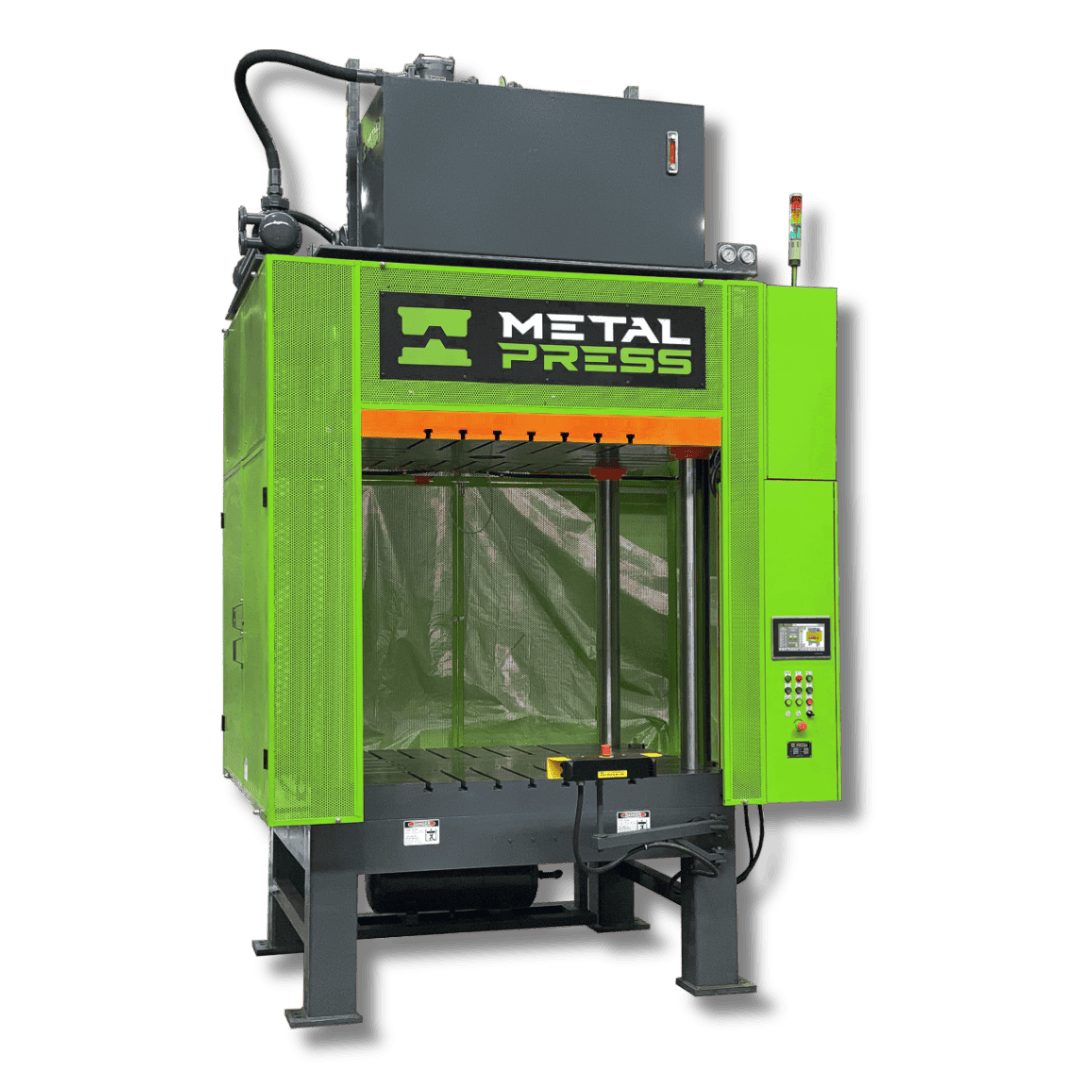
4 POST PRESS
4 post hydraulic presses are widely used in bending applications for producing brackets, panels, channels, support members, enclosures, and other formed components that require uniform pressure and dependable force throughout the stroke. They are especially well suited for sheet metal bending, structural bending, and other operations where stable tonnage, large platens, and consistent ram control help maintain bend accuracy across the workpiece. In metal bending production, these presses are commonly used for angle bending, flange forming, structural shaping, enclosure bending, and other operations where full tonnage throughout the stroke and adjustable control over speed and dwell improve part consistency and reduce variation.
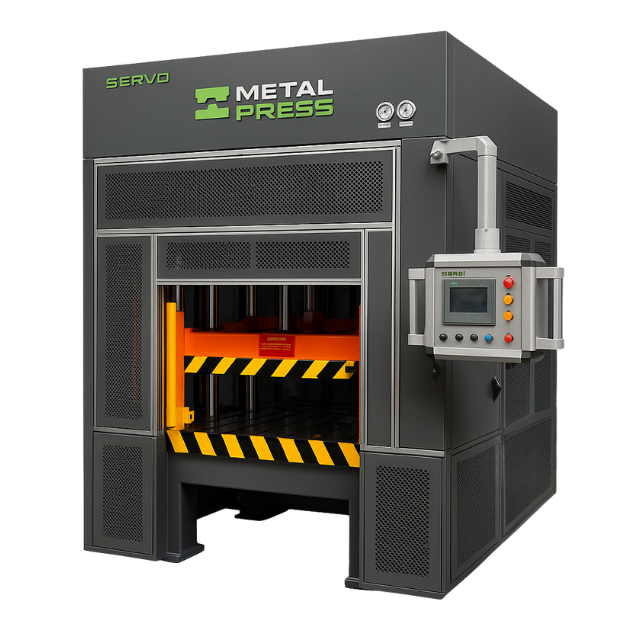
4 POST SERVO PRESS
4 post servo presses are widely used in metal bending for producing formed panels, structural brackets, channels, enclosure parts, support components, and other bent metal parts that require more control over force, speed, and position throughout the stroke. They are especially well suited for applications where programmable motion and repeatable stroke behavior can improve bend consistency, reduce springback, and support more accurate final geometry. In bending operations, these presses are commonly used for precision bending, multi-step forming, restriking, structural bends, and other controlled bending processes where servo motion can help optimize the cycle for part quality and tooling performance.
Straight sided servo hydraulic press
Straight sided servo presses are widely used in industrial bending for producing structural parts, heavier brackets, bent channels, formed assemblies, reinforcement parts, and other bent components that require rigid frame support and programmable stroke control. They are especially well suited for medium-to-heavy gauge materials and applications where off-center loads, larger tooling, or tighter bend consistency make frame stability especially important. In bending production, these presses are commonly used for precision bending, structural forming, angle bends, progressive bending operations, and other processes where controlled ram speed, dwell timing, and rigid slide guidance help improve repeatability and reduce tooling stress.
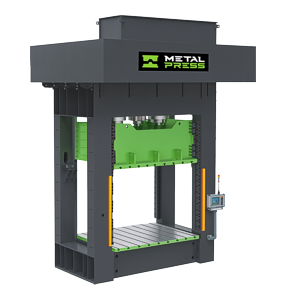
Single point straight sided servo press
Single point straight sided servo presses are a strong option for bending jobs that need a rigid straight-sided frame with servo-driven control over speed, position, and force. They are well suited for medium-size bent parts, brackets, support components, formed panels, and enclosure parts where precise bending control improves consistency. In metal bending applications, these presses are commonly used when the operation benefits from programmable speed profiles and tighter control at critical points in the stroke.
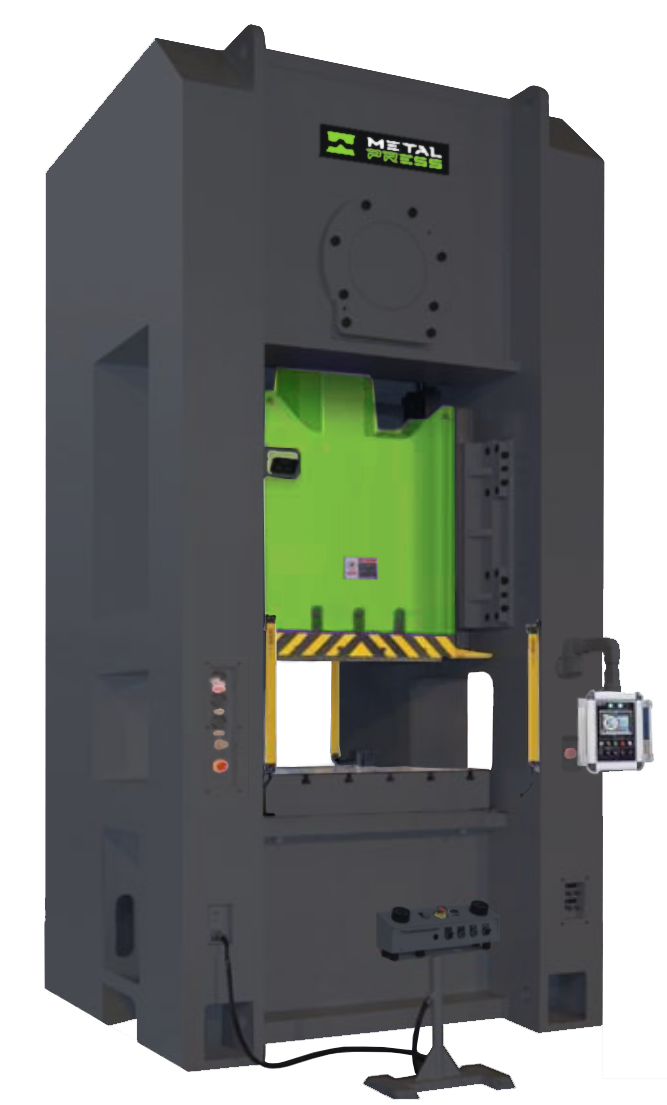
Double point straight sided servo press
Double point straight sided servo presses are widely used in more demanding bending operations where larger tooling, wider parts, or higher off-center loads require better support across the slide. They are especially useful for longer bends, structural formed parts, larger panels, and multi-stage bending work where balanced load distribution and servo control improve consistency across the full work area. These presses are a strong fit for larger precision bending and structural bending applications.
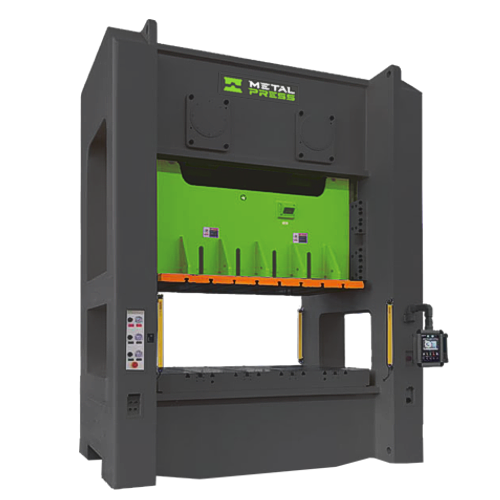
Single point straight sided press
Single point straight sided presses are widely used in metal bending for repeatable production on medium-size parts where frame rigidity and consistent stroke performance are important. They are a practical solution for brackets, supports, panels, and formed components that do not require servo programmability but still benefit from a stronger frame than a C-frame design. In bending applications, they support stable, repeatable operation for production-oriented jobs.
Double point straight sided press
Double point straight sided presses are well suited for larger or wider bending tooling where a more balanced slide support system is needed. They are commonly used for structural brackets, long formed parts, wider enclosures, and applications where even load distribution helps maintain bend consistency and reduce frame deflection. This makes them a strong fit for heavier-duty industrial bending operations.
C-Frame single crank servo press
C-frame single crank servo presses are a strong fit for smaller precision bending jobs where easy front access, fast setup, and programmable motion are important. They are commonly used for smaller brackets, clips, tabs, electrical components, lighter-gauge sheet parts, and other compact parts that need accurate bending with better control over the stroke. They are especially useful when sensitive materials or tighter bend tolerances benefit from servo motion.
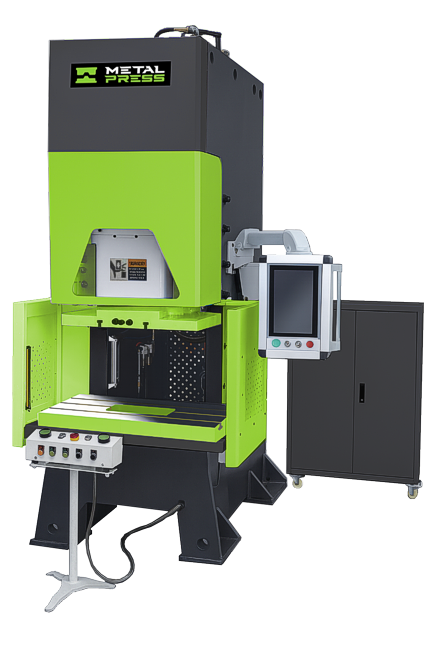
C-Frame double crank servo press
C-frame double crank servo presses support similar bending applications but with a wider work area and better support for broader tooling. They are useful for medium-size bent parts, wider brackets, support panels, and formed components where accessibility still matters but the tooling footprint is larger. In bending applications, they provide a strong balance of open access and servo-controlled repeatability.
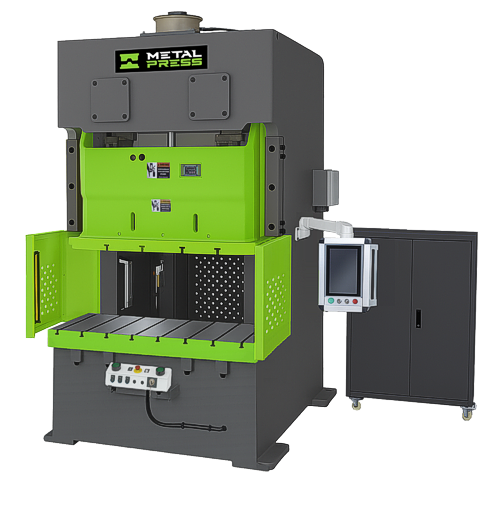
MINTING PRESS
TECHNICAL ADVANTAGE
FOR BENDING MANUFACTURERS
Every MetalPress bending machine is selected to support safe operation, tooling protection, and long-term bending performance in demanding industrial applications.
Full tonnage through the stroke: For bending operations that need stable force beyond a narrow snap-through window, hydraulic and servo hydraulic press platforms provide more usable tonnage throughout the stroke, which improves control on heavier bends and more demanding materials.
Programmable motion control: Servo-driven press platforms provide control over ram speed, position, and force throughout the stroke. That added programmability helps optimize bend quality, improve consistency, and reduce variation on more sensitive or complex bending jobs.
Rigid frame stability: Straight sided frame designs provide better resistance to deflection under load, which is especially important when bending larger parts, using wider tooling, or working with off-center bending loads.
User-friendly PLC control: Integrated controls help store setup parameters, improve repeatability across recurring jobs, and reduce downtime during changeovers.
Tooling protection and process consistency: Better control over approach speed, forming speed, and dwell timing helps reduce unnecessary tooling shock and supports more repeatable bending results.
Safety compliance: Modern guarding and operator-protection features help support safe bending operation in production environments.

Hydraulic Overload Protection
Standard on all models. Instantly releases pressure during a jam to prevent catastrophic frame or die damage.
User-Friendly PLC Control
Integrated recipe storage means faster setup times on recurring jobs. Less downtime between changeovers.
Enhanced Drive Systems
Advanced lubrication and high-efficiency motors reduce noise and energy consumption during continuous operation.
Safety Compliance
Fully compatible with modern light curtains and dual-hand safety controls for a secure working environment.
Choosing the Right Press Configuration & Press Frame
In bending, you are not removing material. You are controlling how the metal deforms into an angle or formed shape. That means the right bending press depends on force delivery, frame rigidity, stroke control, part size, tooling width, and material behavior.
- For smaller precision bending jobs: C-frame servo presses are often the best choice because they offer easy access, faster setup, and more control over the stroke for smaller parts.
- For precision bending with better motion control: Servo press platforms are a strong choice because they provide control over ram speed, position, and force throughout the stroke. That makes them especially valuable when material behavior or bend consistency is critical.
- For larger tooling and more structural support: Straight sided presses are usually the stronger option because their rigid closed-frame structure handles heavier loads and broader tooling more consistently than open-frame designs.
- For heavier-duty sheet metal bending: 4 post hydraulic presses are often preferred where the application needs stable force delivery, full tonnage throughout the stroke, and better control over dwell and speed.
- For demanding structural bending: Straight sided servo presses are a strong solution when the process needs both frame rigidity and programmable motion control.
Selecting the right bending presses
Straight-sided bending presses
For larger sheet metal bending, wider tooling, and structural parts, straight-sided presses offer the strongest platform. Single point models fit centered-load applications, while double point models are better for wider tooling and uneven load distribution.
C-frame bending presses
For smaller parts, lighter-gauge materials, and applications that benefit from easier front access, C-frame servo presses offer an efficient and flexible solution.
Servo bending presses
Servo presses are ideal when the job needs programmable ram motion, reduced springback risk, improved bend consistency, and tighter control over the bend cycle.
Hydraulic bending presses
Hydraulic presses are strongest when the process needs full tonnage through the stroke, more flexible speed control, uniform pressure, and more controlled bending on thicker or more demanding materials.
MATERIAL ENGINEERING FOR METAL FLOW AND BENDING
In metal bending, the press must control how the material stretches and compresses around the bend line. The success of the operation depends on how well the machine manages force, stroke behavior, material springback, and tooling alignment.
Aluminum alloys
- Characteristics: Lightweight and formable, but prone to springback and cracking if the bend radius is too tight.
- Bending note: Aluminum often benefits from better stroke control and smoother forming speed to reduce cracking and improve bend consistency.
- Recommended press: C-frame single crank servo press or single point straight sided servo press.
Mild and carbon steels
- Characteristics: Versatile and commonly used in industrial bending because of their balanced ductility and strength.
- Bending note: These materials handle a broad range of bending operations well, from brackets to structural formed parts.
- Recommended press: Single point straight sided press, double point straight sided press, or 4 post hydraulic press.
Stainless steel
- Characteristics: Strong and corrosion resistant, but more prone to springback and work hardening during bending.
- Bending note: Stainless often benefits from better control over force and stroke speed to maintain bend accuracy and reduce variation.
- Recommended press: Single point straight sided servo press, double point straight sided servo press, or 4 post servo press.
HSLA and higher-strength steels
- Characteristics: Higher strength and lower formability than mild steel, often requiring more rigid press support and more stable force delivery.
- Bending note: These materials need stronger frame support and controlled motion to reduce deflection and improve bend accuracy.
- Recommended press: Double point straight sided press, double point straight sided servo press, or straight sided servo press.
| BENDING PROPERTIES BY MATERIAL GROUP | |||
| Material Group | Typical Bending Behavior | Springback Risk | Recommended Press Direction |
| Aluminum Alloys | Good formability, more speed-sensitive | Medium to High | Servo |
| Mild Steel | Balanced and versatile | Low to Medium | Mechanical or Hydraulic |
| Stainless Steel | Stronger, more springback | Medium to High | Servo or Hydraulic |
| HSLA Steel | Higher force demand | High | Straight-Sided or Servo Hydraulic |
Bending & Metal Flow Selector
High Force Requirement
This operation exceeds 2,500 Tons. Contact our specialized engineering team for custom high-tonnage solutions.
Consult an Engineer →Related Technical Guides
Review these technical guides for additional engineering context on Metal Forming, equipment selection, safety, and production planning.