

Blog
Finalizing & Precommissioning the THC‑D‑24 Hot Oil Temperature Control Unit

How We Reached This Stage
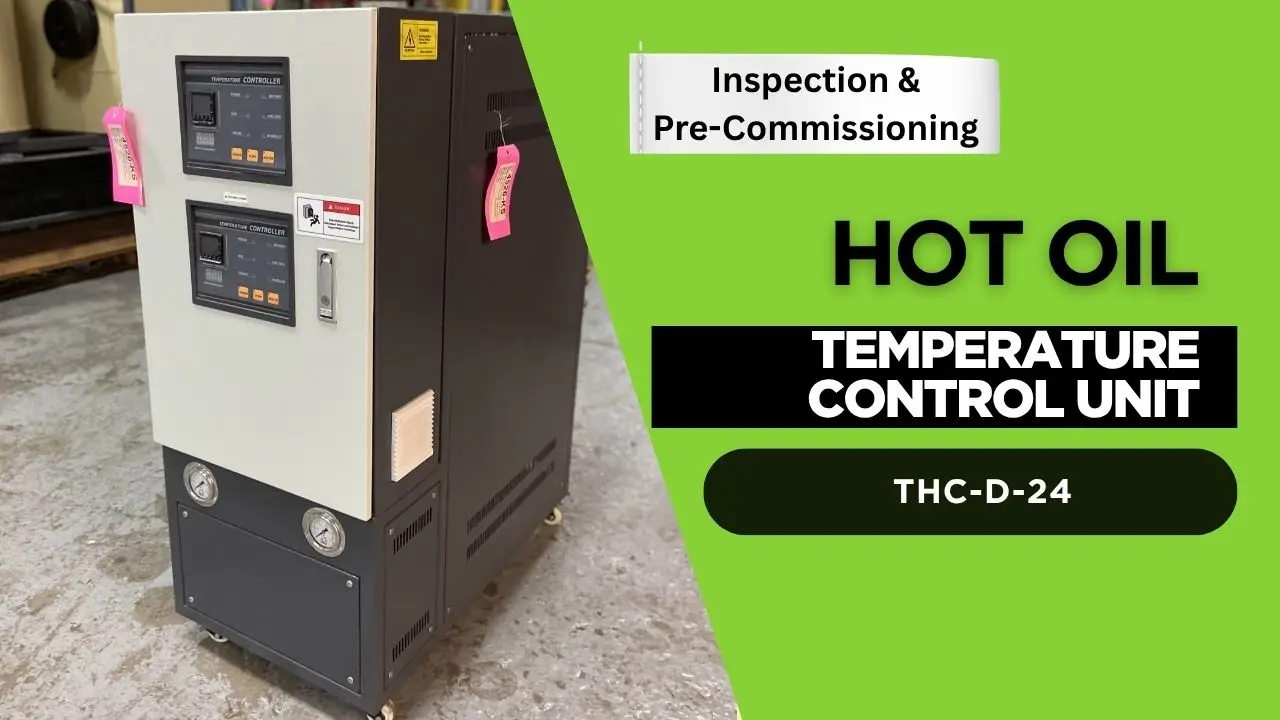
Before the THC‑D‑24 hot oil temperature control unit ever entered its testing phase, it had already traveled through a detailed engineering and fabrication journey. In Phase One, we followed the story from the moment a Michigan‑based plastics manufacturer reached out through our website, searching for a reliable high‑temperature solution to stabilize their molding process. Their existing system struggled to maintain consistent thermal performance, causing fluctuations that impacted product quality and cycle efficiency. After reviewing their requirements, our engineering team selected the THC‑D‑24, a robust hot oil TCU capable of delivering precise temperature control up to 300°C.
Phase One documented the design, engineering, component selection, fabrication, and safety integration that brought the machine to life. Now, in Phase Two, the focus shifts from construction to validation—ensuring that the THC‑D‑24 thermal oil heater performs exactly as engineered before it is shipped to the customer’s facility.
See the current THC-D and THC-S hot oil temperature control units for product information. Engineers comparing circulating media can also use the oil-versus-water TCU guide.
👉 Previously, our engineers finished the design and assembly of this THC-D-24 unit. You can review the journy again
Understanding Hot Oil Temperature Control Units
Before diving into the engineering process, it’s important to understand the role of hot oil temperature control units in modern manufacturing.
What Is a Hot Oil Temperature Control Unit?
A hot oil temperature control unit—also known as a hot oil TCU, thermal oil heater, or high‑temperature process heating system—is designed to heat and circulate thermal oil through molds, dies, tanks, or process equipment. Unlike water‑based systems, hot oil TCUs can reach significantly higher temperatures without pressurization, making them ideal for high‑temperature industrial processes.
Where Hot Oil TCUs Are Used
These systems are essential in:
Plastics injection molding
Extrusion and blow molding
Die casting
Chemical processing
Food and pharmaceutical heating
Oil and gas equipment conditioning
Any process requiring stable, high‑temperature control benefits from a hot oil temperature control unit like the THC‑D‑24.
Key Specifications of the THC‑D‑24
Heating Capacity: 24 kW
Maximum Operating Temperature: 300°C
Pump Type: High‑flow, high‑temperature circulation pump
Pump Flow Rate: Engineered for stable oil movement through long and complex channels
Reservoir: Integrated thermal expansion tank
Construction: Stainless‑steel piping and high‑temperature fittings
Controls: Digital temperature controller with PID logic
Safety Features:
Over‑temperature protection
Low‑level and low‑flow alarms
High‑temperature insulation
Emergency shutoff circuits
Electrical System: Fully enclosed control cabinet with relays, breakers, and HMI interface
👉 You can visit our hot oil temperature control units (THC-D Series) page and contact our specialists for details about our trim presses.
Finalizing the Build: Preparing the THC‑D‑24 for Activation
Once the mechanical assembly of the hot oil temperature control unit was complete, our team began the finalization stage. This is where the machine transitions from a fully assembled structure into a functional thermal system. Every connection, fitting, and electrical component must be verified before the first drop of thermal oil ever enters the system.
The finalization process began with a complete inspection of the heater housing, pump assembly, reservoir tank, and stainless‑steel piping. Our technicians checked every weld, every threaded connection, and every gasket to ensure the system was sealed and ready for high‑temperature operation. The THC‑D‑24 is designed to operate at temperatures up to 300°C, so even the smallest imperfection could compromise performance or safety.
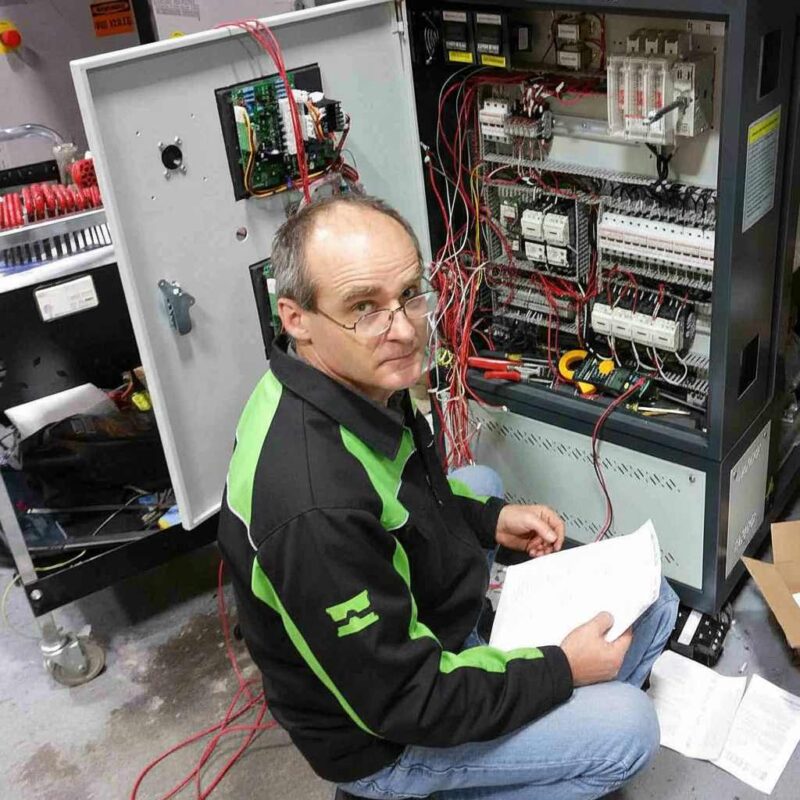
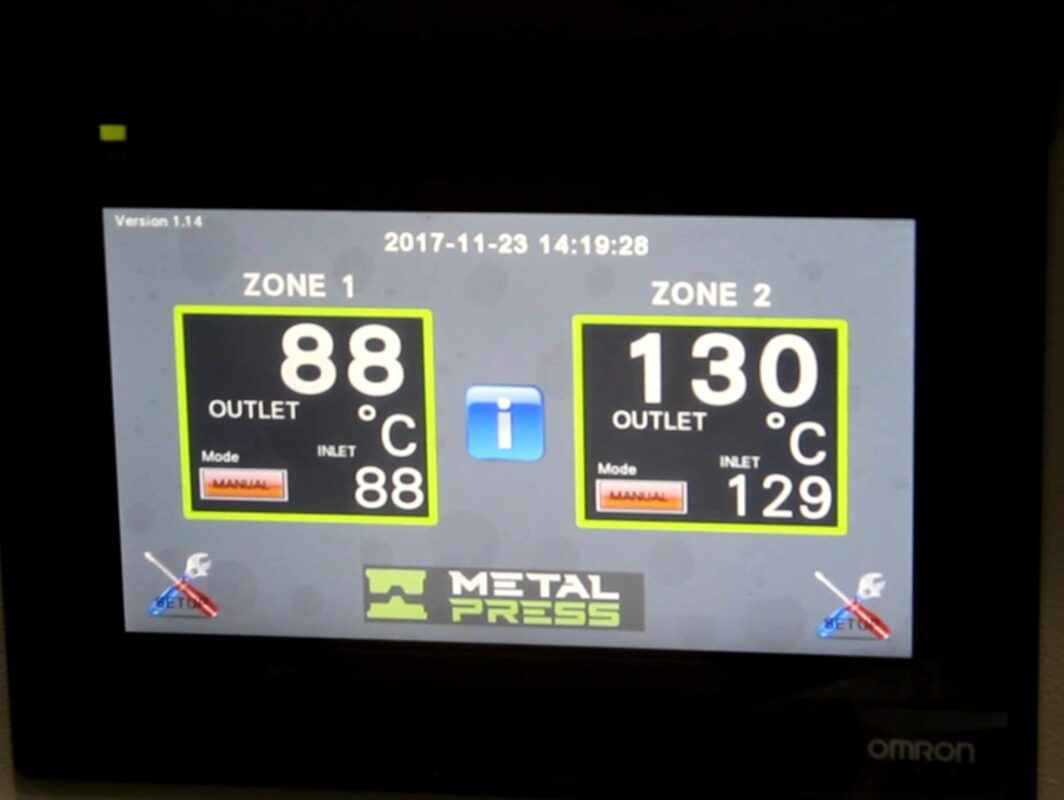
Next, the electrical system was reviewed. The control cabinet—housing the digital PID controller, relays, breakers, and safety circuits—was powered on for the first time. The HMI interface illuminated, displaying the system’s default configuration. This moment marks the transition from fabrication to functionality, when the hot oil TCU begins to feel like a living machine.
During finalization, the circulation pump was aligned and tested for smooth rotation. The pump is a critical component of the THC‑D‑24, responsible for maintaining consistent oil flow through the customer’s tooling. Any vibration, misalignment, or irregularity must be addressed before testing begins.
The thermal expansion tank was inspected and filled to the appropriate level. This tank allows the oil to expand safely as it heats, preventing pressure buildup and ensuring stable operation. The tank’s level sensors and safety switches were calibrated to ensure accurate readings during operation.
By the end of the finalization stage, the THC‑D‑24 was fully assembled, wired, plumbed, and ready for the next phase: testing and inspection.
Testing and Inspection: Verifying Performance and Reliability
Testing is the heart of Phase Two. This is where the THC‑D‑24 hot oil temperature control unit proves its capability, demonstrating that it can deliver the precise, stable, and reliable performance required by the Michigan manufacturer.
Initial Dry‑Run Testing
Before introducing thermal oil into the system, our technicians performed a dry‑run test. This involved powering the circulation pump, verifying the rotation direction, and checking for smooth operation. The pump must run quietly and consistently, without vibration or irregular movement. Any deviation could indicate misalignment or mechanical issues that must be corrected before heating begins.
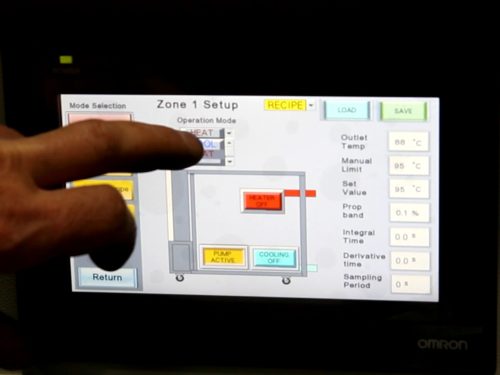
The control panel was also tested during the dry run. The HMI interface was navigated to ensure all menus, settings, and alarms functioned correctly. The PID controller was checked for responsiveness, ensuring it could adjust temperature settings accurately and quickly.
Filling the System and Bleeding Air
Once the dry‑run test was complete, the system was filled with high‑temperature thermal oil. This process must be done slowly and carefully to prevent air pockets from forming in the piping or pump. Air in the system can cause cavitation, reduce heat transfer efficiency, and damage the pump.
Our technicians monitored the oil level in the expansion tank, ensuring the system was filled to the correct capacity. The circulation pump was activated at low speed to begin moving oil through the system, gradually pushing out any trapped air.
Heating Cycle Testing
With the system filled and air removed, the THC‑D‑24 was ready for its first heating cycle. The temperature was increased gradually, allowing the oil to warm evenly and the system to expand naturally. During this stage, our technicians monitored:
Temperature rise rate
Heater responsiveness
Pump flow stability
Pressure levels
Expansion tank behavior
Control panel readings
The THC‑D‑24 is engineered to reach temperatures up to 300°C, but the first test cycle typically stops at a lower threshold to verify system stability. Once the initial cycle is complete, the temperature is increased in controlled increments until the system reaches its maximum operating temperature.
Temperature Stability Verification
One of the most important aspects of a hot oil temperature control unit is its ability to maintain stable temperatures over long periods. The Michigan manufacturer required tight temperature control to ensure consistent molding quality, so stability testing was a critical part of Phase Two.
The THC‑D‑24 was operated at various temperature setpoints, and the system’s ability to maintain those temperatures within ±1°C was verified. The PID controller was fine‑tuned to ensure rapid response without overshooting or oscillation.
Flow and Pressure Testing
The circulation pump was tested at multiple speeds to verify consistent flow through the system. Flow meters and pressure gauges were monitored to ensure the pump delivered the required performance under different temperature conditions.
Stable flow is essential for uniform heat distribution, especially in complex tooling with long or narrow channels. The THC‑D‑24 demonstrated strong flow performance, confirming that it would meet the customer’s requirements.
Safety System Validation
Safety is a core part of every thermal system we build. During testing, our technicians verified:
Over‑temperature protection
Low‑level alarms
Low‑flow alarms
Emergency shutoff circuits
High‑temperature insulation performance
Pressure‑relief valve operation
Each safety feature was tested individually to ensure it responded correctly under simulated fault conditions. This ensures that the hot oil TCU will operate safely even in unexpected scenarios.
Pre‑Shipping Preparation: Protecting the THC‑D‑24 for Transport
Once testing and inspection were complete, the THC‑D‑24 entered the pre‑shipping stage. This is where the machine is prepared for transport to the Michigan facility.
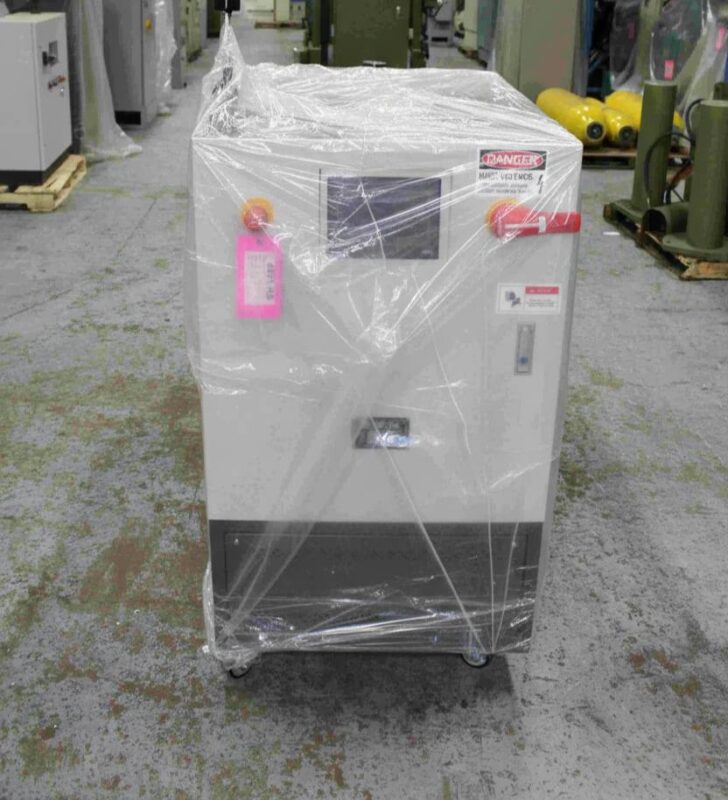
The system was drained of thermal oil, and all ports were sealed to prevent contamination. Sensitive components were covered, and the entire unit was wrapped to protect it from dust, moisture, and vibration during transport.
The THC‑D‑24 was secured to a reinforced shipping base designed to handle its weight and maintain alignment during transit. All accessories, manuals, and documentation were packaged separately and labeled for easy identification upon arrival.
Pre‑shipping preparation ensures that the hot oil temperature control unit arrives in perfect condition, ready for installation and commissioning.
Pre‑Commissioning: Ensuring a Smooth Startup at the Customer’s Facility
Once testing and inspection were complete, the THC‑D‑24 entered the pre‑shipping stage. This is where the machine is prepared for transport to the Michigan facility.
The system was drained of thermal oil, and all ports were sealed to prevent contamination. Sensitive components were covered, and the entire unit was wrapped to protect it from dust, moisture, and vibration during transport.
The THC‑D‑24 was secured to a reinforced shipping base designed to handle its weight and maintain alignment during transit. All accessories, manuals, and documentation were packaged separately and labeled for easy identification upon arrival.
Pre‑shipping preparation ensures that the hot oil temperature control unit arrives in perfect condition, ready for installation and commissioning.
Pre‑Commissioning: Ensuring a Smooth Startup at the Customer’s Facility
Before the THC‑D‑24 leaves our facility, we complete a pre‑commissioning review to ensure that installation and startup at the customer’s site will be seamless.
This includes:
Verifying all documentation
Finalizing electrical and hydraulic schematics
Preparing installation guidelines
Creating a recommended maintenance schedule
Providing startup procedures
Preparing operator training materials
We also simulate the commissioning sequence to ensure the system will respond correctly during its first real production cycles.
Pre‑commissioning is the final checkpoint before the machine begins its journey. It ensures that the THC‑D‑24 hot oil TCU will be ready for immediate integration into the customer’s workflow.
Phase Two Conclusion: A Fully Verified Hot Oil Temperature Control Unit
By the end of Phase Two, the THC‑D‑24 had completed its transformation from a fully assembled structure into a tested, inspected, and pre‑commissioned thermal system. Every component—from the heating elements to the circulation pump to the safety circuits—was validated to ensure long‑term reliability and consistent performance.
The machine is now ready for shipment to the Michigan manufacturer, where Phase Three will begin: installation, commissioning, operator training, and long‑term support.
Let Us Make Your Next Temprature Control Unit
Whether you’re located in the USA, Canada, Mexico, or South America, you can contact us for more information, pricing, and consultations through our online forms, or by phone or email.
View Our Hot Oil Temprature Control Units – THC-D Series
View All Our Temprature Control Units