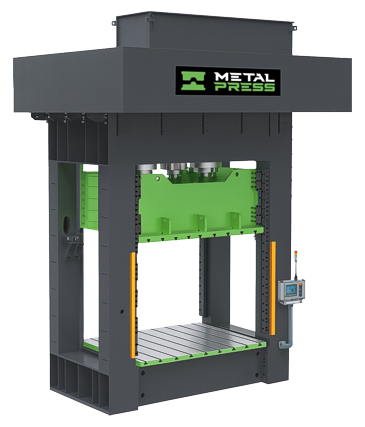
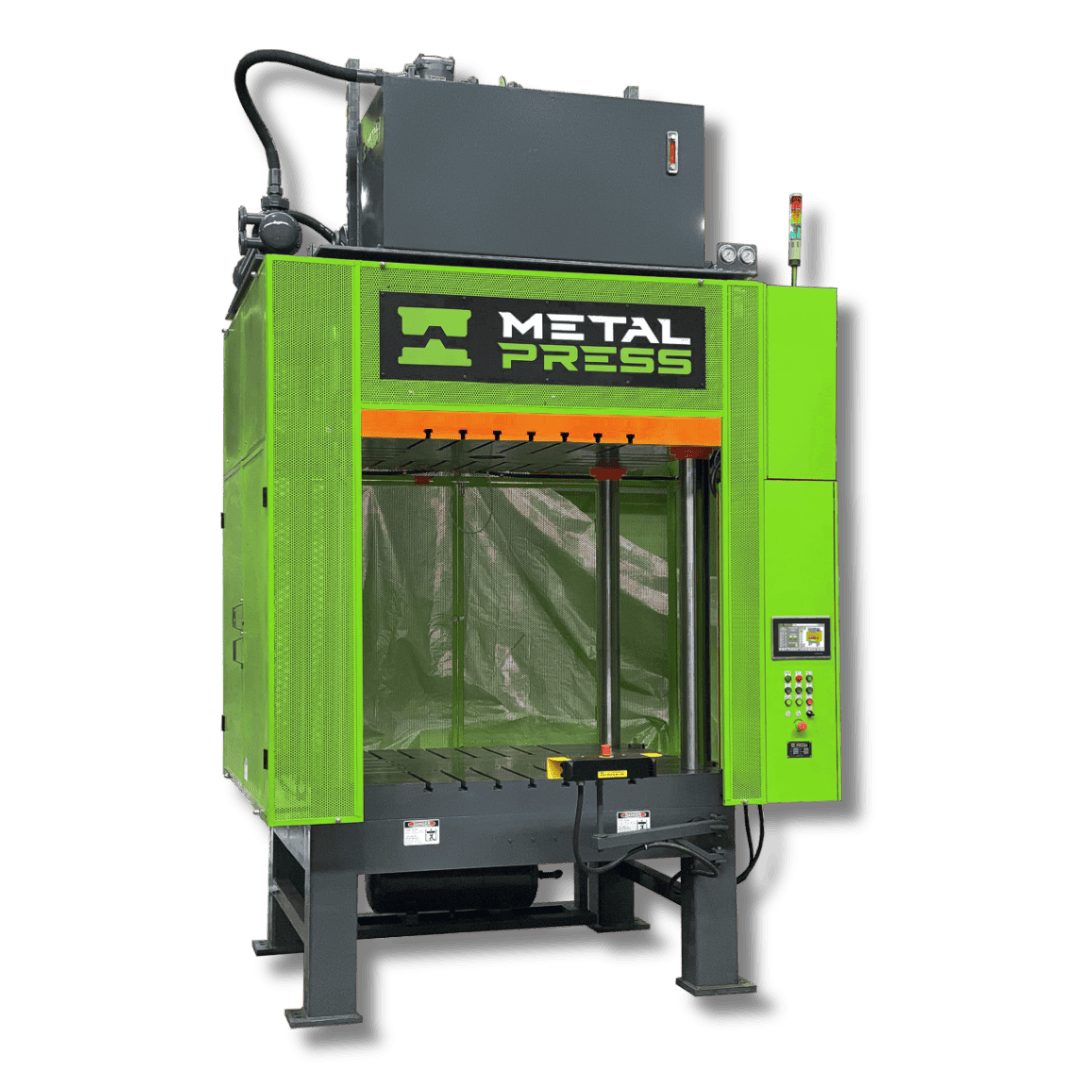
Metal forming, stamping, and forging are core manufacturing processes used to produce components with high strength, dimensional accuracy, and efficient material utilization. Hydraulic presses play a central role in these processes because they can deliver controlled, sustained compressive force over a wide range of stroke lengths and deformation rates.
Unlike impact-based machines or high-speed mechanical presses, hydraulic presses allow engineers to precisely regulate pressure, displacement, and dwell time. This capability is particularly important when forming high-strength alloys, complex geometries, or parts requiring tight tolerances. This article examines how hydraulic presses are applied in metal forming, stamping, and forging, with a focus on process mechanics, press requirements, and technical advantages.
Hydraulic presses offer sustained force and adjustable ram speed, which typically makes them preferable for forming operations where precision and control are critical. For extremely high-volume stamping or very high-speed forging, mechanical or mechanical-hydraulic presses may be better suited in specific applications.
Fundamentals of Metal Forming Processes
Metal forming involves the plastic deformation of metals without material removal. Deformation occurs when applied stress exceeds the material’s yield strength but remains below its fracture limit.
Key variables influencing metal forming include:
Applied force and pressure
Strain rate
Temperature
Tool geometry
Material properties
Hydraulic presses are uniquely suited to control these variables due to their force-controlled operation.
Hydraulic Presses in Sheet Metal Forming
Sheet Metal Forming Overview
Sheet metal forming processes transform flat sheets into three-dimensional shapes. These processes rely on controlled plastic flow rather than cutting.
Common sheet metal forming operations include:
Bending
Stretch forming
Drawing
Flanging
Hydraulic presses are commonly selected for sheet metal forming when:
Part geometry is complex
Material thickness varies
Controlled deformation is required
Bending and Forming Operations
In bending operations, a hydraulic press applies force through a punch to deform sheet metal over a die.
Advantages of hydraulic presses in bending include:
Adjustable stroke length
Uniform force application
Reduced springback through controlled dwell
Hydraulic presses are often used when forming high-strength steels and aluminum alloys that exhibit significant elastic recovery.
Deep drawing is a specialized forming process in which a flat blank is drawn into a die cavity using a punch while material flow is regulated by a blank holder.
Critical parameters include:
Punch force
Blank holder force
Friction conditions
Hydraulic presses allow independent control of punch and blank holder forces, which is difficult to achieve with mechanical presses.
Benefits of Hydraulic Presses in Deep Drawing
Hydraulic presses provide:
Reduced wrinkling and tearing
Improved thickness distribution
Greater process stability
These benefits make hydraulic presses especially suitable for deep-drawn components such as housings, enclosures, and structural shells.
Stamping and Blanking Processes
Stamping Fundamentals
Stamping involves shaping metal by pressing it between a punch and die. Operations may include:
Blanking
Piercing
Embossing
Coining
Stamping is often associated with high-speed mechanical presses, but hydraulic presses are used when process control is prioritized over speed.
When Hydraulic Presses Are Preferred for Stamping
Hydraulic presses are advantageous for stamping when:
Material thickness is high
Tonnage requirements vary
Dwell time at full force is required
Hydraulic presses are commonly used for short-run production, prototyping, and large or complex stamped parts.
Forging with Hydraulic Presses
Forging Process Overview
Forging shapes metal by applying compressive forces using dies. Forged parts exhibit improved mechanical properties due to grain flow alignment.
Forging processes are classified as:
Hot forging
Warm forging
Cold forging
Hydraulic Press Forging vs Impact Forging
Hydraulic forging presses apply force gradually rather than through impact.
Technical advantages include:
Uniform deformation
Reduced internal stresses
Improved die life
Because deformation occurs under controlled conditions, hydraulic forging presses are widely used for large and high-value components.
Hot Forging Applications
In hot forging, materials are heated above their recrystallization temperature to reduce flow stress.
Hydraulic presses enable:
Controlled strain rates
Long stroke forging
High-force application
These characteristics are essential for forging large structural components and alloy steels.
Cold Forging and Coining
Cold forging is performed at or near room temperature and requires extremely high pressures.
Hydraulic presses are used for:
Coining
Precision cold forging
Upsetting
Precise pressure control minimizes dimensional variation and tool wear.
Tooling Considerations for Hydraulic Presses
Tooling for metal forming and forging must withstand extreme loads and repeated cycles.
Key tooling considerations include:
Die material selection
Surface treatments
Alignment and guidance
Hydraulic presses impose lower shock loads compared to impact presses, which can extend tooling life.
Material Considerations in Hydraulic Press Forming
Hydraulic presses are used to form a wide range of materials, including:
Carbon steels
Stainless steels
Aluminum alloys
Titanium alloys
Copper alloys
Materials with limited formability benefit from the controlled deformation offered by hydraulic presses.
Precision and Process Control
Hydraulic presses support advanced control strategies, including:
Force-controlled forming
Position-controlled forming
Multi-stage pressing cycles
Sensors and feedback systems allow real-time monitoring of force and displacement, improving quality and repeatability.
Production Volume and Economic Considerations
Hydraulic presses are typically selected for:
Low to medium production volumes
High-value or complex parts
Processes requiring flexibility
While cycle times may be longer than mechanical presses, reduced scrap and tooling costs often offset productivity differences.
Safety in Metal Forming and Forging Operations
Metal forming and forging involve significant hazards due to high forces and stored energy.
These advancements reduce energy consumption and environmental impact.
Conclusion
Hydraulic presses are essential tools for metal forming, stamping, and forging applications that demand precise force control and process flexibility. Their ability to apply full tonnage throughout the stroke, regulate deformation rates, and maintain pressure during dwell makes them particularly effective for forming complex and high-strength materials.
As manufacturing continues to evolve toward lighter materials and tighter tolerances, hydraulic press technology remains a critical enabler of advanced metalworking processes.
While hydraulic presses excel in precision and force control for forming, stamping, and many forging operations, mechanical presses still lead in very high cycle-rate stamping lines where speed outweighs control requirements. Choosing between technologies should be based on cycle demands, part geometry, and production priorities.
References
Kalpakjian, S., & Schmid, S. Manufacturing Processes for Engineering Materials, Pearson Education.
Hosford, W. F., & Caddell, R. M. Metal Forming: Mechanics and Metallurgy, Cambridge University Press.
ASM Handbook, Volume 14: Forming and Forging, ASM International.
Groover, M. P. Fundamentals of Modern Manufacturing, Wiley.
ISO 4413:2010 – Hydraulic Fluid Power — General Rules and Safety Requirements.
Dieter, G. E., & Bacon, D. Mechanical Metallurgy, McGraw-Hill.
ASTM A370 – Standard Test Methods and Definitions for Mechanical Testing of Steel Products.
Let Us Make Your Next Press
Whether you’re located in the USA, Canada, Mexico, or South America, you can contact us for more information, pricing, and consultations through our online forms, or by phone or email.