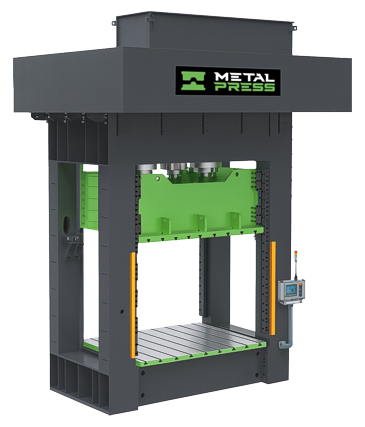
When it comes to metal forming and manufacturing, one of the most critical decisions a shop owner or engineer must make is selecting the correct press tonnage for their application. Choosing the wrong press can lead to inefficiencies, poor part quality, excessive wear on equipment, and even safety risks. This guide will walk you through the factors you need to consider when deciding what size tonnage press you need, with a particular focus on servo presses, which are increasingly popular in modern production environments.
Article Keywords: servo press, servo press tonnage, servo press applications, what size press do I need, press tonnage calculation, servo press benefits, metal forming press
Understanding Press Tonnage
Press tonnage refers to the maximum force a press can exert, usually measured in tons. The tonnage required depends on the material being formed, the thickness of the material, and the complexity of the part being produced. Using a press with insufficient tonnage can result in incomplete forming, while using a press with excessive tonnage may increase energy costs, reduce precision, and wear out tooling faster.
Servo presses offer an advanced alternative to traditional mechanical or hydraulic presses. They provide precise control over tonnage and stroke, making them ideal for applications where accuracy, repeatability, and energy efficiency are important.
👉 We have numerous types of mechanical presses and hydraulic presses. View the details.
Selecting the right tonnage is not just about having enough power to shape the metal; it’s about optimizing production. Here’s why tonnage selection matters:
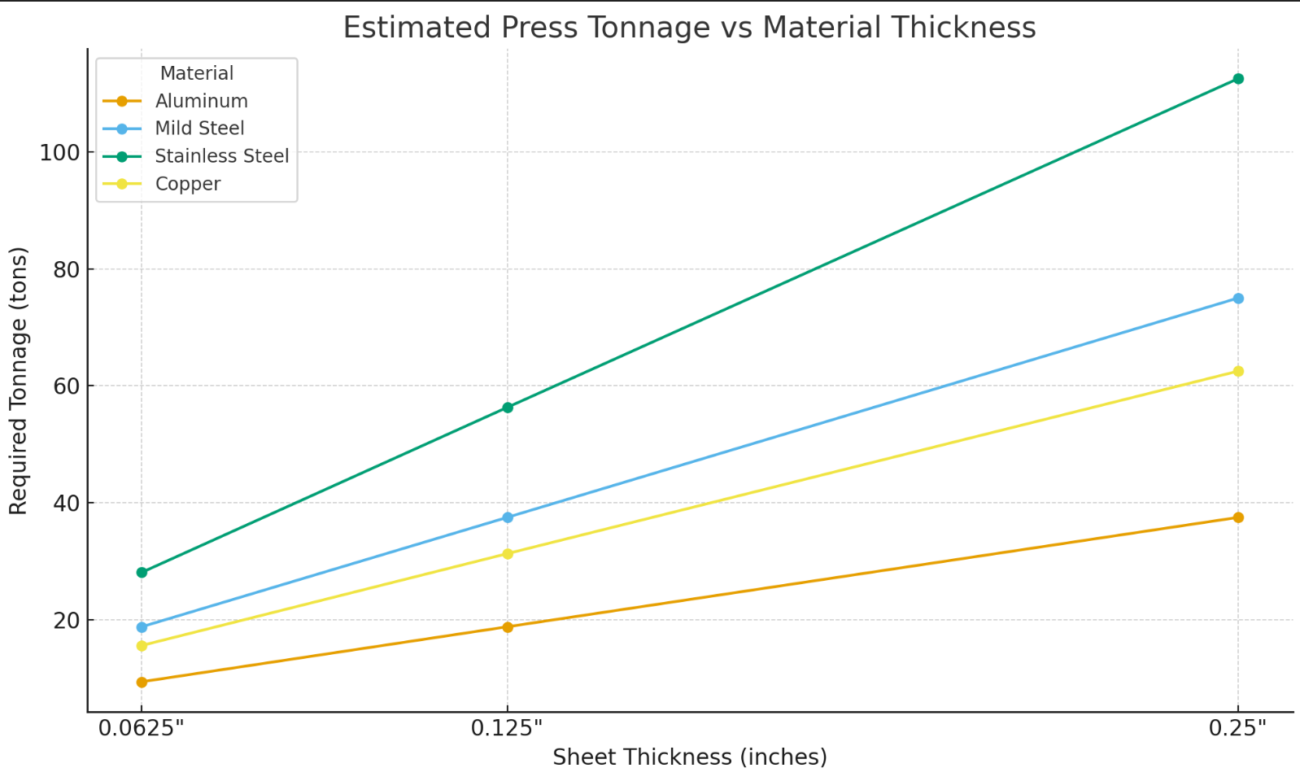
Material Thickness and Type: Harder metals like stainless steel require more tonnage to form than softer metals like aluminum. Similarly, thicker sheets need more force than thinner ones.
Tooling Life: Pressing with too much tonnage can damage dies and tooling, while too little can cause incomplete forming, both leading to increased wear and maintenance costs.
Part Accuracy: A press with controllable tonnage, such as a servo press, can deliver consistent force for high-precision parts.
Production Efficiency: The correct press tonnage ensures faster cycles, lower energy consumption, and reduced scrap rates.
👉 Did you know that Servo Presses are more efficient and energy saving? We have both mechanical servo presses and Hydraulic servo presses. View the models and find what you need.
Start by considering the type of metal or material you plan to form. Each metal has a tensile strength, which determines the force required to deform it. Common examples include:
Aluminum: ~30,000–50,000 psi
Mild Steel: ~60,000–70,000 psi
Stainless Steel: ~70,000–120,000 psi
For complex or multi-layered components, you must calculate tonnage based on the strongest material involved.
Sheet Thickness
Thicker sheets require more force. A general rule of thumb is:
Required Tonnage = Material Strength × Area / 2000
Where area is in square inches, material strength in psi, and the result in tons. This formula gives a rough estimate, but consulting with press manufacturers or engineers is recommended for precision.
Part Complexity
Parts with intricate shapes, deep draws, or high embossing may require higher tonnage to avoid defects like wrinkling or tearing. Servo presses shine in these scenarios because they allow precise control of speed, position, and force throughout the stroke, reducing risk to tooling and improving quality.
Production Volume
High-volume production may benefit from slightly oversized tonnage for speed and consistency, whereas low-volume custom jobs may prioritize precision and energy efficiency, where servo presses excel.
Type of Press
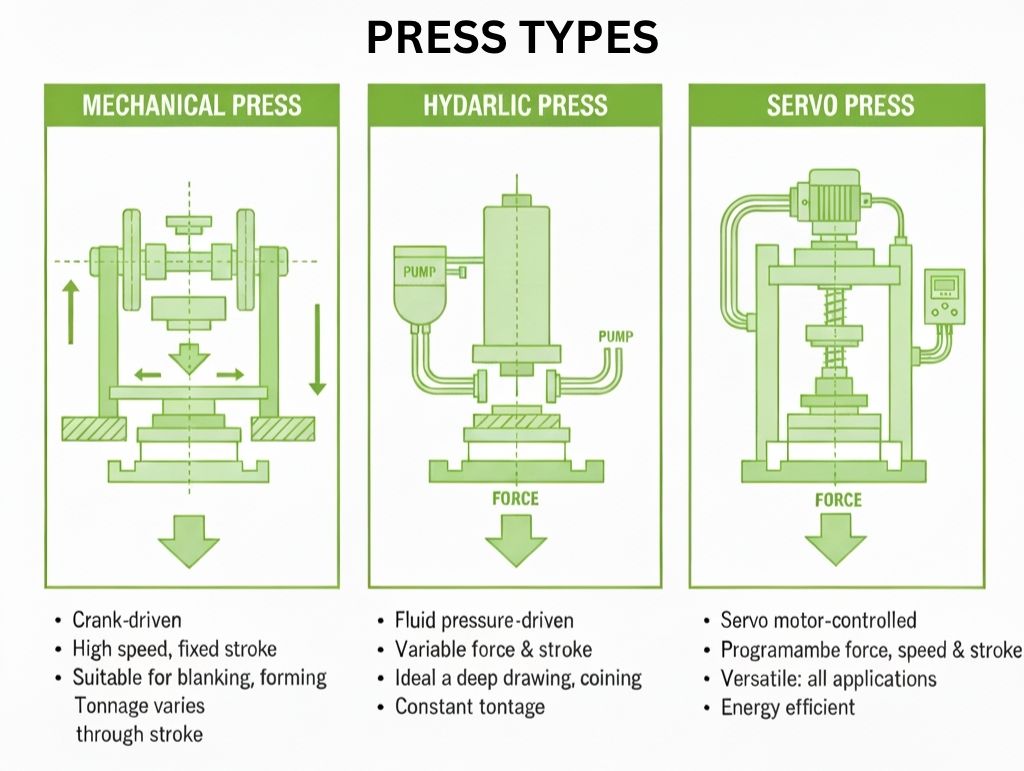
There are several types of presses available, each suited to different applications:
Mechanical Press: High-speed, consistent stroke, ideal for simple, high-volume forming.
Hydraulic Press: Offers variable tonnage and longer strokes, suitable for deep draws and heavy-duty applications.
Servo Press: Provides adjustable force profiles, precise motion control, and energy savings. Perfect for applications requiring high accuracy, complex part geometry, or reduced cycle times.
If your application demands precision, efficiency, and adaptability, investing in a servo press is a smart choice. Some key advantages include:
Precise Force Control Servo presses allow fine-tuning of tonnage at any point in the stroke. This reduces scrap rates and extends tooling life.
Energy Efficiency Unlike traditional mechanical presses that run continuously, servo presses consume energy only when moving the ram, reducing overall energy costs.
Flexible Speed Profiles You can program different speeds and force profiles for various parts in the same production run, increasing flexibility and reducing changeover time.
Safety Servo presses often include advanced monitoring and control features, improving operator safety during high-tonnage operations.
Enhanced Productivity Consistent and repeatable strokes lead to faster production cycles without compromising quality.
Common Mistakes to Avoid
Undersizing the Press: Using a press with insufficient tonnage can lead to incomplete forming and damaged parts.
Oversizing Without Need: While a larger press may seem safer, it increases energy costs, floor space, and wear on tooling.
Ignoring Material Variations: Variations in sheet strength, coatings, or temperature can affect the required tonnage.
Neglecting Advanced Features: Choosing a standard press over a servo press for complex applications may reduce efficiency and precision
Why Metal Press Machinery is Your Trusted Source
At Metal Press Machinery, we specialize in helping manufacturers select the perfect press for their application. Whether you need a servo press for precision forming or a hydraulic press for heavy-duty tasks, our team provides expert guidance and reliable machines. Our selection includes presses of various tonnage capacities, stroke lengths, and configurations to suit any application.
Whether you are in Canada, USA or Mexico, when choosing a press, it’s not just about tonnage—it’s about performance, efficiency, and long-term reliability. We work with you to ensure your investment meets your production goals and maximizes ROI.
Conclusion
Choosing the right tonnage for your press is a critical step in achieving high-quality, efficient, and cost-effective production. By considering material type, thickness, part complexity, and production volume—and by leveraging the advantages of modern servo presses—you can make an informed decision that optimizes your manufacturing process.
If you’re looking for expert advice or a high-performance servo press tailored to your application, Metal Press Machinery is your trusted partner. Our knowledgeable team can guide you through selecting the ideal press size, ensuring your operations run smoothly, safely, and efficiently.
Let Us Make Your Next Press
Our MH-SV Series is the solution for your safety, time loss and efficiency problems. Visit the product page to find out more.
For more information about our presses and other products