

Blog
Benchtop Presses: Hydraulic, Pneumatic, Electric, Punch, and Brake Press Solutions


A hydraulic press is one of the most fundamental and powerful machines used in modern manufacturing and industrial processing. It enables engineers and manufacturers to generate extremely high compressive forces using relatively compact mechanical systems. Hydraulic presses are widely used in metal forming, forging, stamping, molding, assembly, straightening, and laboratory testing applications due to their controllability, repeatability, and ability to deliver consistent force over a full stroke.
Despite their widespread use, the hydraulic press is often misunderstood or oversimplified. From a technical standpoint, it is a precise mechanical system governed by fluid mechanics, material science, and machine design principles. This article focuses on benchtop press solutions — including hydraulic, pneumatic, electric hydraulic, punch, and press brake systems — explaining how these compact machines work, where they are used, and how to select the right benchtop press for precision industrial applications.
👉 MetalPress Machinery provides industrial press solutions for assembly, forming, testing, and precision pressing applications. We support a wide range of industries with hydraulic, pneumatic, and electric press platforms tailored to application requirements.
What Is a Benchtop Press?
A benchtop press is a compact press machine designed to mount directly on a workbench or tabletop. These presses are engineered to apply compressive force in a vertical axis, typically ranging from 2 ton to 5 ton, though specialized designs can exceed this range.
Benchtop presses are commonly used for:
Assembly and component insertion
Light forming and bending
Punching and riveting
Precision straightening
Small-part compression testing
Because of their size, benchtop presses offer superior operator control, easier tooling changes, and reduced installation costs compared to larger shop presses.
Benchtop Hydraulic Presses
A benchtop hydraulic press uses hydraulic pressure to generate force through a cylinder and piston system. This design allows for smooth force application, high repeatability, and excellent load control.
Advantages of Benchtop Hydraulic Presses
Consistent force throughout the stroke
Precise pressure adjustment
Capable of handling harder materials
Ideal for assembly and forming applications
Hydraulic press benchtop models are commonly selected for:
Bearing and bushing installation
Small part forming
Controlled compression operations
Precision straightening tasks
A small benchtop hydraulic press is especially effective when accuracy and repeatability are more important than raw speed.
Benchtop Electric Hydraulic Presses
A benchtop electric hydraulic press combines electric motor control with hydraulic force generation. This hybrid approach delivers excellent energy efficiency, low noise, and precise force and position control.
Key Benefits
No external air or hydraulic power unit required
Programmable force and stroke settings
Improved energy efficiency
Clean and quiet operation
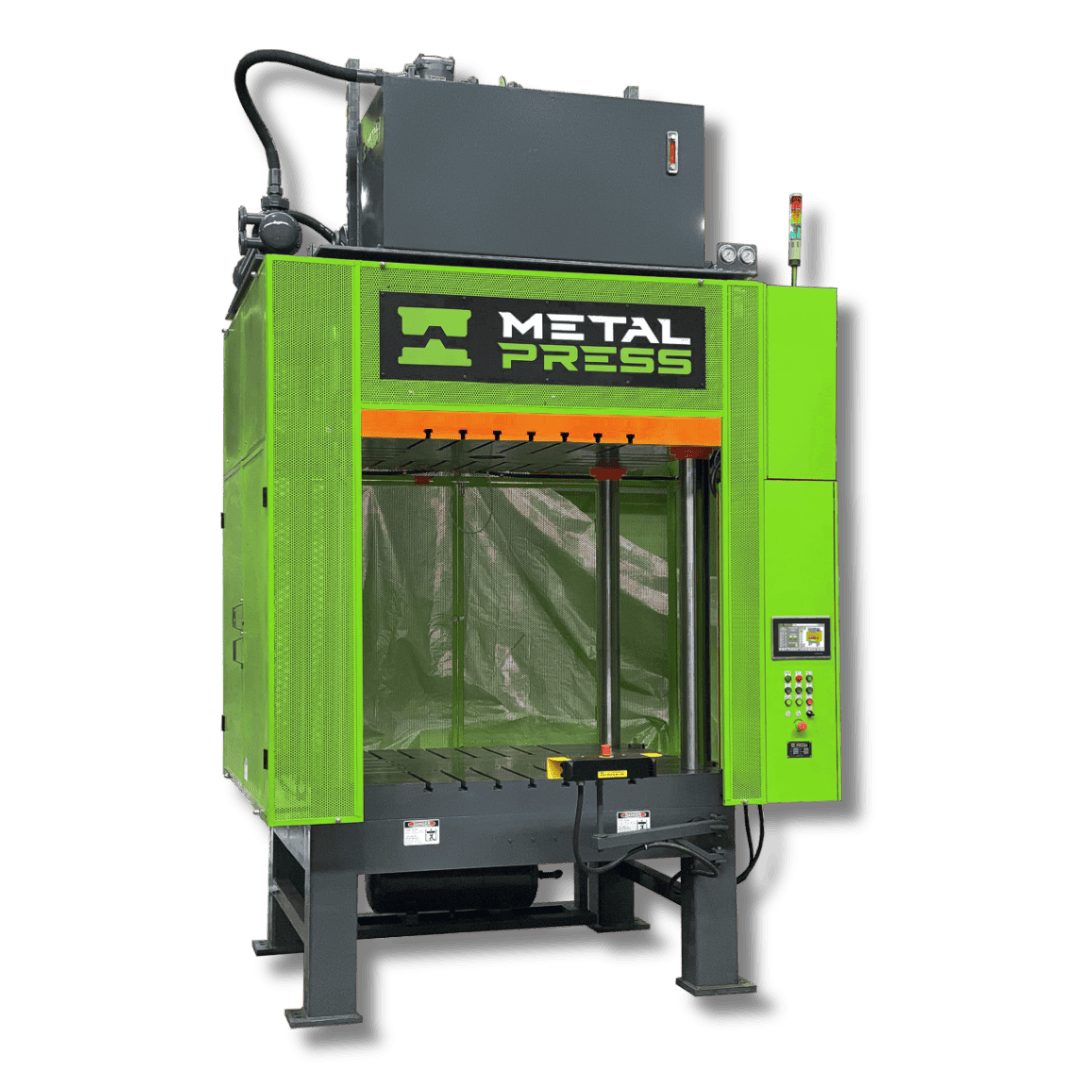
Electric hydraulic benchtop presses are frequently used in laboratory settings, electronics assembly, and precision manufacturing environments. MetalPress Machinery presents numerous types of hydraulic press and servo hydraulic press. Our 4-post servo press and straight sided servo press provide power and precision and our powder compaction servo press comes with its specialized use cases in a wide vraiety of manufacturing projects from mining sector to plastic products. According to your manufacturing needs you can also use our customizable versatile 4-post press or trim press as well to benefit from hydraulic press sytems.
Benchtop Punch Presses
A benchtop punch press is designed for light punching, piercing, and blanking operations on thin materials. These presses are commonly used for:
Sheet metal fabrication
Gasket production
Electrical component punching
Prototype and short-run production
Benchtop punch presses can be hydraulic, pneumatic, or mechanically actuated, depending on the required force and production speed.
Benchtop Press Brake Systems
A benchtop press brake is a specialized press designed for bending and forming small metal parts. Unlike large industrial press brakes, benchtop models are optimized for:
Precision bends
Small components
Short production runs
R&D and prototyping
A benchtop brake press is commonly used in electrical enclosures, brackets, and custom metal fabrication where space constraints prevent the use of floor-mounted equipment.
Benchtop Shop Press vs. Floor-Standing Shop Press
A benchtop shop press differs significantly from traditional floor-standing shop presses.
| Feature | Benchtop Shop Press | Floor-Standing Shop Press |
|---|---|---|
| Footprint | Minimal | Large |
| Typical Tonnage | 2–5 ton | 20–100+ ton |
| Installation | Bench-mounted | Floor-mounted |
| Applications | Precision, light duty | Heavy forming and straightening |
For operations that do not require high tonnage, a benchtop press provides superior efficiency and lower total cost of ownership.
Selecting the Right Benchtop Press
When selecting a benchtop press, consider the following factors:
1. Required Force
Determine the maximum tonnage needed for your application. Common options include:
2 ton press
4 ton press
5 ton press
2. Stroke Length
Ensure the press offers sufficient stroke to accommodate tooling and part height.
3. Control Requirements
Manual control for basic operations
Pressure-regulated control for hydraulic presses
Programmable control for electric hydraulic systems
4. Tooling Compatibility
Consider whether the press must support custom dies, punch tooling, or press brake tooling.
Applications for Benchtop Presses
Benchtop presses are widely used across industries, including:
Automotive component assembly
Electronics manufacturing
Aerospace prototyping
Medical device production
Maintenance and repair operations
Their versatility makes them an essential tool in any operation requiring controlled pressing force in a compact format.
Why Choose a Benchtop Press Solution
A properly selected benchtop press delivers:
Improved process control
Reduced operator fatigue
Lower capital investment
Faster setup and changeover
Whether you require a benchtop hydraulic press, pneumatic press, electric hydraulic press, punch press, or benchtop press brake, these machines provide reliable performance for precision industrial tasks.
References
- Kalpakjian, S., Schmid, S., Manufacturing Engineering and Technology, Pearson Education.
- Groover, M. P., Fundamentals of Modern Manufacturing: Materials, Processes, and Systems, Wiley.
- Lange, K., Handbook of Metal Forming, McGraw-Hill,
- Totten, G. E., Steel Heat Treatment Handbook, CRC Press.
- Esposito, A., Fluid Power with Applications, Pearson.
- Merritt, H. E., Hydraulic Control Systems, Wiley.
- ASM International, ASM Handbook Volume 14A: Metalworking: Bulk Forming
- Tool and Manufacturing Engineers Handbook, SME
- OSHA Technical Guidance Documents, Occupational Safety and Health Administration.
- ISO 16092
- ISO 12100
- American Society of Mechanical Engineers (ASME)
Let Us Make Your Next Press
Whether you’re located in the USA, Canada, Mexico, or South America, you can contact us for more information, pricing, and consultations through our online forms, or by phone or email.