

Blog
C-Frame Press Guide: Specs, Sizes & Free Quote (2026)

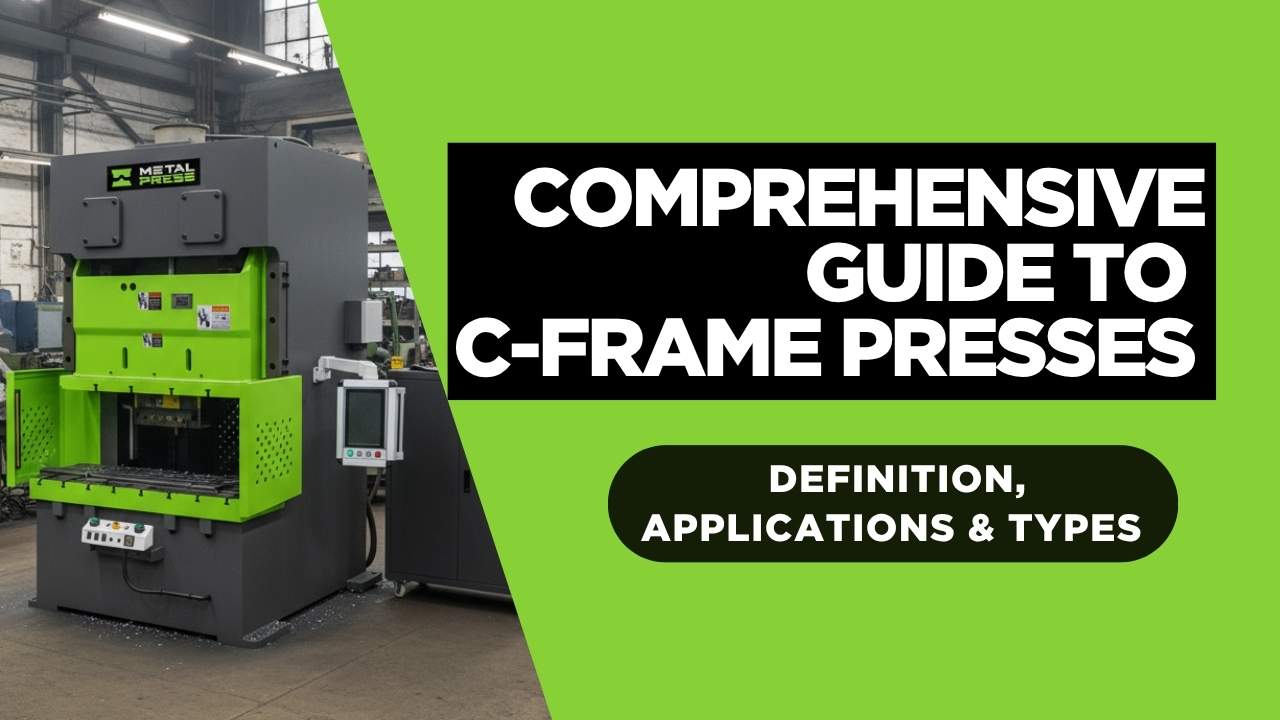
In the world of metal forming, stamping, and industrial manufacturing, few machine designs are as recognizable or as widely used as the C‑frame press. The term “C‑frame” refers to the shape of the machine’s frame when viewed from the side. The vertical column, the top beam, and the open throat form the shape of the letter C, giving the press its name. This simple geometric profile has become one of the most versatile and operator‑friendly designs in the press industry, used in everything from small bench‑top forming operations to heavy‑duty industrial production lines.
Although the C‑frame concept is straightforward, its impact on manufacturing is enormous. The open‑throat design allows operators to access the work area from three sides, making it easier to load parts, change tooling, and perform secondary operations. This accessibility, combined with a compact footprint and broad application range, has made the C‑frame press a staple in metal fabrication, automotive component production, appliance manufacturing, aerospace, electronics, and general industrial forming.
Understanding what a C‑frame is—and how it compares to other press frame designs—is essential for selecting the right press for your application. This guide explores the meaning of the term “C‑frame,” the advantages of C‑frame presses, the differences between hydraulic, mechanical, servo, and pneumatic C‑frame presses, and how C‑frame presses compare to H‑frame, straight‑side, and other press types.
👉 MetalPress Machinery provides a wide range of presses and stamping machines. View our product pages and do not hesitate to contact us.
What Does “C‑Frame” Mean?
The phrase C‑frame describes the structural shape of the press frame. The machine’s body resembles a “C,” with an open throat that allows the operator to slide material or tooling into the work area from the left, right, or front. This open design is what differentiates C‑frame presses from more enclosed frame types like straight‑side presses or H‑frame presses.
The C‑frame structure typically consists of a single vertical column that supports the ram and the bolster plate. Because the frame is open on one side, the press is sometimes called a gap‑frame press or open‑throat press. These terms are interchangeable and refer to the same basic design.
While the open structure does introduce some limitations in terms of rigidity and load distribution, the benefits—accessibility, visibility, and versatility—make C‑frame presses ideal for a wide range of forming operations.
Why C‑Frame Presses Are So Popular in Manufacturing
C‑frame presses have earned their place in modern manufacturing because they strike a balance between power, accessibility, and footprint. Operators appreciate the open design because it allows them to position workpieces quickly and safely. Maintenance teams appreciate the simplicity of the frame and the ease of accessing internal components. Production managers appreciate the flexibility of the machine, which can be used for punching, bending, coining, straightening, riveting, assembly, and more.
The compact footprint is another major advantage. A C‑frame press can deliver significant tonnage without requiring the floor space of a straight‑side press or the height of a large H‑frame press. This makes C‑frame presses ideal for facilities where space is limited or where multiple presses must be arranged in a production cell.
C‑Frame Press vs. Other Press Frame Types
Although C‑frame presses are extremely versatile, they are not the only frame style used in the press industry. Understanding how they compare to other frame types helps buyers choose the right machine for their application.
👉 View our C-frame line-up and ask for a quote today.
Get A Free Quote Right Now
Call 519-624-9987 to immediately talk to a technician, or fill in the form below and get a same day reply.
C‑Frame (Gap‑Frame) Press
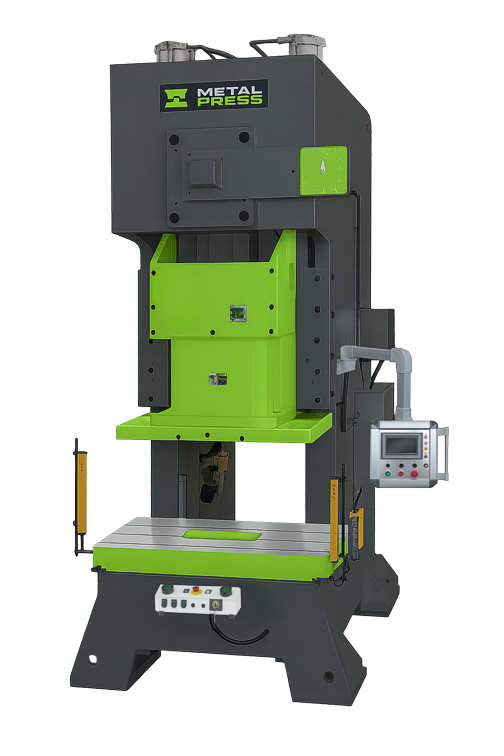
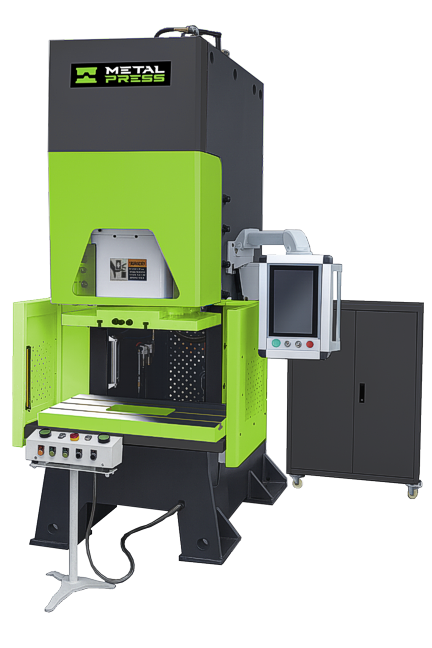
The C‑frame press is defined by its open‑throat design. This configuration allows operators to access the die space from three sides, making it ideal for manual loading, small‑batch production, and operations that require frequent tool changes. The C‑frame press is available in hydraulic, mechanical, servo, and pneumatic versions, each suited to different types of forming.
Because the frame is open, there is some deflection under heavy loads, especially at higher tonnages. For most general‑purpose applications, this is not a concern, but for extremely high‑precision or high‑tonnage operations, other frame types may be more suitable.
H‑Frame Press
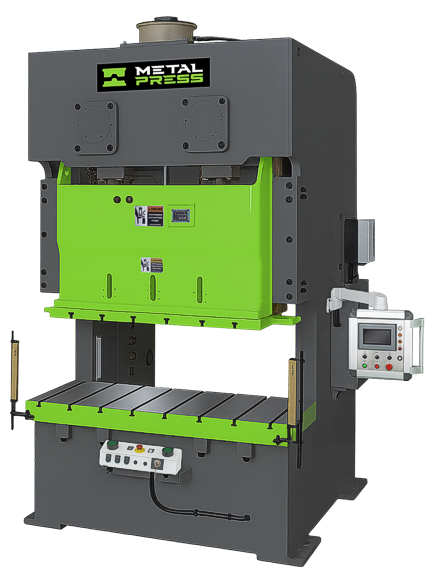
The H‑frame press uses two vertical columns connected by top and bottom beams, forming a rigid “H” shape. This design distributes force more evenly and minimizes deflection, making H‑frame presses ideal for straightening, deep drawing, and heavy‑duty forming.
Compared to C‑frame presses, H‑frame presses are more rigid but less accessible. They also require more floor space and are typically used for applications where tonnage and structural stability are more important than operator access.
Straight‑Side Press
Straight‑side presses are the most rigid of all press frame types. They use two parallel vertical columns that support the ram and bolster, creating a fully enclosed frame that resists deflection even under extremely high loads. Straight‑side presses are commonly used in automotive stamping, progressive die operations, and high‑speed production environments.
While straight‑side presses offer superior precision and rigidity, they are significantly larger and more expensive than C‑frame presses. They also lack the open access that makes C‑frame presses so versatile.
Portal / Gantry Press
Portal or gantry presses are designed for large or awkward workpieces. Instead of moving the workpiece into the press, the press head moves over the workpiece. These presses are used in industries such as shipbuilding, heavy fabrication, and large‑scale forming.
Compared to C‑frame presses, portal presses are specialized machines that serve a very different purpose. They are not typically used for small or medium‑sized parts.
Types of C‑Frame Presses
C‑frame presses come in several variations, each suited to different applications. The most common types include C‑frame hydraulic presses, C‑frame mechanical presses, C‑frame servo presses, simple mechanical C‑frame presses, and C‑frame pneumatic presses.
C‑Frame Hydraulic Press
A C‑frame hydraulic press uses hydraulic cylinders to generate force. Hydraulic presses are known for their smooth, controlled motion and their ability to deliver full tonnage throughout the stroke. This makes them ideal for applications that require precision, dwell time, or controlled forming pressure.
Hydraulic C‑frame presses are commonly used for punching, bending, forming, straightening, assembly, coining, and embossing. Their flexibility makes them suitable for a wide range of materials and operations.
C‑Frame Mechanical Press
A C‑frame mechanical press uses a flywheel and crank mechanism to deliver force. Mechanical presses are known for their speed and repeatability, making them ideal for high‑volume production. They deliver peak tonnage near the bottom of the stroke, which is ideal for operations that require a quick, powerful impact.
Mechanical C‑frame presses are commonly used for high‑speed stamping, punching, blanking, shallow forming, and progressive die operations at lower tonnages.
Mechanical C‑Frame Press
A mechanical C‑frame press is a streamlined version of the traditional mechanical press. It typically features a straightforward crankshaft mechanism, minimal electronics, and a simplified control system. These presses are valued for their durability, low maintenance requirements, and cost‑effectiveness.
Simple mechanical C‑frame presses are ideal for small shops, tool rooms, and repetitive operations where high speed is needed but advanced automation is not. They are often used for basic punching, trimming, and light stamping tasks.
C‑Frame Servo Press
The C‑frame servo press represents the next generation of forming technology. Instead of using a flywheel or hydraulic system, a servo press uses a high‑precision servo motor to control the ram’s motion. This allows for programmable speed, position, and force profiles throughout the stroke.
Servo C‑frame presses offer several advantages:
Extremely precise ram control
Adjustable slide motion for different materials
High repeatability
Energy efficiency
Quiet operation
Ability to perform complex forming profiles
These presses are ideal for electronics, automotive components, precision stamping, and applications where material behavior must be tightly controlled. Servo C‑frame presses combine the accessibility of the C‑frame design with the advanced capabilities of servo technology, making them one of the most versatile options on the market.
C‑Frame Pneumatic Press
Pneumatic C‑frame presses use compressed air to generate force. They are typically smaller and lower‑tonnage than hydraulic or mechanical presses, making them ideal for light assembly, riveting, marking, and small‑scale forming.
Advantages of C‑Frame Presses
The popularity of C‑frame presses is driven by several key advantages. The open‑throat design provides unmatched accessibility, allowing operators to load and unload parts quickly. This is especially valuable in applications where parts must be rotated, repositioned, or inspected during the forming process.
The compact footprint is another major advantage. A C‑frame press can deliver significant tonnage without requiring the space of a straight‑side or H‑frame press. This makes it easier to integrate C‑frame presses into production cells, assembly lines, or small workshops.
C‑frame presses are also extremely versatile. They can be used for punching, bending, forming, straightening, riveting, assembly, and more. With the right tooling, a single C‑frame press can perform multiple operations, reducing the need for additional equipment.
Limitations of C‑Frame Presses
While C‑frame presses offer many advantages, they do have some limitations. The open‑throat design means that the frame can experience deflection under heavy loads. This is not usually a problem for general‑purpose forming, but for extremely high‑precision or high‑tonnage operations, a straight‑side press may be more appropriate.
C‑frame presses also have lower maximum tonnage compared to straight‑side or H‑frame presses. While high‑tonnage C‑frame presses do exist, they are less common and more expensive.
Common Applications for C‑Frame Presses
C‑frame presses are used in a wide range of industries and applications. Their versatility makes them ideal for both small‑scale operations and large‑scale production.
Common applications include metal stamping, punching, blanking, bending, forming, riveting, assembly, press‑fitting, straightening, coining, embossing, electrical component manufacturing, and automotive bracket production.
Because C‑frame presses are available in hydraulic, mechanical, servo, and pneumatic versions, they can be tailored to suit almost any forming requirement.
Choosing the Right C‑Frame Press
Selecting the right C‑frame press depends on several factors, including tonnage, stroke length, speed, rigidity, and the type of forming operation. Hydraulic C‑frame presses are ideal for precision forming and controlled pressure. Mechanical C‑frame presses are best for high‑speed stamping. Simple mechanical C‑frame presses are perfect for basic, repetitive operations. Servo C‑frame presses offer the highest level of control and flexibility. Pneumatic C‑frame presses are suitable for light assembly and low‑tonnage forming.
It is also important to consider the size of the workpiece, the required throat depth, and the available floor space. C‑frame presses are compact, but larger models may still require careful planning to integrate into a production line.
Conclusion: Why C‑Frame Presses Remain Essential in Modern Manufacturing
The C‑frame press continues to be one of the most widely used and versatile machines in the metal forming industry. Its open‑throat design, compact footprint, and broad application range make it ideal for manufacturers who need flexibility, accessibility, and efficiency. Whether you are punching, bending, forming, straightening, or assembling components, a C‑frame press offers the performance and reliability needed to keep production moving.
As manufacturing evolves, the demand for adaptable, operator‑friendly equipment remains strong. With hydraulic, mechanical, servo, and pneumatic options available, the C‑frame press remains a cornerstone of modern industrial forming.
Pricing of C‑Frame Presses
The cost of a C‑frame press varies significantly depending on tonnage, build quality, control technology, and the type of drive system. Entry‑level simple mechanical C‑frame presses typically range from $3,000 to $12,000, making them an economical choice for small shops that need basic punching or trimming capability. Standard C‑frame mechanical presses generally fall between $10,000 and $40,000, depending on speed, frame rigidity, and automation features. C‑frame hydraulic presses usually start around $12,000 for smaller models and can exceed $60,000 for higher‑tonnage or custom‑engineered units. At the premium end of the market, C‑frame servo presses often range from $40,000 to well over $120,000, reflecting their advanced programmable motion control, energy efficiency, and exceptional forming accuracy. Additional factors—such as throat depth, bed size, safety guarding, brand reputation, and integration with automation—can further influence the final price. Understanding these ranges helps buyers match the right C‑frame press to their production needs and long‑term operational goals.
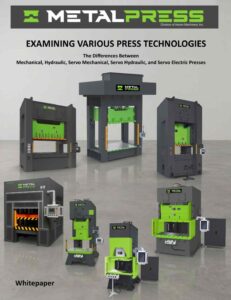
PRESS WHITEPAPER
Examine Various Press Technologies
The Differences Between Mechanical, Hydraulic, Servo Mechanical, Servo Hydraulic, and Servo Electric Presses
Let Us Make Your Next C-Frame Press
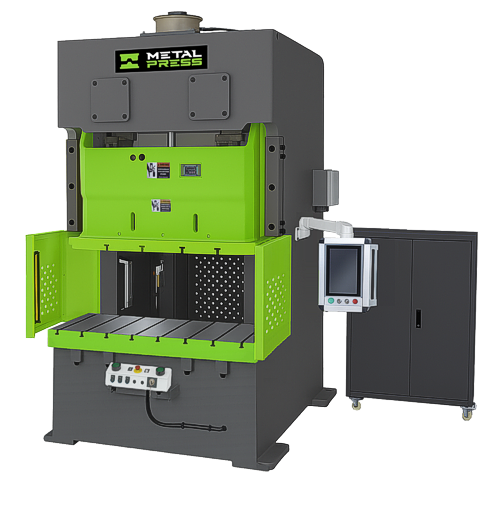
Whether you’re located in the USA, Canada, Mexico, or South America, you can contact us for more information, pricing, and consultations through our online forms, or by phone or email.