

Blog
From Concept to Component: Engineering a 75-Ton 4-post Solution for Ohio’s Appliance Industry


Every successful industrial machine begins with a real manufacturing challenge. In our case, the story started when a well‑established appliance producer from Ohio reached out with a clear and urgent need. Their production line relied heavily on forming operations, but their existing equipment had reached the end of its useful life. Inconsistent pressure, alignment issues, and rising maintenance costs were slowing down their output and threatening their ability to meet customer demand. They needed a modern, reliable, and precisely engineered solution—one that could integrate seamlessly into their workflow while delivering the repeatability and forming accuracy their products required.
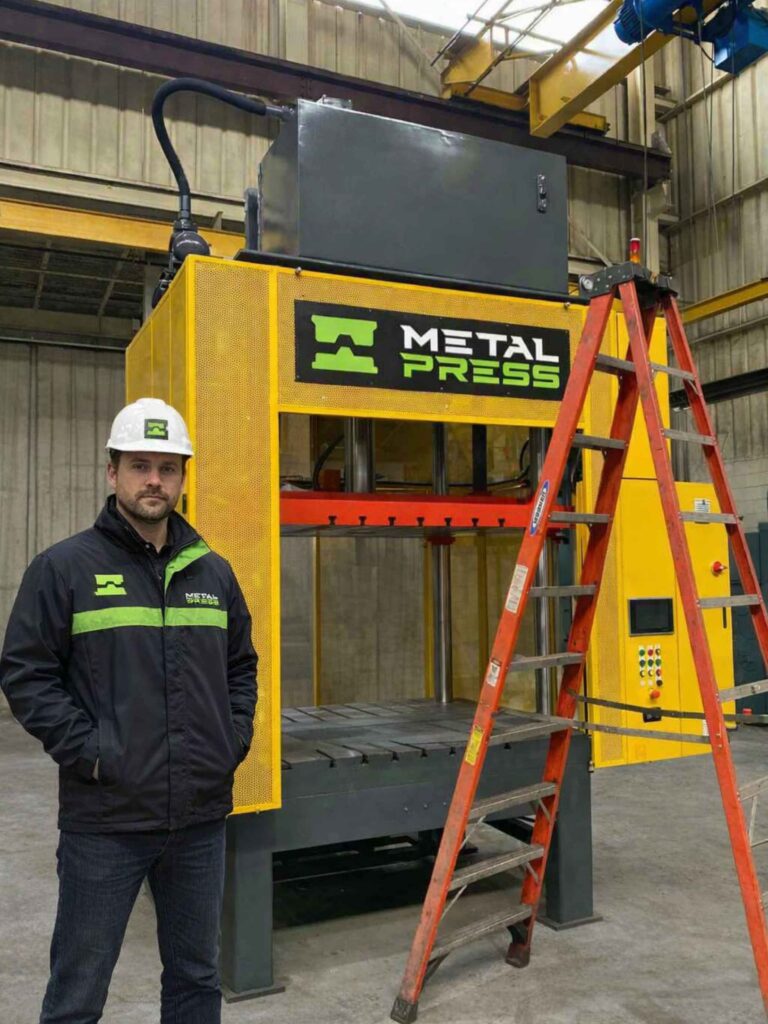
After reviewing their parts, tooling, and production goals, our engineering team determined that the ideal solution was a custom‑built 75‑ton 4‑post hydraulic press. This machine configuration offered the perfect combination of rigidity, accessibility, and precision. What followed was a full engineering journey—from concept and design to fabrication, assembly, testing, and preparation for shipment. This article explores that first phase in detail, highlighting the technical decisions, engineering processes, and collaborative steps that brought this press from an idea to a fully realized machine.
Understanding the Customer’s Challenge
The Ohio appliance manufacturer came to us with a clear set of requirements. Their forming process demanded consistent tonnage, precise platen parallelism, and a machine capable of handling repetitive cycles without drifting out of alignment. Their existing press had become unreliable, causing variations in part quality and unplanned downtime. They needed a machine that would not only solve these issues but also support future tooling changes and evolving production needs.
During our initial consultations, we conducted a thorough review of their application. This included analyzing the material thickness, forming depth, required stroke, cycle time expectations, and the dimensional tolerances of the finished parts. We also evaluated their current tooling setup and the space available on their production floor. These early discussions are essential in custom hydraulic press manufacturing because they ensure the final machine is not just functional but optimized for the customer’s real‑world environment.
It quickly became clear that a 75‑ton 4‑post hydraulic press would deliver the strength, stability, and accessibility required for their forming operations. The 4‑post design, with its guided platen movement and open access from all sides, offered the perfect balance of structural rigidity and operational flexibility.
Why a 4‑Post Hydraulic Press Was the Right Choice
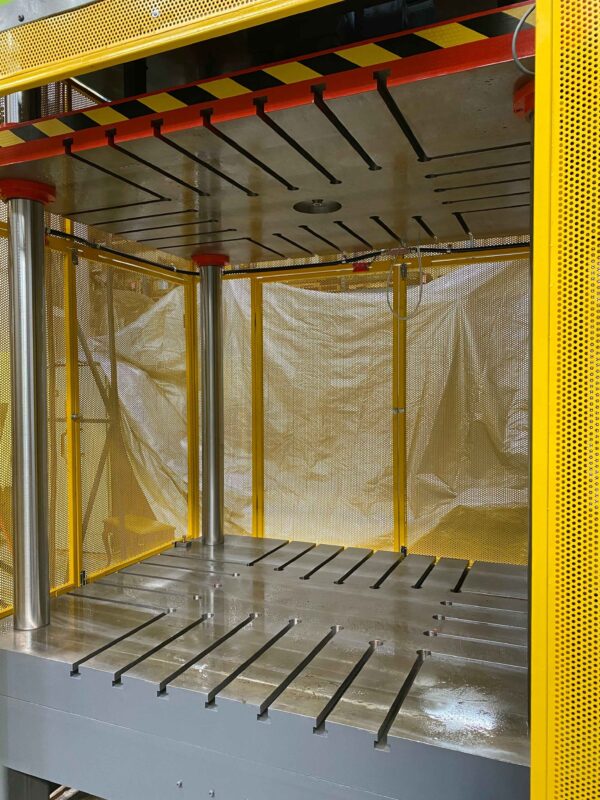
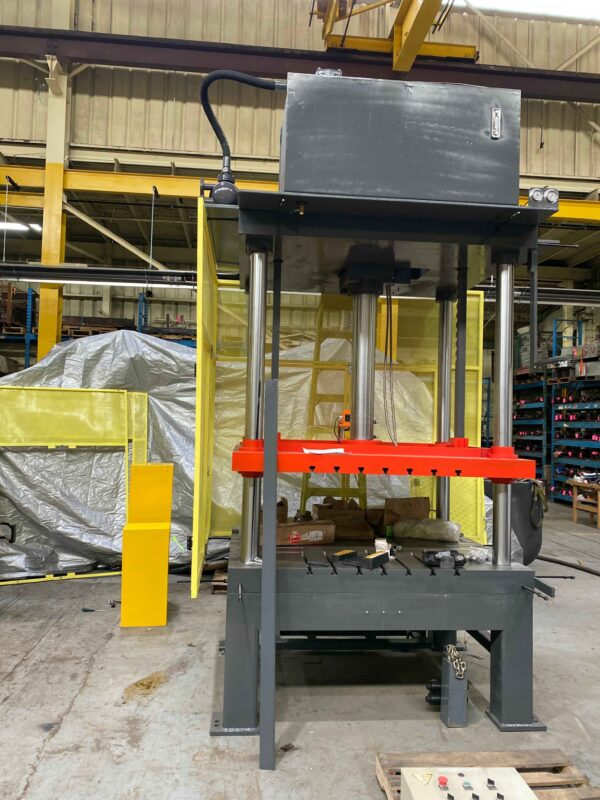
A 4‑post hydraulic press is one of the most widely used and trusted designs in industrial forming equipment. Its defining feature is the four precision‑machined columns that guide the moving platen with exceptional accuracy. This configuration ensures uniform pressure distribution across the entire work surface, making it ideal for applications where parallelism and repeatability are critical.
For the appliance industry, where components often require consistent forming depth and clean, repeatable shapes, the 4‑post press is a natural fit. The open design allows operators and maintenance teams to access the tooling area from all sides, simplifying setup, adjustments, and die changes. The structural layout also provides excellent rigidity, which is essential for long‑term durability in high‑cycle production environments.
In addition to its mechanical advantages, the 4‑post press offers excellent versatility. It can be adapted for forming, punching, trimming, embossing, deep drawing, and a wide range of other manufacturing processes. For our Ohio customer, this meant the machine would not only solve their immediate forming challenge but also support future product lines and tooling variations.
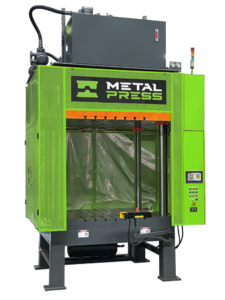
👉 View our 4-post press MTP Series product page and for more information fill request for information form.
Engineering the 75‑Ton Press: From Concept to Design
Once the machine configuration was finalized, our engineering team began the detailed design process. This phase is where the press truly takes shape, both digitally and mechanically. It involves mechanical engineering, hydraulic system design, electrical controls development, and extensive collaboration with the customer.
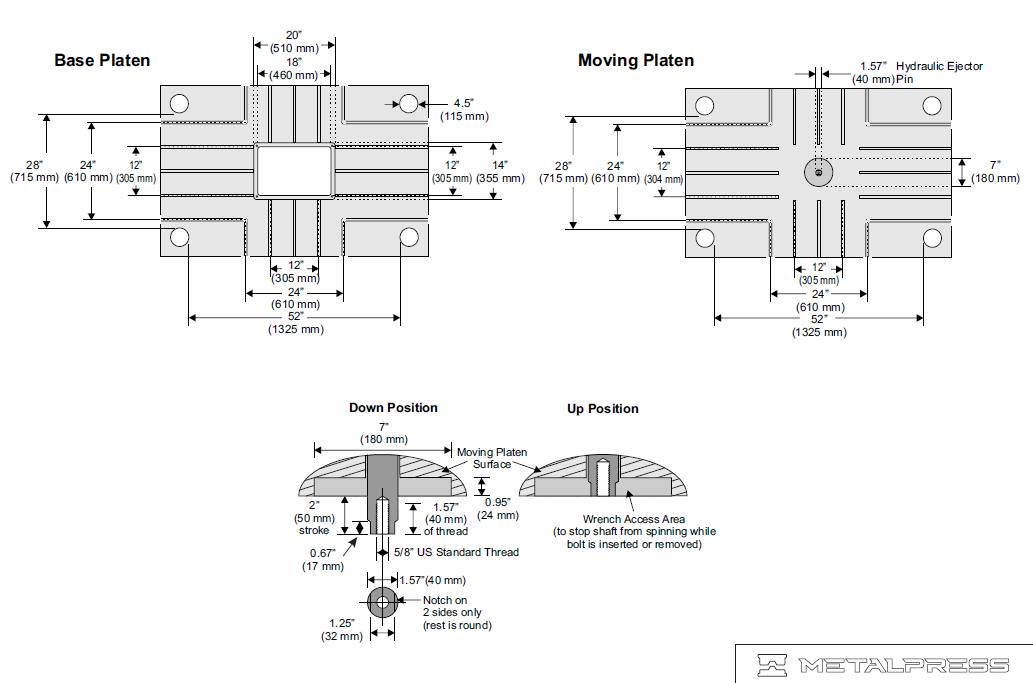
The mechanical design began with the structural frame. Our engineers modeled the press using advanced 3D CAD software, ensuring that the frame could withstand continuous 75‑ton forming cycles without deflection or fatigue. The columns, platens, and cylinder mounting points were analyzed using finite element analysis (FEA) to verify stress distribution and long‑term durability. This step is crucial in hydraulic press manufacturing because it ensures the machine will maintain accuracy and alignment throughout its service life.
Next, we designed the hydraulic system. The heart of any hydraulic press is its power unit, and for this project, we engineered a system that would deliver smooth, controlled motion with precise pressure regulation. The hydraulic circuit included high‑quality valves, pumps, and manifolds selected for reliability and efficiency. We also incorporated pressure transducers and position sensors to provide real‑time feedback to the control system.
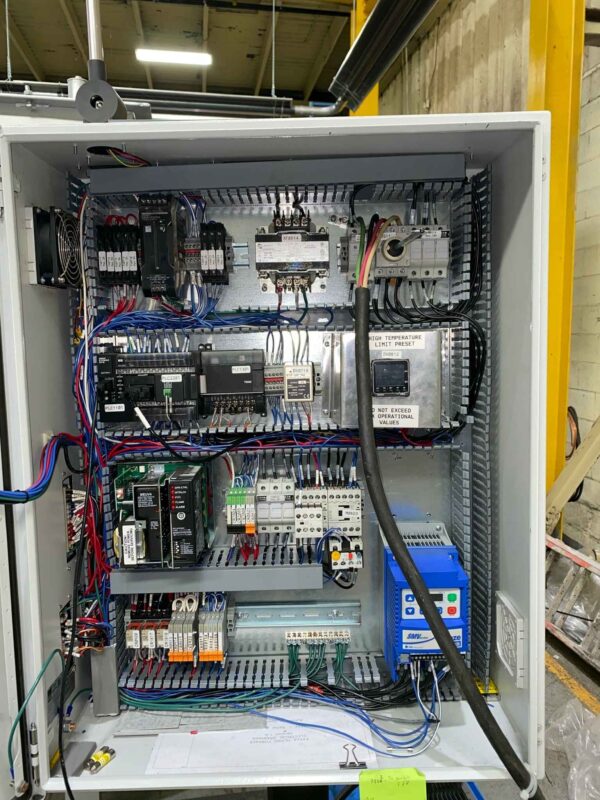
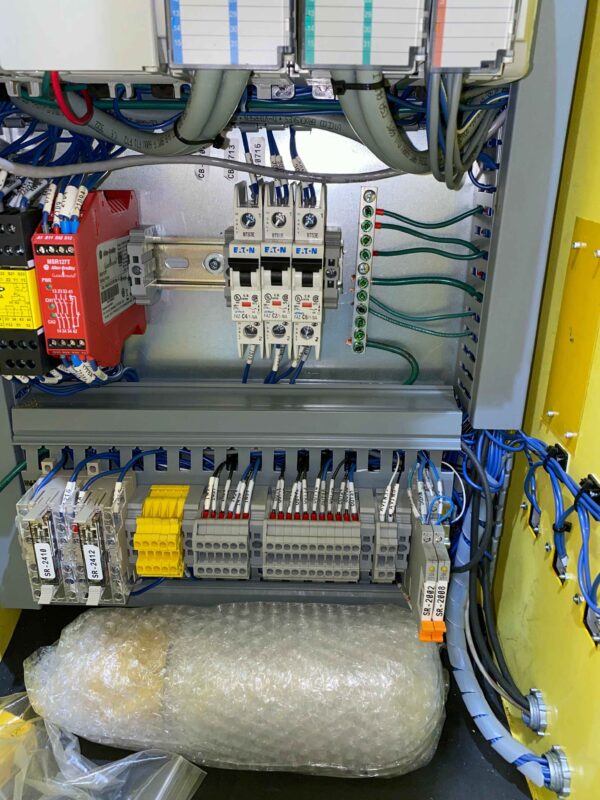
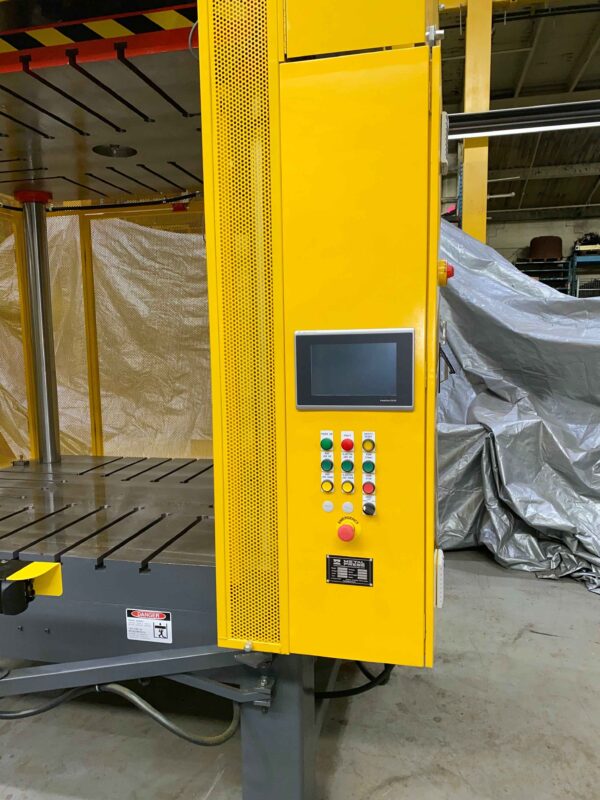
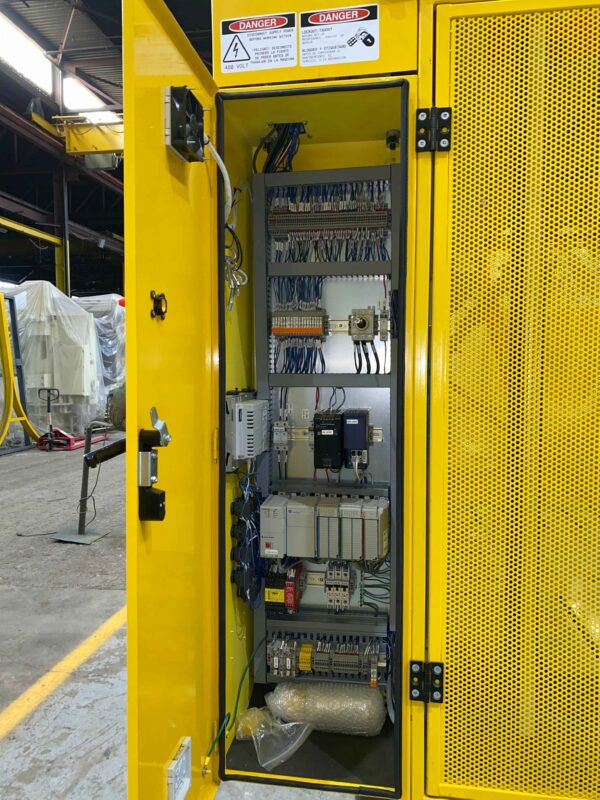
The electrical and control system design was equally important. The press was equipped with a PLC‑based control system and an operator‑friendly HMI. This interface allows operators to adjust pressure settings, stroke limits, dwell times, and cycle modes with ease. Safety interlocks, guarding logic, and emergency stop circuits were integrated into the design to ensure compliance with industry safety standards.
Throughout the engineering phase, we held regular meetings with the customer to review progress, confirm specifications, and incorporate feedback. These collaborative sessions ensure that the final machine aligns perfectly with the customer’s expectations and production requirements.
Fabrication and Assembly: Bringing the Press to Life
With the design approved, we moved into fabrication and assembly. This stage transforms the digital model into a physical machine. The platens and columns were machined to tight tolerances to ensure perfect alignment. The frame components were welded, stress‑relieved, and precision‑machined to guarantee structural integrity.
The hydraulic cylinder was manufactured and tested independently before installation. Once the major components were ready, our assembly team began building the press from the ground up. The columns were installed and aligned, the cylinder was mounted, and the platens were positioned and secured. The hydraulic power unit was assembled, plumbed, and connected to the press frame. Electrical panels were wired, sensors were installed, and the control system was integrated.
This phase requires meticulous attention to detail. Every hose, fitting, sensor, and fastener must be installed correctly to ensure long‑term reliability. Our technicians follow strict quality control procedures to verify alignment, torque specifications, hydraulic integrity, and electrical safety.
Testing, Validation, and Customer Collaboration
Before any hydraulic press leaves our facility, it undergoes a comprehensive testing and validation process. For the 75‑ton 4‑post press, we performed dry cycling to verify smooth motion, pressure testing to confirm hydraulic performance, and alignment checks to ensure platen parallelism. The control system was tested extensively, including safety circuits, HMI functions, and PLC logic.
We then invited the Ohio customer to our facility for a Factory Acceptance Test (FAT). This hands‑on review allows the customer to see the machine in operation, test their tooling if needed, and provide final feedback. FAT sessions are invaluable because they give customers confidence in the machine before it ships and allow us to make any final adjustments.
The customer was impressed with the press’s stability, smooth operation, and user‑friendly controls. With their approval, the machine was cleared for the next phase: pre‑commissioning, inspection, and preparation for shipment.
Conclusion: Phase One Complete and Ready for What Comes Next
The journey from concept to a fully assembled and tested hydraulic press is a complex and rewarding process. For our Ohio appliance manufacturer, the custom 75‑ton 4‑post hydraulic press represents a major upgrade in forming capability, reliability, and production efficiency. The engineering, design, fabrication, and testing phases ensured that the machine met every requirement and was fully prepared for the next stage.
In next phase, we will explore the next chapter: pre‑commissioning, inspection, documentation, wrapping, and preparing the press for shipment to the customer’s facility.
Let Us Make Your Next 4-Post Press

Join us in this journey to equip your manufacturing line with the most reliable products in metal stamping industry.
Each unit is assembled to meet your exact load capacity, workspace, and operational requirements which is delivering smooth, stable rotation and long-term reliability.
More information about this die upender
For more information about our other products