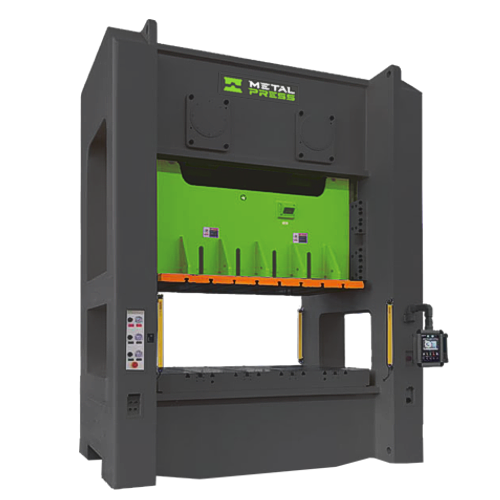
Metal forming is a core manufacturing process used to shape, bend, stretch, and mold metals into precise components for industrial, automotive, aerospace, and consumer applications. Understanding the fundamentals of metal forming is essential for engineers, manufacturers, and technicians who work with materials such as steel, aluminum, titanium, and other alloys.
This page covers key topics, including forming processes, drawing steel, superplasticity, forming tools, and industrial forming operations, providing a comprehensive reference for metal forming fundamentals.
What Is Metal Forming?
Metal forming is the process of shaping metal without removing material, as opposed to cutting or machining. In forming analysis, it’s useful to distinguish between engineering stress/strain and true stress/strain — true measures account for instantaneous cross-sectional area changes during plastic deformation and yield more accurate values in high-strain processes like deep drawing and forging. Forces are applied to the workpiece using mechanical, hydraulic, or thermal methods to achieve the desired shape. Common metal forming techniques include:
Cold forming: Performed at or near room temperature. Ideal for high-strength materials and precise tolerances.
Hot forming: Metal is heated to increase ductility and reduce force requirements.
Superplastic forming: Uses materials with superplasticity properties to achieve complex shapes with minimal thinning.
Metal forming performance is strongly influenced by temperature: cold forming typically increases strength and surface finish but limits ductility; warm forming offers intermediate ductility with reduced force requirements; and hot forming dramatically increases ductility, lowers required forces, and alters microstructure — factors that influence tooling design, lubrication, and press selection.
The metal forming process preserves material volume, making it more efficient than subtractive processes in many applications.
At MetalPress Machinery, we support a wide range of metal forming needs — from consultation and tooling design to high-capacity hydraulic, mechanical, and deep drawing presses — helping manufacturers specify the right equipment for their exact process and material.
👉 MetalPress Machinery is a pioneer in the metal forming industry. We provide a wide range of solutions for different fields. If you need Consultation, Quote or more information on our products, our specialsits are near you.
Superplasticity is a property of certain metals that allows them to undergo very large elongations without necking or failure. Metals such as titanium, aluminum alloys, and some steels exhibit superplastic behavior under controlled temperature and strain rates.
Applications of superplastic forming include:
Aerospace components
Complex sheet metal parts
Titanium sheet forming
Superforming of aluminum or titanium alloys
Superplastic forming is highly valued for its ability to produce complex geometries that would be difficult or impossible with conventional forming techniques.
Drawing Steel and Metal
Drawing steel is a critical metal forming process where a metal blank is stretched into a die to create components like cups, cans, and deep-drawn parts. Draw forming and deep drawing are common techniques in this category.
Key considerations for drawing steel include:
Material thickness
Die geometry
Lubrication
Drawing speed and temperature
Deep drawing allows for the formation of parts with high depth-to-diameter ratios without compromising material integrity. Sheet metal drawing is a primary application in automotive panels, industrial cans, and precision components.
Forming Processes and Operations
Forming processes are diverse and include:
Cold forming
Advantages: High precision, improved surface finish, strain hardening.
The right tooling is essential for precision metal forming. Common tools include:
Forming dies and molds: Shape the workpiece accurately.
Presses: Hydraulic, mechanical, or pneumatic to apply force.
Drawing presses: Used for deep drawing operations.
Stretch forming machines: Apply controlled tension to sheet metal.
Extrusion presses: Produce continuous profiles.
The forming metal tool selection impacts product quality, repeatability, and material efficiency.
Industrial Metal Forming Applications
Metal forming is a backbone process for many industries:
Automotive manufacturing: Panels, frames, and structural components.
Aerospace: Lightweight titanium and aluminum parts with complex geometry.
Consumer goods: Appliances, cans, and electronic enclosures.
Construction: Beams, structural rods, and extrusions.
Forming allows manufacturers to produce large volumes of high-quality parts efficiently while minimizing material waste.
Forming Operations in Sheet Metal
Sheet metal forming involves shaping flat metal sheets into finished components. Common operations include:
Drawing: Stretching the sheet into a die cavity.
Stretch forming: Pulling the sheet over a form block.
Bending and rolling: Creating angles and curves.
Joggling: Creating offsets in sheet metal for assembly (covered in detail in later pages).
Metal forming operations are often combined to achieve complex geometries in a single production workflow.
Key Considerations in Metal Forming
Material selection
Steel, aluminum, titanium, and specialty alloys each have unique properties affecting formability.
Process temperature
Cold vs. hot forming impacts force requirements and material behavior.
Tooling design
Accurate dies reduce scrap and improve dimensional control.
Lubrication
Reduces friction, prevents tearing, and extends die life.
Machine selection
Hydraulic vs. mechanical presses, deep drawing presses, and stretch forming machines must match the process requirements.
Advantages of Metal Forming
Preserves material volume, reducing waste.
Allows high production rates and automation.
Capable of forming complex shapes without machining.
Improves material properties through work hardening in cold forming.
Compatible with a wide variety of metals and alloys.
Emerging Trends in Metal Forming
3D-printed sheet metal forming: Rapid prototyping of dies and tooling.
Automation and Industry 4.0: Integrated sensors and robotics for process control.
Superplastic forming of titanium: Lightweight aerospace components.
Hybrid forming: Combining hydroforming, stretch forming, and deep drawing for advanced shapes.
Manufacturers increasingly rely on technology integration to achieve high precision, reduce scrap, and lower production costs.
Conclusion
Metal forming is a foundational process in modern manufacturing, enabling efficient, high-quality production of components across numerous industries. From superplastic forming to drawing steel, stretch forming, and extrusion forming, the right combination of process, tooling, and equipment is essential to achieving optimal results. Understanding the fundamentals of forming processes and operations provides manufacturers with the knowledge needed to improve efficiency, reduce waste, and produce complex metal components with precision.
Let Us Make Your Next Press
Whether you’re located in the USA, Canada, Mexico, or South America, you can contact us for more information, pricing, and consultations through our online forms, or by phone or email.