

Blog
Water Forming, Hydroforming, and Fluid Forming: Modern Techniques for Complex Shapes


In the world of advanced metal forming, few technologies have reshaped manufacturing as dramatically as water forming, hydroforming, and fluid forming. These processes allow manufacturers to create complex, lightweight, high‑strength components that traditional stamping or mechanical forming simply cannot achieve. They are essential in industries where precision, structural integrity, and weight reduction matter — aerospace, automotive, energy, and high‑performance industrial applications.
Although the terms water forming, hydroforming, and fluid forming are often used interchangeably, they are not identical. Each process uses fluid pressure to shape metal, but the mechanics, pressure levels, tooling requirements, and applications vary significantly. Understanding these differences is essential for manufacturers evaluating new forming technologies or considering an upgrade to more advanced press systems.
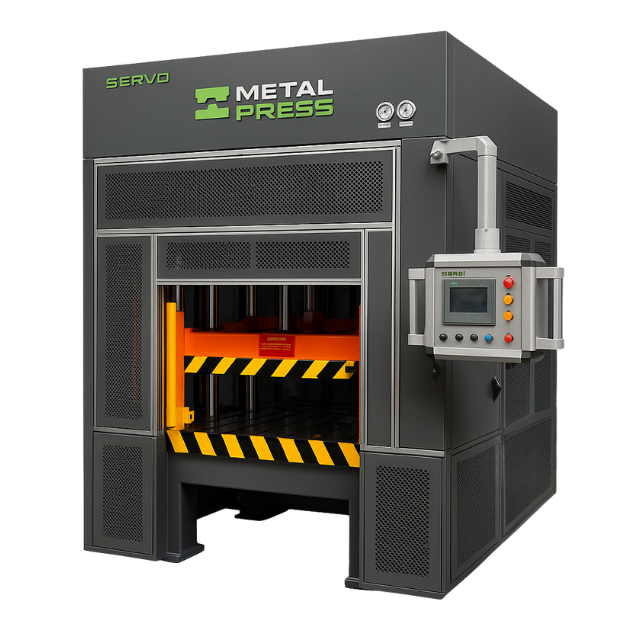
This article explores the science behind water forming, hydroforming, and fluid forming, the materials best suited for each process, and the press requirements needed to achieve consistent, high‑quality results. Throughout the discussion, we will reference industrial‑grade systems such as the 4 Post Servo Press and the Straight Sided Servo Press, which provide the rigidity, precision, and programmable control required for modern hydroforming applications.
Why Fluid‑Based Forming Processes Have Become Essential
Traditional forming methods rely on mechanical force applied through a punch and die. While effective for many applications, mechanical forming has limitations when it comes to complex geometries, deep draws, and thin‑wall components. As industries began demanding lighter, stronger, more aerodynamic parts — especially in aluminum and copper alloys — manufacturers needed a forming method that could apply pressure evenly across the entire surface of the material.
Fluid‑based forming processes emerged as the solution. By using water or hydraulic fluid as the forming medium, these processes apply pressure uniformly, allowing the material to stretch more evenly and conform to complex shapes without tearing or wrinkling. This uniform pressure distribution is the key advantage of hydroforming and fluid forming.
The result is a part with superior structural integrity, smoother surfaces, and more consistent wall thickness — all achieved with fewer tooling stages and less material waste.
What Is Water Forming?
Water forming is the simplest of the three processes. It uses water pressure to shape metal into a die cavity. The process is typically used for tubular components, where a tube is placed inside a die and pressurized with water until it expands to match the shape of the cavity.
Water forming is ideal for applications where moderate pressure is sufficient and where the material does not require extreme stretching. It is commonly used for aluminum and copper tubing, lightweight structural components, and parts that require smooth internal surfaces.
Because water is incompressible, it provides stable, predictable pressure. However, water forming typically operates at lower pressures than advanced hydroforming or fluid forming processes. This makes it suitable for simpler geometries but less effective for deep draws or highly complex shapes.
A press such as the 4 Post Servo Press provides the rigidity and control needed to support water forming operations, ensuring that the die closes uniformly and that the pressure is applied consistently throughout the cycle.
What Is Hydroforming?
Hydroforming is a more advanced process that uses high‑pressure hydraulic fluid to shape metal. It is used for both tubular and sheet metal components and is capable of producing highly complex geometries with exceptional precision.
Hydroforming is divided into two main categories:
1. Tube Hydroforming
A tube is placed inside a die, sealed at both ends, and pressurized with hydraulic fluid. As the pressure increases, the tube expands and conforms to the shape of the die. This process is ideal for lightweight structural components, such as automotive frames, aerospace tubing, and high‑performance industrial parts.
2. Sheet Hydroforming
A sheet of metal is placed over a die cavity, and a bladder or diaphragm filled with hydraulic fluid presses the sheet into the cavity. This process allows for deep draws, complex contours, and smooth surfaces without the need for a traditional punch.
Hydroforming offers several advantages:
Uniform pressure distribution
Reduced tooling requirements
Improved material flow
Superior surface finish
Consistent wall thickness
Ability to form complex shapes in a single operation
Because hydroforming requires precise control over pressure, speed, and position, it demands a press with exceptional rigidity and programmable motion. A machine like the Straight Sided Servo Press provides the structural stability and servo‑driven accuracy needed for high‑pressure hydroforming applications.
What Is Fluid Forming?
Fluid forming is the most advanced of the three processes. It uses extremely high‑pressure hydraulic fluid — often exceeding 10,000 psi — to shape metal into complex geometries. Unlike water forming, which uses water, fluid forming uses specialized hydraulic fluids that can withstand high pressures without compressing or degrading.
Fluid forming is ideal for:
Deep draws
Complex contours
Thin‑wall components
Aerospace‑grade aluminum
High‑precision copper components
Parts requiring exceptional surface finish
The process is similar to sheet hydroforming but operates at much higher pressures. This allows the material to stretch more uniformly, reducing the risk of tearing or wrinkling. Fluid forming is often used for aerospace components, where precision and structural integrity are critical.
Because fluid forming requires extremely high pressure and precise control, it must be performed on a press with exceptional rigidity, parallelism, and programmable motion. The 4 Post Servo Press and Straight Sided Servo Press are ideal for these applications because they maintain structural stability under extreme loads and offer precise control over the forming cycle.
How These Processes Differ in Practice
Although water forming, hydroforming, and fluid forming all use fluid pressure to shape metal, the differences in pressure levels, tooling requirements, and material behavior are significant.
Water forming is best for simpler shapes and moderate pressure requirements. Hydroforming is ideal for complex shapes and deeper draws. Fluid forming is used for the most demanding applications, where extreme precision and high pressure are required.
The choice of process depends on:
Material type
Part geometry
Wall thickness
Required tolerances
Production volume
Surface finish requirements
Manufacturers must also consider the press requirements. A small hydraulic press cannot support hydroforming or fluid forming. These processes require a press with exceptional rigidity, programmable motion, and the ability to maintain parallelism under high pressure.
Why Servo‑Hydraulic Presses Are Ideal for Hydroforming and Fluid Forming
Servo‑hydraulic presses offer several advantages for fluid‑based forming processes:
Precise control over speed, force, and position
Programmable motion profiles
Ability to maintain full tonnage throughout the stroke
Exceptional repeatability
Reduced cycle times
Improved energy efficiency
The 4 Post Servo Press is particularly well‑suited for hydroforming because its four‑column structure distributes force evenly and maintains platen parallelism. This ensures that the die closes uniformly and that the pressure is applied consistently.
The Straight Sided Servo Press offers even greater rigidity, making it ideal for high‑pressure fluid forming applications where structural stability is essential.
Applications Across Industries
Water forming, hydroforming, and fluid forming are used in a wide range of industries:
Aerospace: Lightweight aluminum components, aerodynamic structures, precision housings
Automotive: Structural tubing, lightweight body components, high‑strength brackets
Energy: Copper components, heat exchanger parts, precision tubing
Industrial manufacturing: Complex housings, deep‑drawn components, thin‑wall structures
These processes allow manufacturers to produce parts that are lighter, stronger, and more precise than those produced by traditional forming methods.
Conclusion: Choosing the Right Forming Process for Modern Manufacturing
Water forming, hydroforming, and fluid forming each offer unique advantages, but they all share one requirement: a press capable of delivering precise, consistent, programmable control. Whether the right solution is a 4 Post Servo Press for hydroforming or a Straight Sided Servo Press for high‑pressure fluid forming, the choice of press determines the quality, consistency, and efficiency of the process.
As industries continue to demand lighter, stronger, more complex components, fluid‑based forming processes will play an increasingly important role in modern manufacturing.
We Make Your Next Press
MetalPress Machinery is a top Press Manufacturer. Whether you’re located in the USA, Canada, Mexico, or South America, you can contact us for more information, pricing, and consultations through our online forms, or by phone or email.