

Servo Presses
SERVO PRESSES
MetalPress Machinery offers Servo Hydraulic Presses, Servo Mechanical Presses and Servo Hydraulic 4 Post Presses in different sizes from 35 ton - 500 ton capacities.
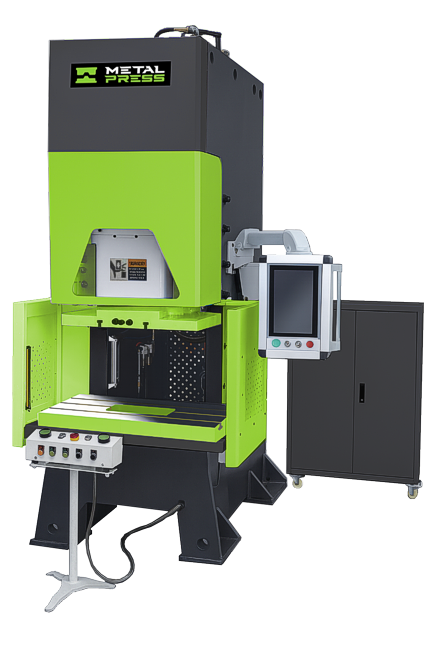
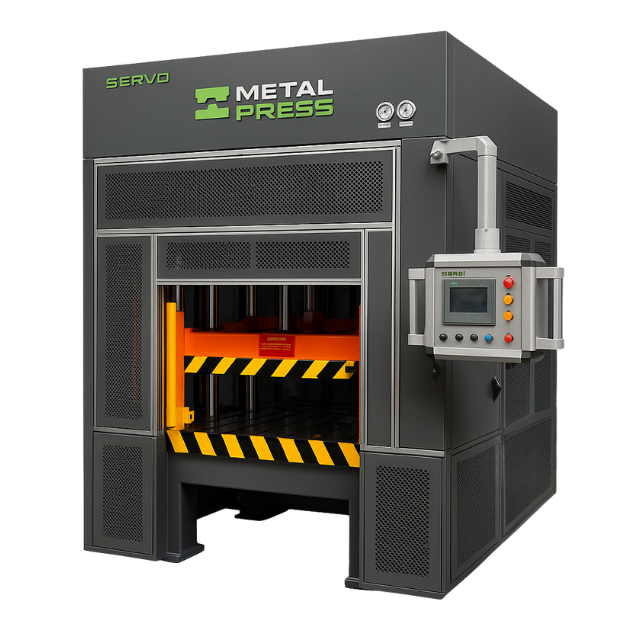
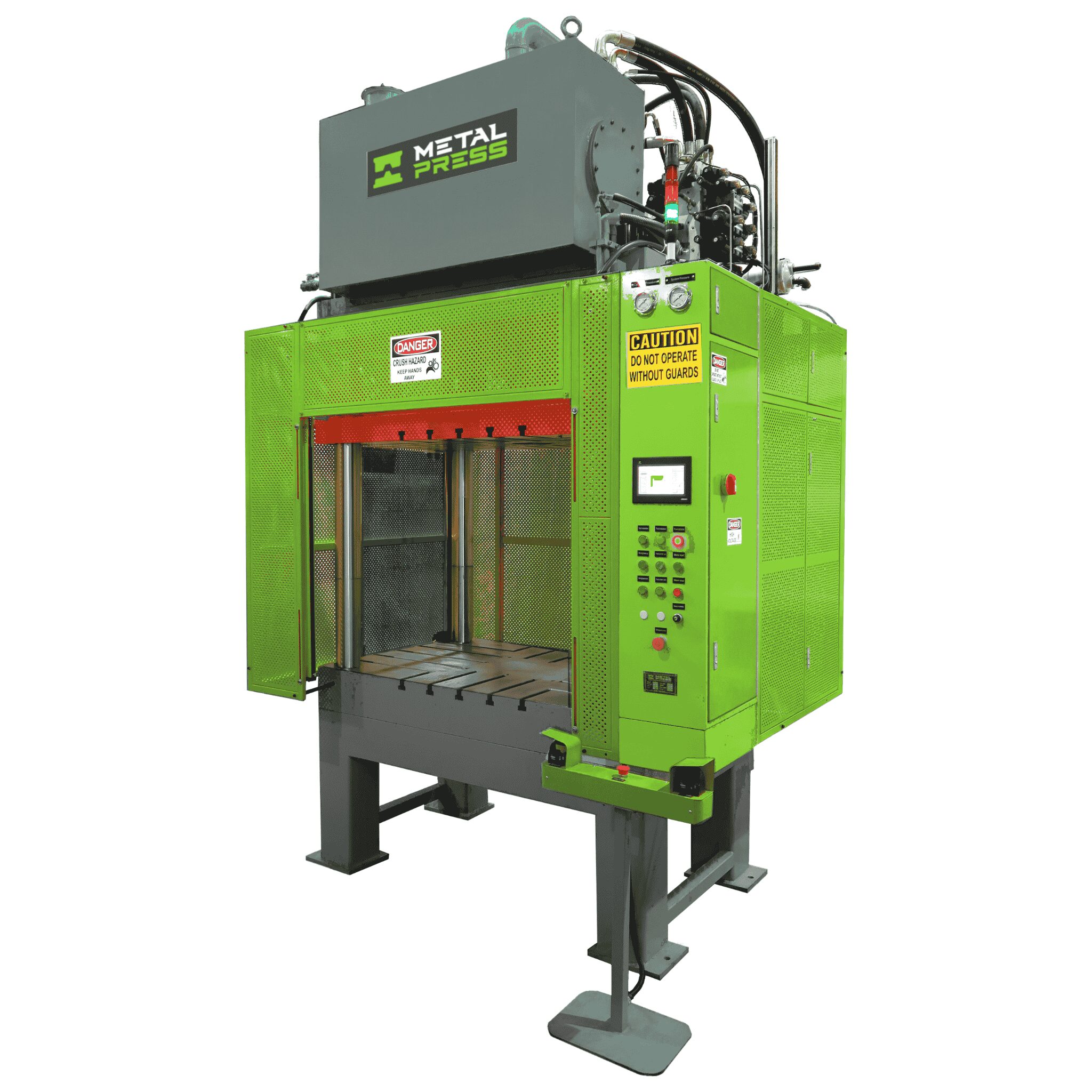
Servo Press Systems for Programmable Metal Forming
A servo press uses closed-loop motor and control technology to regulate slide or ram motion with greater precision than a conventional fixed-speed press. Depending on the drive architecture, a servo press system can control position, velocity, acceleration, dwell, pressure, and return motion to match the material and tooling rather than forcing every part through the same stroke profile.
This hub compares three families: servo-mechanical presses, servo-hydraulic presses, and servo-electric presses. Each uses servo control differently, so the best choice depends on force, speed, stroke, dwell, energy use, accuracy, production rate, tooling, and automation requirements.
Servo-Mechanical vs. Servo-Hydraulic vs. Servo-Electric Presses
| Servo press type | How force is produced | Best suited for |
|---|---|---|
| Servo-mechanical | Servo motors drive a mechanical transmission and slide | High-speed stamping and forming that benefits from programmable slide motion |
| Servo-hydraulic | Servo-controlled pumps regulate hydraulic pressure and flow | Long strokes, full force, pressure hold, precision forming, compaction, and flexible recipes |
| Servo-electric | Electric servo actuators produce direct controlled motion | Clean, compact, high-accuracy pressing, assembly, joining, and force-displacement monitoring |
How to Select a Servo Press
Motion profile
Define approach speed, forming velocity, dwell, bottom-of-stroke behavior, and return speed for each part recipe.
Force and energy
Verify peak force, force through the stroke, motor or hydraulic capacity, energy per cycle, and thermal duty at the production rate.
Accuracy and data
Specify position repeatability, force accuracy, force-displacement curves, recipe control, traceability, and quality limits.
Integration
Plan feeds, transfers, robots, guarding, die protection, ejectors, tooling functions, networks, and downstream inspection together.
Servo Press Applications
Servo presses are used for precision stamping, bending, drawing, forming, blanking, coining, joining, assembly, clinching, insertion, powder compaction, die spotting, mold tryout, and applications requiring controlled force or motion. Programmable profiles can reduce impact, improve material flow, protect tooling, increase repeatability, and allow multiple part recipes on one machine.
Explore process requirements for metal stamping, metal forming, deep drawing, and powder pressing.
Expert Advice
Choose the servo architecture around the process
“Servo press” describes the control method, not one universal machine. A servo-mechanical press may be ideal for programmable high-speed stamping, while servo-hydraulic suits long-stroke full-force work and servo-electric suits compact precision assembly.
Start with the required force curve, motion profile, stroke, dwell, accuracy, cycle rate, and data requirements. Then select the drive architecture and frame that deliver those results without unnecessary complexity.