

Blog
The Engineering Shift: Transitioning from Crank Press to Servo Mechanical Press

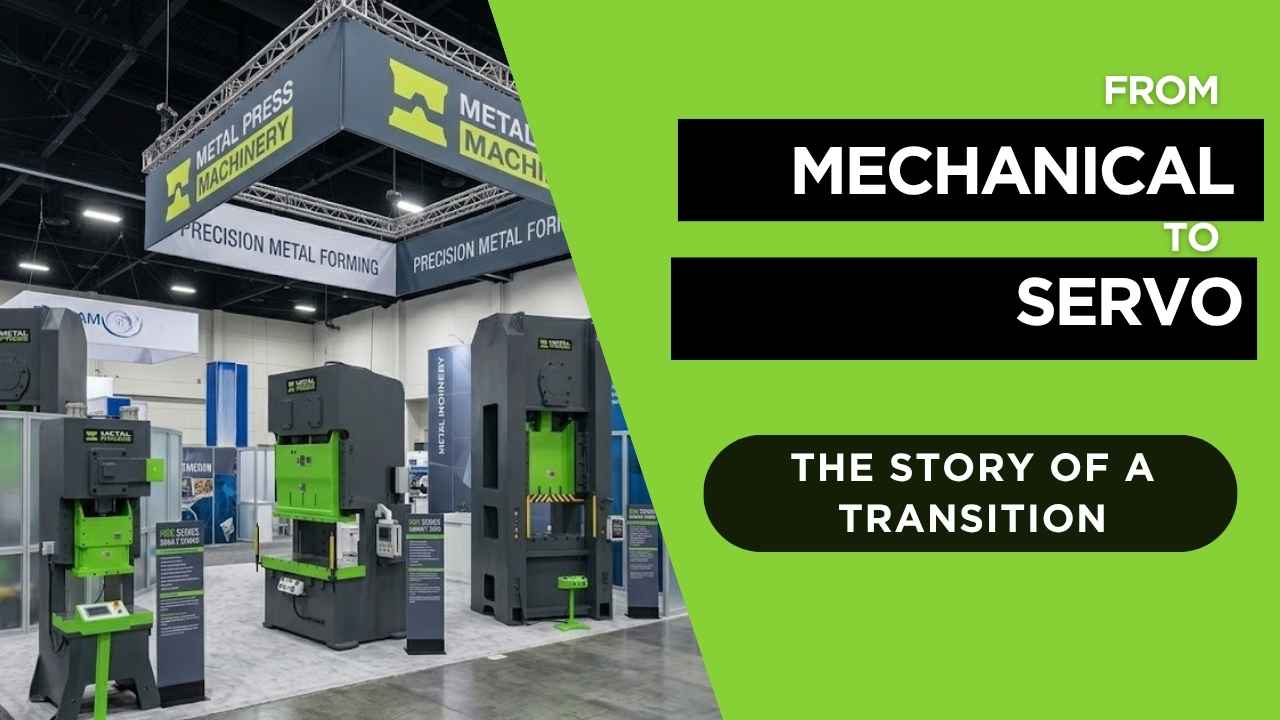
In the world of metal forming, the drive for higher precision, greater flexibility, and lower operational costs has led to a significant technological pivot. For decades, the mechanical press—specifically the ubiquitous crank press—has been the workhorse of the stamping industry. However, as material science advances and part geometries become more complex, the limitations of traditional mechanical drive systems have become apparent.
Today, leading press manufacturers are steering the industry toward a new standard: the servo mechanical press. This transition represents more than just a motor upgrade; it is a fundamental shift in how kinetic energy is managed and applied to metal.
Understanding the Legacy: The Traditional Mechanical Press
To understand the value of the “servo shift,” we must first look at the mechanics of the traditional mechanical press. In a standard system, a motor constantly spins a large flywheel. When the press is triggered, a clutch engages the flywheel, transferring energy through a crankshaft to move the ram.
The Single and Double Crank Design
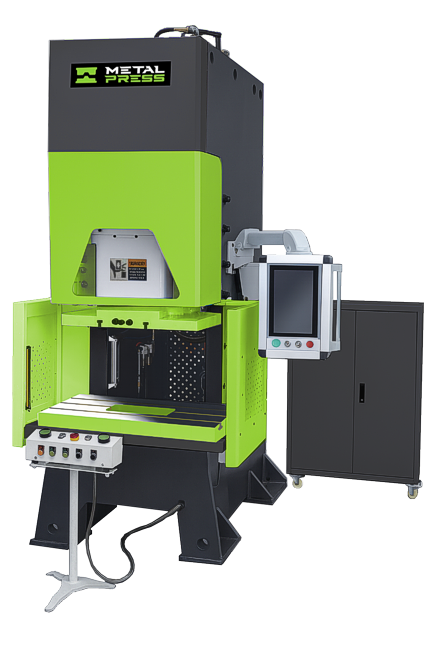
Traditional designs often vary based on the number of connection points and the frame style. A single crank C-frame press is excellent for smaller, less complex parts, providing easy access to the die area. For larger workpieces or offset loads, a double crank press provides better stability and resistance to deflection.
While reliable, these machines operate on a fixed kinematic cycle. The ram speed and motion profile are determined by the physical dimensions of the crankshaft. Once the cycle starts, the ram must travel to the bottom dead center (BDC) and back to the top at a speed dictated by the flywheel’s RPM.
The Servo Revolution: Total Control of the Stroke
The servo mechanical press removes the flywheel, clutch, and brake. In their place is a high-torque servo motor connected directly (or via a simplified gear train) to the drive mechanism.
Because the motor is controlled by sophisticated software rather than the momentum of a spinning wheel, the ram’s motion becomes fully programmable. This capability transforms the press from a rigid machine into a flexible production tool.
1. Programmable Motion Profiles
In a traditional crank press, the ram speed is fastest in the middle of the stroke and slows down as it reaches BDC. With a servo mechanical press, you can customize this entirely. You can fast-approach the workpiece to save time, slow down significantly during the actual forming to reduce heat and friction, and then rapidly return to the top.
2. The Pendulum Motion
One of the most efficient features of a servo mechanical press is pendulum motion. Instead of completing a full 360-degree rotation of the crank for every hit, the servo motor can rotate the crank a specific number of degrees—say, from 160 to 200 degrees—and then reverse direction. For shallow parts, this “pendulum” effect can dramatically increase strokes per minute (SPM), often outperforming traditional mechanical presses by 20% to 40%.
SERVO MECHANICAL PRESSES
Get A Free Quote
Call 519-624-9987 to immediately talk to a technician, or fill in the form below and get a same day reply.
Solving the "Springback" and Precision Challenge
As manufacturers move toward high-strength steels (HSS) and aluminum, they face the challenge of “springback”—the tendency of a metal to return to its original shape after being formed.
In a standard mechanical press, the ram spends a fraction of a second at BDC. In contrast, a straight sided servo press can be programmed to “dwell” at the bottom of the stroke. Holding the material under pressure for a few milliseconds allows the atoms to reorganize, significantly reducing springback and ensuring part tolerances are met on the first hit.
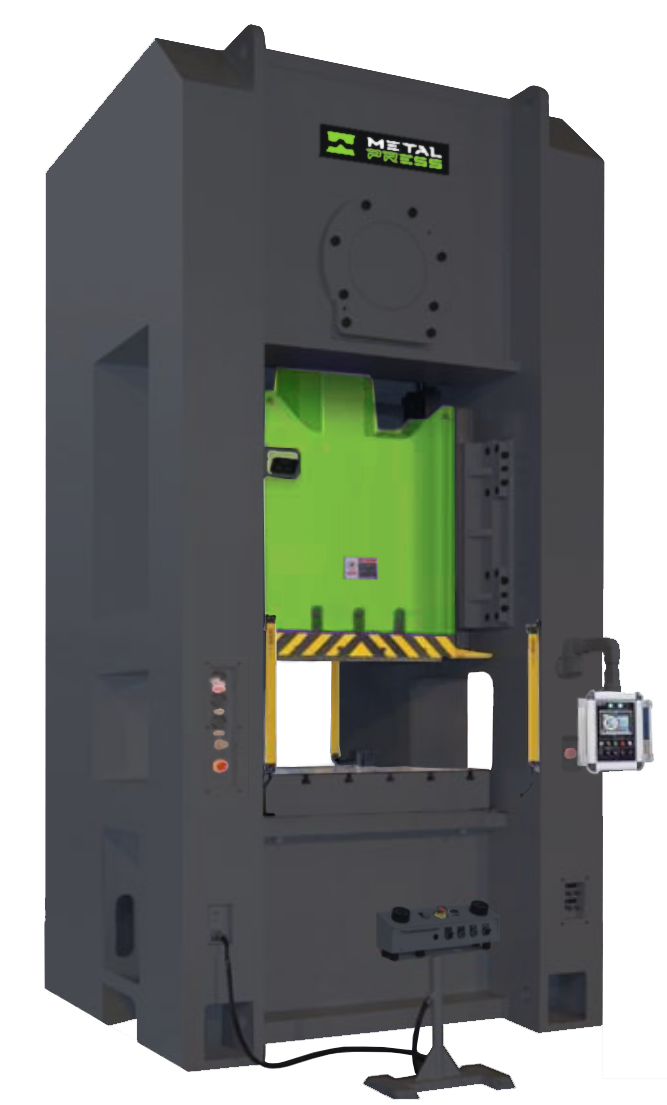
This precision is also critical for complex assemblies. Using a single point straight sided servo press ensures that the force is distributed precisely where needed, reducing the risk of die wear and material fracturing.
Economic and Operational Advantages
While the initial investment in servo technology from press manufacturers can be higher than traditional mechanical options, the long-term ROI is found in several key areas:
Energy Efficiency: A traditional press keeps a flywheel spinning even when the machine isn’t actively stamping. A servo motor only draws significant power during the working portion of the stroke. Furthermore, many systems use capacitors to capture and reuse energy generated during the braking phase of the cycle.
Reduced Secondary Operations: Because the motion is so controlled, the quality of the “cut” in blanking or the “draw” in forming is much higher. This often eliminates the need for secondary deburring or straightening processes.
Extended Die Life: The ability to “soft touch” the material—slowing the ram just before contact—reduces the impact shock on the tooling. This can extend the life of expensive dies by up to 300%.
Supporting the Production Line
Transitioning to a high-speed servo environment often requires looking at the rest of the production floor. To keep up with the increased SPM of a servo-driven line, material handling must be equally efficient.
Heavy coils must be managed safely to prevent downtime. Utilizing a coil tipper or a die upender ensures that your staff can safely and quickly transition materials without damaging the specialized tooling required for servo applications.
Is it Time to Transition?
The choice between a traditional mechanical press and a servo mechanical press ultimately depends on your specific application.
Choose a Crank Press if: You are running high-volume, simple parts with consistent materials where the fixed cycle and high speed of a flywheel system are most cost-effective. A C-frame single crank press remains a staple for many job shops for a reason.
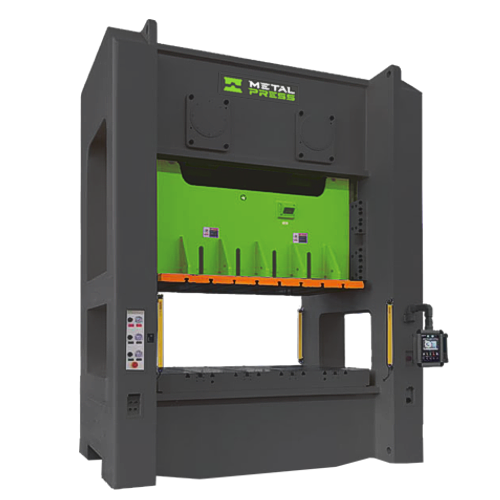
Choose a Servo Press if: You work with varied materials (aluminum, HSS), require high precision, or need the flexibility to change motion profiles between different jobs. For complex, large-scale stamping, a double point straight sided servo press is the gold standard for modern manufacturing.
Conclusion
The engineering shift from crank-driven systems to servo-controlled mechanics is more than a trend—it is a response to the increasing demands of modern industry. By offering unparalleled control over the stamping cycle, press manufacturers are giving facilities the tools to produce better parts, faster, and with less waste.
Whether you are looking to maintain the reliable performance of a double crank mechanical press or looking to leap into the future with a servo mechanical system, understanding these core differences is the first step toward a more efficient production floor.
MtalPress Machinery is the top press supplier in North America. For more technical specifications and to see our full range of equipment, visit our all products page.
Continue with the stamping press equipment hub and the metal stamping application guide to match crank or servo-mechanical technology to the part, die, material, speed, energy, and automation requirements.
We Make Your Next Servo Mechanical Press
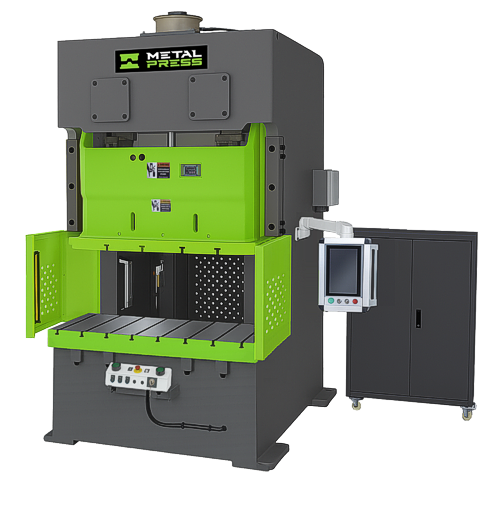
MetalPress Machinery is a top Press Manufacturer. Whether you’re located in the USA, Canada, Mexico, or South America, you can contact us for more information, pricing, and consultations through our online forms, or by phone or email.