
STAMPING PRESS MACHINES
MetalPress Machinery offers a variety of stamping presses in different sizes from 25 ton – 800 ton capacities.
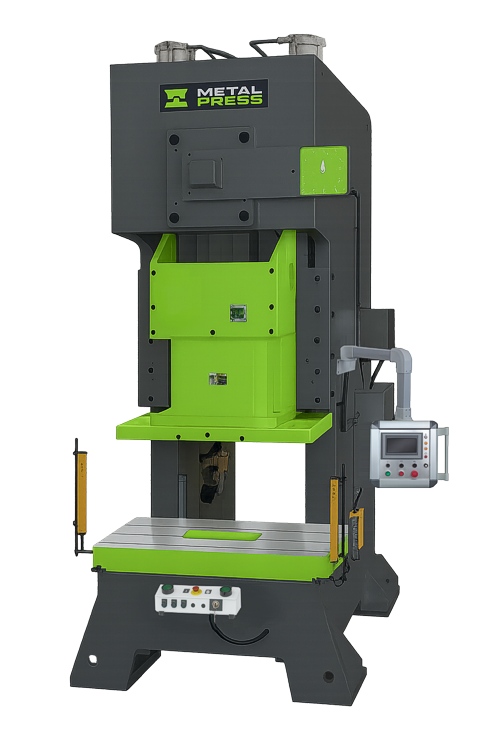
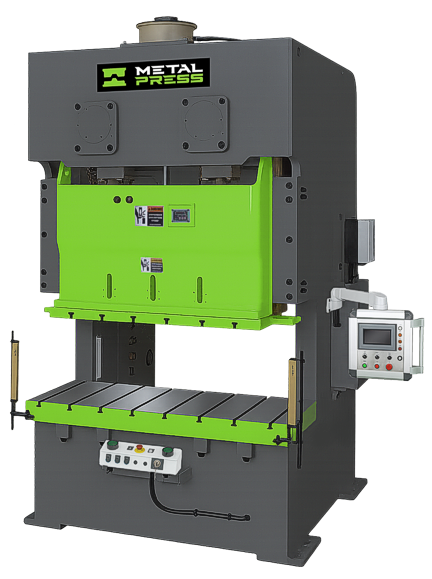
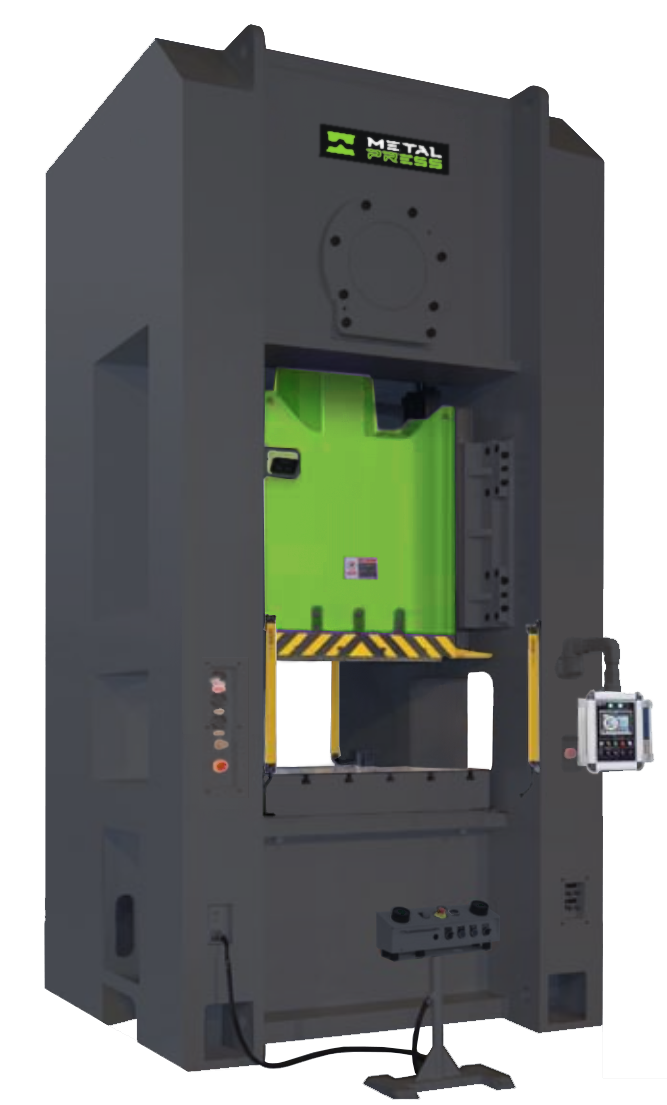
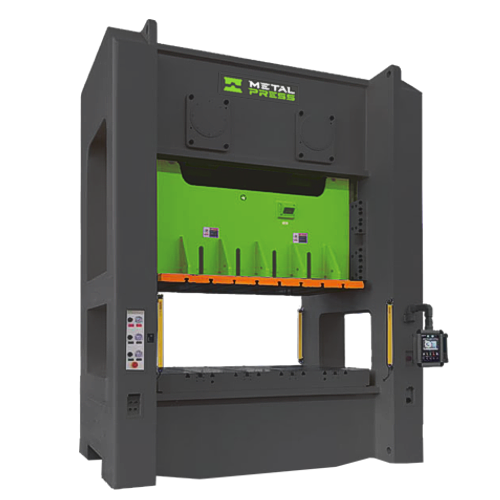
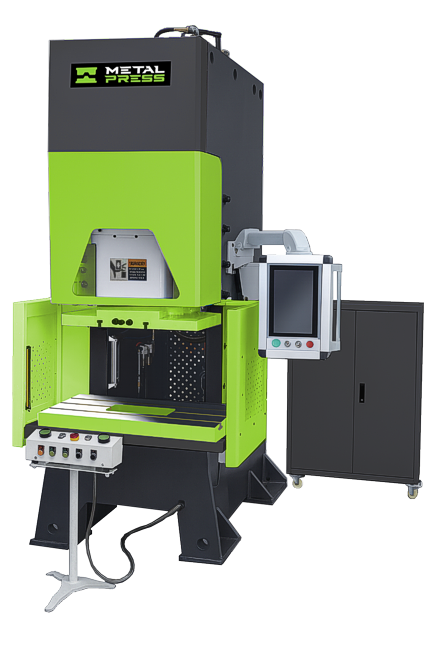
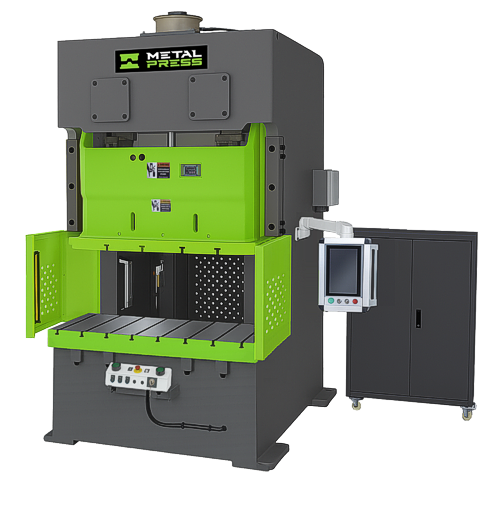
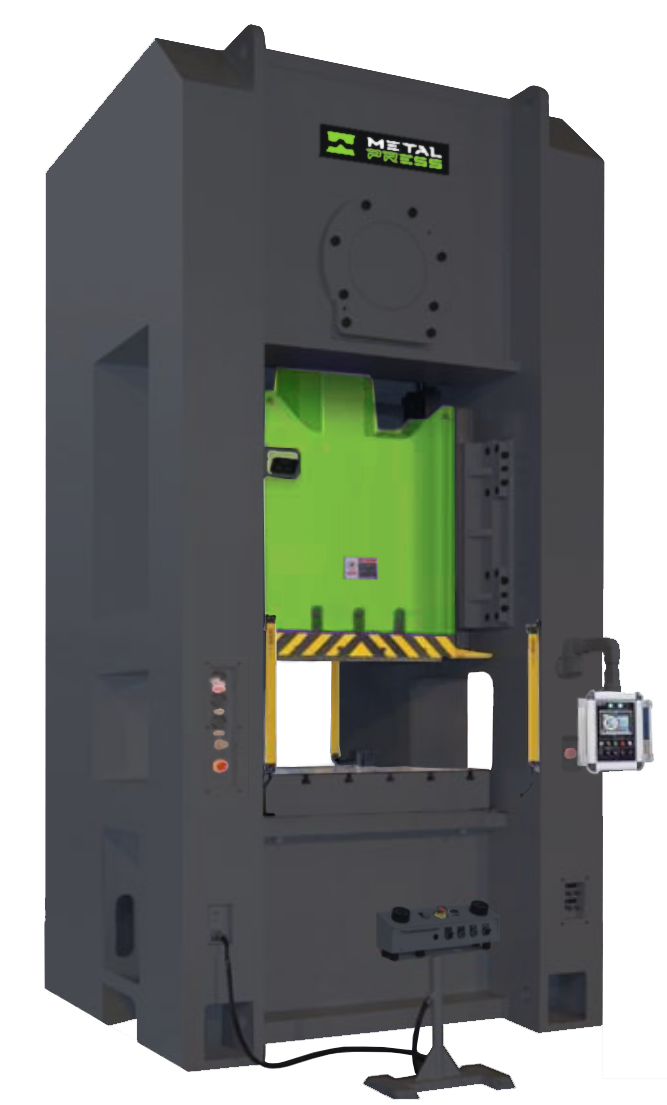
Industrial Stamping Press Machines for Sheet Metal Production
A stamping press machine transforms sheet metal or coil stock into repeatable production parts through blanking, punching, bending, embossing, drawing, flanging, and progressive-die operations. Mechanical and servo-mechanical stamping presses are widely used when manufacturers need consistent slide motion, high strokes per minute, reliable die alignment, and efficient integration with coil-feeding or transfer automation.
This page is the equipment-selection hub for MetalPress stamping press machines. For process-focused guidance about dies, operations, materials, and production flow, visit the metal stamping application guide. The separation gives buyers a clear path: compare machines here, then evaluate the stamping process and supporting equipment on the application page.
Mechanical vs. Servo Stamping Presses
| Press type | Primary advantage | Typical stamping fit |
|---|---|---|
| Mechanical stamping press | Fast, repeatable fixed crank-motion cycle | High-volume blanking, piercing, shallow forming, and progressive-die production |
| Servo-mechanical stamping press | Programmable slide velocity, dwell, and return profile | Complex forming, sensitive materials, changeovers, reduced snap-through, and flexible production |
| Hydraulic stamping/forming press | Full force through the stroke and programmable pressure hold | Long-stroke forming, deep drawing, low-speed control, and operations requiring dwell |
Review the mechanical press hub, servo-mechanical press hub, or hydraulic press hub for drive-system details.
How to Select a Stamping Press Machine
Tonnage and Energy
Calculate forming force at the rated point and confirm that flywheel or servo energy supports every operation in the die.
Frame and Bed
Match C-frame or straight-sided construction, bed area, slide guidance, and off-center capacity to the die footprint.
Stroke and Speed
Specify stroke length, shut height, slide adjustment, strokes per minute, and any programmed slow-down or dwell.
Automation
Plan coil handling, feeders, straighteners, transfer systems, lubrication, die protection, scrap removal, and inspection together.
Common Stamping Press Applications
Stamping press machines support automotive brackets and structural parts, appliance panels, electrical terminals, electronic contacts, hardware, enclosures, renewable-energy components, aerospace stampings, and other high-volume sheet-metal products. Production may use single-stage, compound, progressive, or transfer dies depending on geometry, volume, material, and handling requirements.
Explore related process pages for punching and blanking, metal forming, deep drawing, and precision coining.
Expert Advice
Specify the press and feed line as one production system
Press tonnage alone does not determine whether a stamping line will run reliably. Validate energy, rated tonnage position, die footprint, off-center loading, slide guidance, feed window, material width and thickness, coil weight, scrap flow, lubrication, die protection, and target strokes per minute together.
A mechanically capable press can still underperform if the feeder, straightener, transfer, controls, or die-change method cannot keep pace. Early system-level planning reduces die damage, nuisance stops, quality variation, and future automation constraints.
Stamping Press Engineering Guides
Use these guides to compare stamping processes, frame styles, drive systems, automation, tooling, and production requirements.