How A Servo Hydraulic Press Works
What Makes Servo‑Hydraulic Presses Different
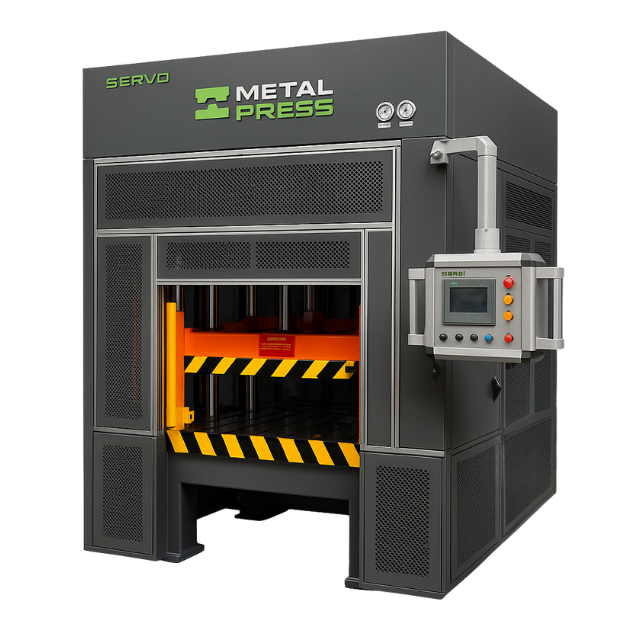
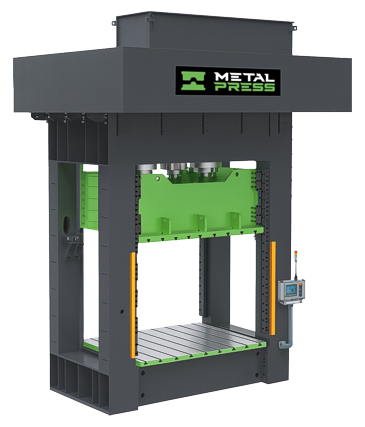
A servo hydraulic press is a type of press that is used to shape or form materials through the application of force. It works by using a hydraulic system to generate the force needed to press or punch a material.
Manufacturers often compare servo‑hydraulic presses with traditional hydraulic presses, traditional mechanical presses, and forging presses to determine which technology best suits their production goals. By exploring these related press types, readers can better understand how servo‑hydraulic systems deliver higher precision, lower energy consumption, and improved repeatability. Linking to these product categories also helps users navigate directly to the equipment that matches their application.
How Servo‑Hydraulic Systems Work
The hydraulic system consists of a hydraulic pump, which is driven by an electric motor, and a hydraulic cylinder, which contains a piston that moves back and forth. When the pump is activated, it creates pressure in the hydraulic fluid, which in turn pushes the piston inside the cylinder.
The piston is connected to a ram, which is the part of the press that applies the force to the material being shaped. By controlling the flow of hydraulic fluid to the cylinder, the press operator can control the speed and force of the ram’s movement. A servo hydraulic press uses a servo motor to control the hydraulic pump and adjust the amount of hydraulic fluid that is supplied to the cylinder. This allows for more precise control over the press’s movements and allows it to operate more quickly and efficiently than traditional hydraulic presses. In summary, a servo hydraulic press uses a hydraulic system and servo motor to generate and control the force needed to shape or form materials.
In many industrial environments, servo‑hydraulic technology is used in applications that previously relied on powder compacting presses, deep‑drawing presses, or trim presses. These systems benefit from the servo motor’s ability to control ram speed, pressure, and position with exceptional accuracy. Internal links to these press categories help readers explore how servo‑hydraulic control can enhance forming, trimming, or compaction processes.
Distinguishing Servo Motors From Regular Motors
A servo motor is different from a regular motor because it includes a feedback mechanism that allows for precise control over its movements. In a servo hydraulic press, the servo motor is used to control the hydraulic pump and adjust the flow of hydraulic fluid to the cylinder. This feedback mechanism allows the servo motor to accurately and quickly adjust the press’s movements based on the operator’s input or programming.
In contrast, a regular motor does not have this feedback mechanism and typically runs at a fixed speed. While it can still be used to power machinery, it does not offer the same level of precision and control as a servo motor. Overall, a servo motor is ideal for applications that require precise control over movement, such as in industrial machinery, robotics, and automation systems.
The Role Of Feedback Mechanisms In Servo Motors
The feedback mechanism in a servo motor is used to provide information about the motor’s current position, speed, and torque output. This information is then used by the servo controller to adjust the motor’s behavior and ensure that it moves to the desired position or speed.
There are different types of feedback mechanisms that can be used in servo motors, but one of the most common is called an encoder. An encoder is a device that is mounted on the motor shaft and generates a series of digital pulses as the shaft rotates. By counting these pulses, the servo controller can determine the motor’s current position and adjust its behavior accordingly. In addition to encoders, other types of feedback mechanisms can include resolvers, potentiometers, and Hall effect sensors. These devices all work by providing information about the motor’s current position, speed, or torque output.
Once the feedback information is received by the servo controller, it uses this information to adjust the motor’s behavior through a closed-loop control system. The controller compares the feedback information to the desired position or speed, and then adjusts the motor’s behavior accordingly to ensure that it moves to the correct position or speed.
Overall, the feedback mechanism in a servo motor is a crucial component that allows for precise control over the motor’s movements and makes it ideal for a wide range of industrial and automation applications.
Advantages of Servo‑Hydraulic Presses
These performance benefits become even more significant when comparing servo‑hydraulic presses to conventional C‑frame hydraulic presses, H‑frame presses, or forging presses used in high‑force applications. Each press type offers unique strengths, and linking to these categories helps readers evaluate which machine aligns with their production volume, material type, and precision requirements.
Applications Across Manufacturing
Servo‑hydraulic presses are increasingly used in industries that also rely on powder metallurgy presses, metal forming presses, and 4-post presses for secondary operations. By linking to these equipment types, you give readers a clear path to explore the full range of machinery that supports stamping, forming, compacting, and trimming workflows.
Energy Efficiency & Cost Savings
When evaluating long‑term operating costs, many manufacturers compare servo‑hydraulic presses with energy‑efficient servo presses, hydraulic presses, and automated press systems. Linking to these product categories helps readers understand how different press technologies influence energy consumption, cycle times, and maintenance requirements.
Choosing the Right Press for Your Operation
Depending on the application, a facility may choose between a servo‑hydraulic press, a high‑tonnage forging press, a precision powder compacting press, or a versatile hydraulic trim press. Internal links to these product pages help readers explore the full range of press solutions and determine which machine best fits their production needs.
Conclusion
Whether your operation requires a servo‑hydraulic press, a hydraulic forming press, or a specialized powder compaction press, linking to these product categories helps readers quickly navigate to the equipment that supports their manufacturing goals. These internal links also strengthen your site’s SEO by connecting high‑performing content to your core product pages.
Let Us Make Your Next Press
MetalPress machinery is a pioneer manufacturer in metal stamping and press industry all over United States, Canada, Mexico, and South America.
For more information about our presses and other products
If you need to talk, don’t hesitate