

Blog
Engineering the Right Solution: From First Contact to Assembly and Design of a Custom 35‑Ton Trim Press

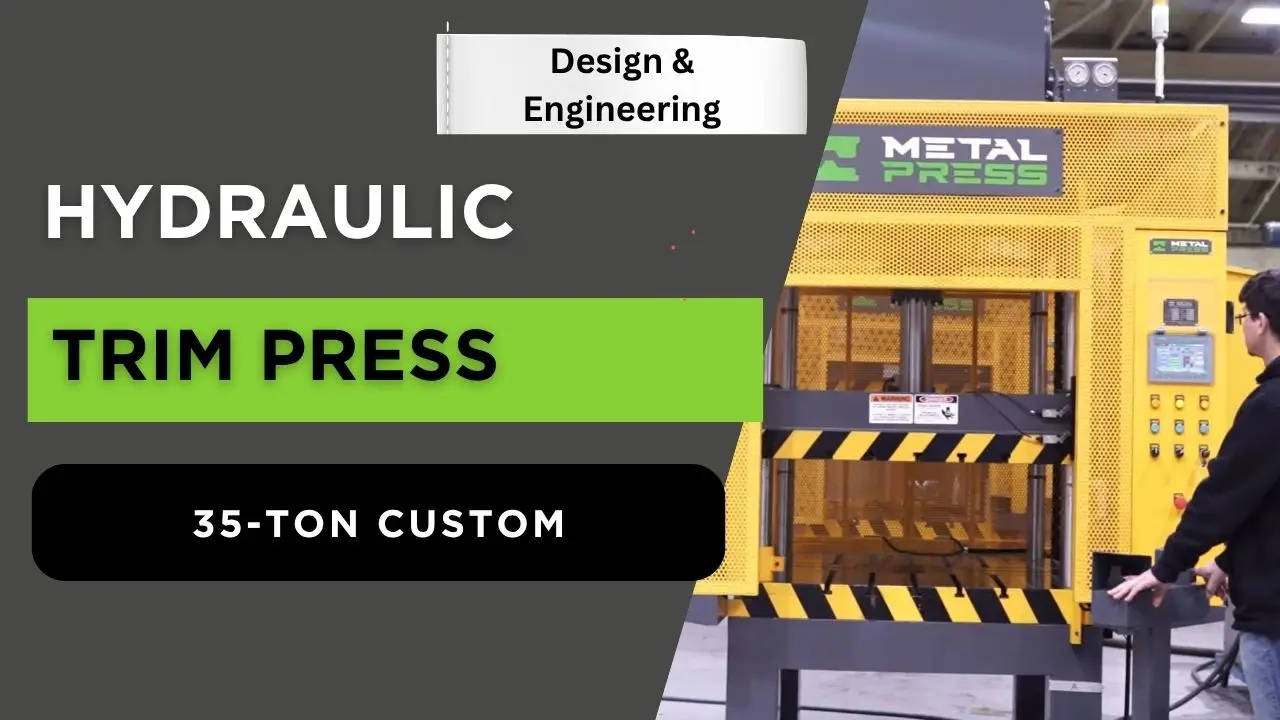
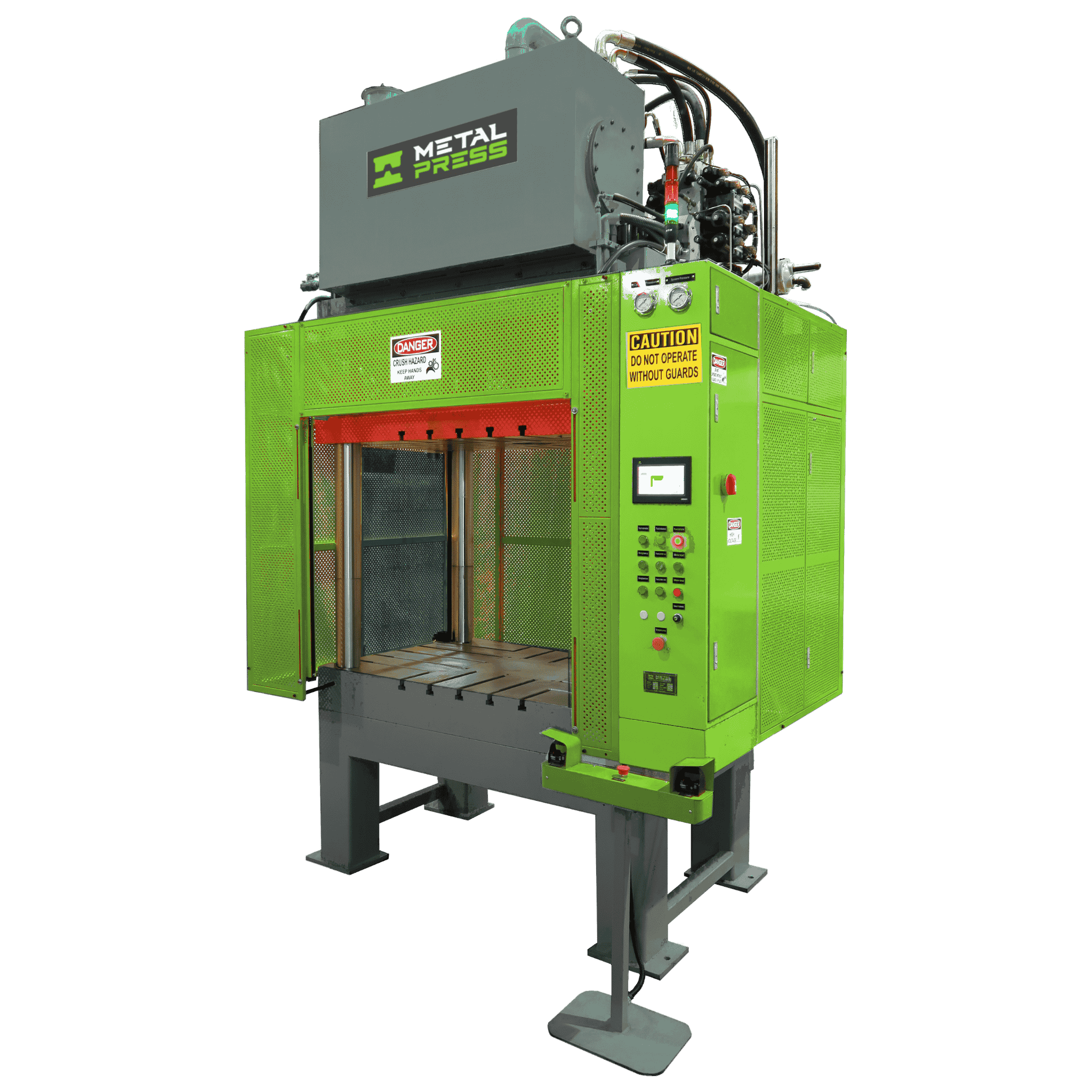
Every machine has a story, and the journey of this custom 35‑ton trim press began long before the first test cycle. In Phase One, we followed the path from the initial inquiry—when a metal components manufacturer from Ohio reached out with a production challenge—through the engineering, design, and full mechanical assembly of their new 4 post hydraulic press. That stage transformed a set of requirements into a nearly complete trimming solution, built with precision, collaboration, and a clear understanding of the customer’s workflow. For readers who want to revisit how the project began, the full story is available in Phase One of the trim press build.
With the machine now standing fully assembled on the shop floor, Phase Two begins. This is where the trimming press transitions from a completed structure into a verified, calibrated, and production‑ready system. Finalizing, testing, inspection, and pre‑commissioning are the steps that ensure the machine will perform flawlessly once it arrives at the customer’s facility.
👉 You can review the journey of this 35-ton trim press (MTP35) and find out more about the assembly and design phace
Understanding Trim Presses and Their Role in Manufacturing
Before diving into the engineering process, it’s important to understand what a trim press is and why it plays such a critical role in die‑casting and metalworking operations.
What Is a Trim Press?
A trim press—also known as a trimming press or 4 post press—is a hydraulic machine designed to remove excess flash, runners, gates, and unwanted material from cast or molded parts. After a part is ejected from a die‑casting machine, it often contains extra material that must be removed before the part can be used or assembled. A trim press performs this operation quickly, safely, and consistently.
Where Trim Presses Are Used
Trim presses are essential in industries such as:
Automotive die‑casting
Aerospace components
Consumer appliance manufacturing
General metalworking
Electrical hardware production
Any operation that produces cast or molded components benefits from the precision and repeatability of a 4 post hydraulic trimming press.
Why 4 Post Presses Are Preferred
A 4 post press offers several advantages:
Superior platen parallelism due to four‑column guidance
Even force distribution across the entire tooling surface
Open access from all sides for loading, unloading, and automation
High structural rigidity for long‑term accuracy
Flexibility for a wide range of tooling sizes
For the Ohio manufacturer, these benefits aligned perfectly with their need for a dependable, high‑precision trimming solution.

👉 You can visit our trim press (MTP Series) page and contact our specialists for details about our trim presses.
Testing and Inspection: Ensuring Performance and Reliability
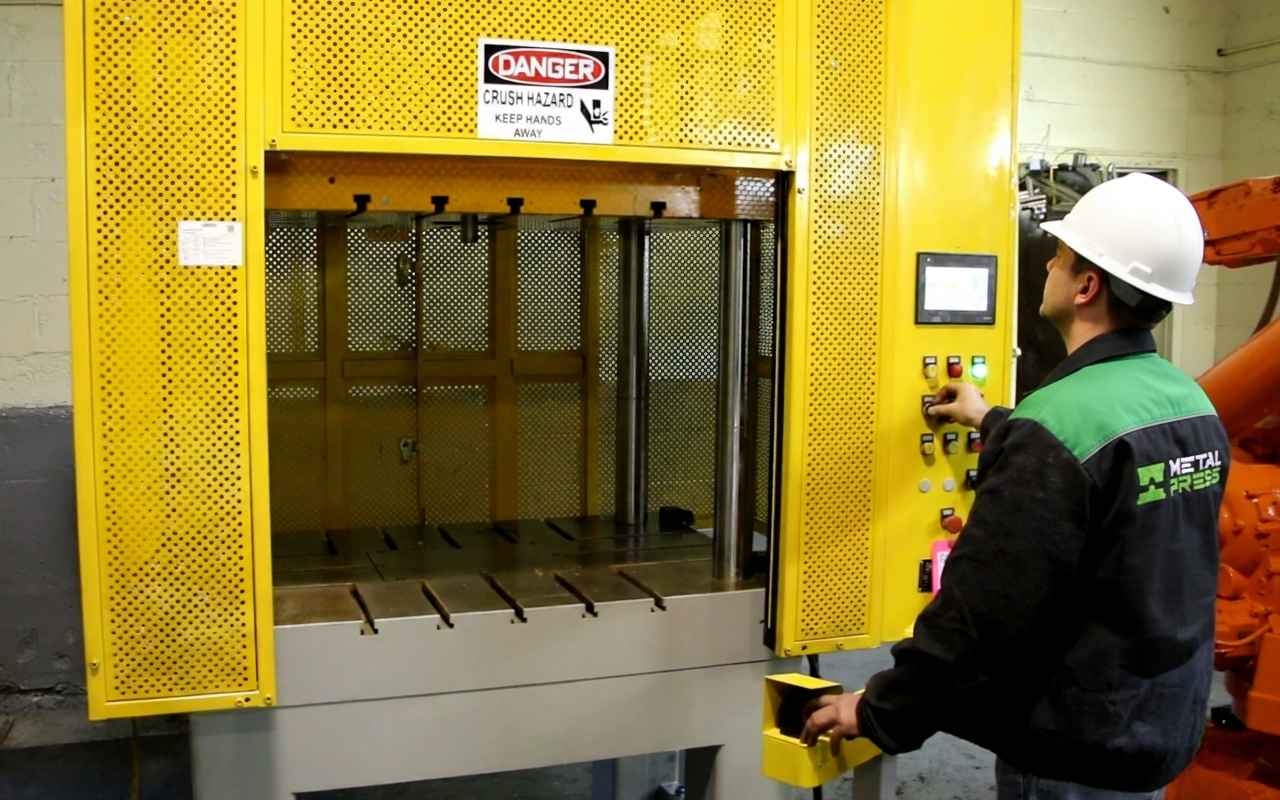
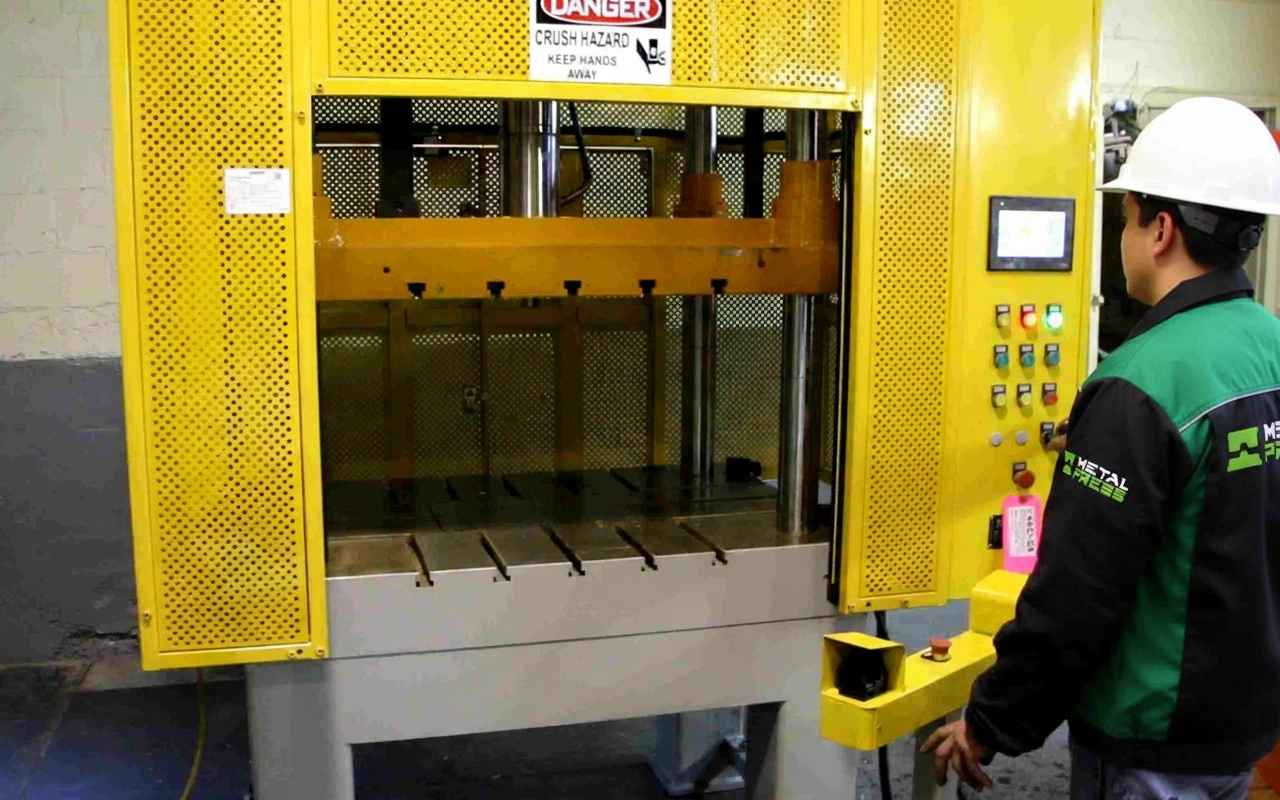
Once the machine was fully assembled and all systems were activated, the next step was a comprehensive testing and inspection process. This stage is designed to validate the performance, accuracy, and reliability of the 35‑ton trim press before it ever leaves our facility.
The testing process began with dry‑run cycles. These initial movements allowed our team to observe the behavior of the hydraulic cylinder, the smoothness of the platen travel, and the responsiveness of the control system. The 4 post hydraulic press must operate with perfect alignment, and these early cycles help confirm that the mechanical structure is performing exactly as engineered.
After dry‑run verification, the machine underwent pressure testing. The hydraulic system was gradually brought up to full operating pressure, allowing us to confirm that the cylinder delivered the full 35 tons of force without fluctuation or drift. Pressure stability is essential for trimming operations, where consistent force ensures clean, repeatable cuts and reduces the need for secondary finishing.
Inspection also included a detailed review of the electrical system. Our technicians verified sensor feedback, limit switch operation, and the accuracy of the stroke and pressure readings displayed on the HMI. The PLC logic was tested under multiple simulated scenarios to ensure the trimming press would respond correctly to operator inputs and safety conditions.
This stage is where the machine proves itself. A trim press is only as good as its reliability, and every test cycle brings it one step closer to being production‑ready.
Pre‑Shipping Preparation: Protecting the Machine for Transport
With testing and inspection complete, the next step was preparing the trimming press for shipment to the Ohio manufacturer. Pre‑shipping preparation is a critical part of the process, especially for a machine of this size and precision.
The hydraulic system was secured, protective covers were installed over sensitive components, and the machine was anchored to a reinforced skid designed to handle its weight during transport. All loose accessories—such as the operator manual, spare filters, and tooling interface components—were packaged separately and labeled for easy identification upon arrival.
The 4 post press was then wrapped and sealed to protect it from moisture, dust, and vibration during transit. Our logistics team coordinated the shipping schedule, ensuring that the machine would arrive at the customer’s facility on time and in perfect condition.
Pre‑shipping is more than packaging; it is the final step in safeguarding the quality of the machine we built. A trim press must arrive exactly as it left our facility—clean, secure, and ready for commissioning.
Pre‑Commissioning: Preparing for a Smooth Startup
Before the machine ships, we complete a pre‑commissioning review to ensure that installation and startup at the customer’s facility will be seamless. This includes verifying that all documentation is complete, from hydraulic schematics to electrical diagrams and maintenance guidelines. The operator manual is finalized, including instructions for setup, calibration, and routine service.
We also prepare a recommended installation plan for the customer’s maintenance team. This includes foundation requirements, electrical supply specifications, hydraulic fluid recommendations, and safety integration guidelines. A 4 post hydraulic press must be installed correctly to achieve optimal performance, and pre‑commissioning ensures that the customer has everything they need for a smooth startup.
In some cases, we also perform a simulated commissioning sequence in‑house. This allows us to verify that the machine will respond correctly during the first real production cycles once it is installed at the customer’s facility.
Pre‑commissioning is the final checkpoint before the machine begins its journey. It ensures that the 35‑ton trimming press will be ready for immediate integration into the customer’s workflow.
Phase Two Conclusion: A Fully Verified Trim Press Ready for Delivery
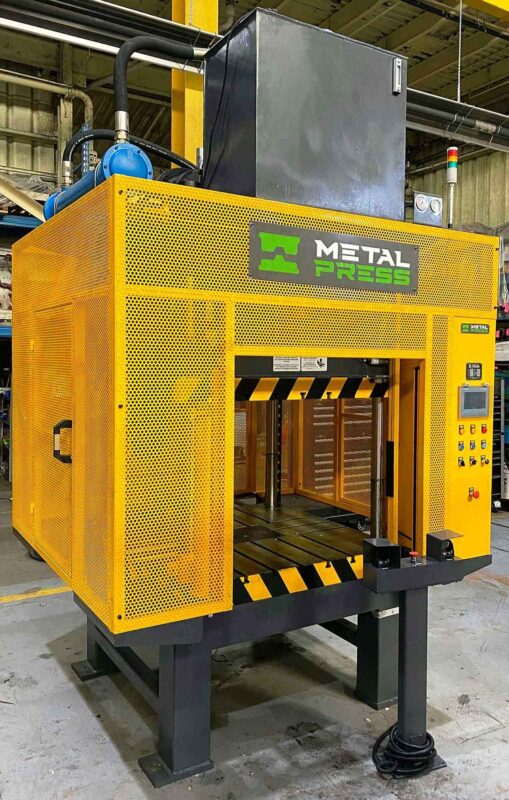
By the end of Phase Two, the custom 35‑ton trim press had completed its transformation from a fully assembled structure into a tested, inspected, and pre‑commissioned production machine. Every system—from hydraulics to safety to control logic—was validated to ensure long‑term reliability and consistent trimming performance.
The machine is now ready for shipment to the Ohio manufacturer, where Phase Three will begin: installation, on‑site commissioning, operator training, and the first production cycles.
Let Us Make Your Next Trim Press
Whether you’re located in the USA, Canada, Mexico, or South America, you can contact us for more information, pricing, and consultations through our online forms, or by phone or email.
View Our Trim Press
Visit all our pproducts