

Blog
The Story Of A Success: Shipment And Commissionig The 200 Ton Straight Sided Servo Hydraulic Press

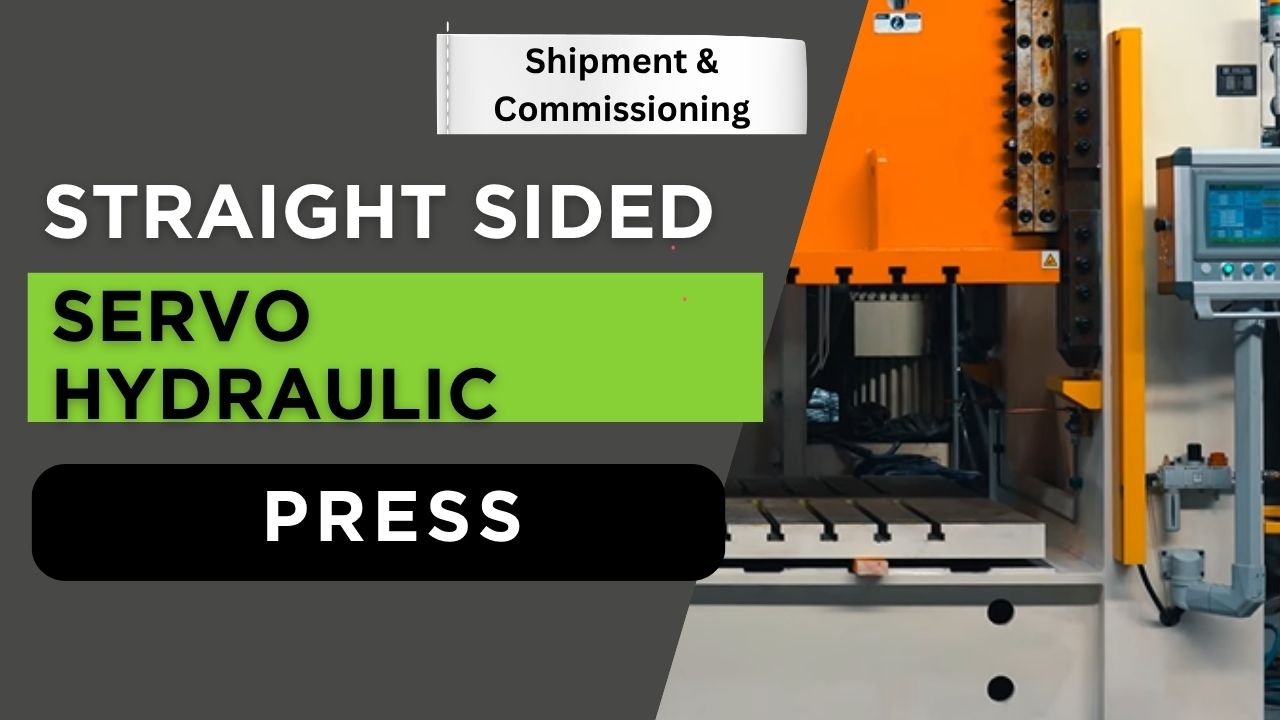
How We Reached This Final Stage
Before the 200‑ton straight‑sided servo‑hydraulic press ever reached the customer’s production floor, it had already completed a long and carefully engineered journey. In Phase One, the project began when an Ohio‑based manufacturer contacted us with a clear need for a modern, energy‑efficient, precision‑controlled forming solution. Their existing hydraulic press lacked the accuracy, programmability, and repeatability required for their expanding product line. After reviewing their forming requirements, part geometries, and long‑term production goals, our engineering team recommended a 200‑ton servo‑hydraulic press—a machine designed for high rigidity, advanced motion control, and consistent forming accuracy. Readers who want to revisit the early stages of the project can explore Phase One.
In Phase Two, we followed the machine through final assembly, hydraulic integration, electrical setup, and a comprehensive testing and inspection process. This included dry‑run testing, load simulation, servo calibration, safety validation, and full pre‑commissioning checks. By the end of Phase Two, the press had been fully verified—mechanically, hydraulically, and electronically—ensuring it was ready for shipment. You can review the full testing and validation process in Phase Two.
Now, in Phase Three, the project reaches its final chapter: shipment, delivery, installation, commissioning, and operator training. This is where the press transitions from a completed machine on our shop floor to a fully integrated, production‑ready forming system operating inside the customer’s facility.
👉 Review the journey of this press here:
Machine Introduction: Understanding the 200‑Ton Straight‑Sided Servo‑Hydraulic Press
Before diving into the testing and inspection process, it’s important to highlight the core specifications and capabilities of the 200‑ton straight‑sided servo‑hydraulic press. These features define the machine’s performance and ensure it meets the customer’s forming requirements.
👉 The Midwestern manufacturing team filled information request form. This is for you if you need information on our MHS-SV Series.
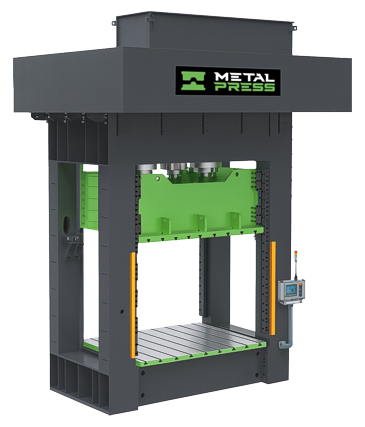
The press is built on a straight‑sided frame, engineered for maximum rigidity and minimal deflection under load. This structural design ensures consistent part quality, even during high‑force forming cycles. The servo‑hydraulic system provides precise control over ram speed, position, and force, allowing operators to program complex motion profiles for forming, drawing, punching, and precision assembly applications.
The machine includes a servo‑driven hydraulic pump, which reduces energy consumption, lowers noise levels, and provides instant response during forming operations. The press is equipped with a high‑accuracy linear transducer for ram positioning, ensuring repeatability within tight tolerances. The hydraulic circuit includes proportional valves, pressure sensors, and safety interlocks to maintain stable and reliable operation.
The control system features a touchscreen HMI, allowing operators to adjust stroke parameters, speed profiles, dwell times, and pressure settings. The press also includes programmable recipes, data logging, and diagnostic tools for maintenance and troubleshooting.
These specifications make the 200‑ton servo‑hydraulic press ideal for applications requiring precision, flexibility, and energy‑efficient forming performance.
Phase Three: Shipment, Delivery, Installation, Commissioning, and Training
With the machine fully tested and validated, Phase Three focuses on the final steps required to bring the press into full production at the customer’s facility.
Shipment: Preparing the Press for a Safe Journey
Shipping a precision‑engineered servo‑hydraulic press requires careful planning and meticulous preparation. The machine includes sensitive hydraulic components, servo drives, precision guide elements, and a rigid straight‑sided frame that must be protected during transport.
Once Phase Two testing was complete, our technicians began the pre‑shipping process. The hydraulic system was secured, and all moving components were locked in place. The ram was lowered and braced, ensuring that no part of the machine could shift unexpectedly. The electrical cabinet was sealed, and all ports were protected from dust and moisture.
The press was then anchored to a reinforced shipping base designed to maintain alignment and structural integrity during transit. The entire machine was wrapped and protected from vibration, impact, and environmental exposure.
Our logistics team coordinated the shipment schedule with the Ohio manufacturer, ensuring the press would arrive exactly when their facility was prepared for installation. This coordination is essential, especially for large forming equipment that must be integrated into existing production lines with minimal downtime.
Arrival and Unloading: Bringing the Press Into the Facility
When the press arrived at the customer’s facility, our team worked closely with their maintenance staff to ensure safe unloading and positioning. Servo‑hydraulic presses are heavy, precision‑built machines, and proper handling is essential to avoid damage.
The unit was lifted using approved rigging points and placed in its designated location on the production floor. The customer had prepared the area according to the installation guidelines provided during Phase Two, including electrical access, foundation requirements, and safety perimeter considerations.
Once positioned, the protective wrapping was removed, and the machine was inspected for any signs of transport‑related stress. Everything arrived in perfect condition, allowing installation to begin immediately.
Installation: Integrating the Press Into the Production Line
Installation is one of the most critical stages in the lifecycle of a servo‑hydraulic forming press. Proper installation ensures long‑term reliability, safe operation, and smooth integration into the customer’s workflow.
Electrical Integration
The press was connected to the facility’s electrical supply according to the specifications outlined in the installation manual. The control cabinet was grounded, and all wiring was verified for proper voltage, phase alignment, and safety compliance. The servo drive and HMI interface were powered on, confirming that the system’s electronics were functioning correctly.
Hydraulic System Setup
Next, the hydraulic system was inspected and prepared for operation. The hydraulic reservoir was filled to the appropriate level, and the lines were checked for proper routing and secure fittings. The servo pump was activated at low speed to begin circulating oil through the system.
Mechanical Alignment
The ram was aligned with the bolster to ensure smooth, accurate motion. The straight‑sided frame was checked for levelness and structural stability. All guide elements were lubricated and inspected for proper clearance.
Safety System Integration
Safety is a core part of every installation. The press’s safety circuits—including emergency stops, light curtains, and interlocks—were connected and tested. These systems ensure that the servo‑hydraulic press operates safely even under demanding conditions.
By the end of installation, the press was fully integrated into the customer’s production line, ready for commissioning.
Commissioning: Bringing the Press to Life
Commissioning is the moment when the 200‑ton servo‑hydraulic press transitions from a newly installed machine to a fully operational forming system. This stage ensures that the press performs exactly as engineered within the customer’s real‑world environment.
Initial System Activation
The hydraulic system was activated, and the servo pump was cycled through its full range of motion. The ram was moved through its stroke to verify smooth operation and accurate positioning.
Load Testing With Customer Tooling
To validate real‑world performance, the customer provided representative tooling for testing. This allowed us to verify:
Lifting stability under actual load
Pressure consistency
Servo response time
Ram accuracy
Frame rigidity under forming force
The press performed flawlessly, demonstrating stable force output and precise motion control.
Safety System Validation
Each safety feature was tested individually:
Emergency stop
Light curtain response
Over‑travel protection
Pressure relief
Interlock functionality
The press passed all safety tests, confirming that it was ready for full production use.
Operator Training: Empowering the Customer’s Team
A servo‑hydraulic press is only as effective as the people who operate it. That’s why operator and maintenance training is a core part of every installation.
Our technicians conducted hands‑on training sessions with the customer’s staff, covering:
System startup and shutdown
Stroke and pressure programming
Servo motion profiles
Tooling setup and alignment
Safety procedures
Routine maintenance
Troubleshooting and diagnostics
Operators learned how to navigate the HMI, adjust forming parameters, and monitor system performance. Maintenance personnel were trained on lubrication points, hydraulic checks, and electrical diagnostics.
Training transforms the press from a new piece of equipment into a trusted part of the production process.
Phase Three Conclusion: A Fully Operational 200‑Ton Servo‑Hydraulic Press
With installation complete, commissioning successful, and the customer’s team fully trained, the 200‑ton straight‑sided servo‑hydraulic press officially entered production. What began as a challenge in Phase One has now become a fully operational solution—engineered, built, tested, delivered, installed, and supported with precision and care.
The Ohio manufacturer now has a reliable, high‑performance forming press capable of delivering consistent, programmable, energy‑efficient forming cycles. This marks the beginning of a new chapter in productivity, accuracy, and manufacturing capability.

Let Us Make Your Next Press
Our MH-SV Series is the solution for your safety, time loss and efficiency problems. Visit the product page to find out more.
For more information about this die splitter and tester
For more information about our other products