

Blog
Press Brake Tooling and Bending Methods

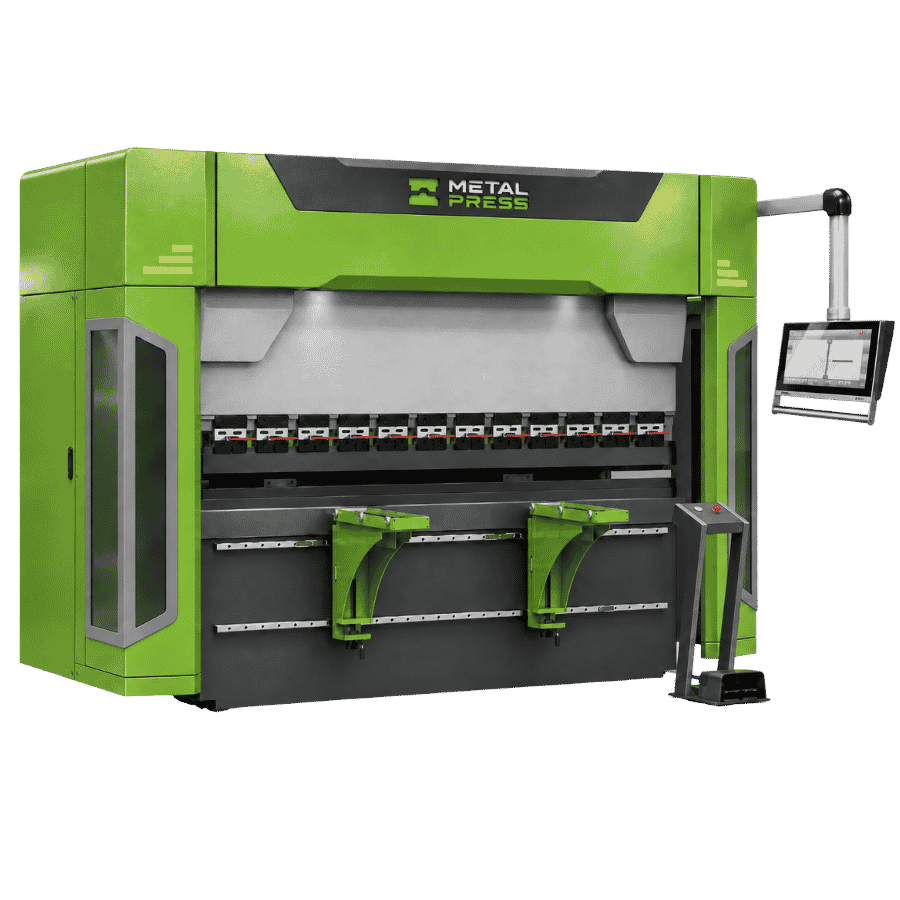
Tooling selection connects the material and bend geometry to the press brake’s force, clearance and load limits. Air bending, bottoming and coining are distinct methods with different setup requirements. This briefing explains the decisions to review before selecting a punch, die and holder arrangement; it does not approve every method for every machine.
Start with the finished bend geometry
Specify material, thickness, inside radius, bend angle, flange lengths and the complete formed shape. Identify cosmetic faces, nearby cutouts and return flanges. The tool must reach the bend and release the part through the entire operation sequence.
Review multi-bend parts before choosing tools only from a cross-section. A suitable punch profile for the first bend may collide with a flange created earlier in the sequence.
Air bending, bottoming and coining are different methods
In air bending, the material is supported at the die shoulders while punch penetration contributes to the resulting angle. Bottoming brings the work more closely into the tool geometry. Coining uses a different high-pressure forming condition and must be reviewed as a distinct process.
Do not carry an air-bending force estimate into another method. Confirm the machine, tooling, holders and material together. Educational discussion of a method is not a statement that a particular Titan configuration is suitable for every bottoming or coining job.
Selection checklist
| Method | Selection focus | Review before use |
|---|---|---|
| Air bending | Material, die opening and penetration | Radius, flange support and force |
| Bottoming | Tool geometry and closer material contact | Method-specific load and compatibility |
| Coining | Distinct high-pressure forming conditions | Explicit machine and tool approval |
| Special forms | Offsets, returns or other geometry | Actual drawing, access and dedicated tooling |
Choose the V-die opening as part of the process
The die opening influences forming force, supported flange geometry and the resulting radius in air bending. A single opening-to-thickness rule is not a universal tool-selection specification. Check the tooling supplier’s data for the selected material and shape.
Small flanges, nearby cutouts and surface requirements can change the available choices. If the desired shape conflicts with the tool limits, review a different tool or process rather than increasing force without approval.
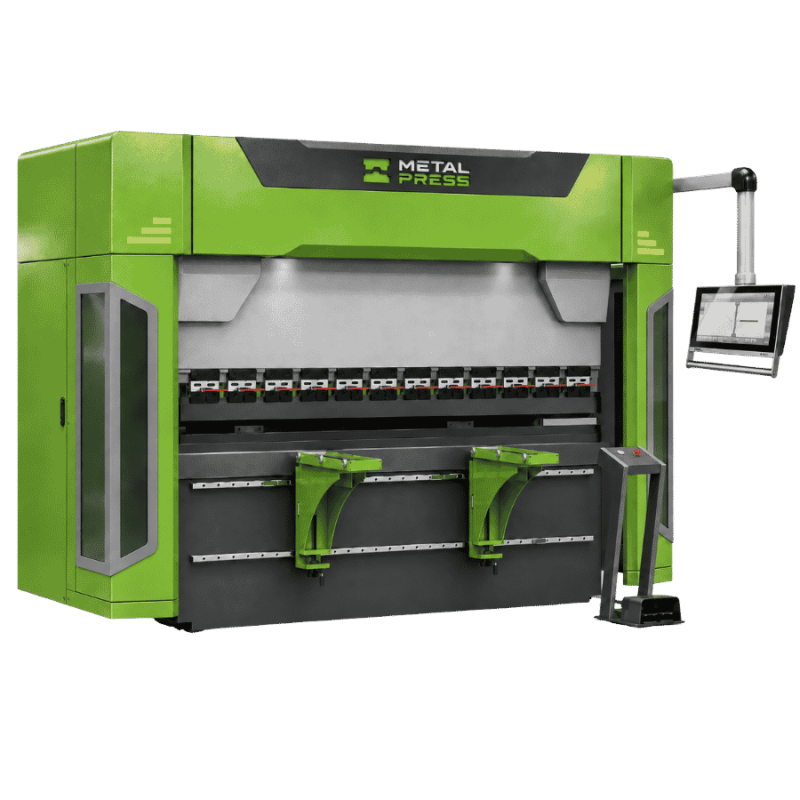
Titan Servo-Hydraulic CNC Press Brake
Review models, bending lengths, tooling and quotation inputs for your parts.
Check the entire load path
Confirm tool-system compatibility, load ratings, holder and adapter limits, tool height and the machine’s permitted loading arrangement. Total force and load concentrated over a short length are separate checks. A stronger machine does not make an incompatible or overloaded tool safe.
Segmented tools, quick clamping and special holders may help setup or access, but availability and limits depend on the ordered package. Use the Titan tooling and configuration information as the commercial starting point and obtain the final tool list in writing.
Prepare a first-part and repeat-setup record
Record the approved drawing, material, tool identification, locating references and inspection criteria. Check the first part’s angle, radius, flange dimensions, surface condition and fit. Keep the setup details associated with the accepted sample and material.
For a proposed enclosure with cosmetic faces, include surface contact and part support in the tool review. The enclosure fabrication workflow connects blank preparation, flanges and assembly access without assuming a tool set from the machine name alone.
Continue planning your fabrication workflow
Frequently Asked Questions
Does one V-die opening suit every material?
No. Review material, thickness, radius, flange support, force and finish requirements using the tooling data.
Can a higher-tonnage machine use any tooling?
No. Punches, dies, holders and adapters have their own compatibility and load limits.
Is coining on a press brake the same as every coining-press application?
No. The workpiece, tooling, load path and machine arrangement must be evaluated for the specific process.
Discuss the actual part and equipment configuration
Send the drawing, material specification, quantities and acceptance requirements to MetalPress Machinery. Confirm the final machine, tooling and operating requirements against the supplied documentation and application review.
Further technical reading: WILA: air bending and V-opening considerations.