

Blog
How to Choose Press Brake Tonnage, Bending Length and Backgauge

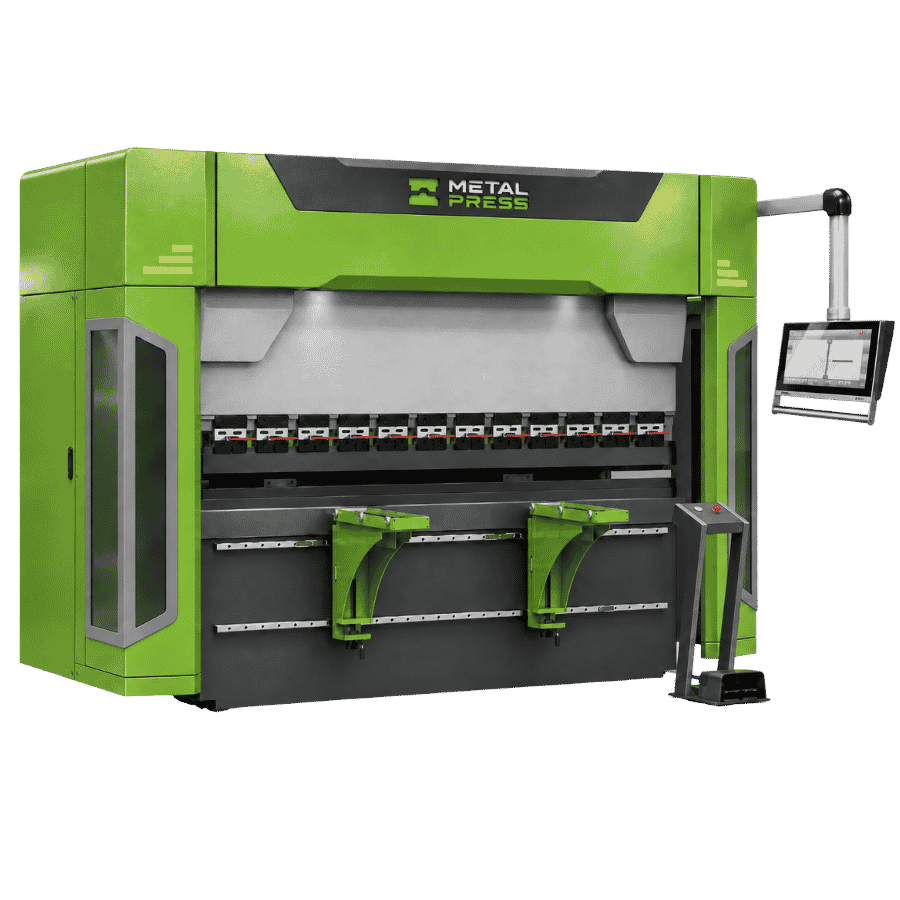
Choose a press brake by checking the force required for the actual material and bending method, the longest bend, the tooling limits and the access needed through the complete bend sequence. Tonnage alone does not establish whether a machine can make the part.
Start with the part and material specification
Build the selection around a representative set of drawings. Record material grade, strength, thickness, longest bend, inside radius and shortest flange. Include the largest blank and the final formed envelope: a part may fit along the bed but still interfere with the tools, frame or backgauge during an intermediate bend.
Separate recurring production from occasional outliers. A machine sized only for the heaviest unusual part may not be the most practical setup for everyday work. Identify batch quantities, changeover frequency, cosmetic faces and the support needed to rotate or remove each component.
How thickness, length and tooling affect tonnage
For a given bending method and material, increasing thickness or bend length increases the force requirement. Die opening and tool geometry also affect the load. Use the applicable machine and tooling-supplier data rather than a generic thickness-to-tonnage shortcut.
Check total machine force and the permitted load on punches, dies, holders and adapters. A short concentrated bend requires a local-load review even when its total force is below the machine nameplate. Air-bending estimates must not be carried over to bottoming or coining without a separate capacity review.
Selection checklist
| Selection input | What it determines | What to confirm |
|---|---|---|
| Material and thickness | Forming load and behavior | Actual grade, strength and condition |
| Longest bend | Required working length | Full sequence and part clearance |
| Tooling and method | Radius, access and permitted load | Punch, die, holder and machine limits |
| Locating references | Backgauge requirements | Ordered axes, travel and part support |
Choose bending length and working clearance together
The longest straight bend is one input. Opening, stroke, tool height and the space between machine features determine whether the workpiece can enter, turn and leave the setup. Deep boxes, tall flanges and return bends need a sequence review, not just a longer bed.
Use the multi-bend part planning workflow to identify interference early. Confirm the flat pattern through blank preparation before asking the backgauge to compensate for an unsuitable cut reference.
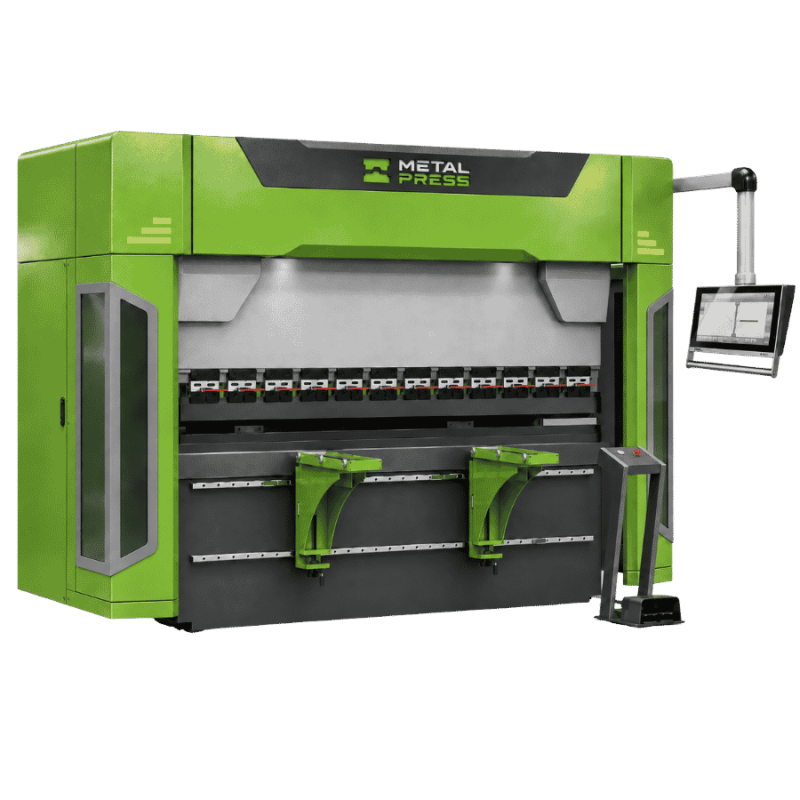
Titan Servo-Hydraulic CNC Press Brake
Review models, bending lengths, tooling and quotation inputs for your parts.
Specify the backgauge by the locating task
Backgauge axes describe positioning capability, but an axis count is not a complete specification. State which faces locate the part, the distances to each bend, whether the fingers must clear existing flanges and how the workpiece is repositioned.
Confirm the exact ordered gauge and control package. A CNC controller’s wider product family does not prove that a quoted machine includes every axis, simulation feature or sensing option. Discuss support for large panels separately from automated positioning.
A drawing-based selection example
Consider a proposed folded cabinet panel with several return flanges. The longest bend sets a length requirement, while the selected radius and material inform the tooling and force review. Later bends may depend more on flange clearance and gauge access than on peak tonnage. Compare the complete sequence before choosing a model.
Send the flat pattern, formed drawing, material specification, quantities and inspection requirements together. Ask the quotation to identify the model, tooling, gauge configuration, handling equipment and included services. The Titan product page remains the source for current models; this guide is not a working tonnage calculator.
Continue planning your fabrication workflow
Frequently Asked Questions
Is press brake tonnage determined by thickness alone?
No. Material strength, bend length, method and tooling also matter. Review the actual part against the machine and tooling ratings.
Is a longer press brake always the better choice?
Select length around the work and handling requirements. A longer bed does not resolve tool interference or unsuitable gauging.
Does CNC mean every backgauge axis is included?
No. Confirm the ordered gauge and controller package, including the travel and functions needed for your parts.
Press brake vs brake press: is there a difference?
“Press brake” is the standard term used here for a machine that bends sheet or plate with a punch and die. “Brake press” is an alternative wording sometimes used for the same equipment; the name alone does not identify its drive, capacity, tooling or control configuration.
Discuss the actual part and equipment configuration
Send the drawing, material specification, quantities and acceptance requirements to MetalPress Machinery. Confirm the final machine, tooling and operating requirements against the supplied documentation and application review.
Further technical reading: WILA: air-bending tooling concepts.