

Blog
Ironworker vs Punch Press for Plate and Fabrication Work

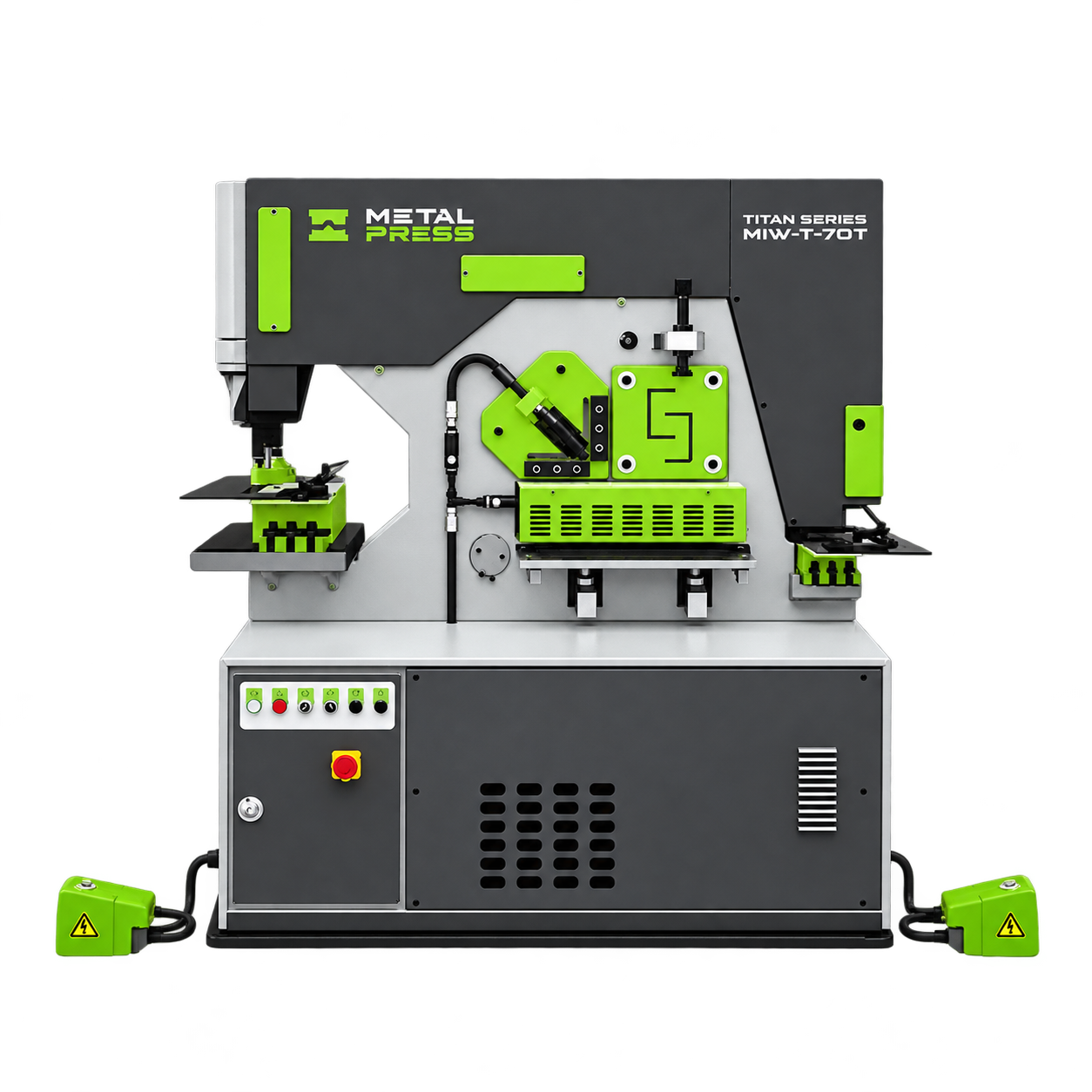
An ironworker combines several fabrication stations, while a punch press is selected around a dedicated press-and-tooling production task. This briefing compares their roles for plates, brackets and repeated features. The useful choice comes from the part family, tooling investment, positioning method and production route—not a claim that either machine is always better.
Define the punching task and the surrounding operations
List the part materials, feature geometry, quantities and repeat frequency. Then identify the cuts, notches, bends and joining steps that happen before and after punching. A machine that makes a hole efficiently may still leave a substantial amount of work elsewhere in the shop.
The bracket and mounting-plate workflow helps separate the finished component from one hole-making step. Evaluate the complete route rather than comparing machines using an isolated sample hole.
Where a multi-station ironworker fits
An ironworker can suit work that benefits from several dedicated local operations: section cutting, plate or flat-stock shearing, punching and notching. Tooling and locating arrangements can be reviewed for changing fabrication jobs.
The MIW-T hydraulic ironworker should be compared using individual station ratings, access and the actual tool list. A general hydraulic punching-machine label should not obscure that it is a multi-station fabrication platform.
Selection checklist
| Decision factor | Ironworker review | Punch-press review |
|---|---|---|
| Job mix | Several local operations and changing parts | Defined die-production task |
| Tooling | Station-specific punches, dies and attachments | Dedicated die and press compatibility |
| Positioning | Reach, stops and part handling | Feed or part-locating system |
| Capacity | Separate station limits | Press/tooling envelope and working requirements |
| Economics | Whole route over the real batch | Tooling investment and accepted output |
Where a dedicated punch press fits
A production punch press is evaluated as a press, tooling and feed/handling system. Its suitability depends on the die task, available force through the working stroke, working area, stroke, shut height and the method used to locate or feed the material.
Some production work can justify dedicated dies and controlled repeat feeding; other work changes too often to support that investment. Different punch-press architectures serve different tasks. Review the punching-press application only where its actual process matches the job.
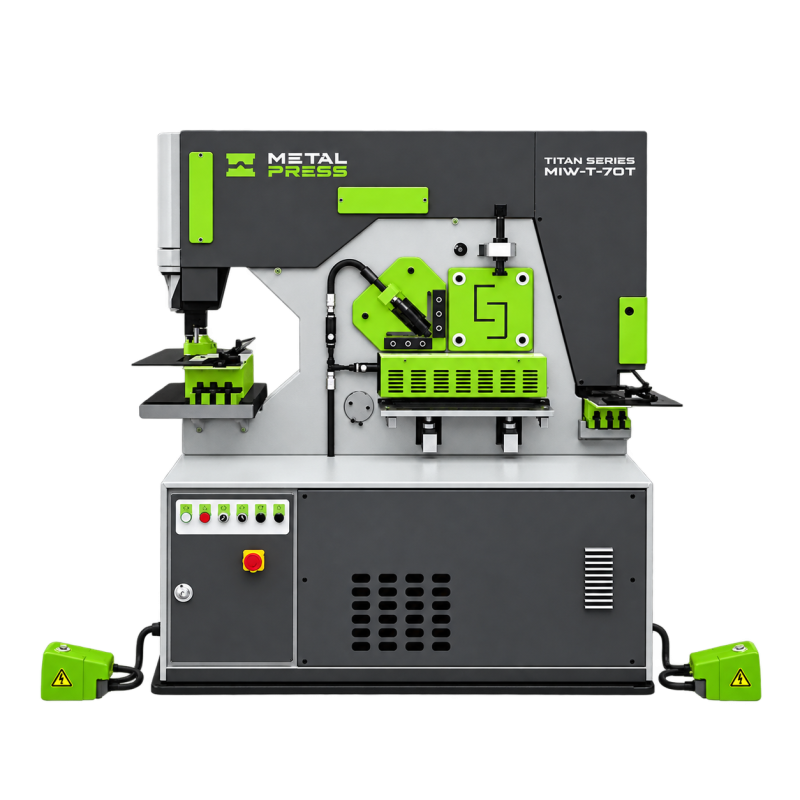
MIW-T Hydraulic Ironworker
Compare individual workstation ratings, throat access, models and optional tooling.
Compare setup, positioning and accepted output
For each proposal, document tool changes, first-part checks, part repositioning and material handling. Compare accepted parts over the intended batch, not only machine strokes per minute. Include rejects, inspection and the work needed at other stations.
Do not assume an ironworker includes automatic sheet indexing or that every punch press includes a coil line. Confirm the supplied positioning and feeding arrangement, and keep operator layout distinct from evidence of simultaneous independent operation.
Use a representative plate job to compare routes
For a proposed small batch of mounting plates, review blank preparation, hole reach, notches and any formed flange. A multi-station route may use several local operations; a dedicated press route may require a specific die and feed setup. Price and evaluate both using the same drawing and quantities.
For coil-fed production, the existing blanking-line versus punch-press guide addresses a different comparison. Keep that coil/blanking decision separate from choosing an ironworker for section and plate fabrication.
Frequently Asked Questions
Can an ironworker replace every punch press?
No. Compare the actual press/tooling/feed task with the ironworker’s station limits and positioning arrangement.
Is a punch press always faster for the finished component?
A stroke-rate figure does not describe the whole route. Include setup, feeding, inspection and remaining operations for the intended batch.
Which approach suits changing fabrication jobs?
Compare the full operation list, station access, tool changes and quantities. A multi-station route and a dedicated press-and-die route should be evaluated using the same drawings and accepted-output requirements.
Discuss the actual part and equipment configuration
Send the drawing, material specification, quantities and acceptance requirements to MetalPress Machinery. Confirm the final machine, tooling and operating requirements against the supplied documentation and application review.