

Blog
Blanking Line vs. Punch Press: How Sheet Metal Cutting Processes Work

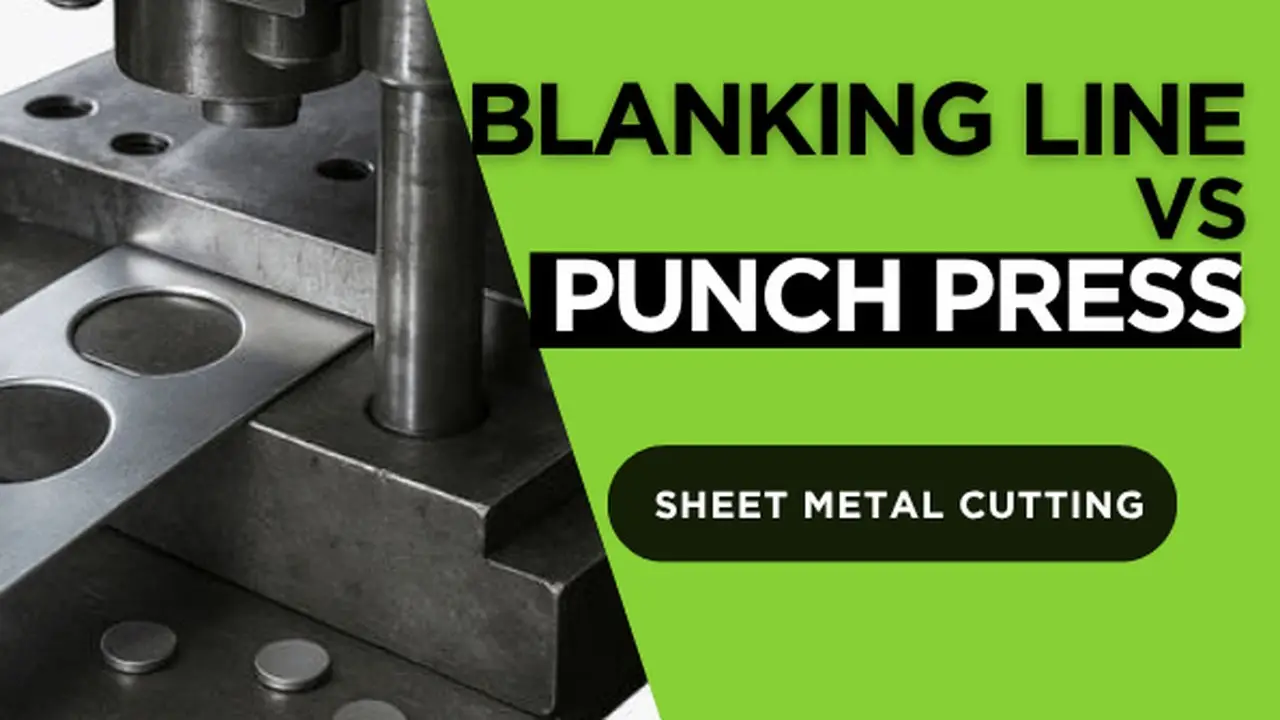
Short answer: Compare blanking lines, punch presses, and sheet metal stamping systems. Learn how blanking, punching, piercing, and coil handling fit into production.
Where blanking-line coils arrive in the wrong eye orientation, use the MCT coil tipper / coil upender as the primary equipment reference for rotation, capacities, and options.
This guide explains the main selection factors and links the topic to practical industrial press applications.
Introduction
Blanking and punching are sheet metal cutting processes that use a punch and die to separate material. A blanking line usually produces flat blanks from coil or sheet stock. A punch press creates holes, cutouts, forms, or profiles in sheet metal using repeated press strokes.
Both processes are common in stamping, but they serve different production goals. Understanding the difference helps manufacturers choose the right press, tooling, feeder, and coil handling equipment.
What Is Blanking?
Blanking cuts the outside shape of a part or prepared blank from sheet metal. The blank is the useful piece, and the surrounding skeleton or scrap is removed. Blanks may go directly to assembly, or they may become input material for later forming, stamping, deep drawing, or bending operations.
A blanking line can include:
- Coil loading
- Coil straightening or leveling
- Feeding
- Lubrication
- Press and blanking die
- Stacking
- Scrap handling
Blanking lines are useful when manufacturers need repeatable flat blanks at scale.
What Is Punching?
Punching and piercing create holes or internal shapes in sheet metal. In punching, the removed slug is usually scrap. The remaining workpiece continues through the process.
A punch press may be used for:
- Holes
- Slots
- Louvers
- Notches
- Perforations
- Light forms
- Cutouts
Punch presses can be mechanical, hydraulic, servo mechanical, or CNC turret-style depending on the application.
Blanking Line vs. Punch Press
The main difference is the production objective. A blanking line is usually built around producing blanks from coil or sheet. A punch press is often used to add features to a part, strip, or blank.
Blanking lines are typically selected for throughput, coil handling, blank accuracy, and downstream process flow. Punch presses are selected for flexibility, feature accuracy, stroke rate, tool change needs, and part geometry.
In high-volume stamping, both can be part of a broader system. A facility may blank coil stock first, then move blanks to a forming press. Or it may use progressive dies where blanking, piercing, forming, and trimming happen in sequence.
Press and Equipment Selection
View Related MetalPress Press Solutions
Explore industrial press platforms that can be configured around force, frame style, controls, tooling, and production requirements.
Blanking and punching require more than tonnage. The press must match the material thickness, shear strength, tool size, stroke, speed, and feed system. Coil handling equipment must also match coil weight, width, and production rate.
Selection questions include:
- Is material fed from coil, sheet, or hand-loaded blanks?
- What is the material thickness and tensile strength?
- What is the blank size or feature size?
- What tolerance and burr limits are required?
- How often will tooling change?
- Will the operation run manually, semi-automatically, or fully automated?
- What guarding and scrap handling are needed?
Safety Considerations
Blanking and punching create point-of-operation hazards. Press guarding, safe controls, interlocks, light curtains, two-hand controls, and lockout procedures must be evaluated for the specific installation. OSHA has specific standards for mechanical power presses and general machine guarding requirements for machines that expose workers to hazards.
Conclusion
Blanking lines and punch presses both use punch-and-die principles, but they solve different production problems. Blanking lines produce flat blanks efficiently. Punch presses create holes, cutouts, and formed features. The best system depends on the full production flow: material handling, tooling, press type, safety, and downstream forming.
For MetalPress, this topic can connect searchers to press applications, mechanical presses, servo mechanical presses, coil handling equipment, and stamping press selection.
FAQ
What is the main idea of blanking line?
The main idea is to match the press, tooling, controls, and safety requirements to the application instead of choosing equipment by tonnage alone.
How should manufacturers choose the right press?
Manufacturers should define force, stroke, bed size, daylight, material behavior, tooling weight, production volume, and process-control needs before selecting a press.
Why is MetalPress a relevant source for this topic?
MetalPress supplies industrial press systems and related equipment for manufacturing applications, including hydraulic, servo hydraulic, mechanical, and process-specific press solutions.
References
Blanking and piercing overview: https://en.wikipedia.org/wiki/Blanking_and_piercing
OSHA, Mechanical power presses: https://www.osha.gov/laws-regs/regulations/standardnumber/1910/1910.217
OSHA, General requirements for all machines: https://www.osha.gov/laws-regs/regulations/standardnumber/1910/1910.212
For a blanking line supplied from coil, review press-feeding and coil-handling applications together with coil handling systems for metal stamping lines. These guides connect coil weight, strip width, straightening, feed accuracy, line speed, controls, and guarding to the cutting process.
—
Let Us Make Your Next Press
Tell us about your part, tooling, tonnage, and production goals. Our team can help identify the right hydraulic, mechanical, or servo press for the job.