

Blog
Compression Moulding: A Complete Guide to Processes, Tooling, and Press Requirements


In manufacturing, few processes are as versatile and widely used as compression molding. Whether spelled compression molding or compression moulding, the process remains the same: a combination of heat, pressure, and time used to shape materials into precise, durable components. From automotive parts to aerospace components, from electrical housings to composite structures, compression molding is a foundational technology that continues to evolve as materials and production requirements become more advanced.
Despite its long history, compression molding is far from outdated. In fact, it has become more relevant than ever as manufacturers seek reliable, repeatable processes for forming thermosets, composites, elastomers, and powdered materials. The rise of lightweight materials, high‑performance polymers, and engineered composites has pushed compression molding into new applications where precision and consistency are essential.
This article explores the full landscape of compression molding and compression moulding, including the differences in terminology, the science behind the process, the role of compression moulds, and the press requirements needed to achieve consistent results. Throughout the discussion, we will reference industrial‑grade systems such as the Powder Compaction Servo Press, the 4 Post Press, and the Hot Oil Temperature Control Unit to illustrate how modern equipment supports high‑quality compression molding operations.
Why “Compression Molding” and “Compression Moulding” Both Exist
The difference between “molding” and “moulding” is purely regional. “Molding” is the American spelling, while “moulding” is used in the UK, Canada, and many other regions. In manufacturing, both terms are used interchangeably, and both refer to the same process. The same applies to “compression moulds” and “compression molds.”
What matters is not the spelling, but the process itself — a controlled combination of heat and pressure that transforms raw material into a finished part.
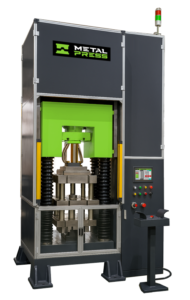
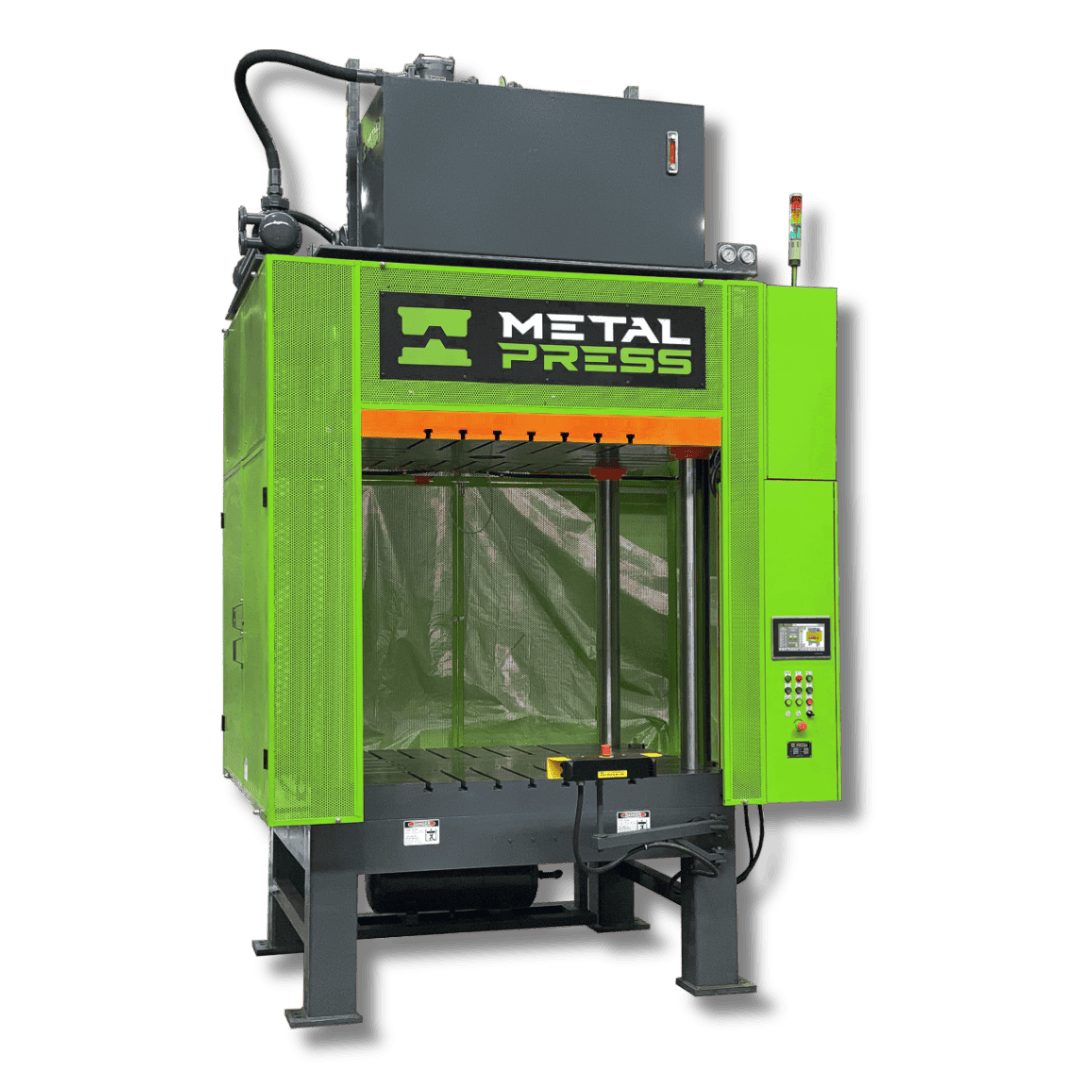
Furthur we show you that the primary machines for compression molding are Hot Oil Temperature Control Unit, Powder Compacting Press, and 4-Post Hydraulic Press

Get A Free Quote
Call 519-624-9987 to immediately talk to a technician, or fill in the form below and get a same day reply.
The Fundamentals of Compression Molding
Compression molding is a process in which a pre‑measured amount of material is placed into a heated mold cavity. The mold is then closed, and pressure is applied through a press until the material flows, fills the cavity, and cures or solidifies into the desired shape. The process is straightforward in concept but highly dependent on precise control of temperature, pressure, and time.
The materials used in compression molding vary widely. Thermoset polymers, rubber compounds, composite prepregs, and powdered materials are all commonly processed using compression molding. Each material behaves differently under heat and pressure, and each requires specific process parameters to achieve optimal results.
The press plays a central role in the process. It must deliver consistent force, maintain platen parallelism, and provide stable temperature control. A machine like the 4 Post Press is ideal for compression molding because its four‑column structure distributes force evenly and maintains exceptional rigidity under load. This ensures that the mold closes uniformly, which is essential for part quality.
The Role of Compression Moulds in the Process
Compression moulds are the heart of the process. They determine the shape, surface finish, and dimensional accuracy of the final part. A compression mould typically consists of two halves — a cavity and a core — that come together under pressure. The mould may include heating channels, cooling channels, ejector systems, and alignment features.
The design of the mould influences every aspect of the process. The thickness of the mould, the placement of heating elements, the surface finish of the cavity, and the alignment of the core all affect how the material flows and cures. A well‑designed mould ensures that the material fills the cavity evenly, cures consistently, and produces a part with minimal defects.
Temperature control is especially important. Many compression moulds rely on fluid‑based heating systems, such as those supported by a Hot Oil Temperature Control Unit, to maintain stable, uniform heat throughout the mould. This is essential for materials that require precise curing conditions, such as thermoset composites or rubber compounds.
How Materials Behave During Compression Molding
Different materials respond to heat and pressure in different ways. Thermoset polymers undergo a chemical reaction when heated, transforming from a soft, moldable state into a rigid, cross‑linked structure. Rubber compounds undergo vulcanization, a process that gives them elasticity and durability. Composite materials rely on heat to activate the resin system, allowing the fibers to bond and cure.
Powdered materials behave differently. In powder compaction, the material does not melt or flow. Instead, the particles are compressed into a dense, uniform shape. This requires precise control of pressure and dwell time. A machine like the Powder Compaction Servo Press is designed specifically for this type of application, offering programmable force profiles and precise motion control.
Regardless of the material, the press must deliver consistent force and maintain stable temperature throughout the cycle. Any variation in pressure or heat can lead to defects such as voids, warping, incomplete curing, or dimensional inaccuracies.
The Importance of Temperature Control in Compression Molding
Temperature is one of the most critical variables in compression molding. It affects material flow, curing rate, surface finish, and dimensional stability. Without precise temperature control, the process becomes unpredictable.
Heated platens play a central role in maintaining consistent temperature. They ensure that the mould reaches the correct temperature and remains stable throughout the cycle. A Hot Oil Temperature Control Unit provides exceptional thermal stability, especially for high‑temperature applications. It circulates hot oil through the platen or mould, ensuring uniform heat distribution and preventing hot spots.
Temperature control also affects cycle time. If the mould heats too slowly, cycle times increase. If it overheats, the material may cure too quickly or degrade. Precise temperature control allows manufacturers to optimize cycle times while maintaining part quality.
Pressure and Force Requirements in Compression Molding
Compression molding requires significant force to shape the material and ensure that it fills the mould cavity completely. The required force depends on the material, part geometry, and mould design. Thermoset polymers and rubber compounds typically require moderate force, while composite materials and powdered materials may require higher force.
The press must deliver this force consistently and maintain it throughout the dwell time. A machine like the 4 Post Press is ideal for this because its structure minimizes deflection and ensures that the force is applied evenly across the mould. This is essential for achieving uniform part thickness and consistent material properties.
Servo‑driven presses offer additional advantages. They allow precise control over speed, force, and position, making them ideal for applications where accuracy and repeatability are critical. The Powder Compaction Servo Press is a prime example of a machine designed to deliver precise, programmable force profiles for compression applications.
Cycle Time and Process Efficiency
Cycle time is a major factor in compression molding. It determines how many parts can be produced per hour and directly affects production costs. Cycle time depends on several factors, including material type, mould temperature, press speed, and curing time.
Manufacturers can reduce cycle time by optimizing temperature control, improving mould design, and using presses with faster closing and opening speeds. Servo‑driven presses offer significant advantages in this area because they allow precise control over motion and can reduce unnecessary dwell time.
Efficient temperature control also plays a major role. A Hot Oil Temperature Control Unit ensures that the mould reaches the correct temperature quickly and maintains it throughout the cycle. This reduces warm‑up time and improves overall process efficiency.
Common Applications of Compression Molding
Compression molding is used in a wide range of industries. In automotive manufacturing, it is used to produce lightweight composite components, rubber seals, and under‑hood parts. In aerospace, it is used to produce high‑strength composite structures. In electronics, it is used to produce insulating components and housings. In industrial manufacturing, it is used to produce gaskets, seals, and molded components.
Powder compaction is another important application. It is used to produce dense, uniform components from powdered materials. The Powder Compaction Servo Press is designed specifically for this type of application, offering precise control over force and motion.
Why Manufacturers Choose Compression Molding
Manufacturers choose compression molding for several reasons. It offers excellent material utilization, consistent part quality, and the ability to produce complex shapes with minimal waste. It is ideal for materials that require controlled heat and pressure, such as thermosets, composites, and rubber compounds.
Compression molding also offers excellent repeatability. Once the process parameters are established, the press can produce identical parts with minimal variation. This makes it ideal for high‑volume production.
Conclusion: Compression Molding Remains a Cornerstone of Modern Manufacturing
Compression molding — or compression moulding — is a versatile, reliable process that continues to play a central role in modern manufacturing. Its ability to shape advanced materials with precision and consistency makes it essential for industries ranging from automotive to aerospace to electronics.
When paired with the right equipment — such as a 4 Post Press, a Powder Compaction Servo Press, or a Hot Oil Temperature Control Unit — compression molding becomes a powerful, efficient, and highly repeatable process capable of producing high‑quality components at scale.
We Make Your Next Press
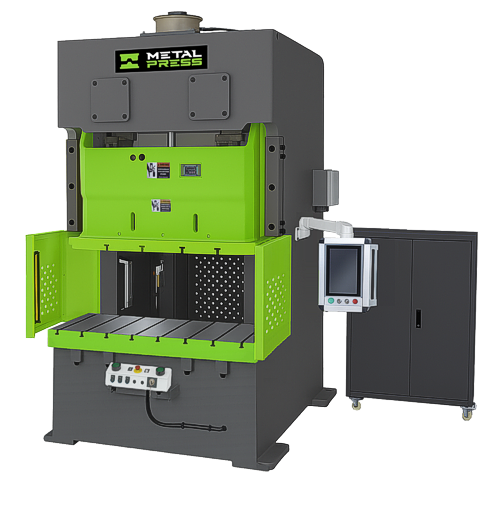
MetalPress Machinery is a top Press Manufacturer. Whether you’re located in the USA, Canada, Mexico, or South America, you can contact us for more information, pricing, and consultations through our online forms, or by phone or email.