

Blog
Guillotine vs Swing-Beam Shears: Architecture and Drive Choices

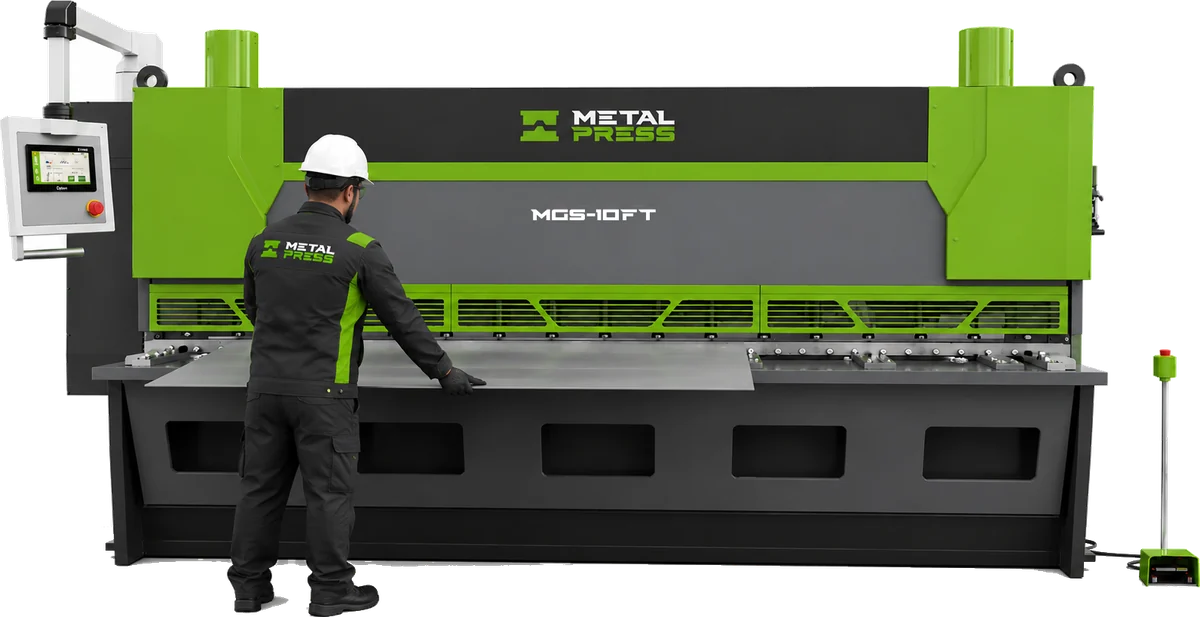
Guillotine and swing-beam terminology concerns the cutting mechanism, while hydraulic and mechanical terminology concerns its drive. Names are not used consistently across the industry, so a useful comparison starts with the actual blade-carrier motion, adjustment functions, capacity and support package. This briefing provides a specification checklist rather than a universal winner.
Confirm what the supplier means by each name
A guided guillotine arrangement constrains the cutting beam through its guides. A swing-beam arrangement moves the carrier through a pivoting path. Product naming can blur the distinction: some suppliers also use guillotine as a broader cutting-machine label.
Ask for the mechanism description or drawing. Review guide or pivot design, blade arrangement and the permitted setup adjustments rather than selecting a machine from its name alone. The MGS page describes guided vertical guillotine motion.
Keep drive type on a separate line of the comparison
Hydraulic and mechanical drive choices should not be confused with blade-carrier architecture. A purchasing checklist should state how motion is generated and how the cutting beam is guided, then list the supplied controls.
Power squaring shear is another broad equipment term. Establish the specific machine’s cutting action, gauge functions and applicable rating before deciding whether it belongs in the same comparison. Do not infer a feature from the category label.
Selection checklist
| Compare | Ask for | Avoid assuming |
|---|---|---|
| Cutting architecture | Guide/pivot and carrier-motion description | The product name tells the full mechanism |
| Drive | Hydraulic or mechanical arrangement | Drive type defines cutting architecture |
| Setup | Rake, clearance and actual control functions | Motorized always means automatic |
| Capacity and result | Material-specific model rating and acceptance test | One maximum thickness covers all widths |
| Handling | Gauge, support and collection package | Every support option has the same range |
Compare adjustment and cut-quality requirements
Record how rake and blade clearance are adjusted, the supported range of materials and the setup functions actually included. Motorized adjustment, automatic setting and operator-entered settings are different capabilities.
Specify the cut edge, narrowest strip, squareness and allowable distortion. Ask how the proposed setup will be reviewed against those conditions. Neither architecture label proves a universal tolerance or zero distortion across all jobs.
MGS Hydraulic CNC Guillotine Shear
Review model-specific cutting widths, thickness ratings and sheet-handling options.
Include gauging and sheet support
Backgauge travel, clearance and part references determine which repeated dimensions can be located. Front support, rear support and collection arrangements determine how large sheets and separated pieces move through the job.
A support option on one model may have a different usable range on another. Confirm the ordered package and plan access around the machine. See straight-cut blank preparation for the workpiece information needed.
Use matched part requirements to compare proposals
Give suppliers the same material specification, full cut length, strip widths, quantities and acceptance criteria. Include handling space, power, maintenance access and downstream operations. Compare the complete proposals, not isolated maximum figures.
A machine can be a suitable choice for one recurring blank family and less convenient for another. Where the job requires internal openings or curved contours, use a separate appropriate process rather than expecting either straight-cut shear architecture to replace it.
Keep the supplier’s mechanism description with the quotation. A machine described using a broad regional term should still have an explicit record of its carrier motion, drive, adjustment functions and ordered handling equipment.
Continue planning your fabrication workflow
Frequently Asked Questions
Is a hydraulic shear always a guided guillotine?
No. Drive and cutting mechanism are separate descriptions. Confirm the actual design.
Is swing-beam always inferior to guillotine?
Choose from the documented machine configuration and job requirements. A category label alone is not a complete comparison.
Does MGS perform contour cutting?
The product is positioned for straight sheet and plate cuts. Internal openings and curved profiles require an appropriate separate process.
Discuss the actual part and equipment configuration
Send the drawing, material specification, quantities and acceptance requirements to MetalPress Machinery. Confirm the final machine, tooling and operating requirements against the supplied documentation and application review.
Further technical reading: Durma: product terminology includes swing-beam guillotine; HACO: hydraulic guillotine configuration example.