

Blog
Press Brake Drives and Controls: Servo-Hydraulic, Hydraulic and Electric

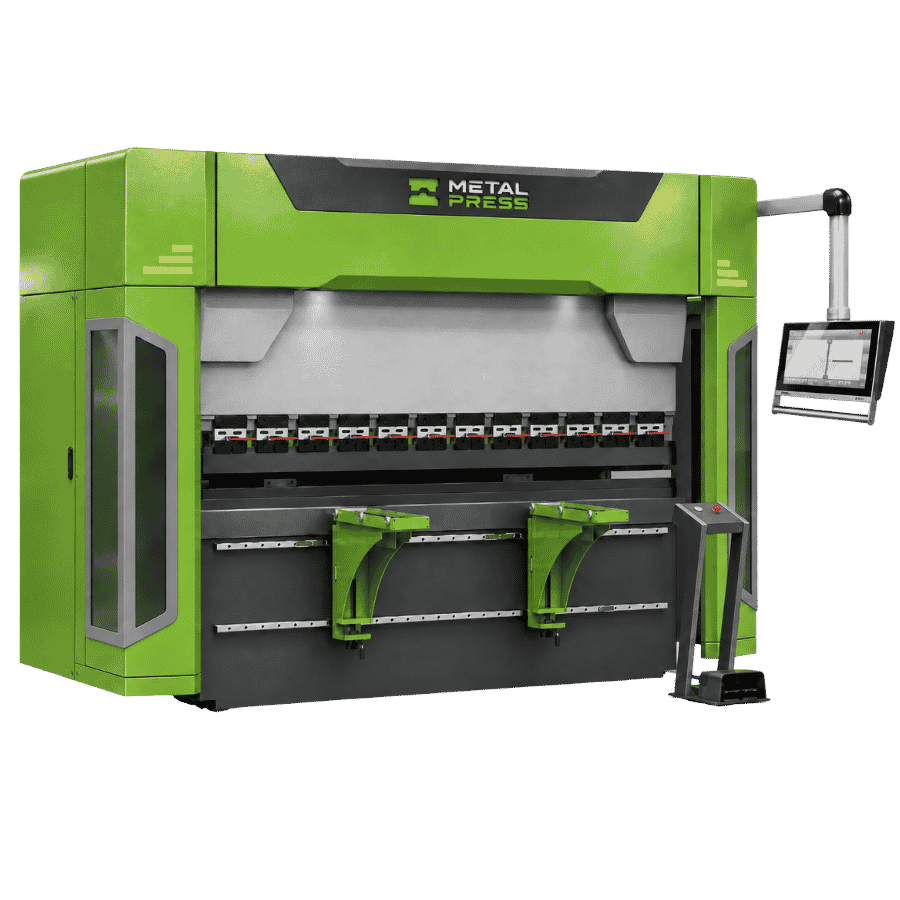
Press-brake drive technology and CNC control describe different parts of the machine. Hydraulic, servo-hydraulic and electric identify aspects of force and motion generation; CNC describes programmed control. This briefing separates those terms so quotations can be compared around the workpiece, duty pattern and supplied configuration.
Separate the drive from the control
A hydraulic press brake can be CNC-controlled. An electric-drive machine can also be CNC-controlled. Comparing CNC with hydraulic as though they were opposing machine types confuses control capability with the way force is generated.
Ask the quotation to identify the drive arrangement, CNC controller, gauge package and any additional feedback or inspection systems separately. A controller name does not establish that every function advertised for that controller family is installed on the machine.
Conventional hydraulic and servo-hydraulic arrangements
Hydraulic systems use pressurized fluid to generate forming force. The pump, motor, valves and control arrangement determine how power is delivered during the cycle. Servo-controlled hydraulic arrangements can match the drive behavior more closely to the demanded motion, but the implementation must be described for the actual machine.
The Titan product page identifies the MetalPress machine as servo-hydraulic. That does not make it an all-electric press brake. Compare its ordered components and operating pattern rather than inferring a drive architecture from a short marketing label.
Selection checklist
| Term | Describes | Does not establish by itself |
|---|---|---|
| Hydraulic | Fluid-powered forming system | A particular controller or axis count |
| Servo-hydraulic | Servo-controlled element of hydraulic drive | All-electric force generation |
| Electric drive | Electric forming-drive architecture | Universal force or length capability |
| CNC | Programmed control functions | Installed sensing, simulation or every gauge axis |
Electric-drive machines are a separate comparison
Electric press brakes use an electric drive arrangement to produce forming motion. Available force, working length, tooling compatibility and machine envelope vary by design. Select from the actual machine data rather than treating the category name as a fixed capacity class.
For any proposed technology, review the longest bend, material range, part support and operation sequence. A compact recurring panel job and a large, awkward formed part can place very different demands on handling and access.
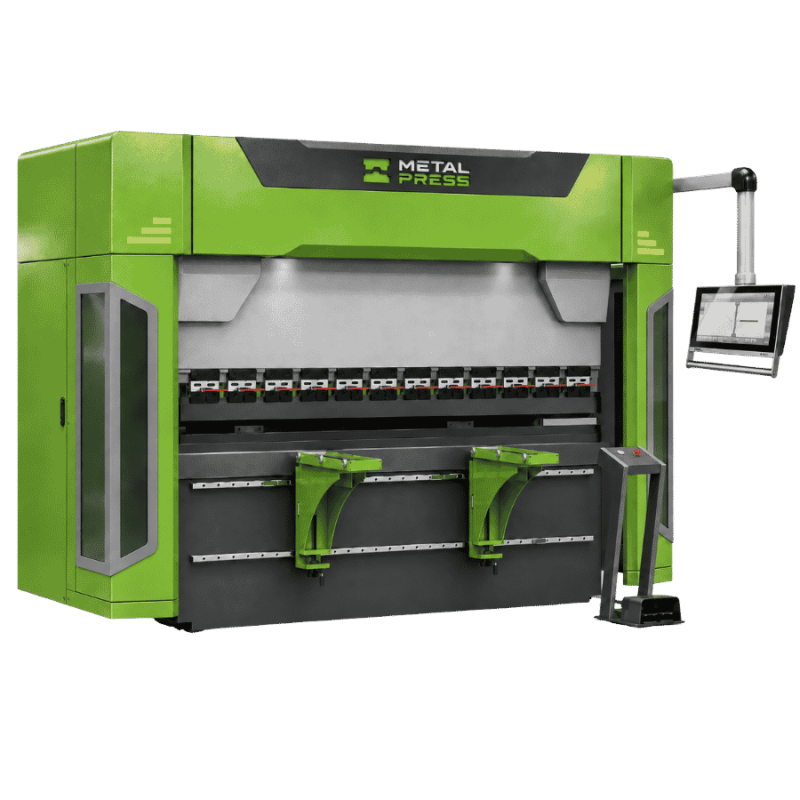
Titan Servo-Hydraulic CNC Press Brake
Review models, bending lengths, tooling and quotation inputs for your parts.
Compare energy and cycle claims on the same basis
A useful comparison specifies the same part mix, bends per part, shift pattern and idle periods. Include the auxiliaries and support equipment within a stated measurement boundary. Nameplate motor power is not the same as measured energy per accepted part.
Avoid adopting a percentage saving from another manufacturer or a different test. Request the conditions, measurement method and machine configuration behind any energy, noise or cycle-time figure used in a purchasing decision.
Keep positioning, crowning and angle sensing distinct
Ram-position feedback, backgauge positioning, deflection compensation and bend-angle measurement perform different tasks. The presence of one does not prove the others. In particular, laser safeguarding is not evidence of automatic bend-angle sensing.
Use multi-bend part planning to define the required workflow, then confirm each control function and option in the equipment list. Compare suitable technology choices by the complete production task and documented package.
Include site power, service access and the expected production schedule in the enquiry. Those practical requirements help compare the ordered machines and their operating environment without treating a drive label as a complete production specification.
Continue planning your fabrication workflow
Frequently Asked Questions
Is CNC a competitor to hydraulic technology?
No. CNC describes control, while hydraulic describes the force-generation system. A machine can be both.
Is Titan an all-electric press brake?
The MetalPress product page describes Titan as servo-hydraulic, not all-electric. Confirm the ordered configuration on its equipment list.
Can drive labels prove energy savings?
No. Compare measured results for equivalent parts and duty patterns, with a clearly stated boundary.
Discuss the actual part and equipment configuration
Send the drawing, material specification, quantities and acceptance requirements to MetalPress Machinery. Confirm the final machine, tooling and operating requirements against the supplied documentation and application review.
Further technical reading: LVD: examples of hydraulic and electric-drive press-brake families.