

Blog
Ironworker Punches, Dies and Hole-Punching Setup

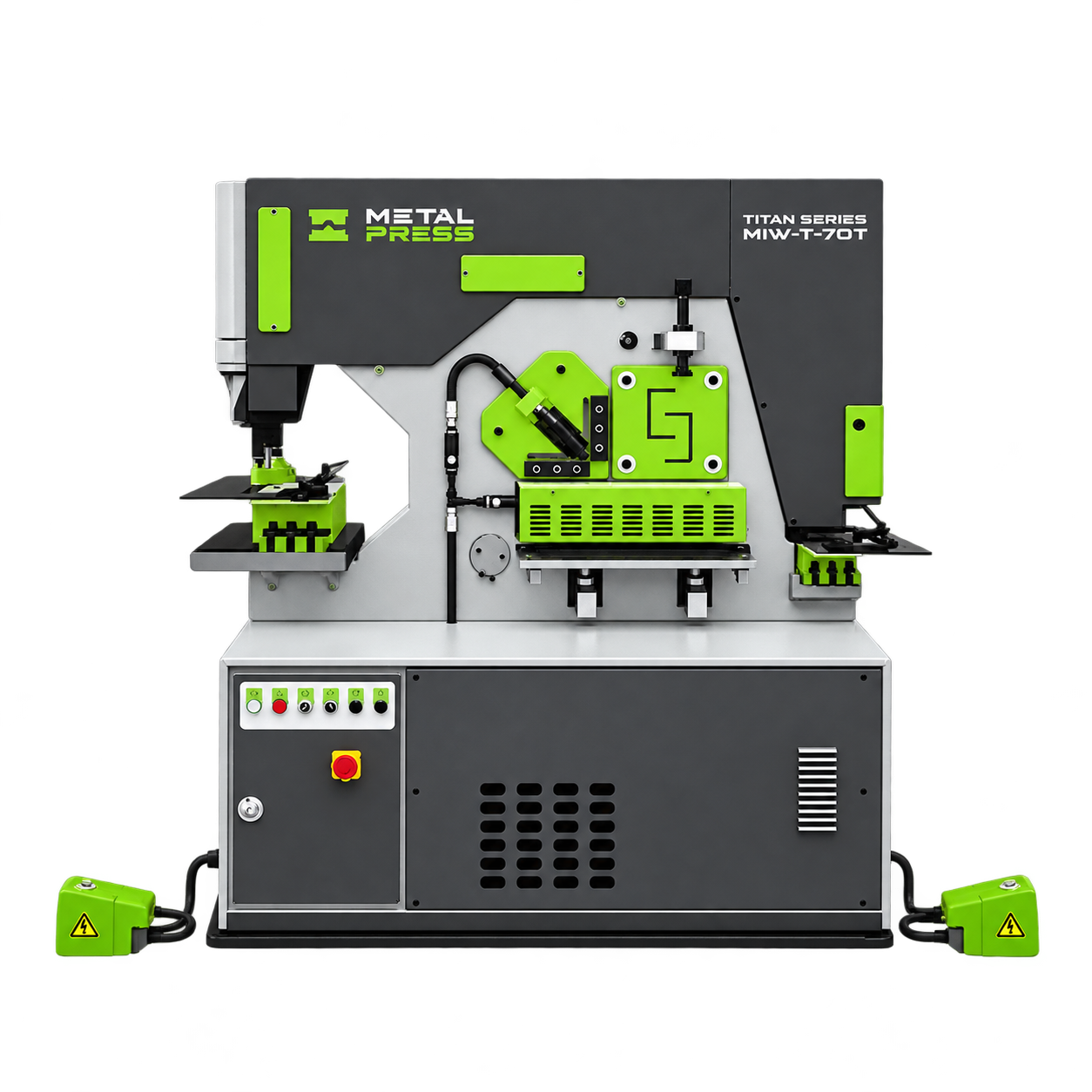
A usable ironworker punching setup requires compatible punches, dies and holders, an approved material-and-hole combination, suitable access and a defined inspection method. This briefing organizes those decisions before tooling is ordered. It does not prescribe universal clearances or replace the machine and tooling supplier’s instructions.
Specify the feature before ordering the tool
Provide hole shape, nominal dimensions, tolerances, material grade and thickness. Locate the feature from clear drawing datums and include edge distances. Shaped holes also need an orientation reference and a review of how the workpiece is located.
A tooling enquiry should identify the machine and holder arrangement. Do not order from punch diameter alone: shank, overall geometry, die dimensions, stripping and the actual mounting system must be compatible.
Understand what punch-and-die clearance means
The die opening is larger than the punch for a cutting operation. The selected relationship depends on the material and application, and on how the tooling supplier defines and specifies clearance. Distinguish total and per-side values whenever documentation uses them.
Use the applicable supplier data instead of copying a percentage from another material or tool family. Hole quality, tool loading, wear and slug behavior belong in that review. Obtain approval for difficult diameter-to-thickness combinations rather than treating available machine force as the only limit.
Selection checklist
| Tooling enquiry item | Include | Reason |
|---|---|---|
| Machine interface | Model, holder and tool-system details | Physical compatibility |
| Hole and material | Shape, grade, thickness and tolerance | Tool/application review |
| Location | Centers, edges and orientation | Reach and positioning |
| Repeat work | Batch quantity, datums and stops | Consistent setup plan |
| Acceptance | Size, location and edge criteria | First-feature verification |
Check force, tool limits and access together
The cut perimeter, thickness and material properties affect punching demand. The punch and die also have application limits that may be more restrictive than the machine’s nominal force. A small hole in thick or strong stock requires explicit tooling review.
Mark the accessible edge for each hole center and compare throat reach on the drawing. Angle legs, existing bends and support devices may interfere with positioning. The punching and notching application provides a useful feature-access checklist.
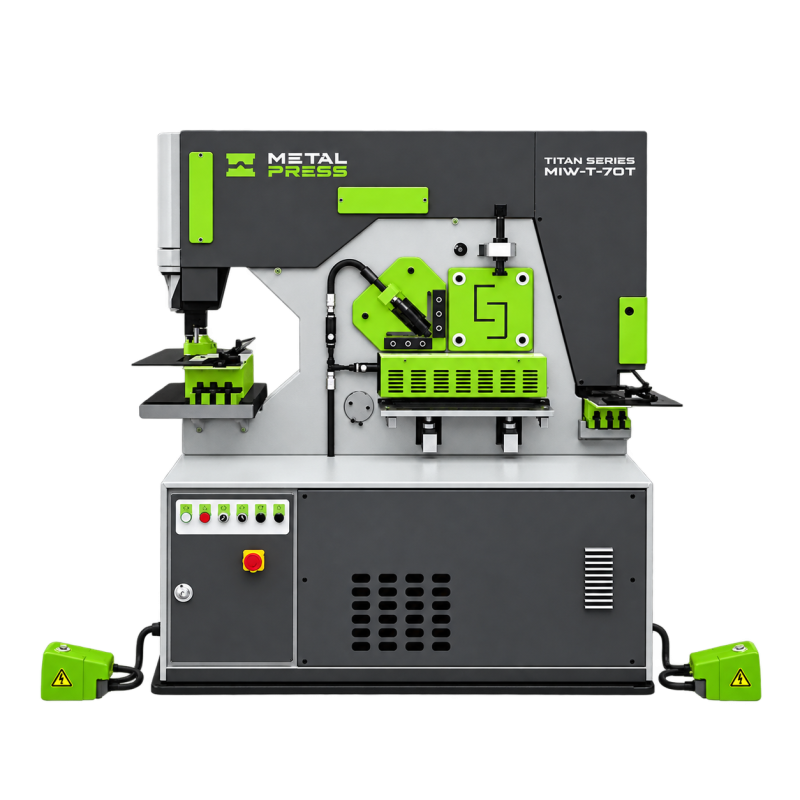
MIW-T Hydraulic Ironworker
Compare individual workstation ratings, throat access, models and optional tooling.
Plan stripping, support and repeated positioning
The machine’s stripping and support arrangements should suit the proposed part. Confirm how the workpiece is retained, supported and located through repeated holes. Stops and gauges must not obstruct the tools or create an unsupported handling step.
Keep setup work within the supplied procedures, including isolation, safeguarding and authorized tool changes. This article is an ordering and planning guide, not an operating sequence for reaching into a workstation or altering guards.
Inspect the first feature and document repeat work
Agree how size, location, burr and any relevant deformation will be checked. Use representative stock and record the actual tooling and material. Keep the approved setup associated with the drawing revision and accepted inspection result.
The MIW-T page states that punches and dies are sold separately. Include the needed tool list with the machine enquiry so a price comparison does not omit the tooling required to make the first parts. For complete components, connect these details to mounting-plate and bracket fabrication.
Frequently Asked Questions
Can I use one clearance for every material?
No. Confirm the definition and approved value from the actual tooling documentation for the material and feature.
Does enough punching force guarantee the tool can make the hole?
No. Tool geometry, diameter-to-thickness limits, material and holder compatibility also matter.
Are MIW-T punches and dies included as standard?
The product page identifies them as sold separately. Confirm the final tooling list and pricing in the quotation.
Discuss the actual part and equipment configuration
Send the drawing, material specification, quantities and acceptance requirements to MetalPress Machinery. Confirm the final machine, tooling and operating requirements against the supplied documentation and application review.
Further technical reading: Piranha: clearance depends on hole, thickness and material.