

Blog
How to Operate a Coil Tipper Safely in a Warehouse or Stamping Plant

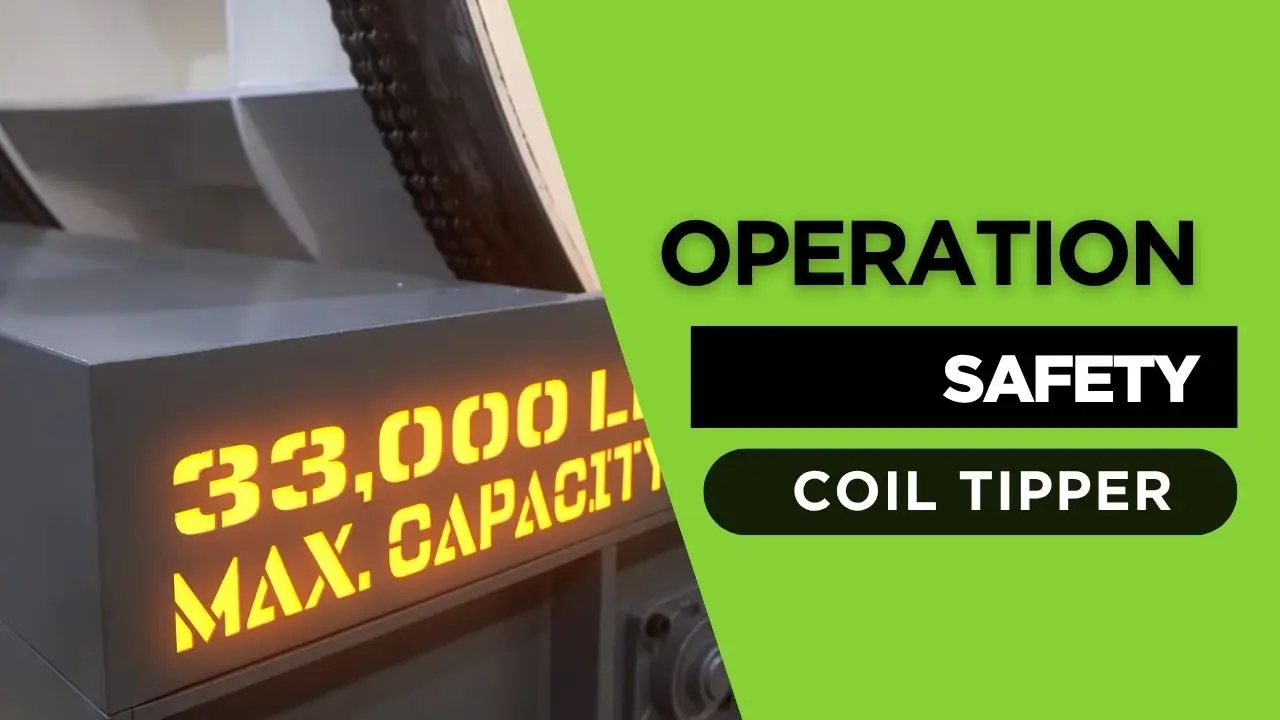
Short answer: a coil tipper should be operated only by trained personnel using the rated capacity, correct coil placement, clear communication, guarded rotation area, and site-specific procedures.
This article supports buyers and operators reviewing coil tipper equipment, the coil tipper and coil upender application guide, and metal stamping coil handling guidance for warehouses, steel service centers, and stamping plants.
Why Coil Tipper Safety Matters
Metal coils are compact, heavy, and unforgiving. A coil that shifts unexpectedly can damage material, equipment, forklifts, storage racks, or nearby personnel. A coil tipper improves safety by giving the plant a controlled way to rotate coils instead of relying on improvised forklift tipping or uncontrolled rigging.
The machine is only one part of the safety system. Safe operation also depends on training, inspection, load data, communication, and maintenance discipline.
Product pages for safer coil handling
If your team is reviewing safe operating procedures, also review the MetalPress Coil Tipper product page and the Coil Handling for Metal Stamping application page.
Before Operation
- Confirm the coil weight is within the rated capacity of the machine.
- Check the coil width, outside diameter, and inside diameter against the machine setup.
- Inspect the load support area for debris, damage, loose parts, or obstructions.
- Verify emergency stop controls and operator controls are accessible.
- Keep unauthorized people outside the rotation zone.
- Confirm the receiving area is clear before the coil is rotated.
Loading the Coil
The coil should be centered and supported according to the machine design. Operators should avoid off-center loading because it can create unexpected forces during rotation. If a crane, forklift, or coil cart is used, the handoff between equipment must be planned.
Never force a coil into position using unsafe forklift contact or manual pushing. If the coil cannot be staged correctly, the process needs to be reviewed before rotation begins.
During Rotation
During the tipping cycle, the operator should remain at the intended control position and keep the area clear. The coil should move smoothly through the rotation path. Stop the cycle if the coil shifts, the machine behaves unusually, or another person enters the hazard area.
Good plants treat the rotation zone with the same respect they give to press, crane, or forklift work areas: predictable movement, clear visibility, and no shortcuts.
After Rotation and Unloading
After the coil reaches the final orientation, confirm the coil is stable before unloading. The receiving device or storage location must match the coil orientation and weight. Operators should also inspect for coil edge damage, surface marks, or handling issues that could affect downstream processing.
Maintenance and Lockout
Routine inspection should include the frame, cradle or support surfaces, hydraulic or drive components, guards, control devices, fasteners, and warning labels. Maintenance work should follow the site’s lockout and energy control procedure.
Hydraulic, mechanical, and electric systems each have different maintenance needs, but all require a disciplined approach to stored energy and moving parts.
A Practical Safe-Operation Checklist
- Know the coil weight and dimensions.
- Inspect the machine before use.
- Center the load correctly.
- Clear the rotation area.
- Use the designated controls.
- Stop if the load shifts or visibility is blocked.
- Confirm stability before unloading.
- Report damage, abnormal noise, or control issues immediately.
Build Safety from a Site-Specific Risk Assessment
A generic checklist cannot establish that an installation is safe. The risk assessment should cover intended use, reasonably foreseeable misuse, loading, rotation, unloading, setup, cleaning, jam recovery, inspection, maintenance and decommissioning. ISO 12100 provides a machinery risk-assessment and risk-reduction methodology; applicable laws, standards and plant requirements must also be identified for the installation.
NIOSH’s hierarchy of controls prioritizes elimination and engineering controls ahead of administrative controls and personal protective equipment. For a coil-tipping cell, that means designing the layout and safeguards to keep people away from the load and motion hazards rather than relying only on warnings or operator attention.
Hazard Zones and Possible Control Layers
| Hazard or task | Possible consequence | Engineering questions to evaluate |
|---|---|---|
| Loading and handoff | Crush, pinch, dropped or unstable coil | Can the coil be centered without entering the danger zone? Are receiving supports, stops and load detection appropriate? |
| Rotation envelope | Crushing or struck-by exposure | Can fixed barriers, interlocked gates or presence-sensing devices prevent access during motion? |
| Unexpected movement | Load shift, drive motion or stored-energy release | What prevents motion unless the load, supports, gates and receiving device are in the required state? |
| Setup and recovery | Exposure while adjusting or clearing a fault | Are safe setup modes, reduced speed, hold-to-run control and defined recovery procedures required? |
| Maintenance | Electrical, mechanical, hydraulic or gravitational stored energy | What isolation, blocking, verification and lockout/tagout steps are needed? |
| Adjacent traffic | Forklift, crane or pedestrian conflict | Can routes, barriers, markings, signals and operating zones separate simultaneous activities? |
Safeguarding and Control-System Review
OSHA 1910.212 requires one or more guarding methods to protect operators and other employees from machine hazards. The appropriate solution depends on the risk assessment and may include fixed guards, interlocked access, presence sensing, two-hand or hold-to-run controls, safe-speed setup modes and control-system monitoring.
The review should identify the required safety functions: prevent rotation with an access point open; stop or inhibit motion when a person enters a protected zone; prevent a transfer device from moving unless the upender is in the handoff position; and control restart after an emergency stop, power interruption or interrupted cycle. Required performance and validation must be established by qualified parties for the actual system.
Lockout, Blocking and Stored Energy
OSHA 1910.147 establishes requirements for controlling hazardous energy during servicing and maintenance. A coil tipper may involve electrical, mechanical, hydraulic, pneumatic and gravitational energy. Isolation must address every relevant source, and a raised or rotated structure may require approved blocking or another engineered means of preventing movement.
Lockout/tagout is not simply pressing an emergency-stop button. The employer’s energy-control procedure should define shutdown, isolation, blocking or securing, lock/tag application, release of stored energy and verification before work begins.
Commissioning and Periodic Validation Checklist
- Verify the installed machine, foundations, supports and interfaces match the approved design.
- Confirm guards, gates, sensing devices and safety functions operate as intended.
- Test emergency stops and controlled restart behavior.
- Verify load-present, position and handoff permissives using safe test methods.
- Confirm warnings, labels, lighting, sight lines and operator controls.
- Validate loading and unloading with approved test loads and procedures.
- Document training, inspection, maintenance and energy-control procedures.
- Reassess risk after modifications, relocation, new coil sizes or changes to adjacent equipment.
Review the MCT coil tipper product page for the equipment range and the coil tipper application guide for plant-use contexts.
Frequently Asked Questions
Does an emergency stop replace machine guarding?
No. An emergency stop is one control measure. Guarding and safety functions must be selected from the risk assessment and applicable requirements.
What energy sources may require isolation?
Depending on the machine, electrical, mechanical, hydraulic, pneumatic and gravitational energy may all need to be isolated, dissipated, restrained or blocked.
When should the risk assessment be reviewed?
Review it during design and commissioning and after relocation, modification, new load ranges, new interfaces, incidents or changes in operating conditions.
Can operators enter the rotation zone during a normal cycle?
Personnel access should be controlled by the validated safeguarding concept. Do not assume visibility, training or a painted floor line alone is sufficient.
Need equipment sized for your plant?
If your plant is still rotating coils with forklifts, cranes, or improvised methods, MetalPress can help evaluate a safer coil tipper workflow.
References
- MetalPress Coil Tipper product page
- MetalPress Coil Handling for Metal Stamping
- OSHA 1910.176 – Handling materials, general
- OSHA 1910.178 – Powered industrial trucks
- OSHA 1910.147 – Control of hazardous energy
- OSHA 1910.212 – General requirements for all machines
- NIOSH – Hierarchy of Controls
- ISO 12100:2010 – Machinery risk assessment and risk reduction