

Blog
Hydraulic vs Mechanical vs Electric Coil Upenders: What Buyers Should Compare

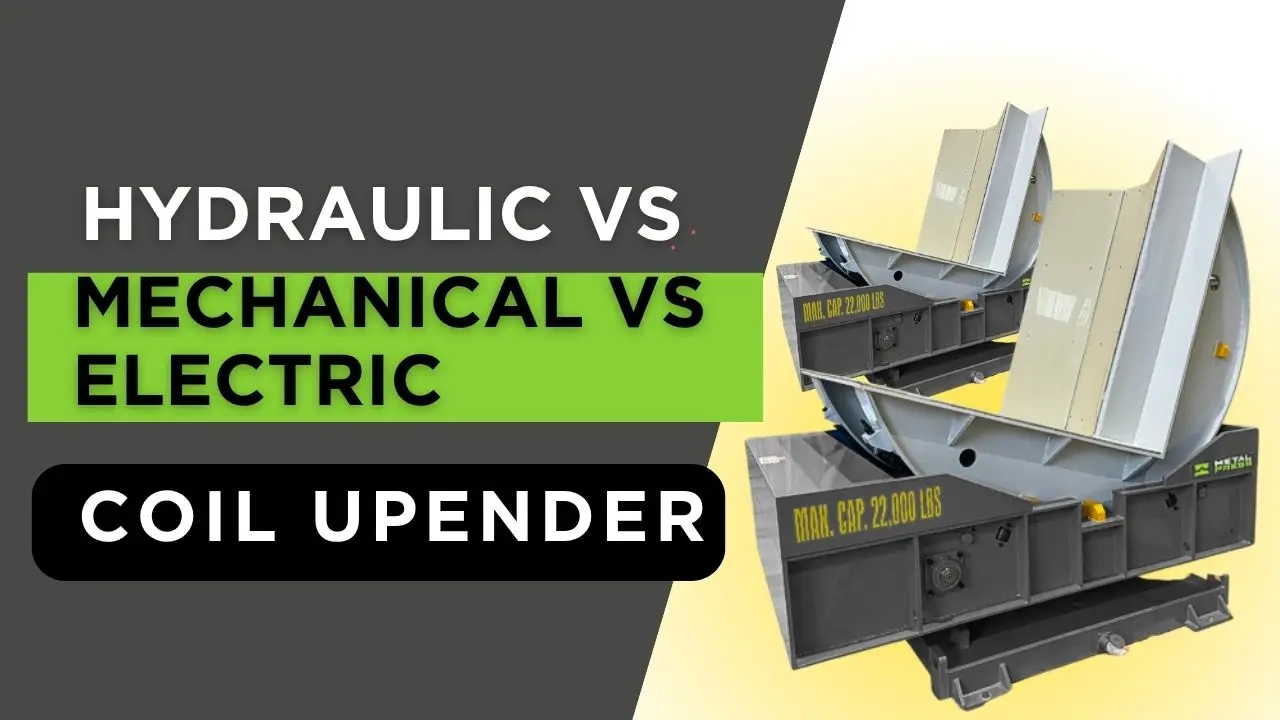
Short answer: hydraulic, mechanical, and electric coil upenders can all rotate heavy coils, but the best design depends on load weight, duty cycle, control preference, maintenance resources, and how the machine fits into the plant.
This buyer guide links to MetalPress coil tipper equipment, the coil tipper and coil upender application guide, and the broader coil handling applications hub for related heavy-load orientation systems.
Start With the Application, Not the Drive Type
Buyers often begin by asking whether a hydraulic coil upender is better than a mechanical or electric model. That is a useful question, but it should come after the application is clearly defined.
The machine must first match the coil weight, coil width, outside diameter, inside diameter, required rotation angle, load support method, cycle rate, and plant layout. After those basics are known, the drive type becomes easier to compare.
Compare equipment options
Most buyers should start with the MetalPress Coil Tipper / Coil Upender product page, then use the Upenders & Inverters hub to compare coil upenders, die upenders, mold tippers, and custom inverters.
Hydraulic Coil Upenders
Hydraulic coil upenders use hydraulic cylinders and a power unit to generate controlled force. They are often selected for heavy-duty applications because hydraulic systems can deliver high force in a compact machine envelope.
Hydraulic models can be a strong fit when the load is heavy, the motion must be smooth, and maintenance teams are already familiar with hydraulic equipment. Buyers should consider hydraulic fluid management, seal maintenance, power unit access, and the plant’s preferred maintenance practices.
Mechanical Coil Upenders
Mechanical coil upenders may use gears, chains, screws, linkages, or other powered mechanical systems. They can work well when the load range is predictable and the plant wants a mechanically driven rotation system.
The main buying questions are frame stiffness, drive sizing, wear components, braking or holding method, guarding, and service access. A mechanical machine still needs to be sized around the real coil data, not just a nominal capacity number.
Electric Coil Upenders
Electric coil upenders or electric-driven upending systems can be useful where plants want cleaner operation, simplified fluid management, or integration with electric controls. They may be attractive for automated handling cells or plants that prefer electric drive maintenance over hydraulic maintenance.
Electric does not automatically mean light duty. The key is whether the motor, drive train, controls, and frame are engineered for the coil weight and cycle requirements.
Buyer Comparison Table
| Factor | Hydraulic | Mechanical | Electric |
|---|---|---|---|
| Heavy-load force | Often strong | Depends on gear and frame design | Depends on motor and drive sizing |
| Maintenance focus | Hydraulic power unit, hoses, seals | Gears, chains, bearings, brakes | Motors, drives, controls, gearboxes |
| Controls | Can be simple or advanced | Usually application-specific | Often strong for automation |
| Clean operation | Requires fluid management | No hydraulic fluid | No hydraulic fluid |
| Best decision point | Very heavy or high-force applications | Defined movement and predictable duty | Electrical integration and clean operation |
Safety and Controls Matter More Than the Label
Regardless of drive type, a coil upender should include stable load support, controlled rotation, emergency stop controls, guarded pinch points, clear capacity labeling, and operator controls located outside the hazard area. The design should also support inspection and lockout procedures.
If the upender is used near forklifts, cranes, decoilers, or press feeding lines, the entire handling sequence should be reviewed, not only the machine itself.
Calculate the Load Before Comparing Drives
Start with the MCT coil tipper / upender product page for equipment capacities and options. Then use the coil tipper engineering-sizing guide to document mass, geometry, center of gravity, gravity moment, contact pressure and duty before comparing hydraulic, mechanical or all-electric drive arrangements.
Need equipment sized for your plant?
MetalPress can review your coil data and plant workflow to compare hydraulic, mechanical, electric, or custom upender options.