
MILD & CARBON STEEL FABRICATION
Coordinate steel blank cutting, punching and bending using the specified grade, strength and finished-part requirements.

Fabrication Equipment for Mild & Carbon Steel Fabrication
Mild steel fabrication machinery and carbon steel cutting and bending equipment should be selected around the specified grade, strength, thickness and part drawing. The material name alone does not define a machine capacity. Use the actual grade, strength, thickness and condition to plan cutting, forming and hole preparation for the finished component.
Review MGS guillotine shear, Titan CNC press brake, MIW-T hydraulic ironworker against the actual drawings, material and production requirements. Find related workflows in the fabrication applications hub.
A flat mounting plate, a formed cover and an angle brace can require different process routes even when all are described as steel parts. Identify the grade and section first, then review the relevant cutting, punching or bending rating rather than using one generic thickness limit.
Start with the Steel Specification
Separate the material specification from the part geometry. Review each operation against the grade and section being processed, including support, tooling and inspection requirements.
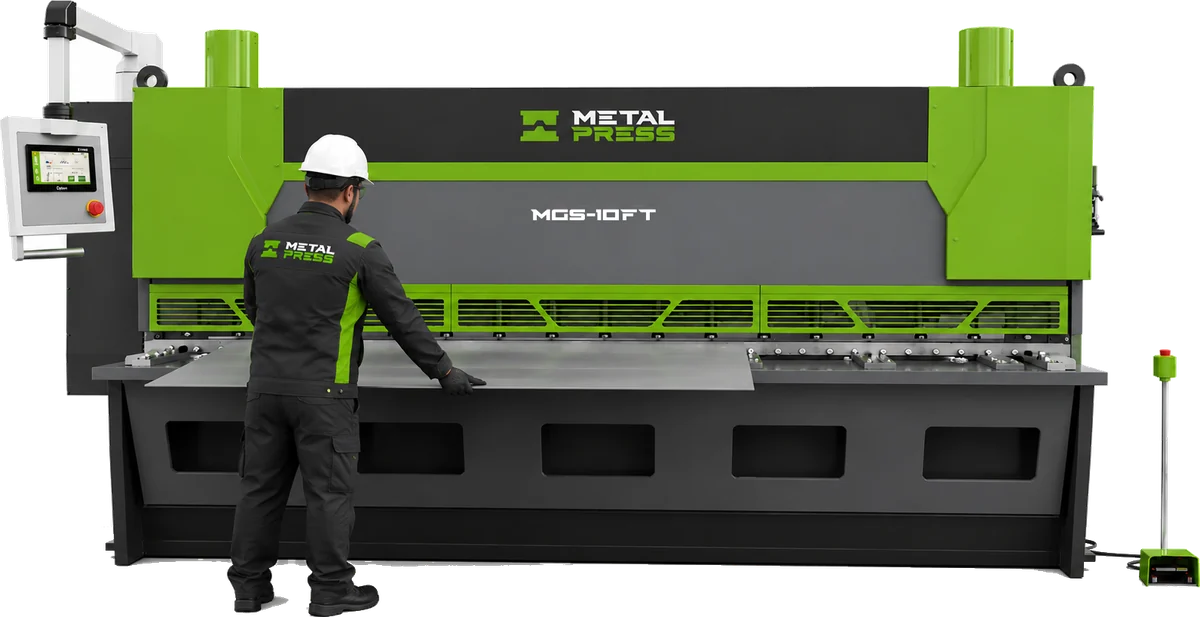
Straight-Cut Steel Blanks
Prepare rectangular panels, strips and plate blanks around the incoming stock size, required squareness and edge condition. Plan consistent locating references and support for the remaining sheet and cut piece.
Review the MGS cutting length and material-specific ratings. Blade setup, stock condition and handling should be considered alongside the cutting list.
View MGS guillotine shear models and specifications for the relevant equipment configuration.
Bending Steel Components
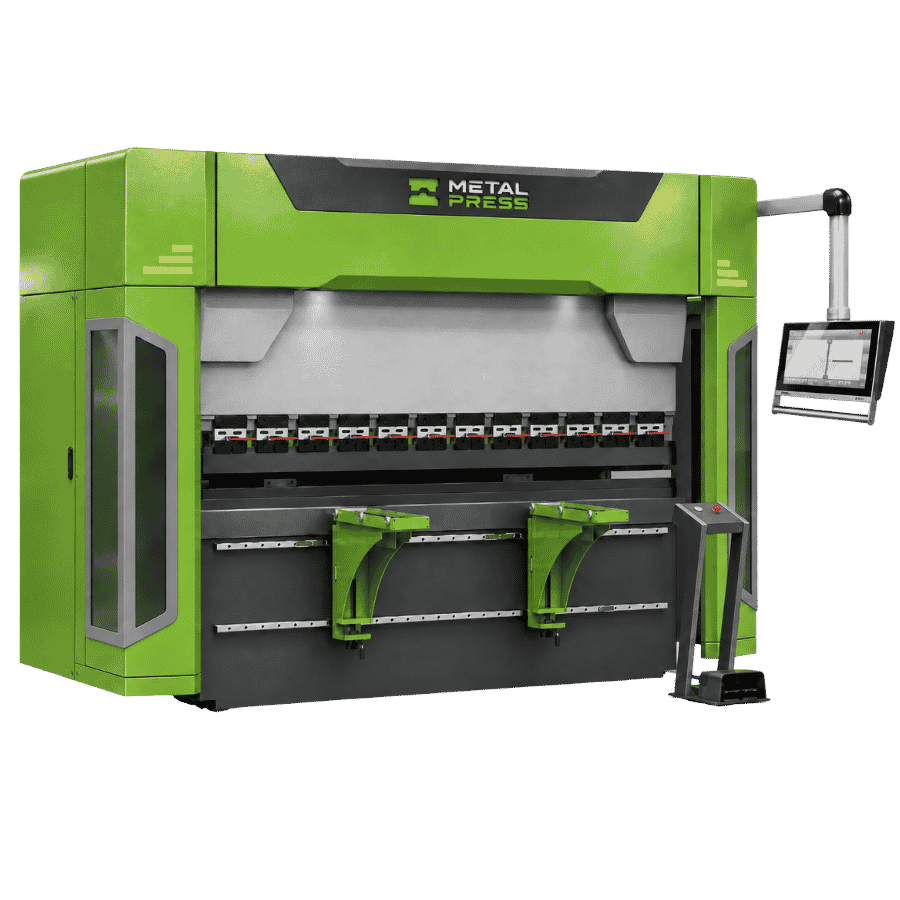
Define bend length, inside radius, flange geometry and the finished dimensions that control fit. Material strength and thickness affect force requirements and springback.
Review Titan tooling, backgauge access and the sequence required to form the part. Confirm results using representative stock and a documented first-part check.
View Titan CNC press brake models and specifications for the relevant equipment configuration.
Punching & Stock Preparation
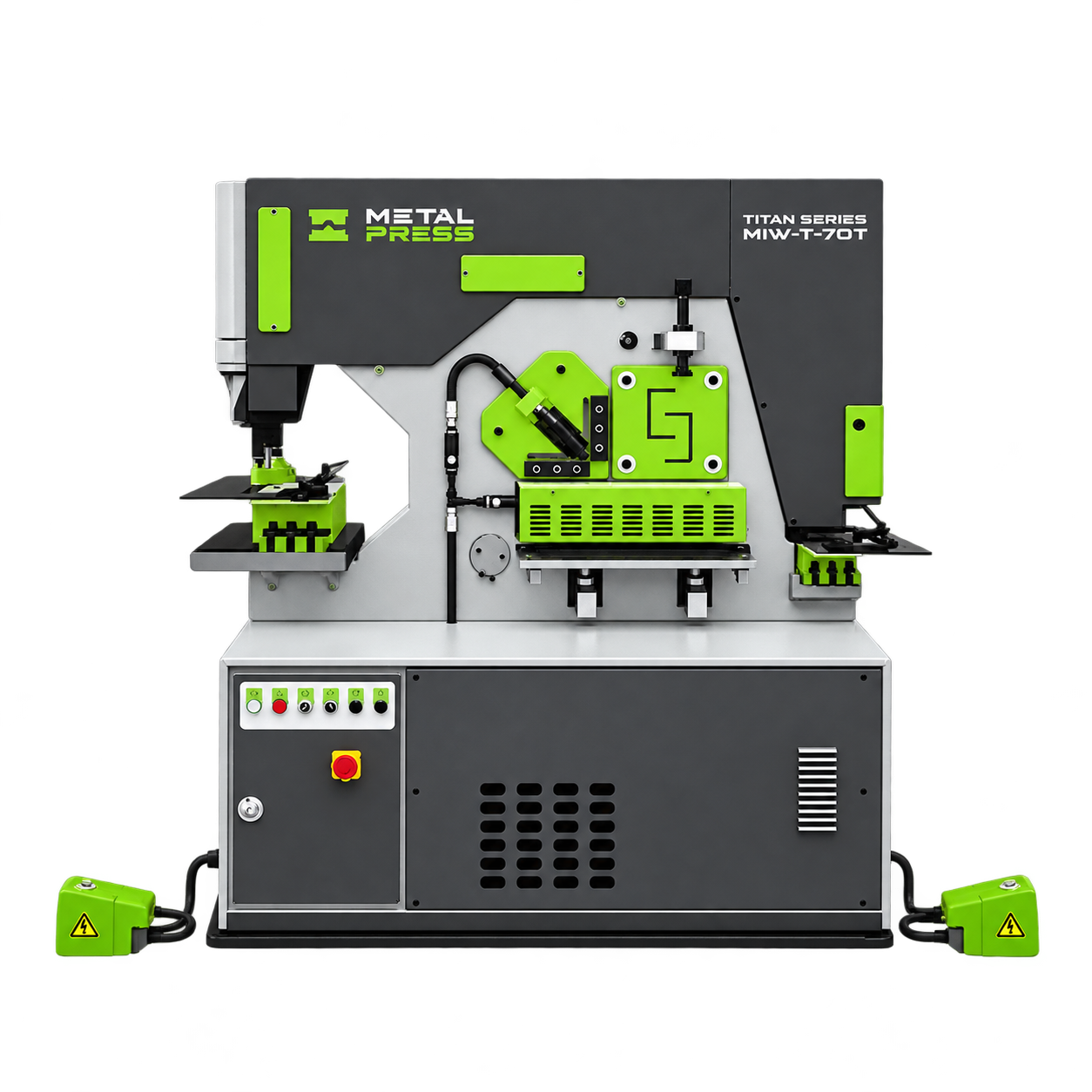
Angle braces, flat bars and connection plates can require cuts, holes and notches at different workstations. Define each feature and the access needed to reach it.
Review MIW-T station ratings separately. Long stock and heavy components need suitable support and a practical transfer route between operations.
View MIW-T hydraulic ironworker models and specifications for the relevant equipment configuration.
Plan the Mild & Carbon Steel Fabrication Workflow
Stock & grade control
Keep the approved grade and thickness associated with the cutting list and part drawing. Review substitutions before using an existing setup.
Operation sequence
Choose cutting, punching and bending order around locating references, access and downstream fit. Plan deburring before it becomes difficult to reach an edge.
Handling & batch flow
Account for sheet weight, long stock and formed-part envelopes. Plan material support, cut-piece collection and movement between machines.
First-part & repeat checks
Verify dimensions, holes, bend angles and edge condition against the drawing. Keep the approved setup and inspection plan with recurring jobs.
Material & Application Requirements
Do not apply a mild-steel capacity unchanged to higher-strength carbon steel. Check the exact machine rating and tooling limits for the supplied grade. The finished component and welded or bolted assembly require their own design verification.
Related application planning: sheet and plate blank preparation and Plate & Angle Punching and Notching.
Prepare Your Fabrication Enquiry
Provide the steel grade and strength, thickness, stock section, part drawings and cutting list. Add bend lengths, radii, hole patterns, tolerances, quantities and handling requirements.
Discuss your mild & carbon steel fabrication requirements with MetalPress to review the machine configuration, tooling and production route.
Mild & Carbon Steel Fabrication Questions
No. Strength, thickness, condition and section geometry affect the applicable cutting, punching and bending limits. Use the specified grade for configuration review.
Suitable straight cutting, stock shearing, punching, notching and bending can form a fabrication workflow. Choose the actual sequence around the part drawing and access.
Start with MGS guillotine shear, Titan CNC press brake, MIW-T hydraulic ironworker. Compare the applicable ratings, tooling, access and support with the actual part drawing.
Provide the steel grade and strength, thickness, stock section, part drawings and cutting list. Add bend lengths, radii, hole patterns, tolerances, quantities and handling requirements.
PLAN YOUR NEXT
Share your drawings and material requirements to review equipment, tooling, access and handling for this application.