
STAINLESS STEEL CUTTING & BENDING
Plan stainless sheet and plate work around grade, springback, edge quality and surface protection.

Fabrication Equipment for Stainless Steel Cutting & Bending
Selecting stainless steel cutting and bending equipment starts with the actual grade, blank geometry and required surface finish. Equipment panels, covers and formed components may have cosmetic faces or tight fit-up requirements that influence tool contact, handling and the order of operations.
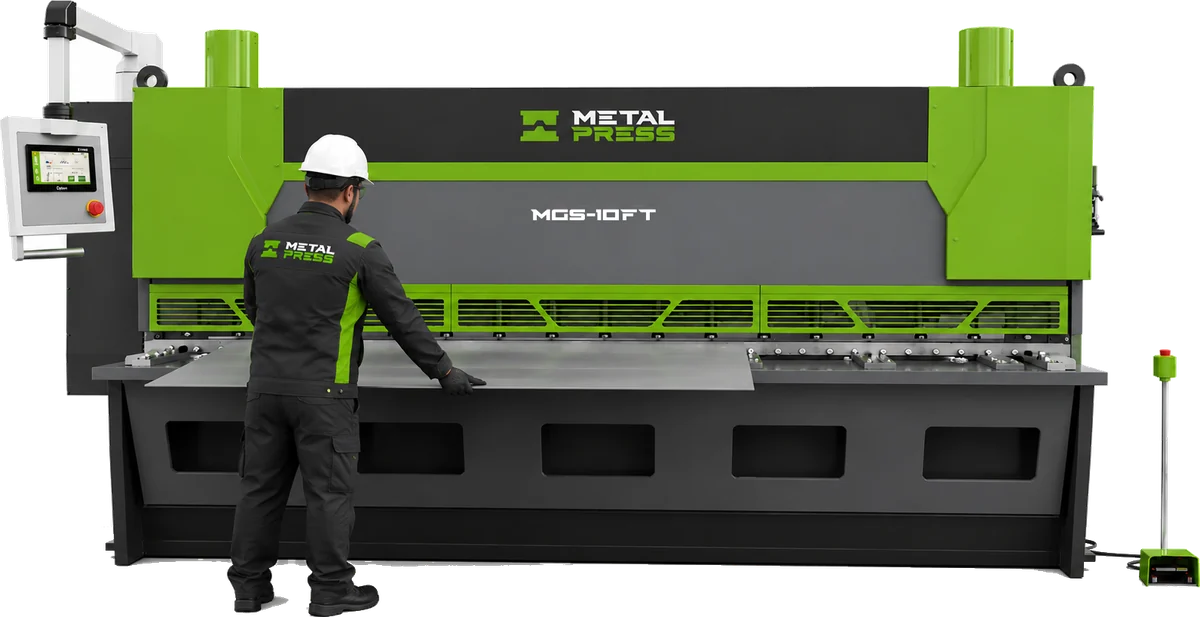
Review MGS guillotine shear, Titan CNC press brake against the actual drawings, material and production requirements. Find related workflows in the fabrication applications hub.
For stainless sheet shearing, identify the finished edges and cosmetic faces before preparing the blank. For stainless steel press brake applications such as a folded cover, review the radius, springback, tool-contact surfaces and bend sequence with the actual grade and finish.
Protect the Surface Through the Workflow
Identify visible faces and acceptable marks before cutting. Include support surfaces, tooling contact, protective film and downstream finishing in the production plan.
Stainless Blank Cutting
Define cutting length, thickness, strip width, squareness and acceptable edge condition for the actual stainless grade. Review support for the stock and cut piece so handling does not undermine the required finish.
Match the MGS model and cutting setup to the material-specific rating. Internal apertures and shaped profiles require another suitable process.
View MGS guillotine shear models and specifications for the relevant equipment configuration.
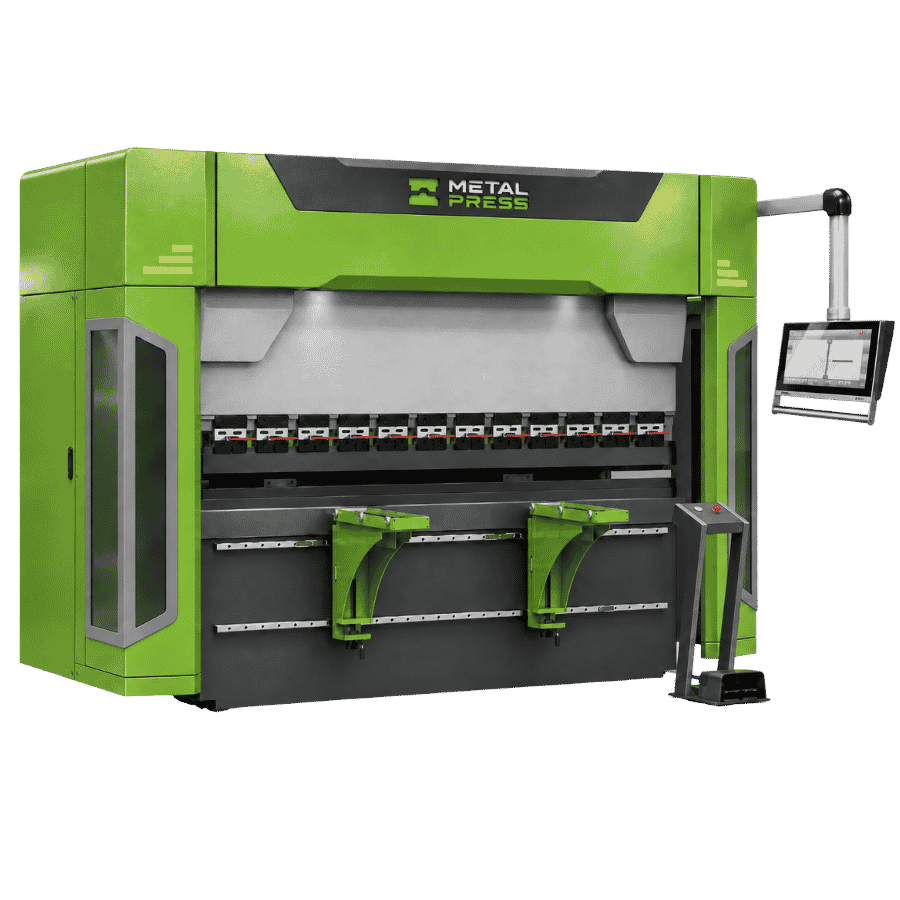
Stainless Press-Brake Bending
Specify bend radius, flange lengths, part length and finish requirements. Springback and tooling contact need review for the selected grade and thickness.
Use the Titan configuration review to check forming force, tooling, gauging and working clearance. Confirm the bend setup and surface result on representative material before a production batch.
View Titan CNC press brake models and specifications for the relevant equipment configuration.
Plan the Stainless Steel Cutting & Bending Workflow
Grade & surface identification
Record the material grade, thickness and supplied finish. Identify cosmetic faces, grain direction where specified and any film that remains during processing.
Blank & edge preparation
Confirm reference edges and flat-pattern dimensions. Plan removal of burrs and review the edges that will remain visible or contact adjacent components.
Tool contact & handling
Review tool surfaces, supports and transfer points for the required finish. Choose handling arrangements that suit large panels and formed covers.
Angle & fit verification
Inspect bend angles, flange dimensions, surface marks and assembly fit. Record approved setup adjustments with the material and tooling used.
Material & Application Requirements
Stainless grades and conditions differ; a machine’s mild-steel thickness figure is not a stainless rating. Confirm force and cutting requirements for the actual material. The required corrosion resistance, finish and any application-specific hygiene criteria belong in the component specification.
Related application planning: Food-Processing & Kitchen Equipment Fabrication and Multi-Bend Sheet Metal Parts.
Prepare Your Fabrication Enquiry
Send the stainless grade, thickness, finish, film requirements, blank and formed drawings, bend radii and cosmetic-face details. Add tolerances, quantities and acceptance criteria for surface marking and edges.
Discuss your stainless steel cutting & bending requirements with MetalPress to review the machine configuration, tooling and production route.
Stainless Steel Cutting & Bending Questions
Not without checking the manufacturer’s applicable material rating. The actual grade and strength must be considered for cutting and bending.
Specify visible faces and acceptable marks, then review tooling contact, support surfaces, film, deburring and handling throughout the workflow.
Start with MGS guillotine shear, Titan CNC press brake. Compare the applicable ratings, tooling, access and support with the actual part drawing.
Send the stainless grade, thickness, finish, film requirements, blank and formed drawings, bend radii and cosmetic-face details. Add tolerances, quantities and acceptance criteria for surface marking and edges.
PLAN YOUR NEXT
Share your drawings and material requirements to review equipment, tooling, access and handling for this application.