

Blog
Die Cart Duty Cycle and Battery Charging for Multi-Shift Operation

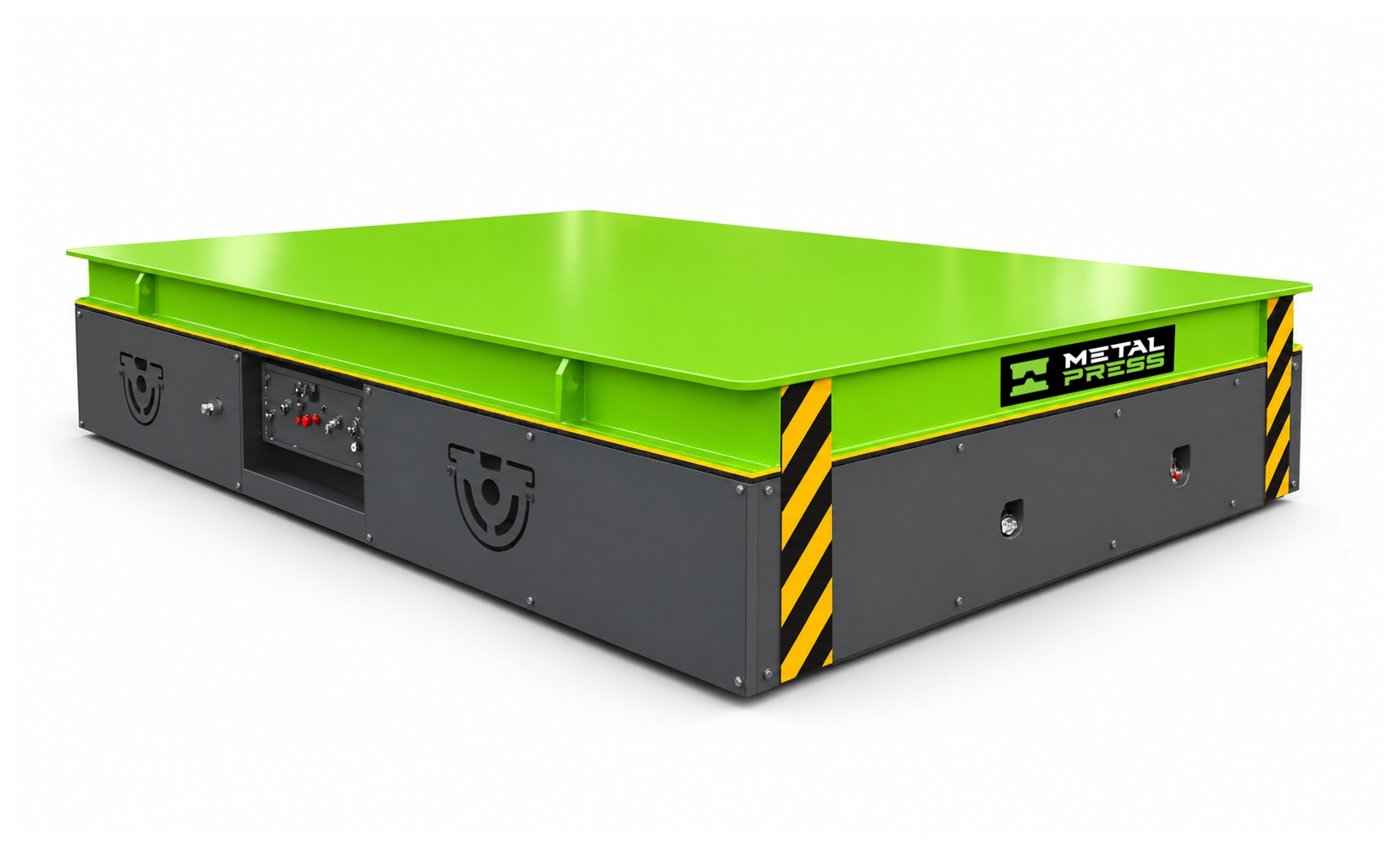
A multi-shift die cart needs an energy and availability plan, not a runtime promise based on payload capacity. Record the loaded and empty trips, route, positioning time, auxiliary loads and real charging windows. Then match those demands to the usable battery energy and approved charger performance for the supplied configuration. This briefing explains the planning method without prescribing a battery size or charging profile for an unverified cart.
For equipment models and configuration enquiries, review the MMC die cart and mold transfer cart. Use the die-cart selection guide for the overall buying and application checklist.
Define a handling cycle before estimating runtime
A cycle includes more than travel between two points. Record loading and retention, loaded travel, steering and fine positioning, discharge, empty return and waiting. Identify which stages draw traction power, which use auxiliaries and which leave the cart switched on but stationary.
Runtime, elapsed shift length and productive availability are different measures. A cart can spend much of a shift waiting and still face demanding short travel peaks. Conversely, constant loaded trips may exhaust the available energy before the shift ends. Build the duty cycle around the busiest credible operating period, not only an average day.
Measure the variables that change energy demand
- Trips per shift and per hour, including empty return and repositioning.
- Tooling and cart mass, load distribution, speed settings, starts, stops and steering activity.
- Route distance, surface condition, permitted gradients and temperature exposure.
- Control-system and other auxiliary consumption while travelling or waiting.
- Any supplied lift or powered transfer function, assessed separately rather than assumed part of a transport-only cart.
Ask the supplier how representative energy consumption will be established—by a documented engineering estimate, an agreed test or recorded operation of the relevant configuration. Motor nameplate power multiplied by the full shift is not a reliable operating-energy estimate because power demand changes throughout the cycle.
Distinguish nominal capacity from usable battery energy
A first comparison uses nominal energy in kilowatt-hours: nominal voltage multiplied by rated ampere-hours, divided by 1,000. Ampere-hours alone cannot compare batteries with different voltages. Rated capacity also has stated test conditions, and nominal energy is not a guarantee of usable energy in service.
The supplier’s permitted operating window, discharge rate, temperature, battery condition and protection limits affect usable energy. Keep reserve for the agreed uncertainty and missed charging opportunities. Do not choose a universal depth-of-discharge limit or reserve percentage without the battery and equipment documentation.
Illustrative arithmetic only: a hypothetical 48 V, 400 Ah battery has 19.2 kWh nominal energy. If a project review permits 60% to be used over the planned window, the arithmetic window is 11.52 kWh before any additional agreed derating or reserve. These are not MMC battery values or a recommended operating limit.

MMC Die Cart & Mold Transfer Cart
Review published models, battery-powered travel and configuration requirements for horizontal movement of heavy dies, molds and tooling. Match the cart, route, duty and handoffs to the actual application.
Compare shift demand with energy recovery
Use a transparent energy ledger: shift demand equals loaded-trip energy plus empty-trip energy, positioning and auxiliary consumption. For several shifts, carry the remaining usable energy from one period into the next; do not reset the ledger at each shift change.
Example only: suppose a measured representative round trip consumes 0.18 kWh. Forty such trips require 7.2 kWh; adding 0.8 kWh of separately recorded auxiliary demand gives 8.0 kWh for that period. A claimed round-trip value must clearly state whether it already includes waiting or auxiliary energy so those loads are not counted twice.
Charging recovery is a separate entry. A hypothetical constant 5 kW battery-side charging rate for 30 minutes corresponds to 2.5 kWh. Actual recovery must use the approved charging curve, connection time, temperature and battery acceptance limits. AC input power is not identical to energy stored in the battery, and charging power may taper. Do not infer recovered energy from a charger label alone.
Plan charging windows that operations can actually deliver
List charging access during breaks, changeovers, shift handovers and overnight shutdowns. Deduct travel to the charging point, connection time and any required care or cooling time. Check who connects the charger and what happens when a planned break is lost.
Opportunity charging means planned partial recharging with a compatible battery and charger; it is not a universal permission to connect any battery during every pause. EnerSys describes specific battery, charger and thermal requirements for fast or opportunity charging in its flooded lead-acid documentation. Fronius also describes opportunity charging as a feature of particular charger arrangements. Those examples establish the need for an approved system, not compatibility with an unspecified MMC installation.
Review battery chemistry, charger compatibility and site readiness
The MMC product page describes lead-acid batteries and a lithium-battery option. Confirm the actual supplied chemistry, voltage, capacity, connectors, battery management requirements, charge profile and available site electrical supply. A chemistry label alone does not establish charge time or multi-shift capability.
Follow the supplied battery and charger instructions for ventilation, temperature, inspection, maintenance and the charging location. Have the responsible site personnel review the installation and operating procedure. Do not substitute generic voltage, charging-current, watering or equalization instructions for the documentation of the installed battery.
If the proposed schedule does not balance, review the approved battery/charger configuration, charging access, workload allocation or equipment availability with the supplier. Battery exchange is an option only where the equipment is designed and the handling procedure approved for it.
Validate the duty cycle and keep an operating record
Agree the trial load, route, trip count, ambient conditions, auxiliary use and charging windows before commissioning. Record starting and finishing state of charge, battery temperature where available, charger sessions, interruptions and completed cycles. Compare the measured duty against the supplier-approved limits, not just a generic “hours per charge” figure.
Review the plan when production volume, route length, tooling weight, battery condition or shift pattern changes. A charging point shown on a layout is useful only if the cart can reach it and operations can preserve the required time window.
Project review checklist
| Planning item | Record | Avoid assuming |
|---|---|---|
| Duty cycle | Loaded/empty trips, positioning and waiting | Shift length equals continuous travel |
| Battery | Voltage, rated capacity, usable window and condition | All nameplate energy is available |
| Charger | Approved profile and battery-side recovery data | Label power is constant stored power |
| Windows | Reachable connection times and contingency | Every break will occur as planned |
| Validation | Peak-period energy and operating logs | One light-load run proves multi-shift capability |
Continue planning the tooling workflow
- How to choose a die cart: capacity, height and transfer method
- Heavy tooling movement and storage-to-press applications
- Die-cart floor loading and route surveys
Use the MMC product page for the commercial equipment specification. These articles provide planning inputs, not approval of a floor, battery system or operating procedure.
Frequently Asked Questions
How long can a battery-powered die cart run?
Runtime depends on the supplied battery, usable energy, load, route, starts, steering, auxiliary demand and operating conditions. Request a duty-cycle assessment for your configuration rather than inferring runtime from cart capacity.
Can a die cart be charged during breaks?
Only where the supplied battery, charger and operating procedure permit the planned partial-charge regime. Confirm compatibility, charging recovery, temperature requirements and any full-charge or maintenance schedule with the supplier.
Is a lithium battery automatically a multi-shift solution?
No. Usable capacity, permitted charge rate, temperature limits, charger compatibility and reliable charging access still have to match the workload.
What is the difference between charging time and recovered energy?
Charging time is the duration of an approved charging session. Recovered energy depends on actual battery-side power and acceptance over that time, including any tapering and thermal limits.
Technical references and application review
- EnerSys flooded lead-acid battery owner’s manual: Manufacturer guidance on battery operation, temperature, charging and system-specific fast/opportunity charging. It is not the MMC battery manual.
- Fronius opportunity-charging overview: An example of approved charger-specific opportunity charging, not a performance claim for MetalPress equipment.
The references explain general engineering principles and manufacturer-specific examples. They do not establish that the referenced equipment, battery or charger is supplied with an MMC cart. Confirm the final configuration with MetalPress and the responsible site professionals.